

what to see in bolzano: unmissable attractions
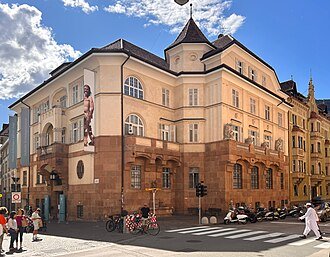
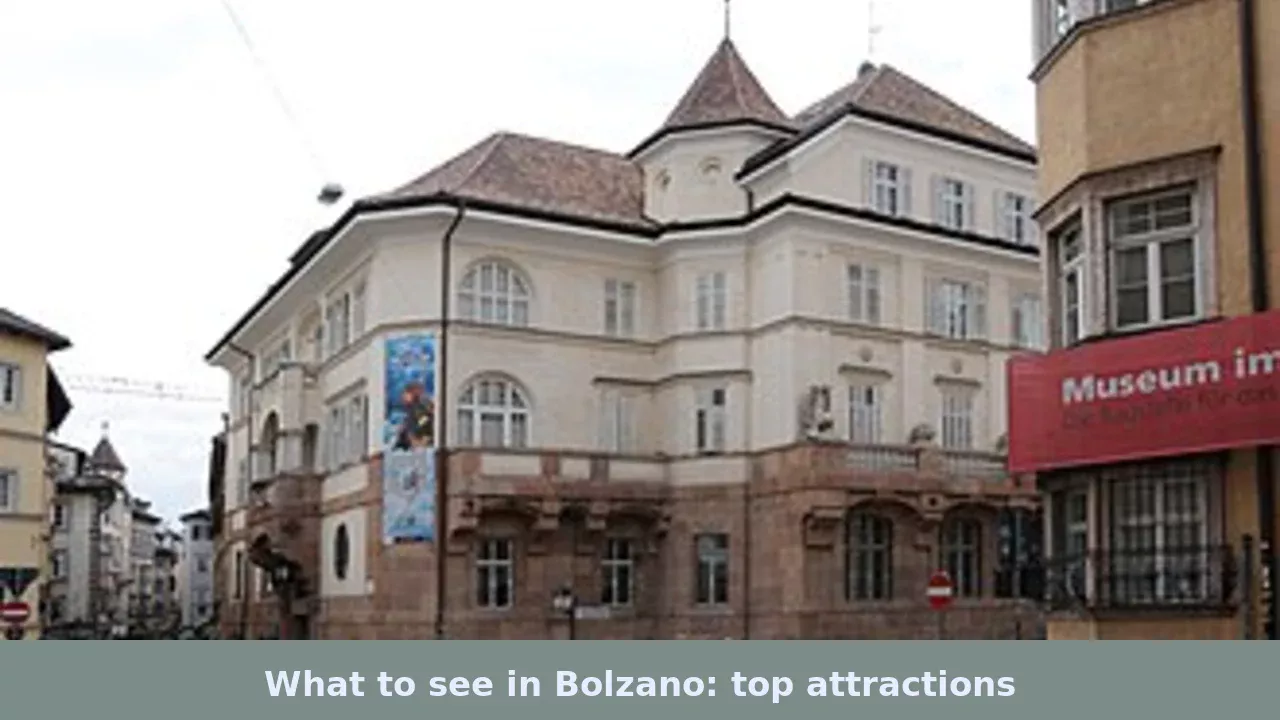
Among the main things to see in Bolzano, the South Tyrolean capital offers an internationally significant attraction: the South Tyrol Museum of Archaeology. Inaugurated in 1998, this museum has become the reference point for the ancient history of the region. Its fame is closely linked to the presence of Ötzi, the Iceman, whose discovery revolutionized the study of Alpine prehistory. The building itself that houses the museum has its own history, having been the former headquarters of the Bank of Italy.
The History and Origins of the South Tyrol Museum of Archaeology
The South Tyrol Museum of Archaeology opened its doors to the public in March 1998, with the primary objective of exhibiting and preserving the most significant archaeological find ever discovered in the region. The decision to establish a museum dedicated to this epochal discovery led to the choice of the current location, an imposing historic building situated in the heart of Bolzano, once a branch of the Bank of Italy. This structure, with its solid architecture and spacious halls, proved ideal for housing the delicate collections and ensuring the security of the precious artifacts.
Its foundation was a direct consequence of the discovery of Ötzi, the Iceman, which occurred in 1991. This event generated enormous scientific and media attention, making it necessary to create an institution capable of enhancing and making such an important heritage accessible to the public. The museum is not limited to Ötzi but also illustrates the history of the South Tyrolean territory from the Paleolithic to the Middle Ages, through chronological and thematic exhibitions that recount the evolution of cultures and societies that populated these valleys. For more details on the history and context of the museum, you can consult the dedicated page on Wikipedia.
Ötzi, the Iceman: The Core of Your Visit
The highlight of any visit to the South Tyrol Museum of Archaeology is undoubtedly the encounter with Ötzi. This extraordinary find, a man naturally mummified by ice, dates back approximately 5,300 years, placing him in the Copper Age. His discovery, which occurred in 1991 in the Ötztal Alps, on the border between Italy and Austria, provided an unprecedented amount of information about the life, customs, and environment of that remote period.
Ötzi is displayed in a special refrigerated cell that recreates glacier conditions, maintaining a constant temperature of -6°C and 98% humidity. This meticulous preservation allows visitors to observe the mummy through a small window. Around him, the museum also exhibits his complete equipment: leather clothes, tools, a bow, a quiver with arrows, a copper axe, and a flint dagger. These objects are not mere artifacts but fragments of an existence that offer a detailed glimpse into the technology and culture of the era.
Permanent Collections and Thematic Exhibitions
In addition to Ötzi, the South Tyrol Museum of Archaeology houses several permanent collections that cover a long span of time, from prehistory to the Carolingian era. Visitors can follow a chronological path that illustrates the different phases of settlement in the South Tyrolean territory. The exhibition halls present artifacts documenting daily life, funerary practices, economic activities, and the social evolution of the communities that inhabited these valleys.
Among the most important sections are those dedicated to the Bronze and Iron Ages, with ceramic, metal, and bone artifacts that bear witness to the advancement of artisanal techniques and social organization. There are also testimonies from the Roman era, a period when South Tyrol became a crossroads of cultures and trade, and those relating to the Early Middle Ages. The museum also regularly organizes temporary thematic exhibitions, which delve into specific aspects of archaeological research or present new findings, always offering new stimuli and perspectives to its visitors.
Practical Information for Visiting the Museum
The South Tyrol Museum of Archaeology is located at Via Museo 43, in the center of Bolzano, and is easily reachable on foot from the train station or the city’s main points of interest. If you arrive by car, several paid parking lots are available nearby. The museum is equipped to welcome visitors with disabilities, ensuring accessibility to all exhibition areas.
Opening hours and ticket prices may vary depending on the season, so it is always advisable to consult the museum’s official website before your visit for the most up-to-date information. Inside the museum, audio guides and information panels are available in several languages to deepen your knowledge of the collections. The museum also offers a shop where you can purchase books and souvenirs related to the exhibitions. For a complete and seamless experience, plan your visit by consulting the official museum website.
Why the South Tyrol Museum of Archaeology is Worth a Visit
Visiting the South Tyrol Museum of Archaeology represents an opportunity to come into direct contact with a fundamental part of human history. The presence of Ötzi, the Iceman, offers a unique perspective on life in the Copper Age, allowing visitors to observe a 5,300-year-old artifact in a scientifically rigorous and educationally effective context. This is not just a museum of artifacts, but a place where science and storytelling unite to recount tales from distant times.
Beyond the famous mummy, the museum presents a complete picture of South Tyrolean archaeology, from the first traces of human presence to the Middle Ages. It is an opportunity to understand how the territory, culture, and technologies have evolved over millennia. Those seeking a deep understanding of the historical roots of this region will find here a cultural offering of great value, enriched by well-curated and documented exhibitions.
If you wish to further explore the beauty and history of this fascinating capital, we invite you to consult the complete guide to Bolzano on our portal. You will find much more information and inspiration to enrich your trip to South Tyrol.