

In Cremona, a Lombard city renowned for its violin-making tradition, what to see in Cremona finds its ultimate expression in its imposing Duomo. Built starting in 1107, this sacred edifice represents the historical and artistic heart of the city. Its majestic architecture and the treasures contained within make it an unmissable stop for anyone visiting the province. The Cathedral of Santa Maria Assunta, with its famous Torrazzo, is a compendium of art history that captivates every visitor.
The History and Origins of Cremona Cathedral (Cathedral of Santa Maria Assunta)
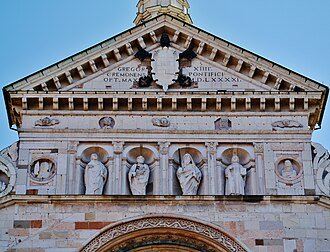
The construction of Cremona Cathedral began in 1107, but the original building suffered severe damage due to an earthquake that struck the region in 1117. This catastrophic event required an almost total reconstruction, which began immediately afterwards and led to the cathedral’s new consecration in 1129. Subsequent construction phases, spanning several centuries, contributed to defining the church’s current appearance, which harmoniously blends Romanesque and Gothic elements.
During the 13th and 14th centuries, significant elements were added, such as the protiro and the rose window on the facade, as well as the transepts that gave the plan a Latin cross shape. These interventions enriched the original structure, bearing witness to the stylistic evolutions and liturgical needs of the era. To delve deeper into the detailed history of this monument, you can consult the Wikipedia page for Cremona Cathedral.
Architecture and Artistic Features of Cremona Cathedral (Cathedral of Santa Maria Assunta)
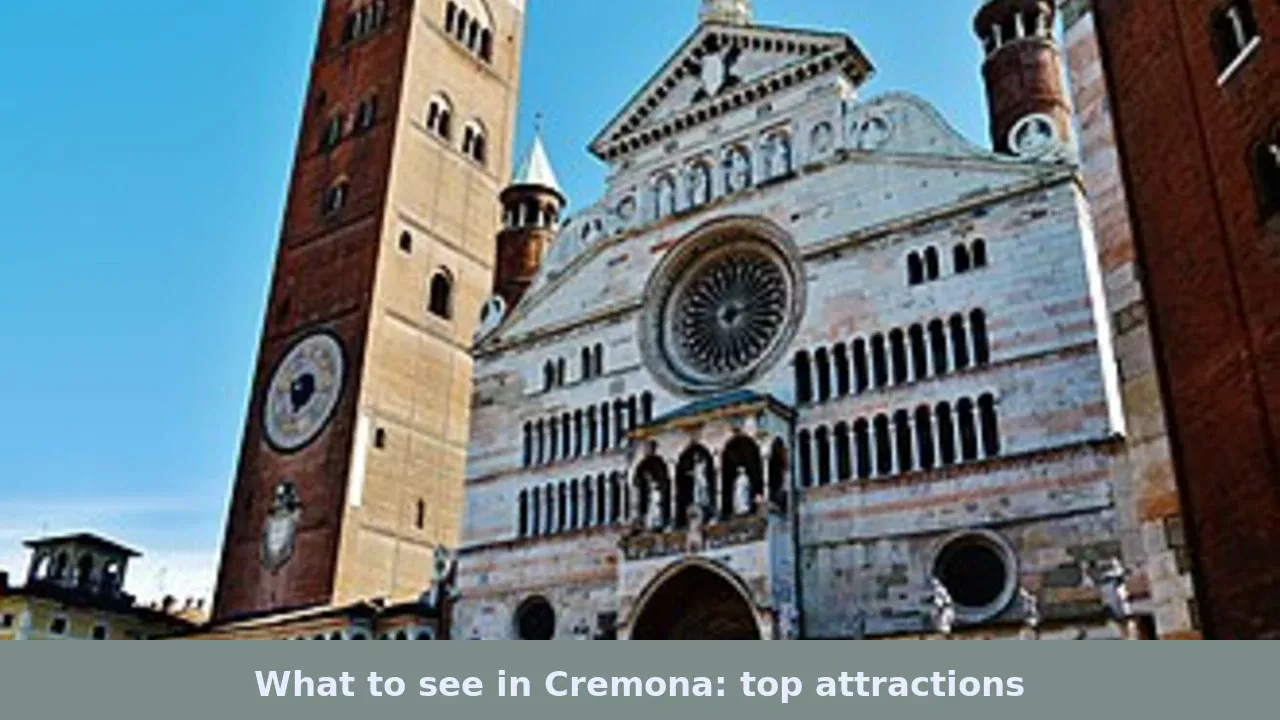
The facade of Cremona Cathedral is an example of Lombard Romanesque architecture, characterized by three decorated portals and a large central rose window dating back to 1274. The protiro, created in 1288 by Bonino da Campione, is adorned with sculptures depicting biblical scenes and allegorical figures, while at its base are two stylophoric lions supporting the columns. This combination of sculptural and architectural elements creates a visually solemn impact.
The interior of the cathedral, divided into three naves, reveals a transition from Romanesque to Gothic, evident in the vaults and arches. The walls are almost entirely covered by a cycle of 16th-century frescoes, representing one of the most important pictorial complexes of the Lombard Renaissance. These paintings, created by masters such as Romanino, Pordenone, Bernardino Gatti known as il Sojaro, Altobello Melone, and Boccaccino, narrate episodes from the life of Mary and the Passion of Christ, engaging the faithful and visitors in a continuous visual narrative.
What to See Inside Cremona Cathedral (Cathedral of Santa Maria Assunta)
Once past the threshold of the Duomo, visitors find themselves immersed in an environment of great visual impact. The side naves and the central nave are adorned with a vast cycle of frescoes that includes masterpieces by Pordenone, who created scenes of the Passion, and Romanino, author of episodes from the life of Christ and the Virgin. These pictorial cycles offer a unique opportunity to appreciate Renaissance art in a sacred context.
Among the most significant works are Bernardino Gatti’s Assumption of the Virgin on the main altar and the exquisite wooden sculptures of the choir. Each side chapel houses minor but notably interesting artworks, including decorated altars and canvases by local artists. The sacristy, also rich in historical furnishings and liturgical vestments, merits a brief visit for its serene atmosphere and the quality of the exhibited objects.
The Torrazzo of Cremona
Adjacent to the Duomo stands the famous Torrazzo, an unmistakable symbol of Cremona and the cathedral’s bell tower. With its 112.7 meters, it is considered the tallest historic masonry bell tower in Italy. Its construction began in 1220 and was completed in 1309, a remarkable engineering feat for its time. The Torrazzo is not only a bell tower but also an astronomical clock of great complexity.
The astronomical clock, created between 1583 and 1584 by brothers Francesco and Giovan Battista Divizioli, is one of the largest in the world and represents a system for calculating time and celestial positions. Climbing to the top of the Torrazzo, via an internal staircase, allows visitors to enjoy a panoramic view of the entire city of Cremona and the surrounding Po Valley. This experience offers a unique perspective on the urban fabric and the rooftops, allowing for a better understanding of the city’s layout.
Why Cremona Cathedral (Cathedral of Santa Maria Assunta) is Worth a Visit
Cremona Cathedral is a monument that encapsulates centuries of history, art, and spirituality, making it a destination of great cultural value. Its architecture, spanning from Romanesque to Gothic, offers a journey through various construction eras. The richness of the fresco cycles within, works by Renaissance masters, makes it a true gallery of sacred art, capable of moving and educating.
Beyond the intrinsic beauty of the cathedral, the presence of the Torrazzo adds a further element of interest. The opportunity to climb to its summit to admire the astronomical clock and enjoy the surrounding panorama makes the visit complete and memorable. The Duomo is the focal point of city life, a place where art, history, and faith converge, offering visitors a deep understanding of Cremona’s heritage.
Practical Information for Visiting Cremona Cathedral (Cathedral of Santa Maria Assunta)
Cremona Cathedral is located in Piazza del Comune, in the heart of the historic center, easily reachable on foot from the train station or major parking areas. If arriving by car, it is advisable to check directions for the closest parking lots to the center, keeping in mind that many areas have restricted traffic. The cathedral’s opening hours vary according to the time of year and liturgical celebrations, so it is always advisable to check before your visit.
Entry to the Duomo is generally free, while access to the Torrazzo requires a ticket, which includes the ascent and the opportunity to observe the astronomical clock up close. Those seeking a more in-depth experience can inquire about organized guided tours, which allow for the discovery of details and anecdotes related to the history and art of the complex. You can find more details and updated information on the official website of the Diocese of Cremona.
To discover all other attractions and get a complete guide to this Lombard city, we invite you to consult the detailed page for Cremona on our portal. After exploring the wonders of the Duomo and the Torrazzo, you might want to continue your discovery of Lombardy by also visiting interesting villages like Cadegliano-Viconago, Cadrezzate, or Besano, each with its own peculiarities and charm.