

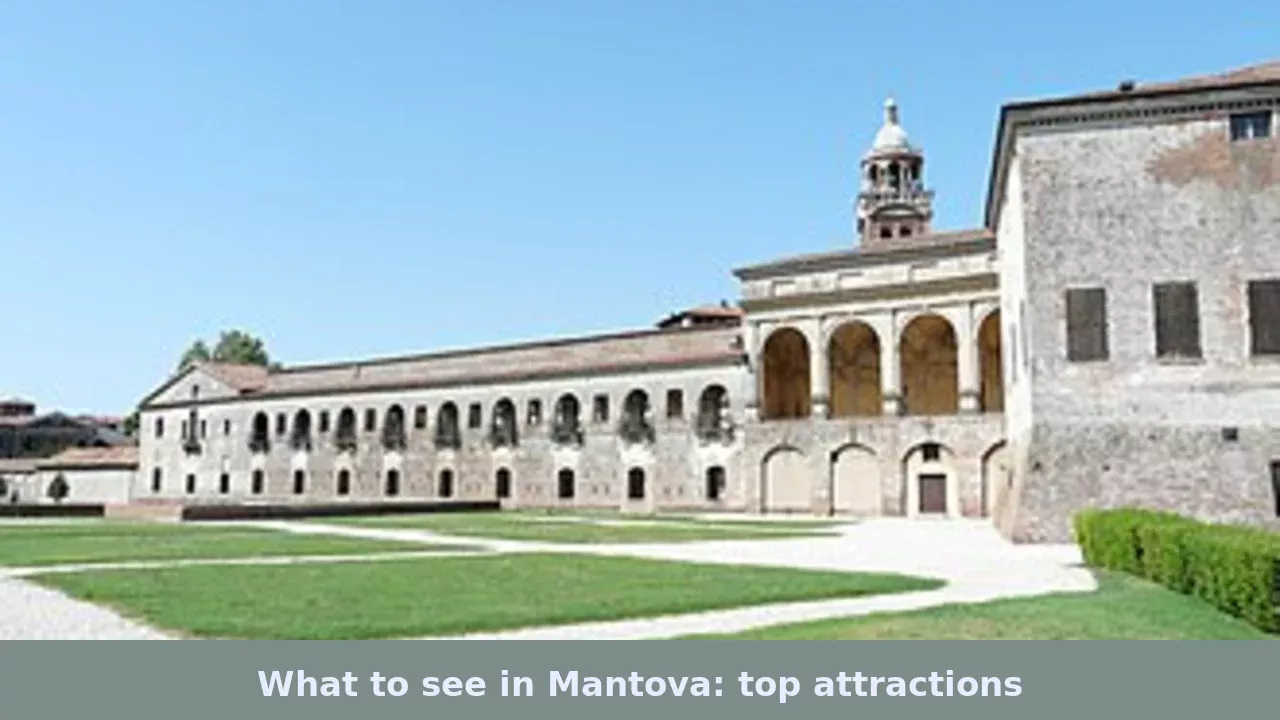
Founded in the 12th century, Mantua is a Lombard city that holds a remarkable artistic and historical heritage. Among the main attractions, for those wondering what to see in mantova, the majestic Doge’s Palace undoubtedly stands out. This monumental complex served for centuries as the main residence of the Gonzaga family, one of the most important Italian lordships. Its vast expanse and the richness of its collections make it an unmissable destination for visitors wishing to deeply understand the history and art of the Italian Renaissance.
The History of Mantua’s Doge’s Palace
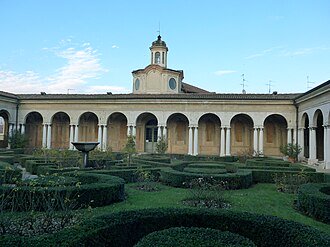
Mantua’s Doge’s Palace is not a single building, but an intricate succession of constructions built and modified between the 13th and 17th centuries. Its origin dates back to 1290, when the Bonacolsi, the first lords of Mantua, began the construction of the Captain’s Palace. With the rise of the Gonzaga family in 1328, the complex started its expansion, incorporating the Castle of San Giorgio and the Old Palace, gradually transforming into a true palace-city.
Over the centuries, numerous architects and artists contributed to its current configuration. Among the most significant are Luca Fancelli, who worked on the Cavalry Courtyard in the 15th century, and Giulio Romano, who designed the Troy Apartment and other important interventions in the 16th century. The Gonzaga family continued to enlarge and embellish the palace until the end of the 17th century, accumulating an immense collection of artworks. For more details on its evolution, you can consult the page dedicated to the Doge’s Palace of Mantua on Wikipedia.
Architecture and Main Spaces of the Doge’s Palace
The Doge’s Palace spans an area of approximately 34,000 square meters, making it one of the largest museum complexes in Europe. It is composed of over 500 rooms and numerous courtyards and gardens, all connected by corridors and galleries. This complex structure reflects the different eras and architectural styles that have succeeded one another, from Gothic to Renaissance, up to Baroque.
Among the most famous spaces are the Castle of San Giorgio, the Old Palace, and the New Court. The Castle of San Giorgio, with its towers and moat, represents the oldest defensive core. The Old Palace includes the Captain’s Palace and the Magna Domus, with frescoed halls and internal courtyards. The New Court, built in the 16th century, houses the Ducal Apartment and the Hall of Mirrors, an example of Baroque architecture.
What to Admire at the Doge’s Palace: The Masterpieces
The Bridal Chamber
One of the highlights of the visit is undoubtedly the Bridal Chamber, located in the Castle of San Giorgio. Frescoed between 1465 and 1474 by Andrea Mantegna, this room is a Renaissance masterpiece. Its walls and ceiling feature a pictorial cycle celebrating the Gonzaga family, with court scenes and realistic portraits. Mantegna’s perspectival illusionism, particularly the central oculus on the ceiling simulating an open sky, is one of the most significant artistic innovations of the era.
The Troy Apartment and the Hall of Rivers
Inside the New Court is the Troy Apartment, designed by Giulio Romano. Its rooms are decorated with frescoes narrating episodes from the Aeneid, demonstrating the erudition and classical taste of the Gonzaga family. The Hall of Rivers, on the other hand, offers an example of Baroque decoration, with allegories of the waterways surrounding Mantua, celebrating the city’s connection to its aquatic environment.
The Hall of Mirrors and the Garden of Simples
The Hall of Mirrors is another highly impressive room, with its walls covered in mirrors and gilded stucco. Created in the 17th century, it was used for celebrations and receptions, offering a testament to the splendor of the Gonzaga court. The Palace also includes several gardens, among them the Garden of Simples, once dedicated to the cultivation of medicinal and aromatic herbs, which today offers a space of tranquility.
Practical Information for Visiting Mantua’s Doge’s Palace
To visit the Doge’s Palace, it is advisable to book tickets in advance, especially during peak season. Opening hours vary, so it is useful to consult the museum’s official website for the most up-to-date information on days and times. The visit can last several hours, given the size of the complex, so it is recommended to plan your time accordingly.
The Palace is located in Mantua’s historic center, easily reachable on foot from the train station or the main city car parks. It is advisable to wear comfortable shoes, as the route includes many stairs and long walks through the various rooms. Audio guides are available to enhance understanding of the artworks and environments.
Why Mantua’s Doge’s Palace is Unmissable
Mantua’s Doge’s Palace represents an extraordinary synthesis of Italian art, history, and architecture. A visit offers the opportunity to immerse oneself in the life of one of the most powerful and refined Renaissance courts. You will be able to admire absolute masterpieces like Mantegna’s Bridal Chamber, but also explore ducal apartments, lavish galleries, and hanging gardens that narrate centuries of history.
The complexity and vastness of the palace allow for an appreciation of its various construction and decorative phases, offering a unique perspective on artistic evolution from the Middle Ages to the Baroque. It is a place that speaks of power, culture, and human ingenuity, and continues to inspire anyone who visits it.
If you wish to delve deeper into this city and its peculiarities, you can consult the complete profile of Mantua on the Villages Italy portal. Additionally, those seeking other Lombard destinations might consider a visit to Brescia or the village of Barasso, without forgetting Brunello, to explore the variety of the territory.