


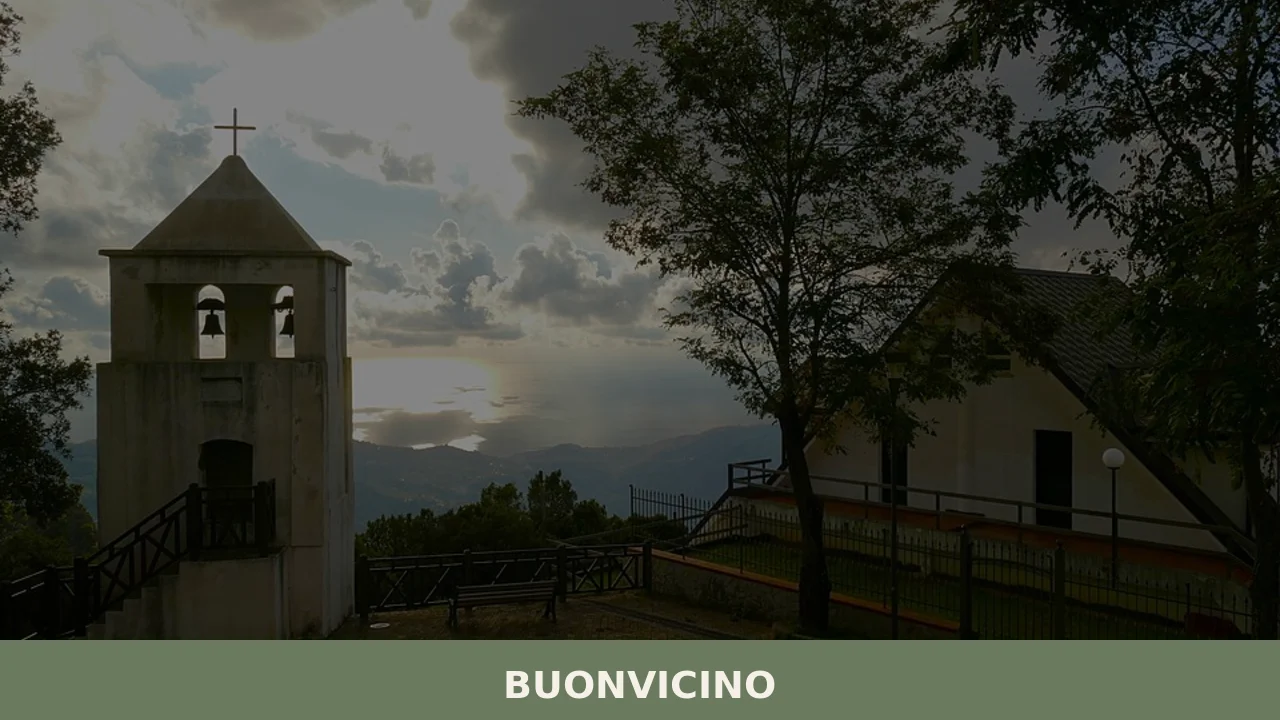
Buonvicino
what to see in buonvicino: Explore this Calabrian village at 400m above sea level. Discover its historic center and traditional cuisine, including homemade pasta.
Discover Buonvicino
Buonvicino, a village situated 400 meters above sea level in the province of Cosenza, Calabria, offers visitors the chance to immerse themselves in a territorial context where life unfolds at a slower pace.
With a population of 2,323 inhabitants, this municipality stands out for its hilly location, typical of many Calabrian settlements that found protection and development in the terrain’s conformation.
Those wondering about what to see in Buonvicino will discover a collection of elements that reflect the history and customs of this part of the region, with the opportunity to explore its streets and admire the surrounding landscape.
History and Origins of Buonvicino
The history of Buonvicino, like that of many Calabrian towns, is characterized by phases that have seen the alternation of various dominations and cultural influences, even in the absence of specific historical documents tracing its exact foundation.
It is plausible that the area has been inhabited since antiquity, with settlements developing in defensive positions, typical of hill villages.
Indeed, the region’s events often pushed populations to seek refuge in elevated places, far from coasts exposed to incursions, thus creating residential nuclei that over time took on the structure of true villages.
The name itself, “Buonvicino,” could evoke an idea of community and hospitality, a good place to live or settle, although the precise etymology is not always uniquely documented by available sources.
During the medieval period, Calabria was the scene of significant power transitions, with the arrival of the Byzantines, then the Normans, and subsequently the Swabians, Angevins, and Aragonese.
Each domination left its mark, both in social organization and in architecture, even if no specific events of national resonance are recorded for Buonvicino.
Hill villages like Buonvicino, often linked to feuds or ecclesiastical properties, experienced their evolution through local dynamics, with the construction of churches, the formation of small squares, and the development of a compact urban fabric, characterized by stone buildings and narrow streets.
Life was shaped by agriculture and pastoralism, activities that molded the landscape and traditions of the community, helping to define the identity of the place throughout the centuries.
In modern and contemporary times, Buonvicino has followed the path of many Calabrian municipalities, facing challenges related to economic and social transformations.
The unification of Italy brought administrative changes and the opening to new infrastructure, while maintaining a strong connection to its agricultural past and its customs.
Its geographical position, while ensuring a certain isolation, has allowed it to preserve some original characteristics, making the village an example of that territorial reality that can also be found in other nearby municipalities, such as Acquaformosa, where local culture and customs are still deeply felt.
Its belonging to the province of Cosenza places it in a broader context of villages that deserve to be known for their authenticity and their contribution to the richness of Calabrian heritage.
What to see in Buonvicino: main attractions
Exploring Buonvicino means delving into a context where traces of the past are evident in its structures and views. The main attractions of this hilltop village offer insights into its evolution and allow visitors to appreciate its privileged location.
Those who decide to visit Buonvicino can dedicate themselves to discovering these places, each with its own peculiarities that contribute to forming a comprehensive picture of the town.
The Mother Church
Buonvicino’s main church represents the spiritual and historical heart of the village.
As in many Calabrian towns, it is probable that the current building is the result of reconstructions and modifications over the centuries, following natural events or expansion needs.
Its architectural lines, while potentially featuring elements of different styles, reflect the local religious tradition. Inside, visitors can admire altars, sacred artworks, and furnishings that testify to the community’s devotion.
Its central location makes it a visible landmark from various angles of the town and a gathering place for residents.
The Historic Center
Buonvicino’s historic center is a labyrinth of streets and small squares, where stone buildings follow one another, creating a secluded atmosphere.
The streets, often narrow and sloping, follow the terrain, adapting to the hilly conformation.
Walking through the center, one can notice the details of the house facades, the stone portals, and the balconies that overhang the streets. This ancient core preserves the village’s original structure, offering a perspective on the life that unfolded here in the past and allowing one to imagine the daily customs of the inhabitants.
It is an experience that invites calm and observation, far from the fast pace of modern cities.
Remains of Ancient Fortifications
Given its strategic hilltop location, it is probable that Buonvicino, like many villages in the area, once had a defense system, perhaps consisting of a tower or perimeter walls.
Although sources do not specify the exact nature or location of such structures, the presence of remains or traces of ancient defensive constructions would not be unusual. These elements, even if fragmentary, offer a starting point to reflect on the importance of protection in past eras and the resilience of the communities that lived in these territories.
Visitors can try to identify these signs in the urban fabric, imagining the function they once served.
The Panoramic Viewpoint
Thanks to its altitude of 400 meters above sea level, Buonvicino offers points from which one can enjoy extensive views of the surrounding landscape.
A panoramic viewpoint, even if not specifically named in sources, is a common feature of many hilltop villages and represents an ideal place to admire the valley below and the mountains silhouetted on the horizon. From here, it is possible to observe the expanse of olive groves, the Mediterranean vegetation, and, on clear days, even catch glimpses of the Tyrrhenian coast.
This spot offers a moment of pause and contemplation, allowing visitors to appreciate the natural beauty of the Calabrian territory and its geological conformation.
Nature Trails in the Surroundings
For those who love outdoor activities and wish to explore nature, the surroundings of Buonvicino offer paths and trails that delve into the hilly vegetation.
These routes, while not described in detail by sources, are a common resource in hilly village areas, ideal for walks or light hikes.
They allow visitors to discover local flora and fauna, breathe fresh air, and enjoy different views of the town and landscape.
Exploring these trails is a way to connect with the natural environment surrounding the village, a relevant aspect for those looking for what to see in Buonvicino beyond its architecture.
Typical Cuisine and Products of Buonvicino
Buonvicino’s gastronomic tradition is part of the broader context of Calabrian cuisine, characterized by strong flavors and the use of simple, genuine ingredients, the result of agriculture and farming deeply rooted in the territory.
The region’s culinary influences are manifold, with echoes of historical dominations and the peasant culture that has always valued the bounty of the land.
Homemade pasta, legumes, seasonal vegetables, pork and lamb, olive oil, and chili pepper are the foundational elements of a diet that, despite its simplicity, offers dishes rich in flavor and tradition.
The hilly location of the village has fostered a cuisine that makes the most of local resources, creating an indissoluble link between food and landscape.
Among the typical dishes that can be found in the area, even in the absence of specific and unique recipes from Buonvicino, there are preparations common to Calabrian tradition.
Homemade pasta, such as fusilli or lagane, often seasoned with robust sauces based on pork or lamb, represents a pillar of the local diet. Vegetables, like eggplants, zucchini, and peppers, are protagonists in side dishes and unique preparations, often stuffed or grilled.
Legume soups, such as beans and chickpeas, are also common, providing a nutritious and flavorful meal.
Pork, prepared in various forms, is a fundamental ingredient, present in many dishes and preparations, reflecting an ancient dietary custom deeply rooted in the territory, similar to what can also be found in Altilia, another village linked to peasant traditions.
Regarding certified products, available sources indicate that no products with specific certifications such as DOP, IGP, PAT, DOC, or DOCG are registered for the Buonvicino area.
This does not mean that quality products are lacking, but rather that their production falls within a more local and traditional dimension, without the formalities of official certifications.
However, it is possible to appreciate agricultural products such as extra virgin olive oil, artisanal sheep and goat cheeses, and pork cured meats, made following methods handed down from generation to generation.
The authenticity of these products is often guaranteed by short supply chains and the passion of local producers, who keep ancient processing techniques alive.
Local festivals and markets, although not specifically documented for Buonvicino by the sources, are common events in many Calabrian villages and represent an excellent opportunity to buy and taste local products.
Typically, these events are concentrated in the summer months, when the community comes alive and visitors are more numerous.
During these occasions, it is possible to find stalls offering seasonal products, gastronomic specialties, and local crafts. Those who wish to take home a memory of Buonvicino’s flavors can visit the small food shops in the village or directly contact agricultural producers, who often sell their products directly from the farm, ensuring freshness and authenticity.
This quest for flavors is an integral part of what to see in Buonvicino and its context.
Festivals, events and traditions of Buonvicino
Festivals and traditions in Buonvicino, as in every Italian village, mark the rhythm of the year and represent moments of strong community gathering, even if sources do not provide specific details on dates and methods of celebration for this municipality.
Generally, the patron saint’s feast day is the most significant event, combining religious celebrations with moments of civil festivity.
In Calabria, these anniversaries are often dedicated to highly revered saints, such as Saint Michael the Archangel or Saint Nicholas, and include solemn processions with the patron saint’s statue passing through the town’s streets, accompanied by musical bands and the faithful.
The day often concludes with fireworks displays and moments of conviviality, which strengthen the sense of belonging and the identity of the village.
In addition to the patron saint’s feast day, it is likely that Buonvicino, like many towns in the province of Cosenza, hosts food festivals during the warmer months, particularly between July and August.
These events are dedicated to promoting typical local products, offering visitors the opportunity to taste traditional dishes prepared according to ancient recipes.
The festivals may celebrate specific products such as homemade pasta, cheeses, cured meats, or seasonal vegetables, helping to keep the local culinary culture alive.
Such events are not only an opportunity to taste good food but also to experience the festive atmosphere of the village, with folk music, dancing, and craft markets, an aspect also found in Bianchi, where local traditions are equally celebrated with active participation.
When to visit Buonvicino and how to get there
The best time to visit Buonvicino, like most of Calabria’s hill villages, is from late spring to early autumn, typically from May to September.
During these months, the climate is generally mild and sunny, ideal for exploring the historic center, taking walks in the surroundings, and enjoying the views without the excessive summer heat.
July and August, while being the warmest months, are also when most local events and festivals are concentrated, offering a livelier and more engaging experience.
Those who prefer a quieter visit, away from the crowds, can opt for May, June, or September, when temperatures are more pleasant and the village reveals a more serene atmosphere.
Regardless of the period, the village offers an authentic experience for those looking for what to see in Buonvicino.
To reach Buonvicino, there are several transport options.
If you arrive by car, the village is accessible via the A2 Autostrada del Mediterraneo (Mediterranean Motorway). The recommended exit is “Mormanno” or “Lagonegro Nord”, from which you will continue on provincial roads towards Scalea and then inland. The distance from the motorway exit can vary, but it’s important to consider a stretch of state and provincial road for about 30-50 kilometers, depending on the chosen exit.
Those who prefer the train can refer to the Scalea-Santa Domenica Talao railway station, located on the Tyrrhenian line.
From here, it is necessary to continue by bus or taxi for about 20-30 kilometers to Buonvicino.
For those arriving by plane, the nearest international airport is Lamezia Terme (SUF), which is about 110-120 kilometers away.
From the airport, it is possible to rent a car or use public transport services (train to Scalea and then bus/taxi) to reach the final destination, considering a travel time of about 1.5 – 2 hours by car.
Those visiting Buonvicino can extend their itinerary towards Albidona, another Calabrian village that shares the richness of the region’s historical and natural heritage, offering further points of discovery for travelers.
Photo Gallery of Buonvicino
Do you have photos of Buonvicino?
Share your photos of the village: the best ones will be added to the official gallery, with your credit.
Send your photosIn Calabria More villages to discover
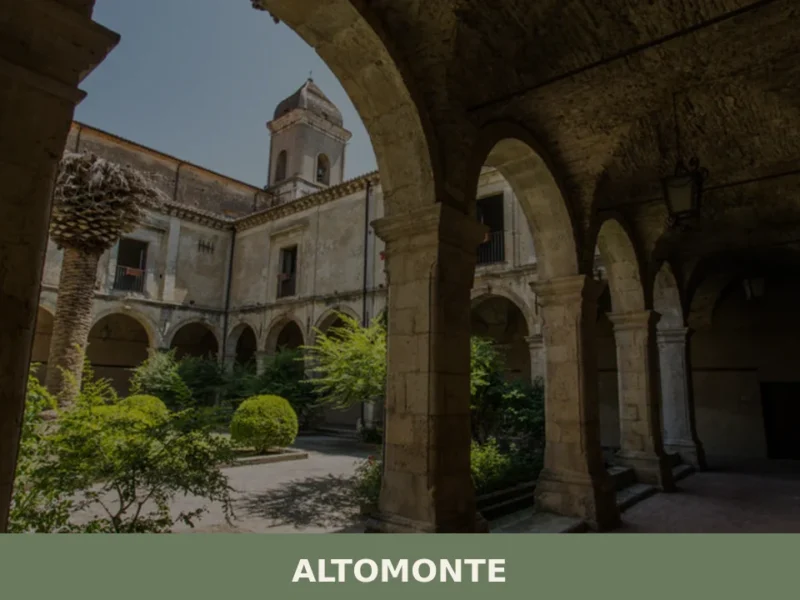
Altomonte
What to see in Altomonte: a hill village at 455m in Calabria with a 14th-century Gothic church, Civic Museum and medieval castle. Plan your visit today.
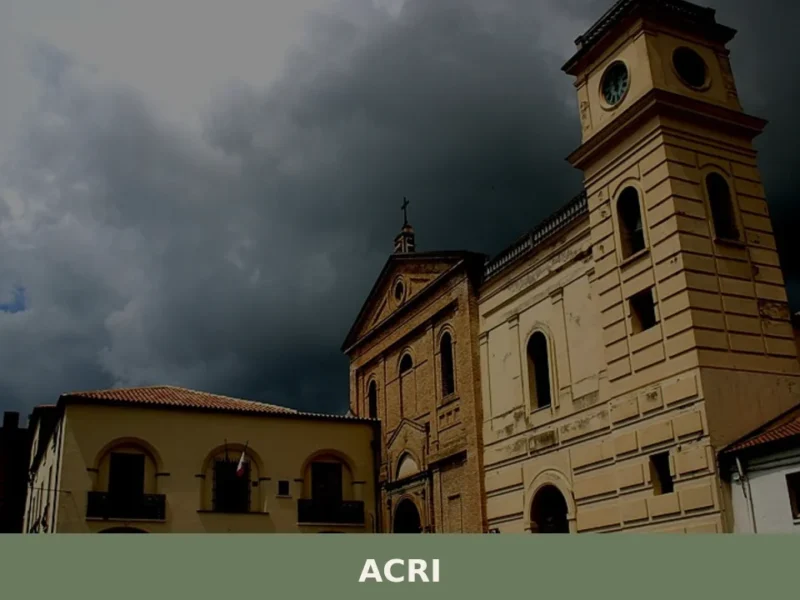
Acri
Acri is a town in the province of Cosenza with over 21,000 inhabitants, located in the Calabrian interior of the Sila Greca area, on a territory that passed through Norman, Swabian and Aragonese rule, leaving concrete traces in the local architecture and culture. For anyone approaching this corner of the province of Cosenza, the question […]
Bonifati
The village of Bonifati, located in the Cosenza hinterland but with a view towards the Tyrrhenian Sea, has historical roots deeply embedded in a past of fortifications and coastal defense. Already in the Middle Ages, this settlement stood out for its strategic position, an element that shaped its urban layout and identity. In this article […]




📝 Incorrect information or updates?
Help us keep the Buonvicino page accurate and up to date.