


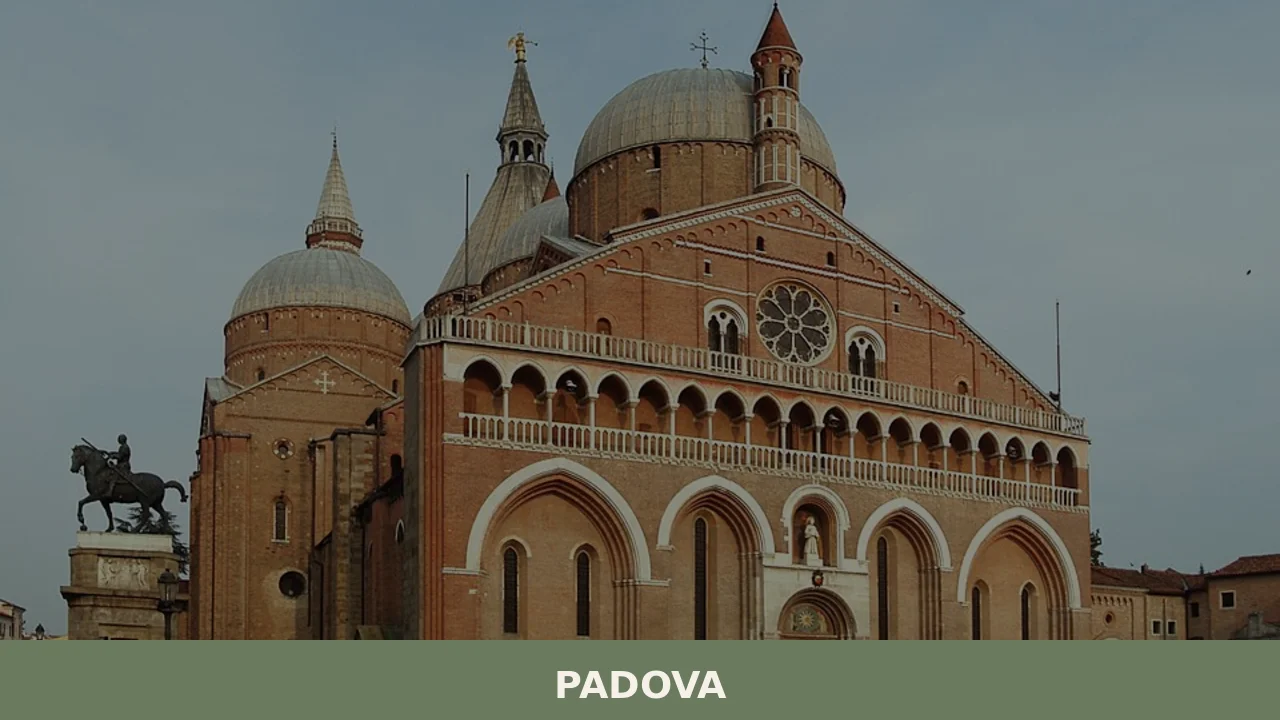
Padova
Padova, Italy: Explore 1 historic university city. Discover Giotto’s frescoes at Scrovegni Chapel & the vast Prato della Valle. Plan your trip now!
Discover Padova
With a population of 207,245 inhabitants and situated at an altitude of 12 m above sea level, Padova is located in the Venetian plain, traversed by the Bacchiglione river and an extensive network of canals.
This historic city, capital of its namesake province, boasts a significant cultural and artistic heritage, the result of centuries of evolution and important historical influences.
Those planning a visit to Veneto often ask themselves what to see in Padova, a question to which this guide aims to offer comprehensive and detailed answers, exploring its architecture, its squares, and its places of knowledge that define its identity.
Its strategic location has made it a crossroads of cultures and trades, contributing to shaping an urban fabric rich in testimonies from different eras.
History and Origins of Padova
The origins of Padova are rooted in an ancient past, with legend attributing its foundation to the Trojan Antenor, who fled after the fall of Troy.
The first stable settlements in the territory date back to the 10th-9th century BC, but it was during the Roman era that the then Patavium experienced a period of great splendor.
In 45 BC, the city obtained the status of municipium, becoming one of the most prosperous centers of Regio X Venetia et Histria, renowned for the production of high-quality wools and textiles that were exported throughout the Empire.
This phase of economic and cultural growth left a lasting imprint on the urban planning and historical memory of the place, making Padova a point of reference in northern Italy for the era.
During the Middle Ages, after the barbarian invasions, Padova experienced a period of reorganization and rebirth, establishing itself as a free commune starting from the 11th century.
This autonomy was often threatened by the expansionist aims of neighboring lordships, particularly that of Ezzelino III da Romano in the 13th century, but the city managed to defend its independence.
A crucial event in its history was the founding of the University in 1222, one of the oldest in the world, which attracted students and intellectuals from all over Europe, helping to make it a center of excellence for legal and scientific studies.
This institution has continued to profoundly influence the cultural and social development of the city, projecting it into an international dimension of knowledge.
In the 14th century, Padova came under the Lordship of the Carraresi, who governed the city with a skillful policy of patronage and urban development, enriching it with important works of art and architecture.
In 1405, the city was incorporated into the Republic of Venice, beginning a long period of Venetian domination that lasted until the fall of the Serenissima in 1797.
Under Venice, Padova maintained a prominent role as a cultural and agricultural center, benefiting from the political stability and commercial exchanges of the Republic.
Subsequently, the city was subjected to Austrian rule, then became part of the Kingdom of Italy in 1866, following the events of the Risorgimento and contributing to the movements for national unity, in a historical context that also saw the nearby Verona undergo similar political and territorial changes.
What to see in Padova: main attractions
Visiting Padova means immersing yourself in a journey through history, art, and spirituality, discovering places that have marked eras and cultures.
The city offers a variety of attractions that cater to every interest, from visitors seeking artistic masterpieces to those wishing to explore ancient centers of knowledge.
For those wondering what to see in Padova, the options are numerous and all of great value. Every corner of the historic center can reveal an interesting detail, a monument, or a square that tells fragments of this Venetian city’s glorious past, making every stroll an experience rich in discoveries.
Basilica of Saint Anthony of Padova
The Basilica of Saint Anthony, affectionately known as “Il Santo” (The Saint), is one of the most revered sanctuaries in the Catholic world and represents one of Padova’s main attractions.
Its construction began in 1232, immediately after the death of Saint Anthony, and continued for several centuries, resulting in an architectural complex that blends Romanesque, Gothic, and Byzantine elements, with its eight domes and two twin bell towers.
Inside, visitors can admire priceless works of art, including frescoes by Altichiero da Zevio in the Chapel of Saint James and sculptures by Donatello in the High Altar, which enhance its artistic richness.
The Saint’s tomb is a pilgrimage destination for millions of faithful every year.
The internal structure of the Basilica is imposing, with three naves and numerous richly decorated side chapels.
The Treasury Chapel safeguards significant relics of the Saint, while the Relics Chapel features an exhibition of objects related to his life.
The cloister, accessible from the Basilica, offers a moment of tranquility and allows visitors to admire further architectural details. A visit to this majestic basilica is not only a spiritual experience but also a journey through centuries of art and devotion that have shaped one of Padova’s most recognized symbols.
For information on opening hours and celebrations, it is advisable to consult the Basilica’s official website.
Scrovegni Chapel
The Scrovegni Chapel, a masterpiece of Italian medieval art, is world-renowned for the fresco cycle created by Giotto between 1303 and 1305.
Commissioned by Enrico Scrovegni, a wealthy Paduan banker, as a private chapel and family mausoleum, the building is entirely decorated with scenes from the lives of Joachim and Anne, the life of Mary, and the life of Christ, culminating with the Last Judgment on the counter-façade.
These frescoes represent a fundamental turning point in art history, anticipating the Renaissance with their dramatic intensity, the realism of the figures, and the innovative use of perspective, elements that define a new way of narrating through images.
To preserve the integrity of the artworks, access to the Chapel is limited and occurs through a guided tour with fixed times, which includes an acclimatization period in a room with controlled temperature and humidity.
The visit, although of limited duration, offers a unique opportunity to admire Giotto’s expressive power and the vividness of the colors, which, despite the centuries, still retain much of their original brilliance.
The Scrovegni Chapel has been recognized as a UNESCO World Heritage site, testifying to its exceptional universal value.
It is highly recommended to book your visit well in advance through the official website of the Civic Museums of Padova.
Prato della Valle
Prato della Valle is one of Europe’s largest squares and a symbol of Padova, with its characteristic elliptical shape.
This vast green area is surrounded by a navigable canal, the Isola Memmia (Memmia Island), adorned with a double ring of 78 statues depicting illustrious figures linked to the city’s history, including scientists, artists, and commanders.
Its current configuration dates back to the late 18th century, when architect Domenico Cerato designed its redevelopment, transforming a marshy area into an elegant public space. The Prato is a meeting and leisure point for residents and visitors, who use it for walks, sports, and relaxation.
Throughout the year, Prato della Valle hosts numerous events, markets, and manifestations, including the traditional weekly Saturday market, one of the largest in Italy, and seasonal fairs.
At the center of Isola Memmia, there is a monumental fountain and ample green spaces where people gather. The square is an excellent example of 18th-century landscape and urban architecture, combining functionality and aesthetic beauty, offering a unique perspective on city life.
Walking along the perimeter of the square, admiring the statues, is a pleasant way to discover important historical figures and better understand Padova’s cultural heritage.
Palazzo della Ragione
The Palazzo della Ragi one, built starting from 1218 and expanded in 1306 with the addition of its characteristic inverted ship’s keel roof, is one of Padova’s most imposing civic buildings.
For many centuries, it served as the seat of the courts and the center of the city’s economic and public life, housing within it the grand Salone, a vast hall 81 meters long and 27 meters wide, with a height of 27 meters.
This hall, also known as the Salone dei Giganti (Hall of Giants) due to the presence of large frescoed figures, is covered by a wooden roof without intermediate columns, a remarkable engineering feat for its time.
The current frescoes, created in the 15th century by artists such as Niccolò Miretto and Stefano da Ferrara, replace Giotto’s original ones, which were lost in a fire in 1420.
The pictorial cycle of the Salone is a work of great iconographic complexity, representing zodiac signs, planets, seasons, and related human activities, following an astrological and philosophical program. On the ground floor of the palace is the Sotto Salone (Under Hall), which hosts a lively historic market with shops selling typical food products, active since the Middle Ages.
A visit to the Palazzo della Ragione allows one to appreciate not only its architectural grandeur but also its historical function as the beating heart of Paduan justice and commerce.
The external stairs, known as the “scale del Bò” (Bò stairs), lead to the noble floor and offer a view of the Piazza delle Erbe below.
Padua Botanical Garden
The Padua Botanical Garden, founded in 1545 by the University of Padua, is the world’s oldest university botanical garden still in its original location and one of the city’s UNESCO sites.
It was established with the aim of facilitating the study of medicinal plants, which were then fundamental for preparing medicines, and has been a pioneer in botanical research and education.
Its original structure, a circle inscribed within a square, represents an organizational model that influenced the design of other botanical gardens in Europe, demonstrating innovation in the classification and cultivation of plant species. Its collection includes thousands of species, many of which are rare and ancient.
Over the centuries, the Botanical Garden has continued to expand and enrich its collections, including plants from every continent.
In addition to the historic section, the Garden of Biodiversity was inaugurated in 2014, a modern greenhouse that recreates the Earth’s climatic environments, hosting a vast range of plant species that illustrate the evolution and adaptation of plants to different ecosystems.
A visit offers an opportunity to deepen one’s knowledge of the plant world, from historic medicinal species to the most recent acquisitions, in a context of great scientific and educational value.
The Botanical Garden is a place of active research and biodiversity conservation, as well as an attraction of great interest for nature and science lovers.
Typical cuisine and products of Padova
Paduan cuisine is part of the rich Venetian gastronomic tradition, characterized by robust flavors and a strong connection with the products of the land and inland waters, typical of a plain territory.
Historical influences, particularly those of Venetian domination, have enriched the culinary repertoire with spices and techniques that have integrated with local preparations.
The basis of the Paduan diet includes cereals such as rice and corn, legumes, and a variety of meats, with particular attention to poultry and pork products, which reflect the availability of raw materials in the area. This culinary tradition is the result of centuries of adaptation and innovation, while maintaining a strong link with the oldest recipes.
Among the most representative dishes of Paduan cuisine, risotto with chicken livers stands out, a preparation that uses Vialone Nano rice, typical of Veneto, and chicken livers, often deglazed with white wine.
Another classic is pasta e fagioli (pasta and beans), a humble but substantial dish, prepared with borlotti beans and fresh egg pasta or maltagliati, which is traditionally enriched with pancetta or pork rind for a more intense flavor.
One cannot fail to mention bollito misto alla padovana, an assortment of boiled meats (beef, hen, tongue) accompanied by sauces such as salsa verde (green sauce) or horseradish, often served during winter festivities.
Goose, also present in ancient Venetian tradition, is cooked in various ways, such as oca in onto, preserved in its own fat.
Despite the lack of specific DOP or IGP certified products for the Padova area in the provided database, the province is nonetheless rich in regionally recognized agri-food excellences.
The Euganean Hills, near the city, are known for producing quality wines, including Serprino and Fior d’Arancio, which perfectly complement local dishes.
Artisan cured meats, such as sopressa and salame, are widespread and appreciated for their traditional processing, which often includes the use of garlic and pepper, and can also be found in neighboring villages like Roveredo di Guà, where pork butchery maintains a strong identity.
Fresh and aged cheeses, from the mountain pastures and farms of the region, are also an integral part of Paduan gastronomy.
As for desserts, pazientina is a traditional layered cake, composed of shortcrust pastry, sponge cake, pastry cream, and chocolate, often prepared for special occasions.
The fugassa padovana, similar to a sweet focaccia flavored with citrus, is another example of local pastry, often consumed during festivities.
To purchase these products and savor the true cuisine of Padova, it is recommended to visit the Sotto Salone market, open daily on the ground floor of the Palazzo della Ragione, or the numerous restaurants and trattorias in the historic center that offer traditional menus.
The city also offers weekly farmers’ markets where fresh produce can be found directly from local producers.
Festivals, events, and traditions of Padova
Padova’s cultural and social life is marked by a rich calendar of festivals and events, many of which are linked to centuries-old traditions and deep popular devotion.
The most important festival is dedicated to Saint Anthony of Padova, the city’s patron saint, celebrated annually on June 13th. The celebrations include a solemn religious procession with the statue of the Saint and his relics, attracting thousands of pilgrims and faithful from all over the world.
The streets of the historic center come alive with stalls, musical events, and cultural manifestations that accompany the religious functions, creating an atmosphere of celebration and sharing that involves the entire community.
In addition to the patron saint’s festival, Padova hosts numerous other events that reflect its vibrant identity.
Prato della Valle, as mentioned, is home to a large weekly market on Saturdays, but also seasonal fairs and markets, such as the Saint Anthony Fair in June and the Saint Lucia Fair in December, offering artisanal and gastronomic products.
The University of Padova, with its long history, contributes with a calendar of cultural events, conferences, and exhibitions that enliven the city throughout the academic year.
Traditions linked to the university world, such as graduation celebrations, are an integral part of Padova’s social fabric and add a touch of liveliness to the historic center.
Food and wine events and musical reviews further enrich the offerings for residents and visitors, providing opportunities to discover local peculiarities.
When to visit Padua and how to get there
The best time to visit Padua depends on the traveler’s personal preferences, but generally spring (April-May) and autumn (September-October) offer mild temperatures and pleasant weather, ideal for exploring the city on foot and enjoying its squares and gardens.
During these months, tourist crowds are less intense compared to the peak summer season, allowing for a more relaxed visit to major points of interest such as the Scrovegni Chapel and the Basilica of Saint Anthony. Summer can be hot and humid, but the city still offers a wide program of outdoor events.
Winter, though colder, offers a charming atmosphere, especially during the Christmas period with its markets.
For those arriving by car, Padua is easily accessible via the A4 Milan-Venice motorway, with dedicated exits such as “Padova Est” and “Padova Ovest”, and the A13 Bologna-Padua motorway.
The city has several car parks, some of which are located near the historic center or well connected by public transport.
Padua train station is an important hub in the national network, with numerous high-speed and regional connections linking it to cities such as Venice, Milan, Bologna, and Rome, making it accessible from all over Italy.
Those traveling by train can check schedules and purchase tickets on the Trenitalia website to plan their journey.
The nearest airport is Venice Marco Polo Airport (VCE), located about 40 km from Padua, well connected to the city by bus and shuttle train services.
Treviso-Sant’Angelo Airport (TSF) is also a valid option, about 60 km away, also with direct bus connections to Padua.
For those seeking a complete experience in Veneto, Padua can be an excellent stop before continuing to other points of interest such as Concamarise or San Mauro di Saline, both in the same region, which offer different glimpses of the Venetian countryside.
It is always advisable to check public transport schedules and traffic conditions before departure.
| Starting Point | Distance | Estimated Time |
|---|---|---|
| Venice | 40 km | 40-50 min (car/train) |
| Verona | 85 km | 1 hour (car/train) |
| Bologna | 120 km | 1 hour 15 min (car/train) |
Where to stay in Padua
Padua offers a wide range of accommodation solutions suitable for every type of traveler and budget, from tourists looking for comfortable lodging in the historic center to students or professionals on business trips.
In the heart of the city, there are numerous hotels, from luxury ones with full services to more intimate boutique hotels, often housed in historic buildings that retain the charm of past eras.
Many of these are located within walking distance of major attractions, such as the Basilica of Saint Anthony or Prato della Valle, facilitating pedestrian movement and immersion in city life.
Choosing a central accommodation allows you to fully experience the atmosphere of Padua, with easy access to restaurants, cafes, and shops.
For those who prefer more economical solutions or a more authentic experience, Padua also offers a good selection of bed & breakfasts and guesthouses, often privately run, which provide a family atmosphere and the opportunity to interact with locals.
Apartments and holiday homes are also available, ideal for families or groups who desire more autonomy and space.
In the immediate vicinity of the center or in more peripheral areas, you can find accommodations with private parking, an advantage for those arriving by car. It is advisable to book accommodation in advance, especially during peak season or in conjunction with important events, to secure the best choice and most advantageous prices.
Photo Gallery of Padova
Do you have photos of Padova?
Share your photos of the village: the best ones will be added to the official gallery, with your credit.
Send your photosIn Veneto More villages to discover
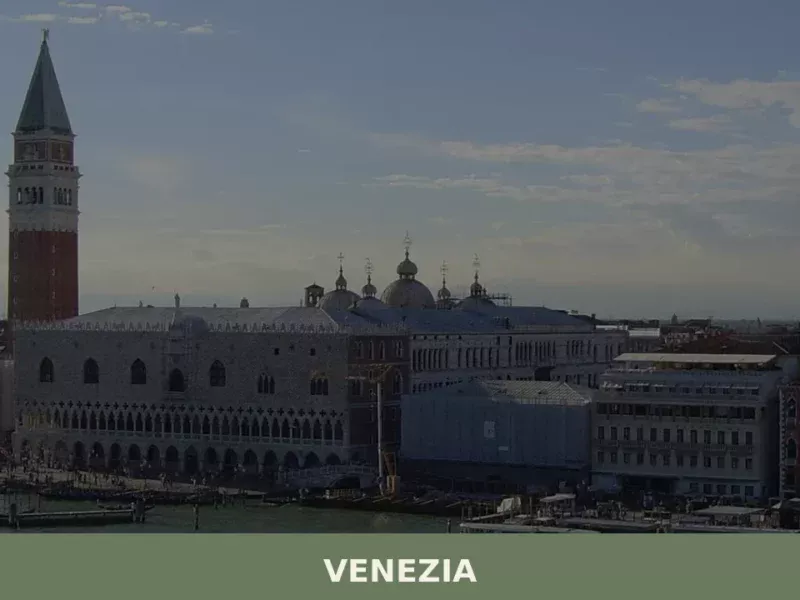
Venezia
With its 259,263 inhabitants, Venice stands out as one of the most significant centers in Veneto, presenting an altitude of 256 meters above sea level. This city, included in the Hill Villages category according to the classification provided, offers an invaluable historical, artistic, and cultural heritage. In this article History and Origins of Venice What […]
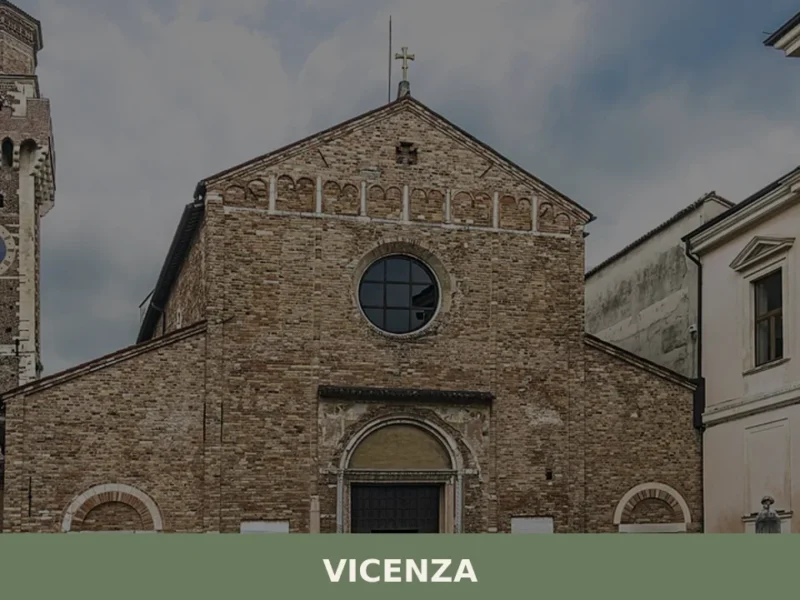
Vicenza
Village of Vicenza: Explore 1 architectural masterpiece, the Olympic Theatre, and taste traditional baccalà. Plan your Italy trip now!
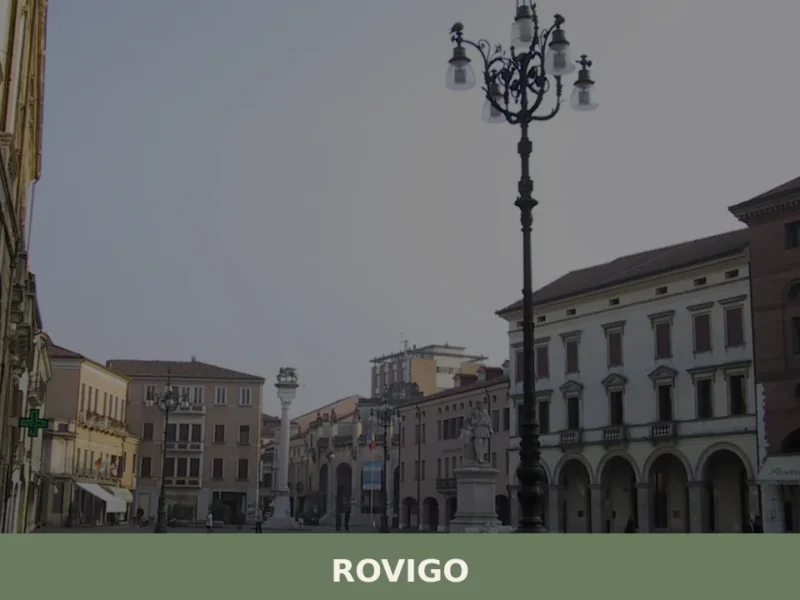
Rovigo
what to see in rovigo? Discover 5 top attractions in this city of 50,000 residents, from Rovigo Castle to La Rotonda. Explore the Polesine region.



📝 Incorrect information or updates?
Help us keep the Padova page accurate and up to date.