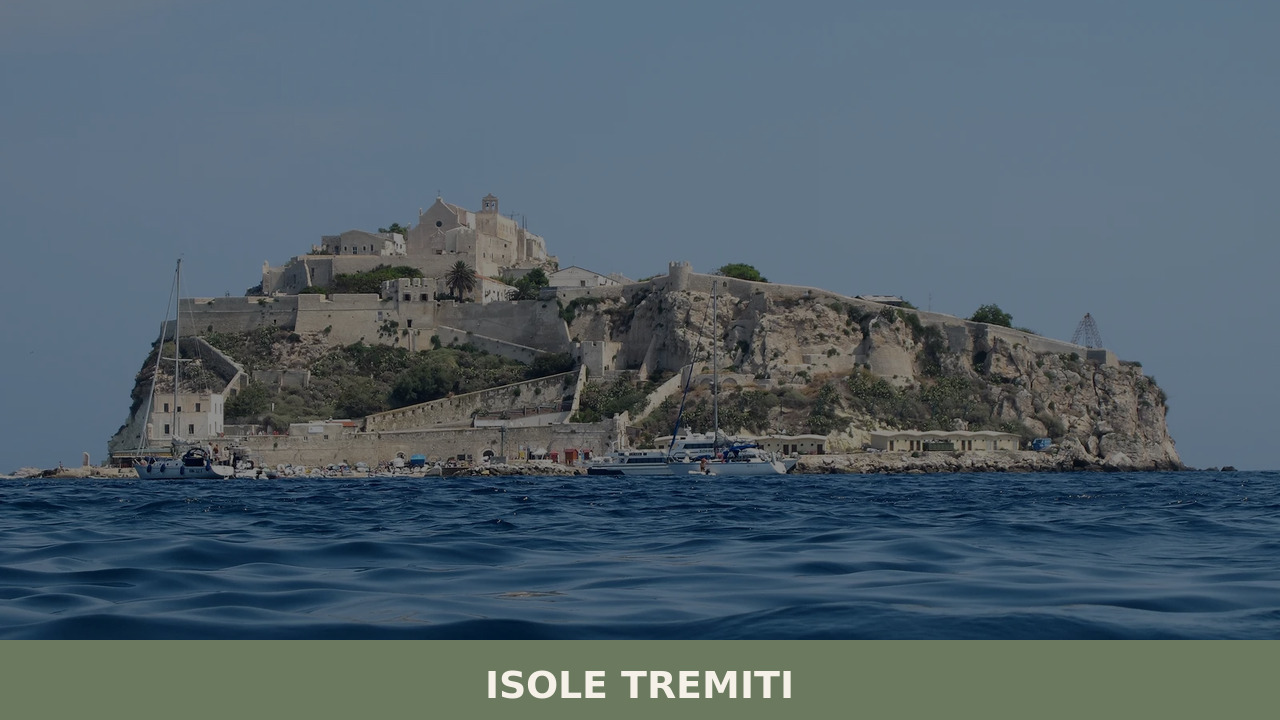
A 481-resident archipelago off Puglia’s Gargano coast, the Tremiti Islands compress monastic history, Adriatic wildlife, and sea caves into three inhabited islands.
Salt crusts the iron railings of the harbour on San Domino before the first ferry of the morning has even docked. Fishermen coil ropes in silence, their movements unhurried, practiced over decades on these three inhabited islands rising from the Adriatic twenty-two kilometres off the Gargano coast. With just 481 residents spread across a commune that sits roughly 70 metres above sea level, this archipelago in the province of Foggia compresses centuries of exile, monastic devotion, and marine wilderness into a territory you can walk end to end in an afternoon. Understanding what to see in Isole Tremiti begins here, at the waterline, where the limestone meets the current.
The name itself carries the tremor of the sea — “Tremiti” likely derives from the Latin Trimerus or the Greek Diomedes, the mythological hero whom ancient sources claimed was buried on these islands. Diomedes’ association is not mere legend: the Roman author Pliny the Elder recorded the story, and the rare Scopoli’s shearwater — a seabird that nests here in large colonies — was said by classical writers to be the transformed companions of Diomedes, their nocturnal cries mistaken for the wailing of grieving soldiers. Greek and Roman navigators knew the islands well, and archaeological evidence confirms human presence dating to at least the first century BCE.
The archipelago’s defining chapter began in the early Middle Ages, when Benedictine monks established a monastery on San Nicola, the smallest and most fortified of the inhabited islands. The Abbey of Santa Maria a Mare, constructed between the ninth and eleventh centuries, became one of the wealthiest religious houses on the Adriatic, controlling trade routes and accumulating land holdings on the mainland. Cistercian monks later replaced the Benedictines, followed by the Lateran Canons in the fifteenth century. Each order left architectural layers on the abbey complex — Romanesque arches beneath Gothic vaulting, Renaissance frescoes painted over earlier decoration.
The islands also served, repeatedly, as a place of confinement. The Roman emperor Augustus exiled his granddaughter Julia the Younger here in 8 CE, and the tradition of banishment persisted across the centuries. During the Fascist era, the regime deported Libyan political prisoners to the Tremiti in the 1910s and later confined anti-Fascist dissidents. This dual identity — sanctuary and prison, monastic retreat and penal colony — is carved into the stone walls and watchtowers that still define the skyline of San Nicola.
Crowning the fortified island of San Nicola, this abbey complex is the archipelago’s historical nucleus. Its mosaic floor, dating to the eleventh century, depicts animals and geometric patterns in polychrome tesserae. The painted wooden crucifix inside, attributed to the thirteenth century, and a Black Madonna icon remain objects of local veneration. The fortified walls surrounding the abbey were reinforced under Angevin and Aragonese rule, giving the island the silhouette of a citadel rising directly from the sea.
The only sand beach in the entire archipelago occupies a narrow inlet on San Domino’s eastern shore. The sand is coarse, mixed with shell fragments, and the water turns a distinctive pale green where the seabed shallows over limestone. Aleppo pines lean over the cove from the hillside above. During summer months, space is limited — arriving before mid-morning is essential to find an unoccupied stretch.
Named after the Mediterranean monk seal — the “sea ox” — that once sheltered inside, this sea cave on San Domino’s southern coast can be entered by small boat when conditions are calm. The cave extends roughly seventy metres into the cliff face, and sunlight refracting through the water projects shifting blue and green patterns across the rock ceiling. Boat tours departing from San Domino’s harbour typically include this cave among several grottoes circling the island.
San Domino is the largest island and the only one with significant tree cover. A dense forest of Aleppo pine, mixed with Mediterranean maquis — rosemary, lentisk, juniper — blankets the island’s interior. Footpaths cut through this forest connect lookout points along the coast. The scent of pine resin in the summer heat is heavy and immediate, and the shade provides a counterpoint to the exposed rock of neighbouring San Nicola.
Beyond the abbey itself, the entire island of San Nicola functions as a walled compound. Defensive towers, a cloister, and a series of narrow passages built across successive centuries create a layered architecture that rewards slow, careful walking. The view from the eastern ramparts takes in Capraia — the uninhabited third island — and on clear days the long profile of the Gargano promontory. Interpretive panels along the route explain the construction phases from the ninth to the eighteenth century.
The cuisine here is dictated by geography: the Adriatic provides, and the land offers little. Fresh fish dominates every menu — grilled dentex, seared swordfish, and zuppa di pesce made from whatever the morning catch yields. Seafood pasta is prepared simply, often with cherry tomatoes, garlic, and local olive oil brought over from the Gargano mainland. Capers grow wild on the rocky slopes of San Nicola and appear in salads, on bruschetta, and as a condiment alongside cured fish. The few restaurants on San Domino and San Nicola tend to be family-run, with menus that shift according to the season and the sea.
Because the islands lack agricultural flatland, most produce — bread, vegetables, cheeses, cured meats — arrives by ferry from the province of Foggia. The broader Puglia region contributes celebrated products: burrata from Andria, orecchiette pasta, and the DOP olive oils of Dauno. Local honey, harvested from hives set among the pine forest of San Domino, is one of the few products genuinely native to the archipelago. Dining here is an exercise in simplicity, where the quality of a single grilled fish, a plate of raw sea urchin, and a glass of Apulian white wine constitutes a complete meal.
The archipelago operates on two distinct rhythms. From June through September, ferries run frequently, the few hotels and guesthouses fill to capacity, and the islands absorb day-trippers from Vieste, Termoli, and other coastal towns. August is the most crowded month — the beaches shrink under the weight of visitors, and boat tours must be booked in advance. Water temperature peaks around 25°C in August, and the diving conditions are excellent, with visibility often exceeding twenty metres.
May, early June, and September offer a more measured experience. The sea is warm enough for swimming by late May, the pine forests are fragrant, and accommodation is easier to secure. The Feast of the Assumption on August 15th is the most significant local celebration, with a maritime procession honouring the Madonna. Winter brings rough seas, reduced ferry schedules, and a near-total quiet; most tourist services close between November and March, and the permanent population retreats into its small, self-contained routines. For those interested in the historical and architectural dimension of the islands rather than beach life, the shoulder months deliver a clearer, less interrupted encounter with the place.
The Tremiti Islands are accessible only by sea or helicopter. The most common ferry departure points are Termoli in Molise (approximately one hour by fast hydrofoil), Vieste on the Gargano coast (roughly ninety minutes), and Rodi Garganico (similar duration). During summer, additional services operate from Peschici, Capoiale, and occasionally Ortona. Helicopter connections run from Foggia’s Gino Lisa Airport, offering a fifteen-minute flight — practical but expensive, and subject to weather cancellations.
For those arriving by car, the nearest mainland port of Termoli lies along the A14 Adriatic motorway. Vieste, farther south on the Gargano peninsula, is reachable via the SS89. The closest major airport is Bari Karol Wojtyła Airport, approximately 200 kilometres from Termoli and well connected to European destinations. Foggia’s smaller airport handles limited traffic. Train travellers can reach Termoli directly via the Adriatic rail line from Bologna, Ancona, Bari, or Lecce. Vehicles cannot be brought onto the islands — San Domino and San Nicola are navigated entirely on foot, with small electric shuttles and golf carts serving as the only motorised transport.
The province of Foggia extends far inland from the Tremiti coast, climbing into the Subappennino Dauno — a chain of hills where small, often overlooked villages preserve traditions that the coast has long since abandoned. Carlantino sits quietly above the Fortore river valley, a settlement of a few hundred residents surrounded by forests of oak and chestnut. Its annual truffle festival draws visitors from across the region, and the landscape — green, hilly, deeply rural — is a world apart from the salt-bleached rock of the Tremiti archipelago.
Further along the Dauno hills, Alberona occupies a ridge at over 700 metres, where stone houses cluster around a medieval core linked to the Knights Templar. Cool mountain air, dense woodland, and a pace of life governed by agricultural seasons make Alberona a useful counterpoint to any coastal itinerary. Together, these inland villages reveal the range of Puglia’s territory — from the open Adriatic to the forested ridgelines of its western border — and argue for a slower, more deliberate way of moving through the region.
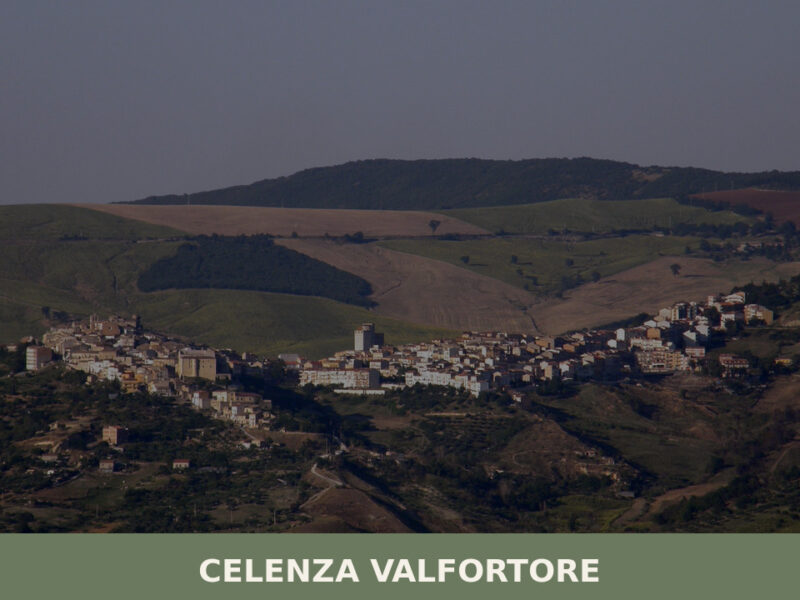
A hill village of 1,363 people above the Fortore valley in Puglia's Daunia highlands. Castle, churches, stone lanes, and a working landscape far from the tourist coast.
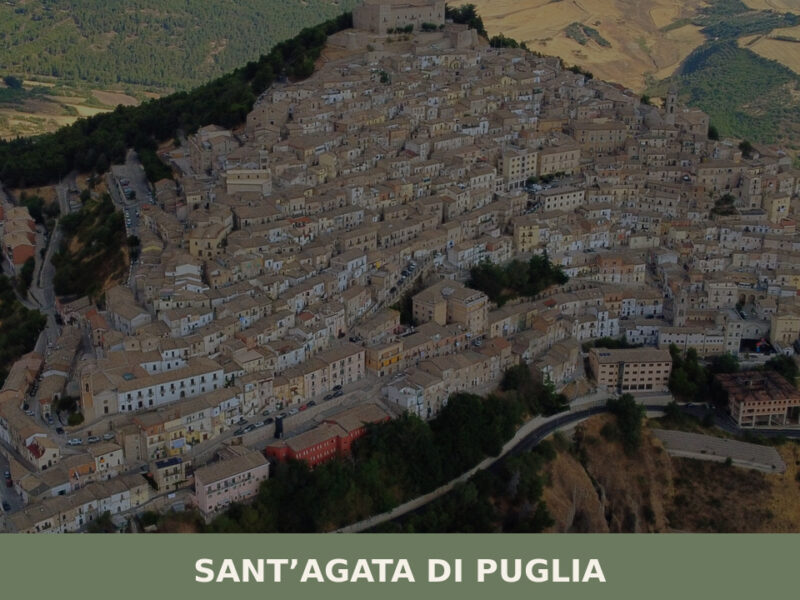
A ridge-top village at 794 metres in the Daunia hills, Sant'Agata di Puglia rewards slow exploration with its Norman castle, stepped stone alleyways, and mountain cooking.
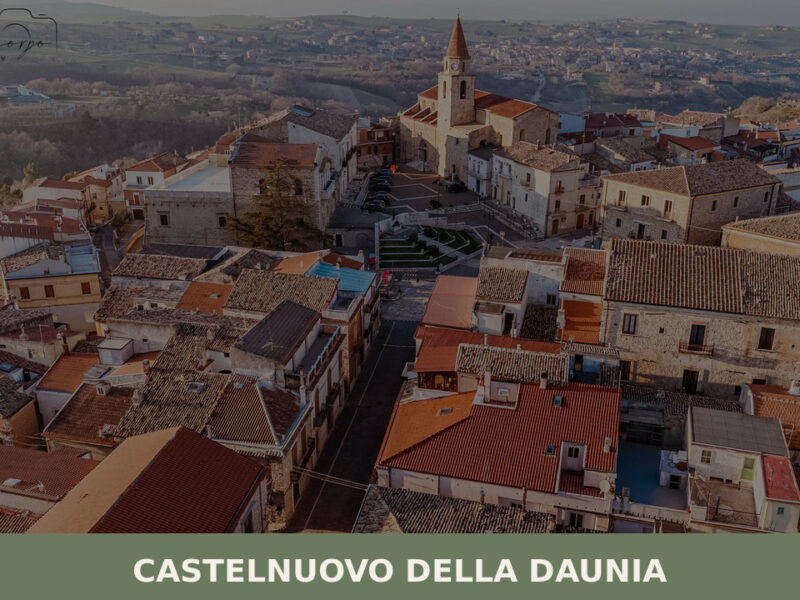
A compact hill village at 543 metres in Puglia's Subappennino Dauno, Castelnuovo della Daunia offers medieval lanes, panoramic views over the Tavoliere, and the quiet rhythms of inland southern Italy.
📝 Incorrect information or updates?
Help us keep the Isole Tremiti page accurate and up to date.