A quiet agricultural town on Puglia’s Tavoliere plain, Stornara rewards visitors with honest rural architecture, sweeping wheat-field panoramas, and a food tradition rooted in durum wheat.
Morning light falls flat and wide across the Tavoliere plain, and the first sound you register in Stornara is the hum of tractors pulling out toward wheat fields that stretch to the horizon. This small agricultural town — 5,772 inhabitants, 107 metres above sea level, in the province of Foggia — rarely appears on itineraries, which is precisely what makes it worth the stop. If you are wondering what to see in Stornara, the answer begins not with grand monuments but with the honest texture of a working community shaped by grain, faith, and centuries of southern Italian resilience.
The name Stornara is believed to derive from the Latin Sturnus, referring to the starlings that still darken the sky above the Tavoliere in autumn migration. Some scholars connect it instead to Esturnal, a settlement documented along the ancient Roman road, the Via Traiana, which linked Benevento to Brindisi and cut through this part of the Puglian plain. Whether the birds or the road came first in the naming, both remain defining features of the landscape today.
Stornara’s recorded history gains traction in the medieval period. Under Norman rule in the eleventh and twelfth centuries, the settlement served as a modest agricultural casale within the broader feudal system that reorganised southern Italy. Frederick II of Swabia, who transformed much of Puglia into a personal domain of castles and hunting estates, exercised control over the Tavoliere’s grain economy — an economy on which Stornara’s livelihood directly depended. The town passed through a succession of feudal lords over the following centuries, including the Caracciolo and Carafa families, who held influence over many communities in the Capitanata region.
By the eighteenth century, Stornara had solidified its identity as a centre for cereal production. The Bourbon-era land reforms and, later, the post-unification redistribution of the latifundia reshaped daily life here profoundly. The town’s layout — compact, radiating from a central church square — still reflects its function as a nucleus for agricultural workers who fanned out each day into the surrounding fields.
The parish church anchors the town’s main piazza and dates in its current form to renovations carried out in the eighteenth century. Its facade is restrained — pale stone, a modest bell tower — but inside, the nave holds devotional statues and altarpieces that chart the town’s religious life across several centuries. The feast dedicated to its patron, the Madonna della Stella, remains the most important date on Stornara’s calendar.
The central square functions as Stornara’s living room. Low-rise buildings in local tufa and plaster line narrow streets that branch off in a compact grid. There is no grand palazzo here, but the proportions are human-scaled and the details — iron balconies, arched doorways, stone lintels — record the vernacular architecture of the Tavoliere’s farming towns. Walk slowly; the texture is in the repetition.
At 107 metres above sea level, Stornara sits just high enough to offer an uninterrupted sightline across the Tavoliere delle Puglie, the largest plain in southern Italy after the Campanian lowlands. In late spring the wheat turns gold, and the geometry of the fields — enormous, flat, stitched by irrigation channels — becomes almost abstract. This is working landscape, not curated scenery, and it commands attention precisely for that reason.
Scattered along the roads leading out of town are small rural chapels and edicole votive — roadside niches housing painted or ceramic images of the Virgin or local saints. These are functional devotional objects, maintained by nearby families, and they trace the old routes between Stornara and neighbouring masserie. They speak to a faith embedded in agriculture and in the act of leaving home each morning for the fields.
The masseria — the fortified farmhouse typical of Puglia — dots the countryside around Stornara. While many remain private working farms, several have been partially restored and are visible from the provincial roads. Their thick-walled courtyards, grain storage towers, and sheep pens document the latifundist economy that shaped this territory from the medieval period through to the twentieth century.
Stornara’s cuisine is rooted in the grain economy that sustains the town. Durum wheat, the foundation of Puglia’s bread and pasta traditions, grows in the fields immediately outside the built-up area. Handmade orecchiette, cavatelli, and strascinati appear on family tables dressed with simple sauces — slow-cooked tomato ragù, turnip tops sautéed with garlic, or a sharp pecorino from the Capitanata’s sheep farms. Bread here is baked in large loaves with a dark, thick crust, a direct descendant of the pane di Altamura tradition adapted to local flour blends. Olive oil, while less dominant than in the Bari or Lecce provinces, still contributes to the kitchen’s base flavour.
Local eating tends toward home cooking rather than formal restaurants. Small trattorie and agriturismi in the surrounding countryside offer fixed menus that change with the season: lampascioni (wild hyacinth bulbs) in winter, fresh fava bean purée with chicory in spring, roasted peppers and aubergines through the summer. The province of Foggia produces several wines under the Daunia IGT designation, and a glass of the local Nero di Troia pairs well with the heavier meat dishes typical of cooler months.
The Tavoliere plain experiences hot, dry summers and mild, occasionally rainy winters. July and August push temperatures above 35°C with little shade to speak of in the open landscape. The most rewarding months to visit are May, June, and September — warm enough for long outdoor walks, cool enough to enjoy them. Late May and early June catch the wheat fields at their most photogenic, a sea of gold under hard blue sky. The town’s patron saint festival, celebrating the Madonna della Stella, brings processions, music, and communal meals to the streets, transforming Stornara’s quiet piazza into something animated and generous.
Autumn, particularly October, has its own appeal: starling murmurations over the plain, the olive harvest beginning in neighbouring zones, and a quality of light that softens the flat landscape into something almost painterly. Winter visitors will find the town quiet but not inhospitable — the bakeries still operate, the bars still serve espresso at the counter, and the rhythms of rural life continue regardless of the tourist calendar.
Stornara lies along the SS655, a secondary state road that connects the main centres of the Tavoliere. The nearest motorway access is the A16 (Napoli–Canosa), with the Cerignola Est exit approximately 20 kilometres to the southeast. From Foggia, the provincial capital, the drive takes around 30 minutes heading south. Bari is roughly 120 kilometres to the southeast, approximately 90 minutes by car via the A14 motorway.
The town is served by a small railway station on the Foggia–Barletta line operated by Trenitalia, though services are infrequent and a car remains the most practical option. The nearest airports are Bari Karol Wojtyła (BRI), about 130 kilometres away, and Foggia “Gino Lisa” (FOG), which handles limited domestic traffic. From Bari airport, car rental agencies offer straightforward access to the Tavoliere via the A14 and connecting roads.
Stornara occupies a central position in the Capitanata, making it a useful base for exploring several lesser-known communities across the province. To the southwest, into the Subappennino Dauno hills, the village of Candela rises at a considerably higher elevation, offering a different architectural character — stone-built, steep-streeted, oriented toward the Irpinia mountains rather than the plain. The contrast between Stornara’s flat agricultural identity and Candela’s hilltown compactness illustrates how dramatically the Puglian landscape shifts within a short drive.
For those drawn to the coast and something entirely different in character, the Isole Tremiti — a tiny archipelago off the Gargano peninsula — can be reached by ferry from the ports of Vieste, Peschici, or Termoli. The journey from Stornara to the embarkation points takes roughly two hours by car, delivering travellers from the vast, silent geometry of the wheat fields to the sharp limestone cliffs and transparent Adriatic waters of one of southern Italy’s most isolated marine environments. Both destinations reward the traveller willing to look beyond the well-marketed icons of the region.
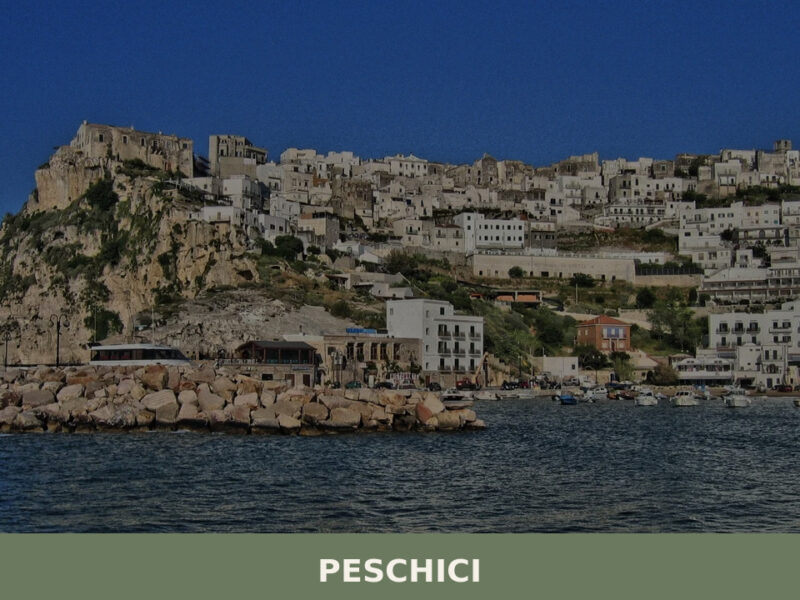
Perched on a rocky promontory above the turquoise waters of the Adriatic Sea, Peschici is one of the most enchanting coastal villages in Puglia’s Gargano peninsula. With its whitewashed houses, narrow alleyways, and dramatic clifftop setting, this small town of 4,283 inhabitants offers a captivating blend of history, natural beauty, and Mediterranean charm. If you’re […]
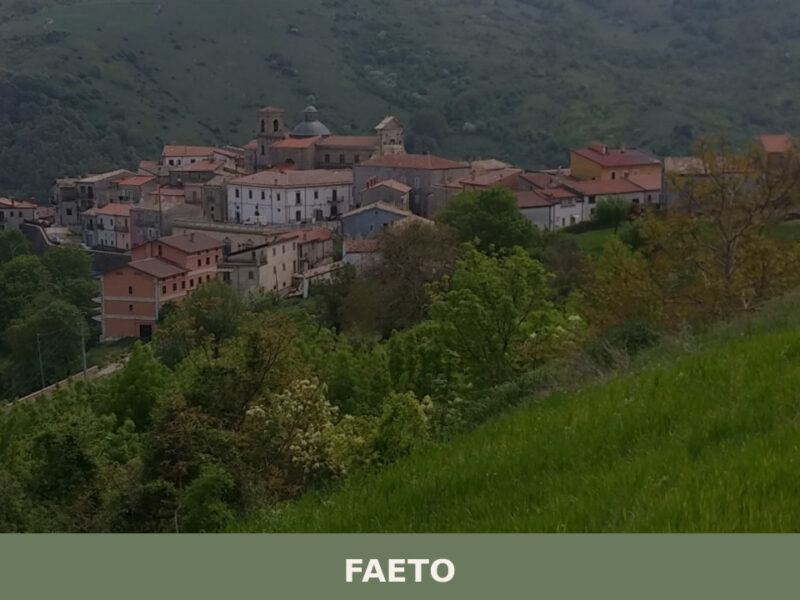
A Franco-Provençal-speaking village of 616 inhabitants high in the Daunia mountains. Discover what to see in Faeto: ancient dialect, beech forests, and Puglia's highest peak.
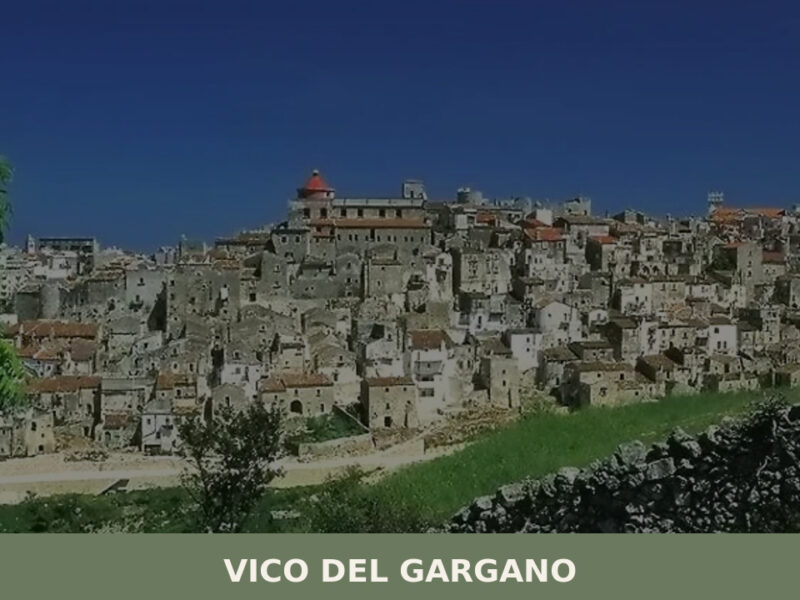
A hilltop village at 445 metres on the Gargano promontory, Vico del Gargano rewards slow exploration — medieval alleys, underground olive presses, and ancient forest at its edge.
📝 Incorrect information or updates?
Help us keep the Stornara page accurate and up to date.