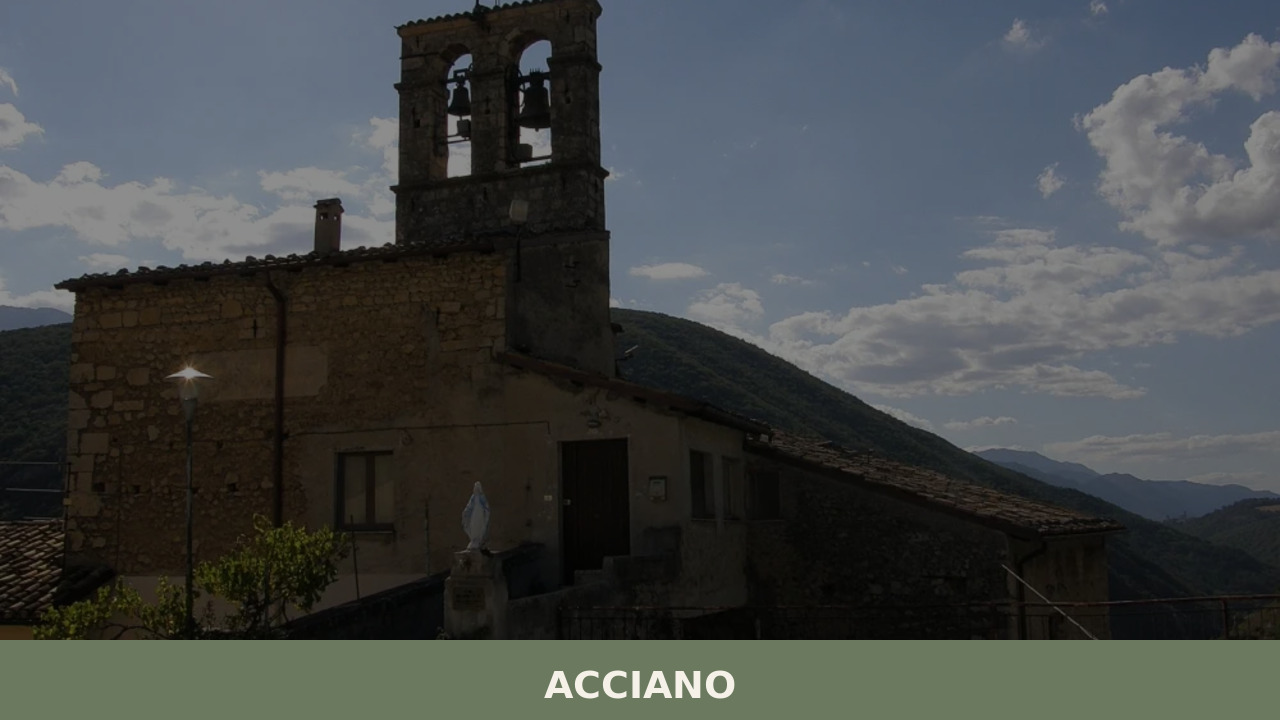
Morning light falls across stone walls the colour of dried wheat, and the only sound is water — a fountain somewhere below the main road, feeding a trough that has served this valley for centuries. Acciano sits in the Aterno Valley south of L’Aquila, a commune of just 339 inhabitants spread across a handful of […]
Morning light falls across stone walls the colour of dried wheat, and the only sound is water — a fountain somewhere below the main road, feeding a trough that has served this valley for centuries. Acciano sits in the Aterno Valley south of L’Aquila, a commune of just 339 inhabitants spread across a handful of frazioni in the mountains of central Abruzzo. Knowing what to see in Acciano requires walking slowly, listening to the architecture, and understanding that this is a place shaped more by earthquakes and shepherds than by any grand civic ambition.
The origins of the name Acciano are debated but commonly linked to a Roman personal name, possibly “Accius” or “Attianus,” suggesting the area was settled as a small agricultural estate during the Roman period. The Aterno river valley served as a natural corridor connecting the highland plateaus to the coastal lowlands, and settlements like Acciano grew along these routes as way stations and pastoral communities. By the early medieval period, the village was part of the feudal system that dominated the Abruzzese interior, passing through the hands of various Norman and Angevin lords.
Like much of the L’Aquila province, Acciano’s history is marked by seismic events. The catastrophic 2009 L’Aquila earthquake caused significant damage to the commune’s historic buildings and churches, accelerating a depopulation trend that had already reduced the settlement to a few hundred residents. Restoration work has been slow and painstaking, a familiar story across dozens of small Abruzzese comuni still rebuilding more than a decade later.
Despite its modest size, Acciano maintained a degree of ecclesiastical importance through its parish churches, which served scattered rural populations across the surrounding hills. The commune encompasses several frazioni — including Beffi, Roccapreturo, and Succiano — each with its own distinct character and architectural heritage, a reminder that in Abruzzo, a single municipality often holds a constellation of separate settlements, each with its own bell tower and patron saint.
The parish church of San Pietro anchors the main settlement. Its stone façade, plain and Romanesque in proportion, reflects the restrained ecclesiastical architecture typical of the upper Aterno valley. Interior restorations following the 2009 earthquake have revealed earlier structural layers, making it a quiet document of the commune’s centuries of devotion and rebuilding.
Beffi, one of Acciano’s frazioni, preserves a compact medieval layout of narrow lanes and arched passageways. The village clusters around a small fortified core, and several residential structures retain their original stonework. It is a place where the logic of defensive settlement — tight walls, limited access points — remains legible in every alleyway.
Roccapreturo, another frazione, takes its name from the rocky spur (“rocca”) on which it was built. The remnants of a watchtower speak to its strategic function in the medieval period, controlling sightlines across the valley. The surrounding houses, stacked up the hillside, illustrate how terrain dictated the shape of daily life in these mountain communities.
The valley floor below Acciano offers walking routes along the Aterno river, one of the longest in Abruzzo. The river cuts through limestone terrain, creating a landscape of terraced fields, abandoned mills, and riparian vegetation. In spring, the water runs high and cold from snowmelt off the surrounding peaks, and the valley becomes a corridor of wildflowers.
Situated near Beffi, this small church draws its name from its position near a crossing point over the river. Its frescoed interior, though damaged over time, retains traces of devotional painting that offer a glimpse into the artistic culture sustained by even the smallest Abruzzese communities during the late medieval and Renaissance periods.
The cuisine of Acciano is rooted in the pastoral and agricultural traditions of the Abruzzo interior. Lamb — roasted with herbs or slow-cooked as a ragù — appears on most tables, alongside legumes such as lentils and chickpeas grown on the valley terraces. Handmade pasta, particularly sagne and maccheroni alla chitarra, forms the backbone of first courses, dressed simply with tomato, pecorino, and sometimes saffron from the nearby Navelli plateau, one of the most prized saffron-producing areas in Italy. Local bread, baked in wood-fired ovens, has a thick crust and dense crumb designed for a mountain climate.
Dining options within the commune are limited, as one would expect in a settlement of 339 people. Visitors are more likely to find meals at agriturismi in the surrounding countryside, where menus follow the seasons and ingredients come from the property itself. Local cheeses — fresh and aged pecorino — and cured meats are produced in small quantities, best purchased directly from the few remaining shepherds and farmers who work the land around the frazioni.
Late spring and early autumn offer the most rewarding conditions for visiting Acciano. From May through June, the Aterno valley is green, the light is long, and wildflowers cover the hillsides. September and October bring cooler air, harvest activity, and a clarity of atmosphere that sharpens the mountain views. Summers can be warm in the valley but remain pleasant compared to coastal Abruzzo, and evenings are reliably cool at this altitude.
Village festivals, often tied to patron saints, animate the frazioni intermittently through the summer months, though dates and scale vary year to year given the small population. Winter brings cold and occasional snow, lending the stone villages a stark, photogenic quality — but services are minimal, and some roads may be difficult. Visitors should plan with self-sufficiency in mind: bring supplies, carry a full tank of fuel, and confirm any accommodation in advance.
Acciano lies approximately 30 kilometres south of L’Aquila along the SS261 road, which follows the Aterno valley. From Rome, the most direct route is via the A24/A25 motorway toward Pescara, exiting at Molina Aterno or the appropriate junction for the SS261; the total driving time from Rome is roughly 90 minutes. From Pescara, the drive takes about an hour via the A25 motorway and then south on local roads.
The nearest railway station with connections to the national network is L’Aquila; a limited regional bus service connects some of the valley settlements, but schedules are infrequent and not designed for tourism. The closest airports are Rome Fiumicino (approximately 150 km) and Pescara Abruzzo Airport (approximately 90 km). A car is effectively essential for reaching and exploring the commune and its scattered frazioni.
The upper Aterno valley links Acciano to a chain of small comuni, each holding fragments of the same geological and cultural story. To the north, closer to L’Aquila, the landscape opens toward highland plateaus where saffron fields and fortified villages create a distinct character. Further south and east, the terrain rises sharply into the Majella and Gran Sasso massifs, sheltering communities that have maintained their identity through centuries of relative isolation. The region rewards those willing to drive secondary roads and stop in places not marked on most itineraries.
Among these, the nearby village of Fontecchio in the same Aterno valley preserves a remarkable medieval fountain and a compact historic centre that complements any visit to Acciano. Further afield, Castelvecchio Calvisio offers one of the most intact examples of a fortified Abruzzese hill settlement, its elliptical plan still clearly visible from the surrounding ridges. Together, these villages form a circuit through one of the most quietly significant cultural landscapes in central Italy.
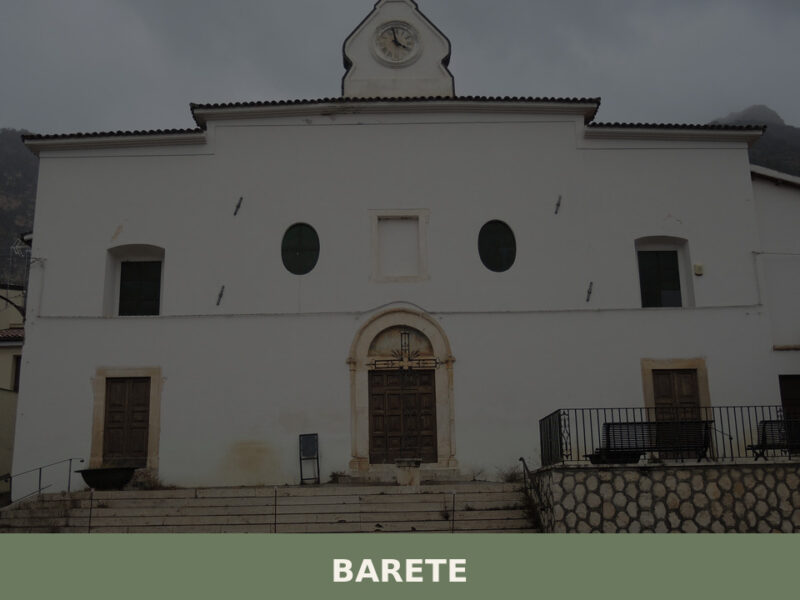
Morning light hits the limestone walls of Barete’s older houses at a low angle, turning them briefly gold before the shadow of the Gran Sasso massif reclaims the narrow lanes. A rooster calls from somewhere behind a garden wall. The air smells of woodsmoke and cold stone. This is a settlement of roughly 695 inhabitants, […]
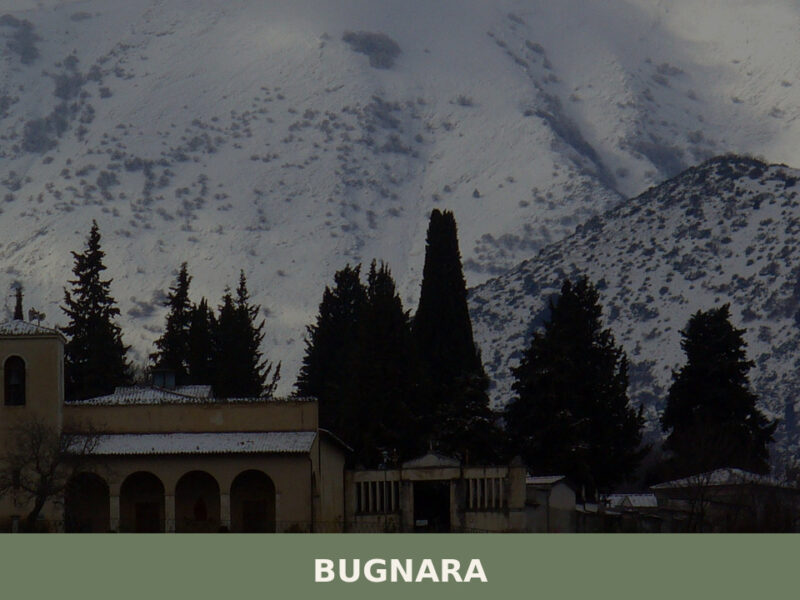
Morning light falls across the Sagittario valley in long, amber strokes, catching the limestone walls of a settlement that has watched over this corridor of central Abruzzo for the better part of a millennium. Bells from a church tower mark the hour, their sound flattening against the surrounding slopes before fading. The streets are narrow, […]
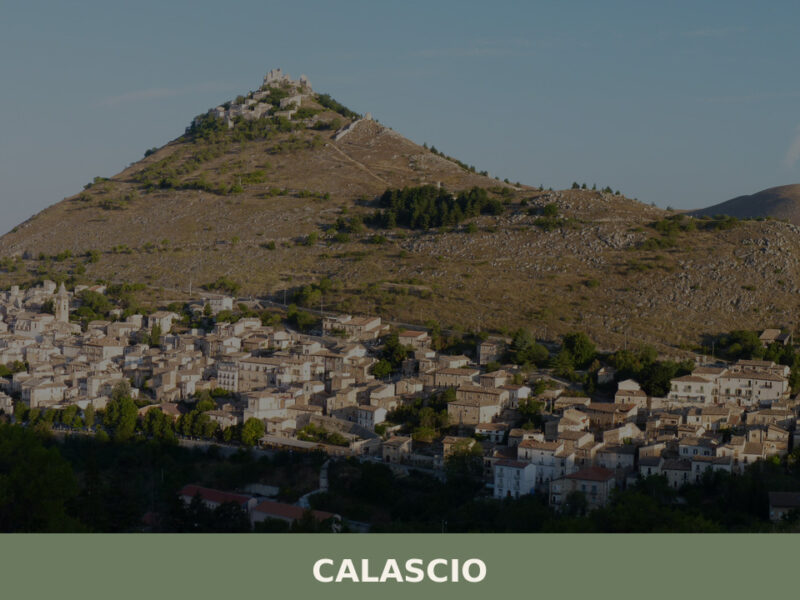
Morning light catches the limestone walls of Rocca Calascio before it reaches the village below, turning the fortress a pale gold against the dark mass of the Gran Sasso. At 1,210 metres above sea level, the air is thin and sharp, carrying the sound of wind through empty doorways. Only 127 people live here year-round, […]
📝 Incorrect information or updates?
Help us keep the Acciano page accurate and up to date.