


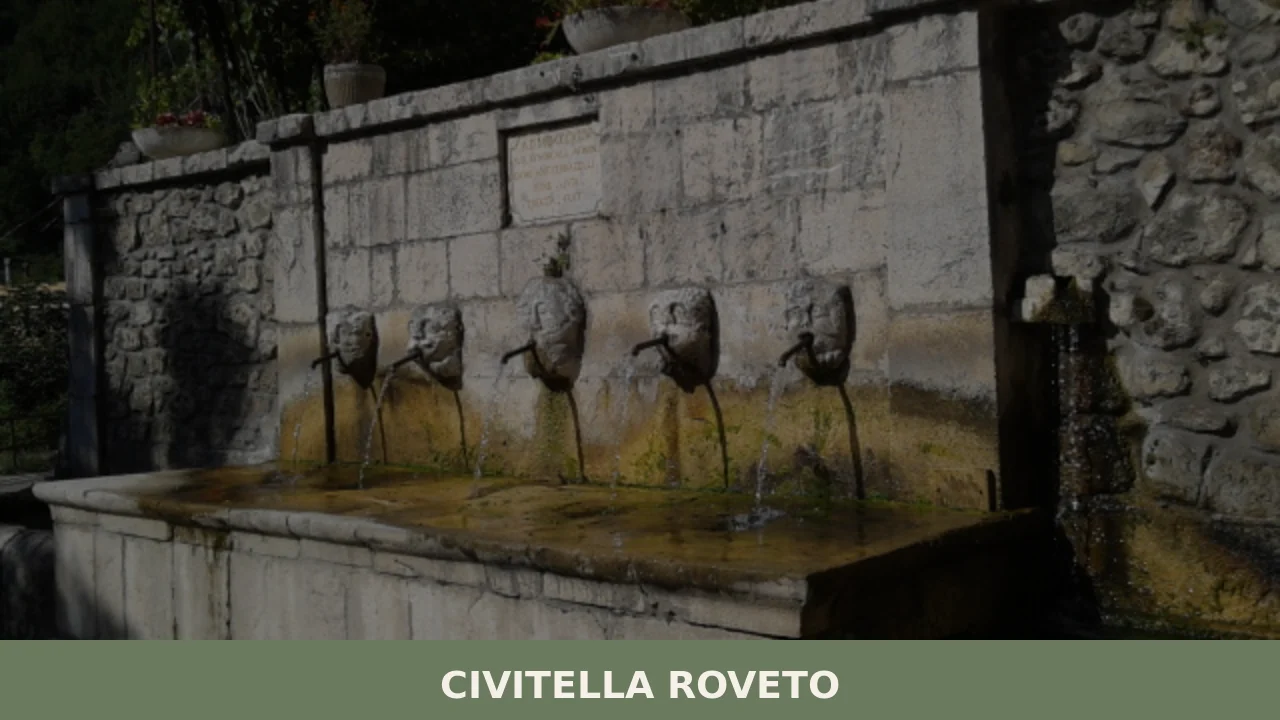
Civitella Roveto
At 528 metres above sea level, on the eastern side of the Valle Roveto, Civitella Roveto has a current population of 3,327, spread between the old town and the hamlets along the River Liri. The valley, a natural corridor between the Marsica and Lazio, determined the strategic role of this settlement for centuries. Understanding what […]
Discover Civitella Roveto
At 528 metres above sea level, on the eastern side of the Valle Roveto, Civitella Roveto has a current population of 3,327, spread between the old town and the hamlets along the River Liri. The valley, a natural corridor between the Marsica and Lazio, determined the strategic role of this settlement for centuries. Understanding what to see in Civitella Roveto means working through a sequence of layers — from medieval feudal control to Bourbon administrative reform, and on to the agro-pastoral economy that still marks the surrounding landscape.
History and origins of Civitella Roveto
The name “Civitella” derives from the Latin civitas, in a diminutive form indicating a small fortified centre. The addition “Roveto” refers to the valley of the same name, itself probably linked to the widespread presence of brambles (rovi) or, according to another theory, to a corruption of the Latin term rivus, owing to the proximity of the Liri. The first documented mention of the village dates to the Norman period, when the Valle Roveto was incorporated into the feudal system of the County of the Marsi. Its position along the valley — the only transit route between Lake Fucino and the plain of Sora — made the site a point of military and commercial control.
During the 13th and 14th centuries, Civitella Roveto passed through the hands of several feudal lords. The Colonna family held dominion for a significant period, and the castle overlooking the old nucleus was expanded and reinforced during these phases. In the 15th century, the fief was contested among baronial families of the Kingdom of Naples. With annexation to the Bourbon Kingdom, the village underwent the administrative reorganisation of 1806, which abolished feudalism and established it as an autonomous municipality.
The Marsica earthquake of 13 January 1915, with its epicentre at Avezzano, also struck the Valle Roveto hard. Civitella Roveto suffered severe structural damage, and the subsequent reconstruction partially altered the medieval urban layout. In the post-war decades, emigration towards Rome and northern Italy significantly reduced the population, a demographic trend that has slowed only in recent times.
What to see in Civitella Roveto: the 5 main attractions
1. Medieval Castle
The structure dominates the village from above, with a layout that reveals distinct building phases — from the Norman-Swabian core to 15th-century additions. The perimeter walls and a tower are still legible in the profile of the building, which is now privately owned. The position provides a direct vantage point over the entire Valle Roveto, from the slopes of the Abruzzo National Park to the foothills of the Simbruini mountains.
2. Church of San Giovanni Battista
Dedicated to the patron saint of the village, celebrated on 24 June, the parish church retains a structure that was reworked after the 1915 earthquake. Inside are examples of devotional statuary and a masonry altar rebuilt in the early 20th century. The façade, in its simplicity, marks the centre of the town’s civic and religious life.
3. Old town and stone stairways
The old nucleus develops vertically along the slope, with steep stairways connecting the different levels of the settlement. The houses of local limestone, many restored after 1915, feature doorways with carved lintels. Walking these lanes means reading the settlement logic of a village built for defence: narrow, layered, oriented inward.
4. Bridge over the Liri and the river area
The River Liri rises a few kilometres to the north, in the territory of Cappadocia, and runs through the entire Valle Roveto. The bridge at Civitella Roveto marks the connection between the two sides of the valley and serves as an access point to the riverside area, used during the summer months. The banks of the Liri, in this stretch, are lined with riparian vegetation including willows and poplars.
5. Valle Roveto trails
From the municipal territory, hiking routes lead to the higher elevations of the surrounding mountains, between 1,000 and 1,500 metres. The trails pass through beech and Turkey oak woods, and in some sections reach the boundaries of the municipal territory. The area is frequented by hikers connecting the Valle Roveto to the Lazio side of the Simbruini range.
Local cuisine and regional products
The cooking of Civitella Roveto reflects its border position between Abruzzo and Lazio. Handmade pasta — in particular sagne, wide irregular strips of water and flour — is dressed with tomato sauce and sheep’s milk ricotta or with a mutton ragù. Pulses, especially beans and lentils, appear in winter soups alongside pork rinds. The local bread, baked in wood-fired ovens still operating in some hamlets, has a thick crust and dense crumb, made to last several days.
Among the territory’s products is extra virgin olive oil from indigenous cultivars — the Valle Roveto, sheltered from cold winds, allows olive cultivation at relatively high altitudes. The production of salsicce and cured pork salumi still follows the calendar of winter slaughtering. In autumn, the chestnut harvest from the surrounding woods sustains a small local economy, with fruit sold fresh or processed into flour. Regional food guides list several trattorie in the old town that serve these dishes according to established recipes.
When to visit Civitella Roveto: the best time of year
The feast of San Giovanni Battista, on 24 June, is the moment of greatest communal intensity: a procession, bonfires, and outdoor tables draw back emigrants who return for the occasion. Summer, from June to September, offers the most favourable conditions for high-altitude hiking and activities along the Liri. Summer temperatures, tempered by the altitude of 528 metres, generally remain below 30 degrees.
Autumn brings the colour change of the beech forests and the harvest season — chestnuts, olives, porcini mushrooms in the woods above the village. Winter is cold, with possible snowfall between December and February, and the village takes on a slower rhythm; it may be the right time for those looking to observe the daily life of a Valle Roveto community without the filter of summer events. Spring, with the flowering along the banks of the Liri, is the least crowded period and perhaps the most suited to photography.
How to reach Civitella Roveto
By car, the most direct route from Rome (approximately 110 km) follows the A1 motorway to the Frosinone exit, then continues on the Sora–Avezzano dual carriageway through the Valle Roveto. From L’Aquila (approximately 95 km), take the A25 to Avezzano and descend into the valley along the SR 690. From Naples the distance is approximately 190 km, via the A1 with a turn-off towards Sora.
The nearest railway station with good connections is Avezzano, on the Rome–Pescara line, from which Civitella Roveto is approximately 30 km away. The Avezzano–Roccasecca railway line runs through the Valle Roveto with local stops, but services are infrequent. Rome Fiumicino airport, approximately 150 km away, is the main reference hub; Pescara airport is approximately 130 km away. The lack of frequent public transport makes a car the most practical way to reach and get around the area.
What to see in Civitella Roveto and in nearby Abruzzo villages
The Valle Roveto places Civitella Roveto within a network of small mountain communities that share similar dynamics: depopulation, post-earthquake reconstruction, and an economy tied to woodland and livestock. Moving towards the inner Marsica, Lecce nei Marsi offers a direct comparison with a village facing the same demographic challenges but maintaining a different relationship with the Fucino plain, the large lake drained in the 19th century that transformed agriculture across the entire area.
For those looking to explore the Apennine side of Abruzzo more broadly, a worthwhile detour is towards Valle Castellana, in the Teramo province, at the foot of the Monti della Laga. The two places — one in the Liri valley, the other on the Adriatic side of the Apennines — represent different variants of the same Abruzzese mountain settlement model, with architecture, dialects, and food traditions that diverge in recognisable ways despite their shared regional identity.
In Abruzzo More villages to discover
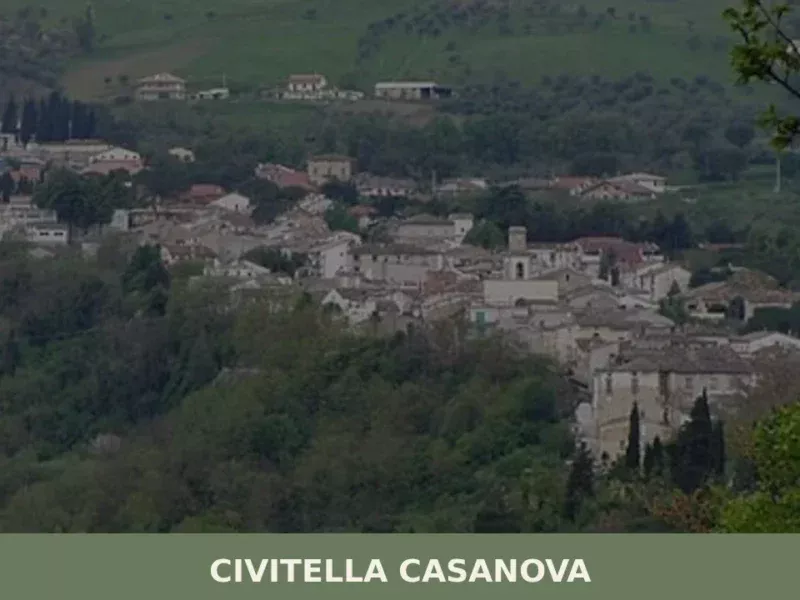
Civitella Casanova
At 400 meters above sea level, in the hilly heart of the province of Pescara, lies Civitella Casanova. This village, whose historical presence is attested since Roman times, offers a territorial context where geology and human activity have shaped a distinctive landscape. For those wondering about what to see in civitella casanova, the journey through […]
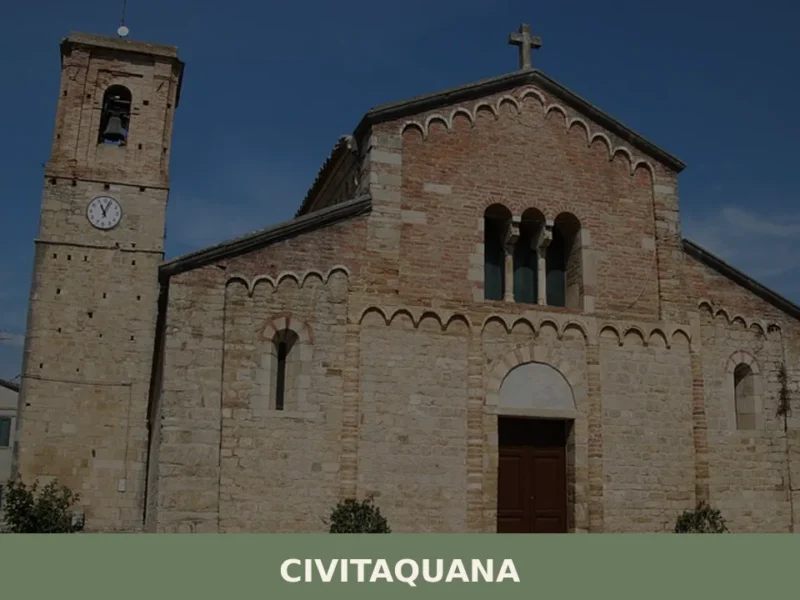
Civitaquana
At 550 metres above sea level, on the eastern slope of the Gran Sasso descending towards the Pescara hills, Civitaquana is home to 1,146 inhabitants spread between the historic centre and the surrounding hamlets. The village’s very name — documented in medieval sources as Civitas Aquanae — reveals an origin linked to the presence of […]
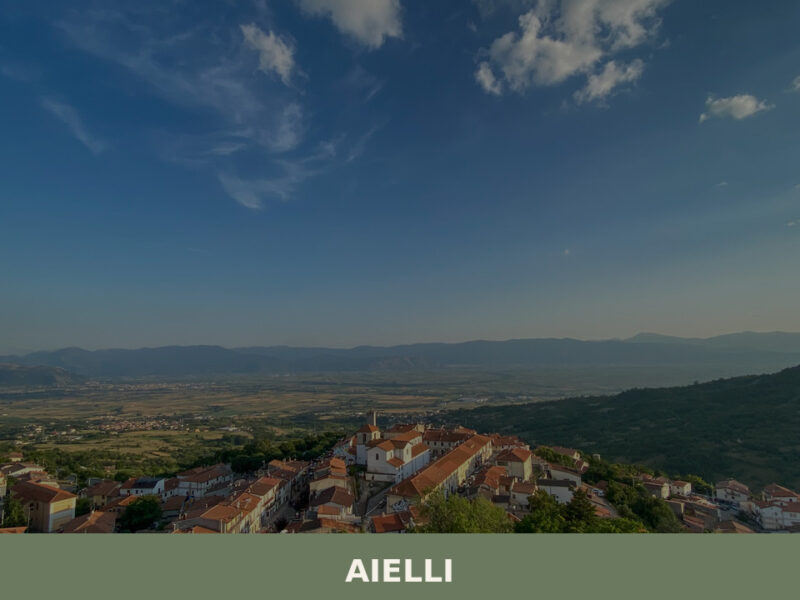
Aielli
Morning light falls across a wall of painted figures three storeys tall, their colours sharp against old stone. A narrow street turns, and another mural appears — an astronomical chart, its constellations precise enough to navigate by. Aielli sits at over 1,000 metres on the Fucino plateau in the province of L’Aquila, a village of […]



📝 Incorrect information or updates?
Help us keep the Civitella Roveto page accurate and up to date.