


Aielli
 Mountain
Morning light falls across a wall of painted figures three storeys tall, their colours sharp against old stone. A narrow street turns, and another mural appears — an astronomical chart, its constellations precise enough to navigate by. Aielli sits at over 1,000 metres on the Fucino plateau in the province of L’Aquila, a village of […]
Discover Aielli
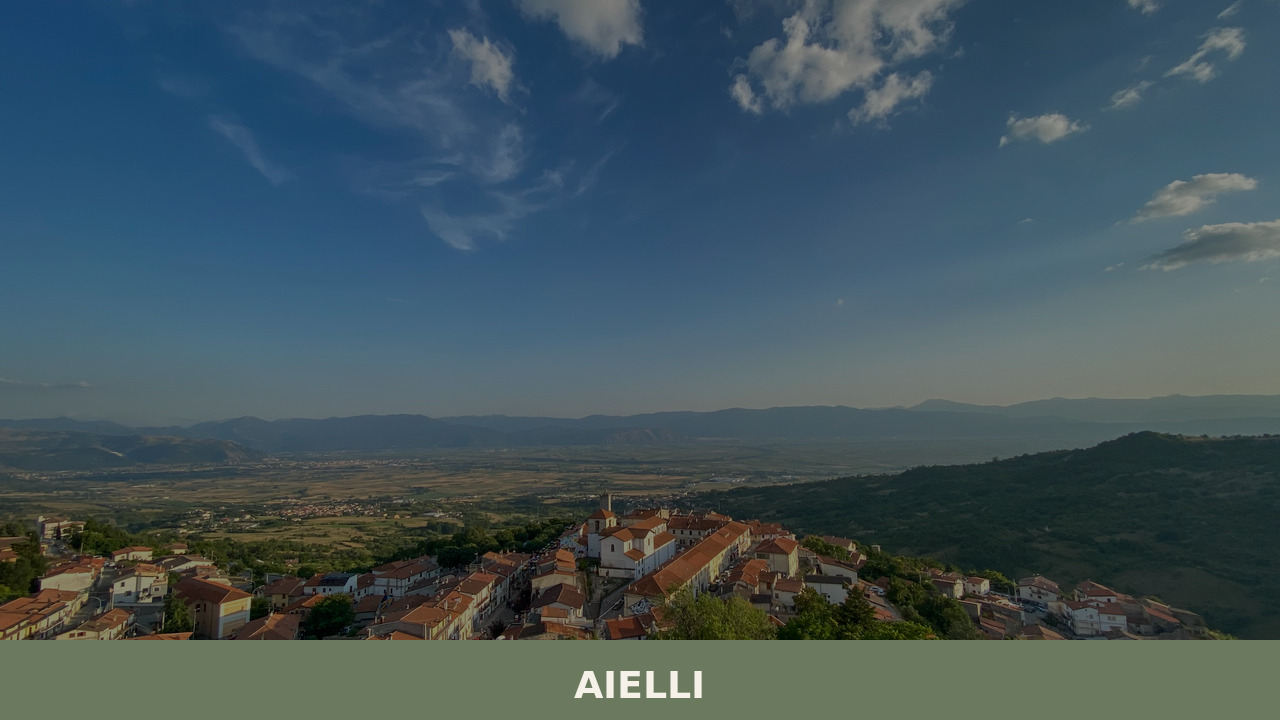
Morning light falls across a wall of painted figures three storeys tall, their colours sharp against old stone. A narrow street turns, and another mural appears — an astronomical chart, its constellations precise enough to navigate by. Aielli sits at over 1,000 metres on the Fucino plateau in the province of L’Aquila, a village of fewer than 1,500 inhabitants that has quietly reinvented itself as an open-air gallery. Understanding what to see in Aielli means reading walls the way you might read pages — each one a distinct narrative layered onto medieval fabric.
History of Aielli
The origins of Aielli trace back to the early medieval period, when small fortified settlements took shape across the mountainous interior of Abruzzo. The village’s name likely derives from the Latin “Agellum,” meaning a small field — a reference to the agricultural terraces that once stepped down toward the vast basin of Lake Fucino. That lake, one of the largest in central Italy, was drained in the 1870s under the direction of Prince Alessandro Torlonia, transforming the region’s economy and landscape irreversibly. Aielli, perched above the newly exposed plain, watched its world change from pastoral isolation to agricultural industry within a single generation.
During the medieval centuries, the village was governed by a succession of feudal lords, its defensive tower — the Torre Medievale — standing as both watchtpoint and symbol of authority over the surrounding territory. The 1915 Marsica earthquake, one of the deadliest seismic events in Italian history, devastated much of the area. Aielli suffered significant damage, and reconstruction reshaped parts of the village’s fabric. The older quarter, Aielli Alto, retains its pre-earthquake character in places: tight alleyways, stone arches, the layered evidence of building and rebuilding over centuries.
In the decades that followed, depopulation hollowed out many Abruzzo hill towns. Aielli’s response, beginning in earnest in 2017, was distinctive: it invited muralists from Italy and abroad to paint its walls, creating the project known as “Borgo Universo.” The initiative drew on the village’s existing connection to the sky — a 19th-century astronomical tower had long been one of its landmarks — and turned outward migration into a reason for reinvention.
What to see in Aielli: 5 must-visit attractions
1. The Murals of Borgo Universo
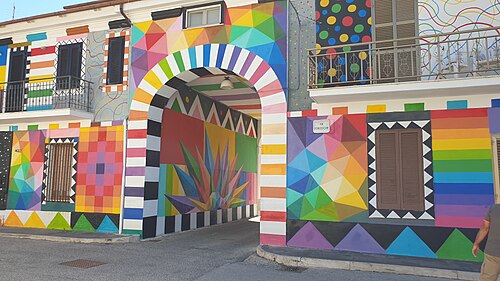
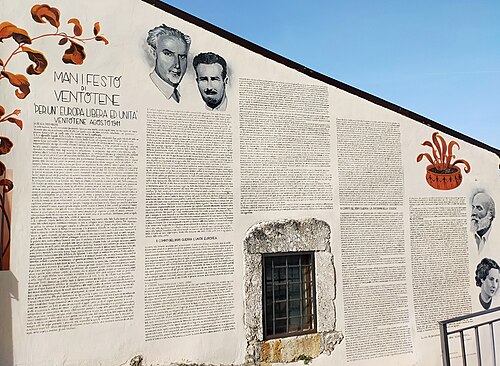
More than thirty large-scale murals now cover the walls of Aielli Alto, each painted during the annual Borgo Universo festival. The works range from figurative storytelling to abstract compositions, many incorporating astronomical and scientific themes. Walking the circuit takes roughly an hour, with each piece labelled by artist and year — a timeline of the project’s evolution painted directly onto the village itself.
2. Torre Medievale (Medieval Tower)
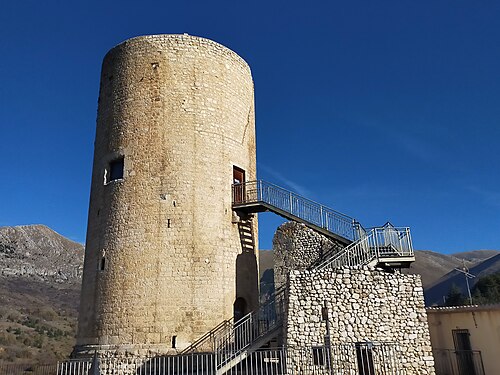
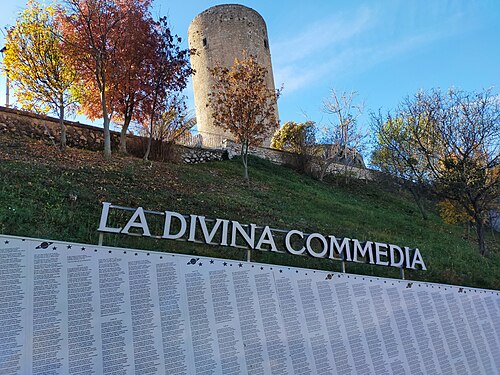
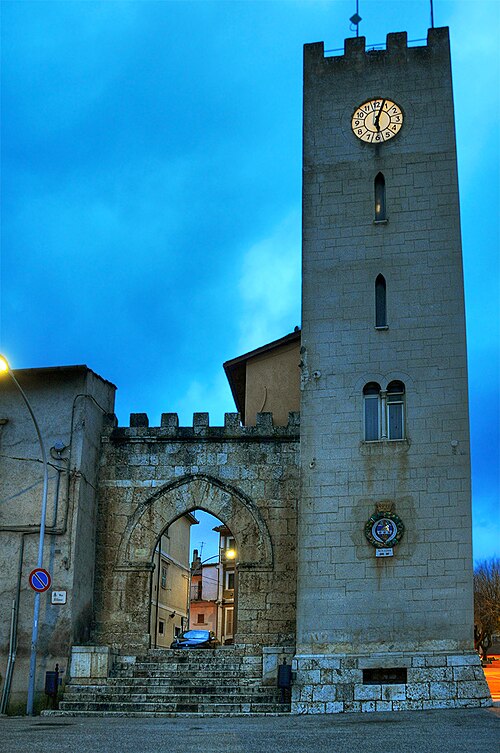
The tower rises from the upper village, a square structure dating to the 14th century. Originally built as a defensive lookout over the Fucino basin, it now hosts a small astronomical observatory and serves as the symbolic anchor of Borgo Universo. Climbing its interior staircase offers a direct line of sight across the drained lakebed to the mountains of the Sirente-Velino range beyond.
3. Chiesa di San Giuseppe
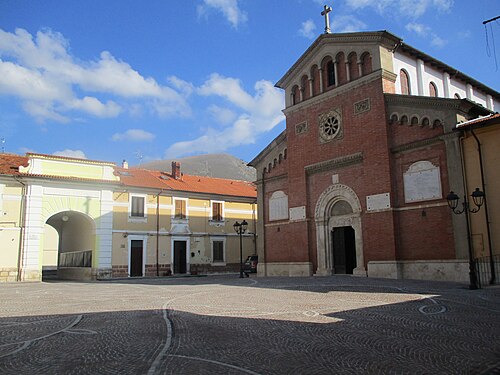
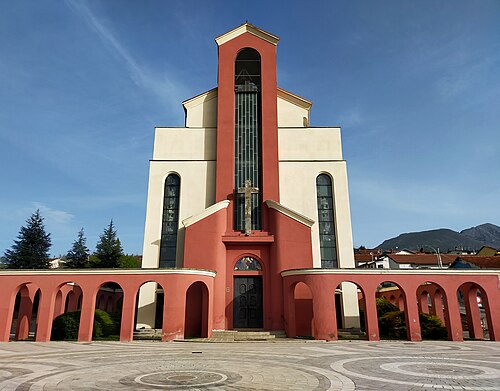
This parish church, rebuilt after the 1915 earthquake, stands in the lower part of the village. Its plain façade conceals a simple interior with a wooden ceiling and modest devotional art. The church functions as a gathering point for village life, its bell marking hours that echo off the surrounding stone walls with a clarity amplified by altitude and silence.
4. Aielli Alto — The Old Quarter
The upper village preserves the medieval street plan: passages narrow enough to touch both walls simultaneously, external staircases climbing to upper-floor doorways, and arched underpasses that frame views of the valley below. Even without the murals, the built environment here tells a story of adaptation — earthquake repairs visible beside older masonry, each era’s stone a slightly different colour.
5. The Fucino Plain Viewpoint
From several points along Aielli’s upper edges, the full extent of the former Lake Fucino spreads out below — now a geometric patchwork of agricultural fields, one of the most productive areas in central Italy. The flatness of the plain against the surrounding ring of mountains creates an almost surreal contrast. In winter, mist collects in the basin, and the village appears to float above cloud.
What to see in Aielli: local food and typical products
The cuisine here is mountain food, built for cold winters and physical labour. Pasta made with flour and water — no eggs — dominates: sagne e fagioli (rough-cut pasta with beans), maccheroni alla chitarra cut on a wire-strung frame, and lenticchie paired with handmade pasta shapes. Lamb, raised on the upland pastures of the Sirente-Velino area, appears roasted with rosemary or braised slowly with tomatoes and peppers. Saffron from the nearby Navelli plateau, one of the most prized in the world, gives risottos and broths a distinctive colour and a subtle, almost metallic fragrance.
Local restaurants and agriturismi in the Fucino area serve these dishes without much ceremony — portions are generous, menus are short, and wine tends to be Montepulciano d’Abruzzo from lower-altitude vineyards to the east. In autumn, foraged mushrooms and chestnuts appear on tables. The village itself has limited dining options, but the surrounding towns of Celano and Avezzano offer a broader range within a short drive.
Best time to visit Aielli
The Borgo Universo festival, typically held in August, is when Aielli is most animated — new murals are painted live, and evening events fill the streets with music and projections. Summer brings warm days and cool nights at this altitude, ideal for walking the village on foot. Spring (April through June) is quieter but rewards with wildflowers on surrounding hillsides and clear views across the Fucino plain before summer haze sets in.
Winter transforms the village. Snow is common above 1,000 metres in Abruzzo, and Aielli can sit under a white cover for weeks. The murals take on a different character against the grey sky and white ground, and the silence of the old quarter is near-total. Visitors should note that some facilities may have reduced hours outside the summer season. A half-day is sufficient to explore the murals and tower, though the surrounding area — the Sirente-Velino regional park, the Celano gorge — merits a longer stay.
How to get to Aielli
Aielli lies along the A25 motorway (Rome–Pescara), with the Aielli–Celano exit providing direct access. From Rome, the drive takes approximately 90 minutes (around 115 km). From Pescara on the Adriatic coast, the journey is roughly 100 km, just over an hour by motorway. L’Aquila, the provincial capital, is about 55 km to the north.
The village has a train station on the Sulmona–Avezzano line, served by regional Trenitalia services. Trains are infrequent, so checking schedules in advance is essential. The nearest airports are Rome Fiumicino (approximately 150 km) and Pescara Airport (about 110 km). A car is strongly recommended for exploring the wider area, as public transport connections between small villages remain limited.
More villages to discover in Abruzzo
The inner mountain territory of Abruzzo is dense with small villages, each shaped by the same forces — feudal history, earthquake, emigration — yet each distinct in character. South of Aielli, the Peligna valley holds communities where traditions of wool-working and confetti-making have persisted for centuries. To the north, the Gran Sasso massif shelters settlements that feel closer to alpine Europe than to the Mediterranean coast barely an hour’s drive east. Exploring even a handful of these places reveals the variety contained within a single Italian region.
For those drawn to Aielli’s combination of history and creative reinvention, two nearby villages offer compelling next stops. Santo Stefano di Sessanio, northeast of L’Aquila beneath the Gran Sasso, is a meticulously restored medieval borgo where Medici-era architecture has been converted into one of Italy’s pioneering “albergo diffuso” projects. Further south, Scanno sits beside its namesake heart-shaped lake, its older women still occasionally wearing the traditional costume that drew photographers like Mario Giacomelli and Henri Cartier-Bresson to its streets decades ago. Together with Aielli, these villages sketch the range of what Abruzzo’s interior still holds.
Frequently asked questions about Aielli
Quando si celebra la festa patronale di Aielli e chi è il santo protettore del paese?
Aielli celebra la sua festa patronale in onore della Madonna della Vittoria la prima domenica di luglio. Si tratta di una ricorrenza sentita dalla comunità locale, che si raccoglie nella piccola frazione montana sull'altopiano del Fucino. Chi pianifica una visita a luglio ha quindi l'opportunità di assistere ai festeggiamenti tradizionali oltre che di esplorare i murales del borgo antico.
Ci sono sentieri escursionistici documentati nei dintorni di Aielli?
Aielli si trova ai margini del Parco Naturale Regionale Sirente-Velino, un'area protetta che include una rete di sentieri CAI segnalati che attraversano le montagne circostanti. Il parco offre percorsi per diversi livelli di difficoltà, con itinerari che toccano l'altopiano del Fucino e le vette del massiccio del Sirente. Per informazioni aggiornate sui tracciati numerati è consigliabile consultare il sito ufficiale del Parco Sirente-Velino o le sezioni locali del CAI.
Aielli è visitabile come tappa di un giorno partendo da Roma o Pescara?
Sì, Aielli è comodamente raggiungibile in giornata sia da Roma (circa 115 km, 90 minuti sull'autostrada A25) sia da Pescara (circa 100 km, poco più di un'ora). Il paese stesso si esplora in mezza giornata, ma abbinando la visita ai murales e alla Torre Medievale con una sosta nelle vicine gole di Celano o nel centro storico di Avezzano, è possibile costruire un'escursione giornaliera soddisfacente senza necessità di pernottamento.
È possibile raggiungere Aielli in treno?
Aielli dispone di una stazione ferroviaria sulla linea regionale Sulmona–Avezzano, servita da Trenitalia con corse regionali. I treni sono poco frequenti, quindi è indispensabile verificare gli orari aggiornati sul sito Trenitalia prima di partire. Una volta scesi in stazione, il centro del paese è raggiungibile a piedi o con mezzi locali. Per esplorare i dintorni — il Parco Sirente-Velino, le gole di Celano, Avezzano — l'auto rimane il mezzo più pratico.
📷 Photo Gallery — Aielli



Nearby Villages near Aielli
In Abruzzo More villages to discover
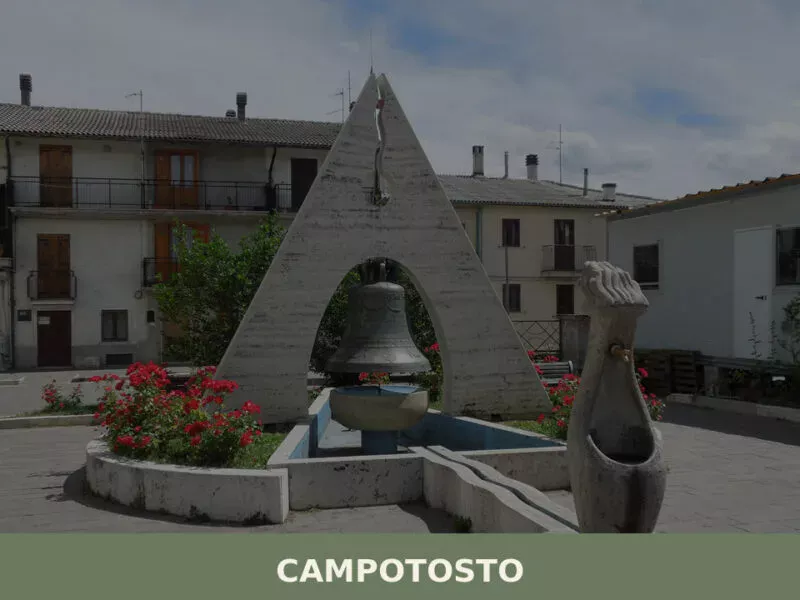
Campotosto
 Lake
Mountain
Lake
Mountain
At 1,420 metres beside one of Europe's largest artificial lakes, Campotosto offers wild Apennine landscapes, cured mortadella, and trails into the Gran Sasso National Park.
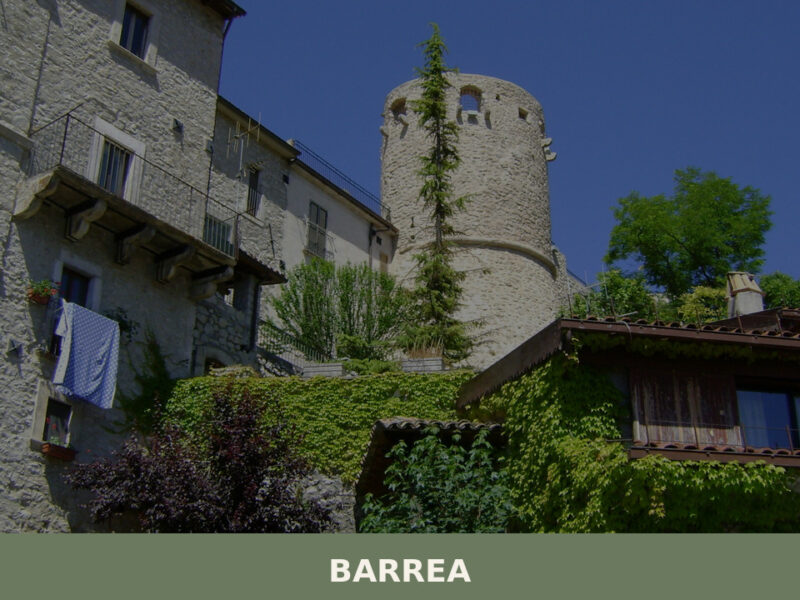
Barrea
Lake
Mountain
A mountain village of 710 inhabitants at 1,060 metres in the heart of Abruzzo's national park. Discover what to see in Barrea, from its medieval tower to the lake below.
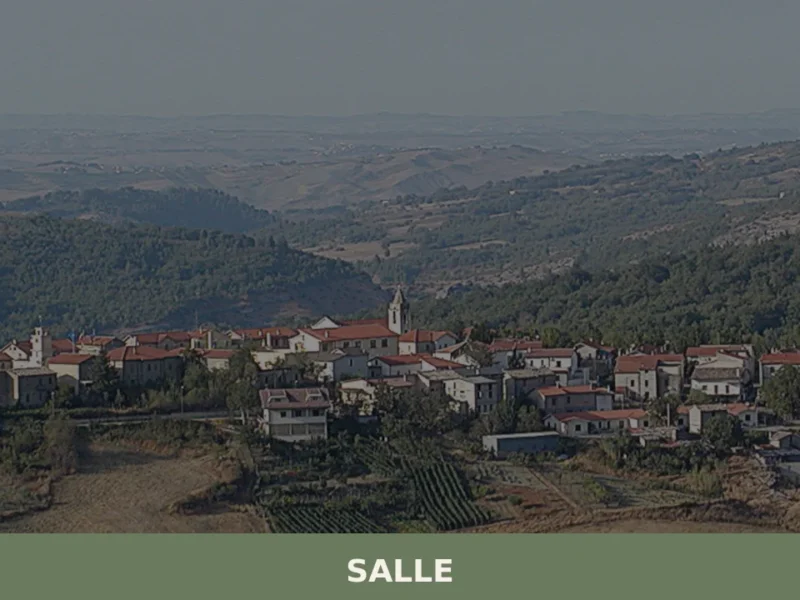
Salle
Mountain
From its elevation of 680 m (2,231 ft) above sea level, the village of Salle overlooks the Orta Valley, where the river carves through limestone gorges towards the Majella massif. Stone houses, built from local materials, cluster tightly along ancient pathways, revealing centuries of human habitation in this mountainous landscape. The air often carries the […]
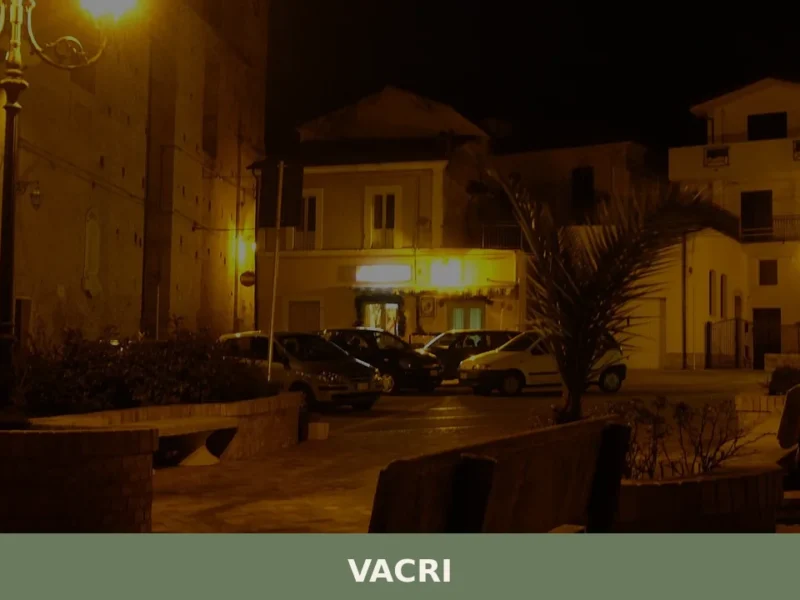
Vacri
 Sea
Sea
What to see in Vacri? Explore the 5 must-see attractions of this Abruzzese village. Discover history and breathtaking views. Read on and plan your itinerary!
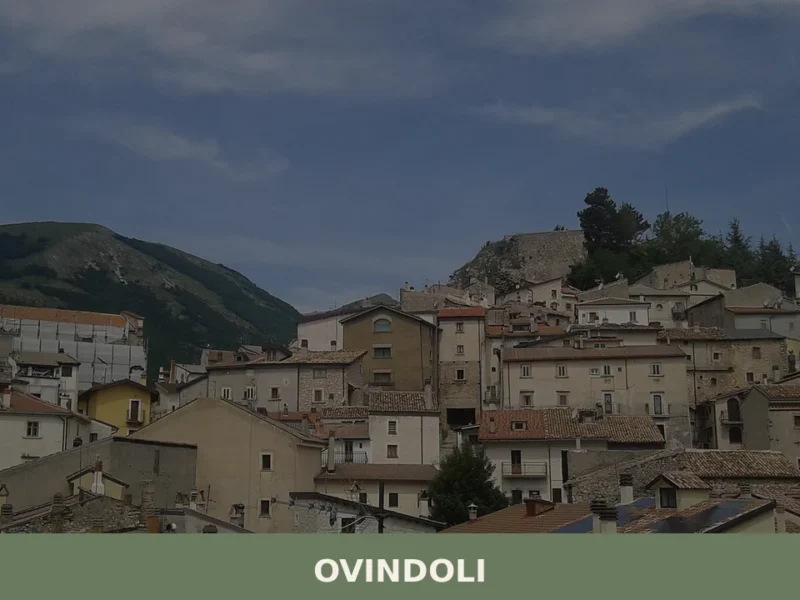
Ovindoli
Mountain
What to see in Ovindoli, Italy: ski slopes on Monte Magnola, hiking in Sirente-Velino park, 1,203 inhabitants. Discover top attractions and how to get there.
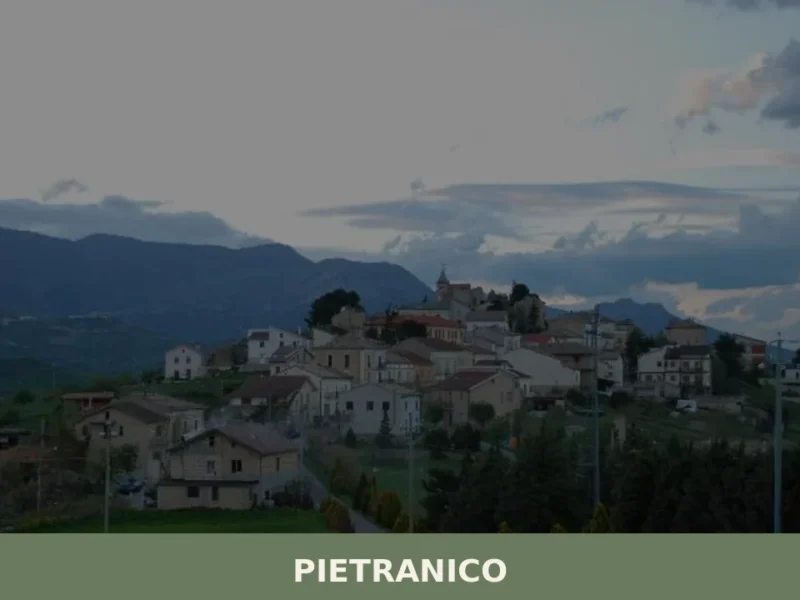
Pietranico
 Hills
Hills
What to see in Pietranico, Abruzzo, Italy: 506 inhabitants, a medieval castle site, and wind-swept hilltop views. Discover top attractions and how to get there.
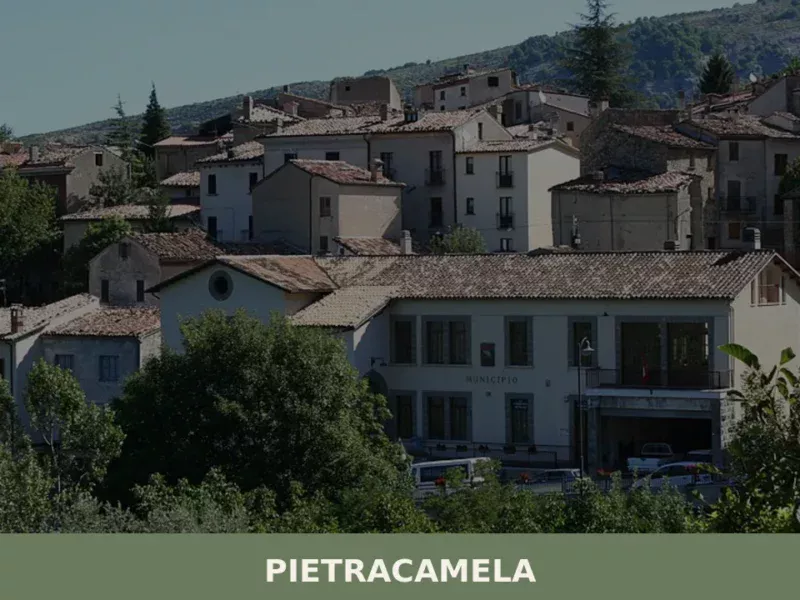
Pietracamela
Mountain
what to see in pietracamela, Italy. Discover its top attractions, events, and culinary delights. Explore attractions like Gran Sasso and experience local festivals. A complete guide to this Abruzzo gem.
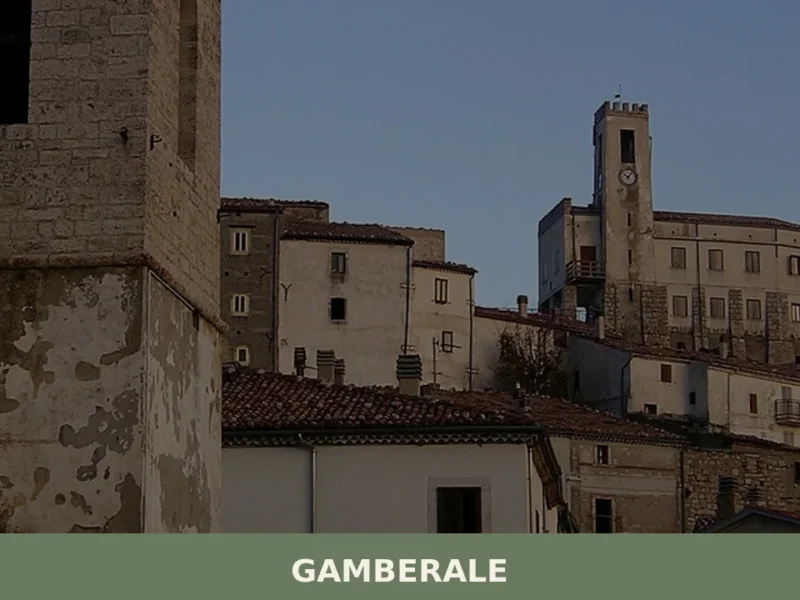
Gamberale
Mountain
At 1,343 metres above sea level, along the eastern ridge of the Majella mountains where the slopes descend towards the Sangro valleys, 277 residents keep alive a settlement that the catasto onciario of the Kingdom of Naples already recorded in the eighteenth century as a community of shepherds and charcoal burners. Visitors arriving in Gamberale […]
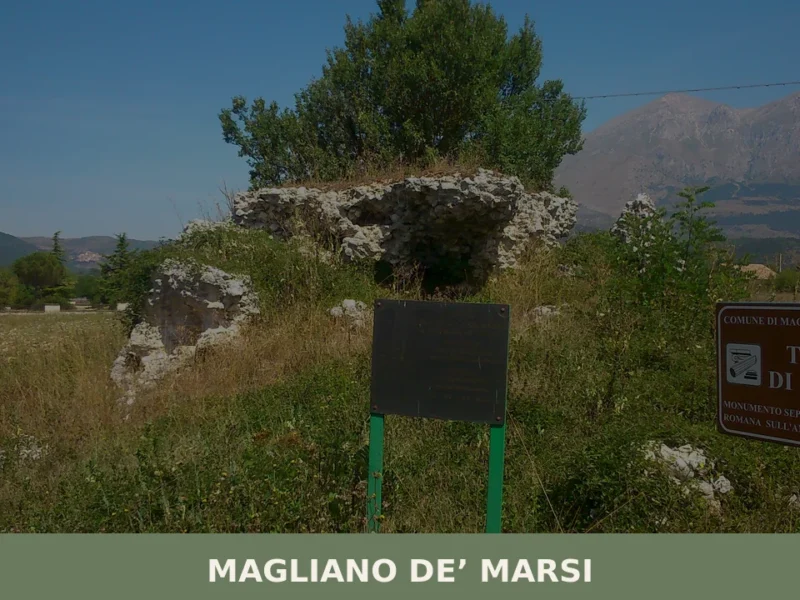
Magliano de’ Marsi
Mountain
Magliano de’ Marsi has 3,739 inhabitants and extends along the western slope of the Fucino Plain, in the province of L’Aquila, at an altitude of approximately 720 metres. The town lies along the route that once connected Rome to the Adriatic coast through the Marsica basin, and its urban layout still bears the marks of […]
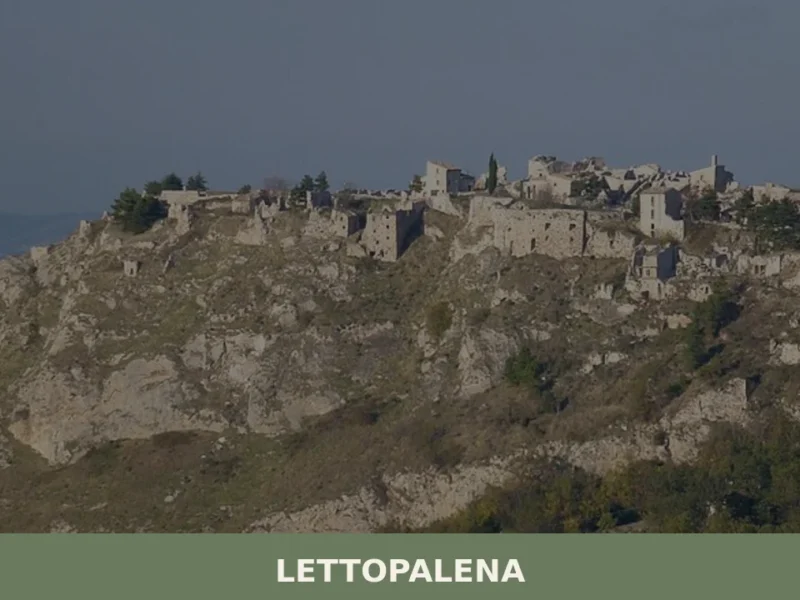
Lettopalena
Mountain
Discover the charm of Lettopalena Village in Abruzzo, Italy. Explore its rich history, culture, and scenic beauty. Plan your visit to this hidden Italian gem today!





🏡 Know Aielli better than we do?
If you’re a local or have been there, your knowledge matters: add what’s missing or fix a detail on this page.