


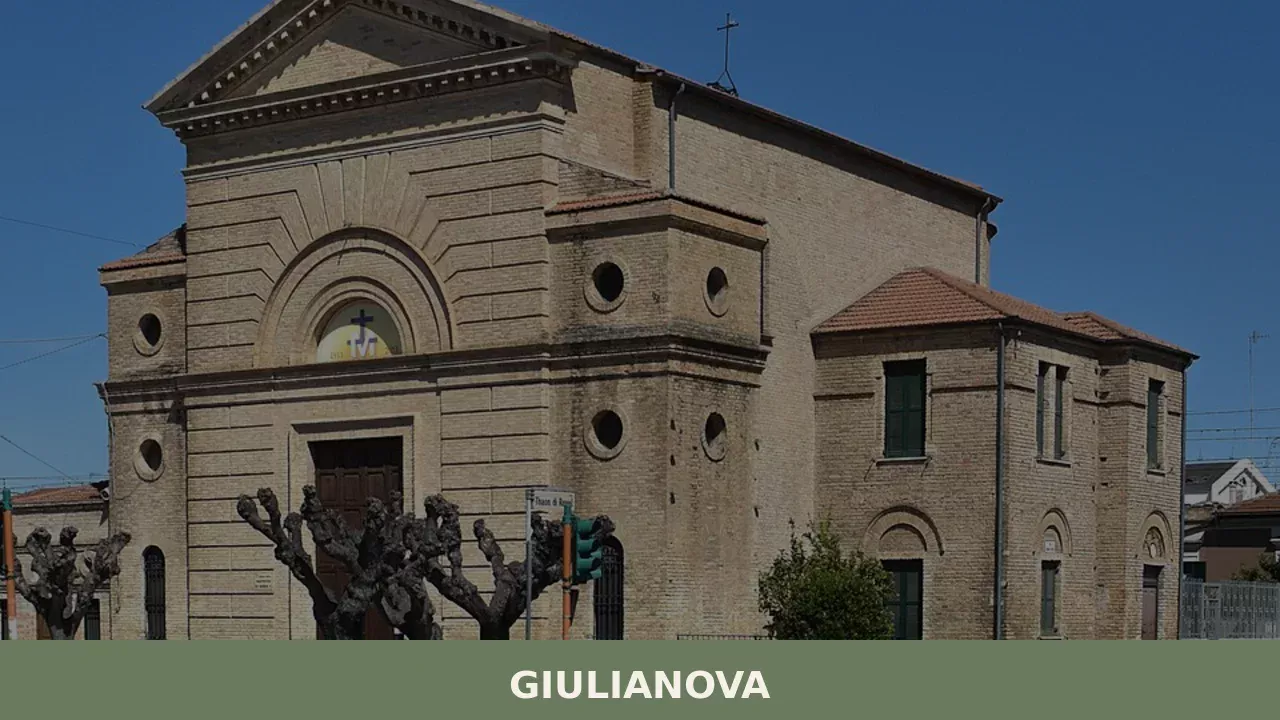
Giulianova
In 1470, Duke Giuliantonio Acquaviva refounded the ancient settlement of Castel San Flaviano on a hill 68 metres above sea level, giving it his own name: Giulianova. The urban layout he commissioned — a regular grid with a central square and symmetrical blocks — is one of the earliest documented examples of an ideal Renaissance […]
Discover Giulianova
In 1470, Duke Giuliantonio Acquaviva refounded the ancient settlement of Castel San Flaviano on a hill 68 metres above sea level, giving it his own name: Giulianova. The urban layout he commissioned — a regular grid with a central square and symmetrical blocks — is one of the earliest documented examples of an ideal Renaissance city in Italy. Understanding what to see in Giulianova means reading that fifteenth-century plan, still intact in the upper town, and then descending towards the Adriatic shoreline where a second identity, centred on beach tourism and the harbour, developed from the nineteenth century onwards.
History and origins of Giulianova
The original settlement, Castel San Flaviano, is documented from at least the tenth century, when a castrum stood near the mouth of the Salinello stream. The name derived from the cult of Saint Flavian, Patriarch of Constantinople who died in 449, whose relics, according to tradition, washed ashore on this coast. For centuries the settlement remained a small fortified village within the Duchy of Spoleto, later falling under Norman and Angevin influence. Its coastal position made it vulnerable to raids and looting, including those attributed to the troops of Braccio da Montone in 1421.
The turning point came with Giuliantonio Acquaviva, Duke of Atri, who between 1470 and 1472 rebuilt the settlement in a planned layout on the hilltop. The project, likely influenced by the theories of Leon Battista Alberti, called for an orthogonal street grid with a rectangular square at its centre. Giulianova thus became an early case of rational urban planning in southern Italy. The Acquaviva family, one of the most powerful in the Kingdom of Naples, retained control of the town until the abolition of feudalism in 1806.
With the arrival of the Adriatic railway in 1863, the coastal strip at the foot of the hill began to be populated. The distinction arose between Giulianova Alta — the Renaissance historic core — and Giulianova Lido, which expanded over the twentieth century to become one of the main seaside resorts on the Teramo coast. Today the municipality has 23,369 inhabitants and retains this dual character: hilltop and coastal, historical and tourist-oriented.
What to see in Giulianova: 5 main attractions
1. Cathedral of San Flaviano
Built between 1472 and 1496 at the behest of the Acquaviva family, the cathedral is a brick building with an octagonal plan and dome, one of the few examples of centrally planned Renaissance architecture in Abruzzo. The interior, modified over the centuries, retains a spatial structure that recalls Brunelleschian models. Beneath the church lies a crypt with medieval frescoes from the ancient church of Santa Maria a Mare.
2. The Belvedere and the Giulianova Alta walkway
From the eastern edge of the hill, the belvedere offers a direct view over the Adriatic coast, the harbour and — on clear days — as far as the Conero promontory. The walkway along the perimeter walls of the upper town allows visitors to observe the fifteenth-century urban layout from the outside: the bastions, the surviving gates and the sharp drop between the historic quarter and the seafront below.
3. Church of Santa Maria a Mare
Located in the Lido area, this Romanesque church dates back to the twelfth century and is what remains of the earlier settlement of Castel San Flaviano. The portal features sculpted reliefs, and inside there are fragments of Cosmatesque flooring. The building, restored several times, is one of the rare architectural elements predating the Renaissance refoundation that are still visible within the municipal territory.
4. Pinacoteca Civica “Vincenzo Bindi”
Housed in the palazzo of the same name in Giulianova Alta, the art gallery holds the collection donated by the historian and art critic Vincenzo Bindi at the end of the nineteenth century. It includes paintings from the sixteenth to the nineteenth century, Castelli ceramics, majolica and a library of around 50,000 volumes. It is one of the most substantial museum collections in the Province of Teramo, with works from the Neapolitan school and Grand Tour vedutisti.
5. The Harbour and the Lungomare Monumentale
Giulianova’s harbour is the largest fishing port on the central Abruzzo Adriatic coast. Every morning the fresh fish sale takes place here, with brodetto di pesce alla giuliese — the local fish stew — forming the backbone of the area’s gastronomic tradition. The lungomare monumentale, built in the 1930s, stands out for its rationalist architecture and decorative mosaics along the balustrade.
Local cuisine and regional products
Giulianova’s cuisine revolves around Adriatic fish. The most distinctive dish is brodetto alla giuliese, a fish soup that differs from the versions found in the Marche and Romagna through the use of green peppers and the absence of tomato in the original recipe — a detail local cooks have debated for generations. The harbour ensures a direct supply: sole, red mullet, cod, langoustines and cuttlefish appear regularly on the menus of restaurants near the quayside. Kiosks along the seafront serve frittura di paranza and charcoal-grilled fish skewers.
Heading uphill, the cuisine shifts to the land. The Province of Teramo is a production area for Pretuziano delle Colline Teramane DOP extra virgin olive oil, obtained predominantly from Dritta and Leccino olive varieties. In the trattorias of Giulianova Alta you will find maccheroni alla chitarra with pallottine (small meatballs in sauce), virtù teramane — a ritual soup prepared on the first of May with pulses, cereals and vegetables — and Abruzzo-style porchetta. Local pastry shops offer calgionetti, fried ravioli filled with chickpeas, cocoa and cooked grape must.
When to visit Giulianova: the best time
The climate is that of the central Adriatic: hot summers with average temperatures around 28–30 °C in July and August, and winters that are mild compared to the Apennine hinterland. The bathing season runs from June to September, with visitor numbers peaking between mid-July and mid-August, when the Lido reaches its highest density. Those wishing to visit the upper town and the museums at a relaxed pace will find more room between April and June, when the days are long and the heat has not yet set in.
Among recurring events, the patron saint’s feast of San Flaviano is celebrated on 24 November. In summer, music and theatre festivals are held in the upper town’s square. The week around Ferragosto is the most crowded: restaurants by the harbour require reservations and traffic along the seafront becomes congested. September, when the sea is still warm and tourist flows are declining, is often the most balanced period for a visit that combines beach time with exploring the historic centre.
How to reach Giulianova
Giulianova is served by the A14 Bologna–Taranto motorway, with a dedicated exit at “Giulianova-Teramo” from which the centre is approximately 3 kilometres away. Giulianova railway station lies on the Adriatic Bologna–Lecce line: regional trains connect it to Pescara (around 35 minutes), Ancona (around 2 hours) and Bologna (around 3 and a half hours). Some Intercity trains also stop here.
The nearest airport is Pescara (Abruzzo Airport “Pasquale Liberi”), approximately 50 kilometres to the south along the A14 — reachable in 35–40 minutes by car. From Rome, the distance is around 210 kilometres, covered in just under 3 hours via the A24 to Teramo and then the dual carriageway to the coast. From Teramo, the provincial capital, Giulianova is approximately 25 kilometres away via the SS80 and local connecting roads. The Municipality’s website provides updated information on parking and summer transport.
Other villages to discover in Abruzzo
Abruzzo has a variety of smaller centres that deserve attention beyond the coastal strip. In the L’Aquila hinterland, over 100 kilometres from Giulianova, Cansano sits at the foot of Monte Maiella, in a completely different setting — mountain, stone, winter silence. The village, in the Peligna Valley, preserves the remains of an Italic settlement and a limestone building fabric that documents centuries of agro-pastoral life. It is a good example of how inland Abruzzo differs radically from the coast.
Also in the Province of L’Aquila, in the Marsica area, Lecce nei Marsi lies on the edges of the Fucino basin, the ancient lake drained in the nineteenth century. The village is set in a landscape of agricultural plain and low hills, with a heritage of rural architecture and churches that tells the story of land reclamation and agrarian colonisation in the Marsica. For those visiting Giulianova who want to understand the differences between coastal and Apennine Abruzzo, a trip to these centres reveals a more complex and layered human geography.
Getting there
Corso Giuseppe Garibaldi, 64021 Giulianova (TE)
In Abruzzo More villages to discover
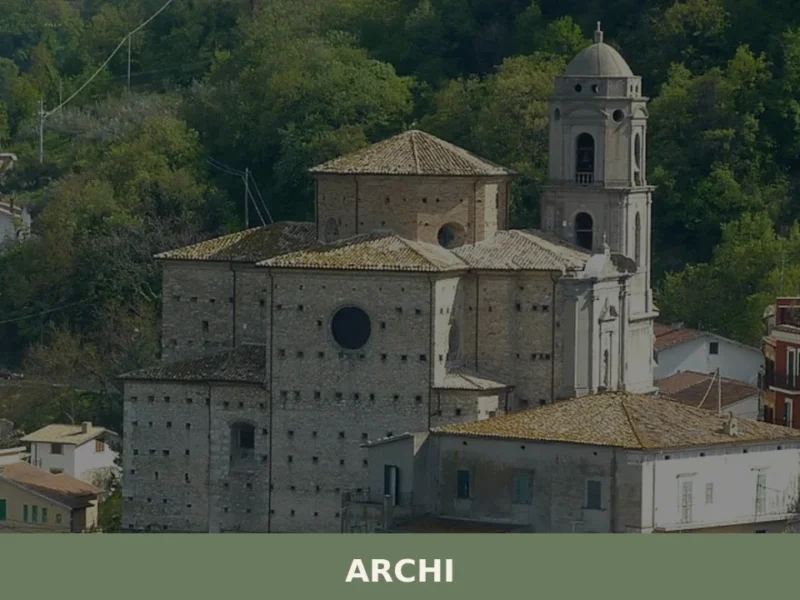
Archi
Archi sits at 492 metres above sea level in the province of Chieti, a settlement of just under 2,000 inhabitants occupying a ridge above the Sangro river valley in southern Abruzzo. The village’s position — commanding views across a landscape that drops sharply toward the river below — has defined its strategic importance since the […]
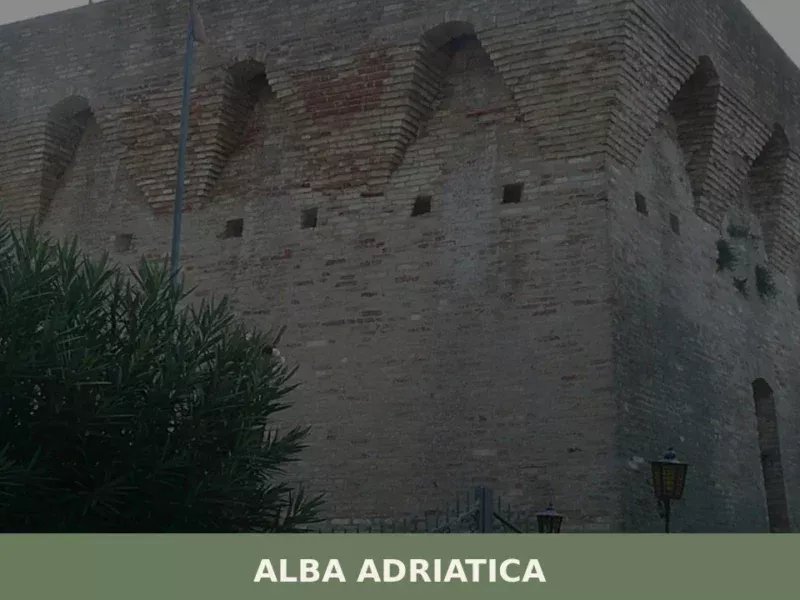
Alba Adriatica
Until 1956, this locality did not exist as an independent municipality: it was a hamlet of Tortoreto, known as Tortoreto Stazione because of the railway stop on the Adriatic line. The administrative separation created a coastal town that today has 12,760 inhabitants spread across a territory sitting just 5 metres above sea level. Understanding what […]
Filetto
Filetto, a settlement of 854 inhabitants, is located at 403 meters above sea level in the heart of the province of Chieti. This settlement, documented in historical sources dating its presence back to the medieval era, extends across a hill overlooking the Foro Valley. Its urban layout reflects the layering of different periods, with buildings […]



📝 Incorrect information or updates?
Help us keep the Giulianova page accurate and up to date.