


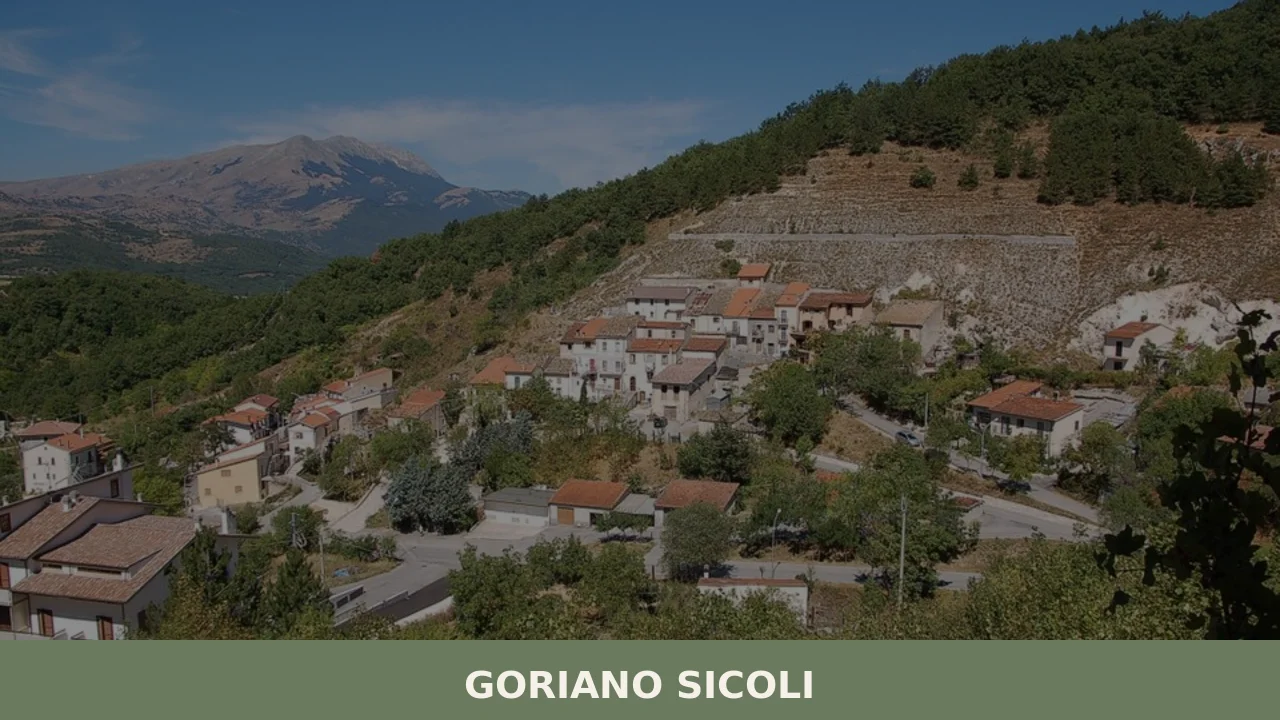
Goriano Sicoli
At 720 metres above sea level, in the Valle Subequana along the course of the Aterno river, Goriano Sicoli has just 511 inhabitants today — less than a fifth of the population recorded in the 1901 census. The village, in the province of L’Aquila, owes the second part of its name to the Roman colony […]
Discover Goriano Sicoli
At 720 metres above sea level, in the Valle Subequana along the course of the Aterno river, Goriano Sicoli has just 511 inhabitants today — less than a fifth of the population recorded in the 1901 census. The village, in the province of L’Aquila, owes the second part of its name to the Roman colony of Superaequum, a Peligni settlement documented by Pliny the Elder. Understanding what to see in Goriano Sicoli means finding your way between sacred architecture, medieval remains and a mountain landscape defined by Monte Sirente, which closes the horizon to the north with its 2,349 metres.
History and origins of Goriano Sicoli
The name “Goriano” appears in early medieval documents in the form Gurianum, probably derived from the Latin personal name Curius or Gurius, indicating the owner of a fundus. The designation “Sicoli” — from Superaequum Coelium, contracted over time into “Sicoli” — distinguishes this settlement from the similarly named Goriano Valli, located a few kilometres further north. The area was inhabited in the Italic period by the Peligni, an Oscan people who controlled the valley until the Roman conquest in the 3rd century BC.
During the Norman-Swabian period, Goriano Sicoli came under the influence of the County of Celano, one of the most powerful feudal structures in inland Abruzzo. The village suffered damage from the earthquake of 1706, a seismic event that devastated much of the Marsica and the Valle Peligna, requiring substantial reconstruction of both civil and religious buildings. In the 18th century, it passed under the control of the Barberini, a papal family of Tuscan origin that administered several Abruzzese fiefs until the abolition of feudalism in 1806. The historic centre retains its narrow, vertical urban layout, organised along the hillside slope with stepped alleys connecting the lower area to the summit where the defensive structure once stood.
The patron saint of the village is Santa Gemma di Goriano Sicoli, a virgin and martyr whose veneration has been locally attested since the Middle Ages. The cult of Gemma represents a significant case of local Abruzzese hagiography: the saint does not appear in the universal Roman Martyrology, but her veneration is recognised by the Diocese of Sulmona-Valva and forms the central axis of the village’s festive calendar.
What to see in Goriano Sicoli: churches, tower and nature
Church of Santa Maria Nuova
The main religious building in the village, rebuilt after the earthquake of 1706. The façade features a portal with a round arch and an upper window that illuminates the single nave. Inside, lateral altars in stucco with Baroque decorations and 18th-century paintings from the Abruzzese school document the post-earthquake revival of religious architecture in the Valle Subequana.
Church of Santa Gemma
Dedicated to the local patron saint, it houses the saint’s relics in an urn placed beneath the high altar. The current structure largely dates to the 18th century. During the patron saint’s feast, celebrated on 12 May, the statue of Santa Gemma is carried in procession through the streets of the historic centre, following a route that passes through the village’s main landmarks and draws the faithful from surrounding hamlets.
Medieval tower
A remnant of the village’s original defensive apparatus, the square-plan tower dominates the upper part of the settlement. Built from blocks of local limestone, it reaches a height of approximately fifteen metres. Its position allowed visual control over the Valle Subequana and optical communication with the watchtowers of neighbouring villages, a system typical of the medieval defensive organisation of inland Abruzzo.
Historic centre and civil architecture
The houses in the old nucleus are built from local stone with clay tile roofing. Several carved stone portals, dating to the 17th and 18th centuries, mark the entrances of the most important residences. The alleys follow the natural gradient of the slope with stone staircases and covered passages — the so-called sporti — which connect buildings on different levels and also served to stabilise the opposing structures.
Sirente trails and mountain environment
From the village, hiking trails lead towards the Sirente-Velino Regional Park, a protected area of over 50,000 hectares established in 1989. The trails pass through beech forests above 1,200 metres in altitude and summit grasslands where the presence of the Apennine wolf has been documented. The Sirente meteoritic crater, a few kilometres from the village, is one of the rare examples of an impact structure identified in the Apennines.
What to see in Goriano Sicoli: cuisine and valley products
The cuisine of Goriano Sicoli is that of inland mountain Abruzzo: handmade pasta — sagne, cazzellitti, maccheroni alla chitarra — dressed with lamb ragù or mutton sauce. Lentils grown on the Navelli plain, less than thirty kilometres away, go into winter soups alongside pork rind. L’Aquila DOP saffron, produced on the Navelli plateau, is used in both first and second course recipes. Local pecorino cheeses are the product of sheep farming that still takes place on the valley’s pastures today, albeit in smaller numbers than in the last century.
Ferratelle — thin wafers cooked in a double-sided engraved iron press — and mostaccioli made with cooked grape must are the sweets prepared in village homes, especially during the Christmas period and patron saint festivities. Montepulciano d’Abruzzo DOC wine and Cerasuolo, in its rosé version, accompany meat dishes. The municipal website periodically lists local food festivals and markets where products from area farms can be found.
When to visit Goriano Sicoli: the best time
The feast of Santa Gemma, on 12 May, is the most intense moment in the community calendar. The procession, brass band music and fireworks draw emigrants and visitors, and for a few days the village reaches a human density it does not experience during the rest of the year. Summer, from June to September, offers daytime temperatures between 25 and 30 degrees, tempered by the altitude, and ideal conditions for hiking in the Sirente-Velino Park. Winter is harsh — minimum temperatures regularly drop below zero between December and February — and snow often covers elevations above 1,000 metres, making the area suitable for snowshoeing and cross-country skiing in the park’s equipped zones.
Autumn, particularly October, brings the colour change of the beech forests on Sirente: the band between 800 and 1,500 metres becomes a gradient from yellow to deep red that stands out sharply against the limestone rock of the peaks. It is also the season for gathering porcini mushrooms and chestnuts in the woods around the village. Spring, between April and May, coincides with the flowering of wild orchids in the limestone grasslands — species documented in the regional park’s management plan.
How to reach Goriano Sicoli
By car, from the A25 Rome-Pescara motorway, the exit is Cocullo or Pratola Peligna-Sulmona; from either, the village can be reached in approximately 15–20 minutes via the regional road 5 Tiburtina Valeria and the provincial roads of the Valle Subequana. From Rome the distance is around 130 kilometres, covered in about one hour and forty minutes. From Pescara it is approximately 90 kilometres, just under an hour and a half.
The nearest railway station is Goriano Sicoli-Castelvecchio Subequo, on the Sulmona–L’Aquila line operated by Trenitalia, with limited frequency and services that do not always run daily — it is advisable to check timetables in advance. The nearest airport is Abruzzo Airport in Pescara (approximately 95 km); Rome Fiumicino and Ciampino airports are 170 and 150 kilometres away respectively. The village is accessible only on foot in the upper part of the historic centre; parking is available in the lower area, along the access road.
Other villages to discover in Abruzzo
Those exploring inland Abruzzo along the Apennine ridge will find a network of small settlements with characteristics similar to Goriano Sicoli: demographic depopulation, concentrated architectural heritage, and a direct relationship with the mountain environment. Brittoli, in the province of Pescara, shares with Goriano the condition of a village with fewer than a thousand inhabitants and a location close to protected natural areas. Its stone architecture and compact urban fabric offer an interesting comparison with the building traditions of the Valle Subequana.
On the opposite side of the region, towards the coast and the Vastese area, Casalanguida in the province of Chieti sits at lower elevations in a hilly landscape where vines and olive trees replace the beech forests and high-altitude pastures. The transition from mountain Abruzzo to its hilly counterpart — in less than two hours by car — highlights the geographic variety of a region that changes climate, vegetation and food traditions within just a few kilometres, while maintaining a small-scale urban form and a social structure still tied to village rhythms.
In Abruzzo More villages to discover
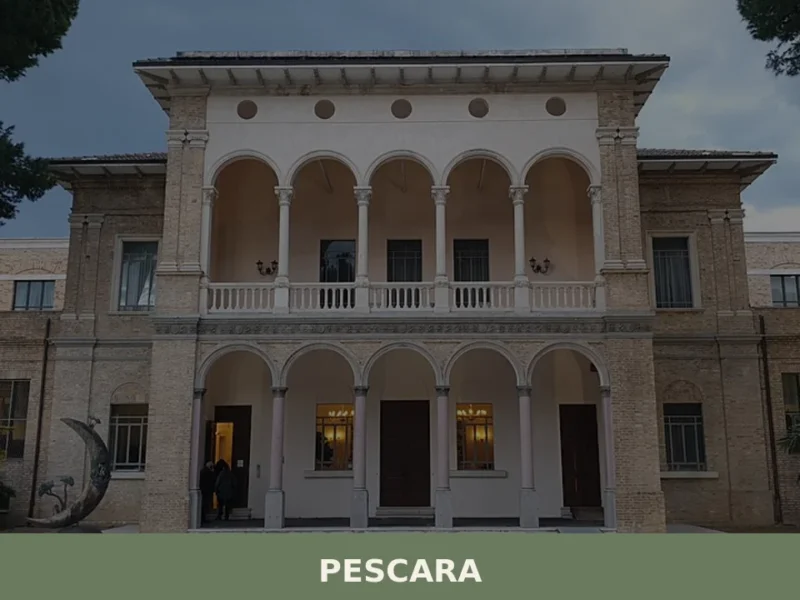
Pescara
In Pescara, where the Aterno river meets the Adriatic, the city stretches across a coastal plain just 4 metres above sea level. Its forked layout, divided by the watercourse that once served as its natural boundary, has shaped the identity of this centre of nearly 119,000 inhabitants in the province of the same name. On […]
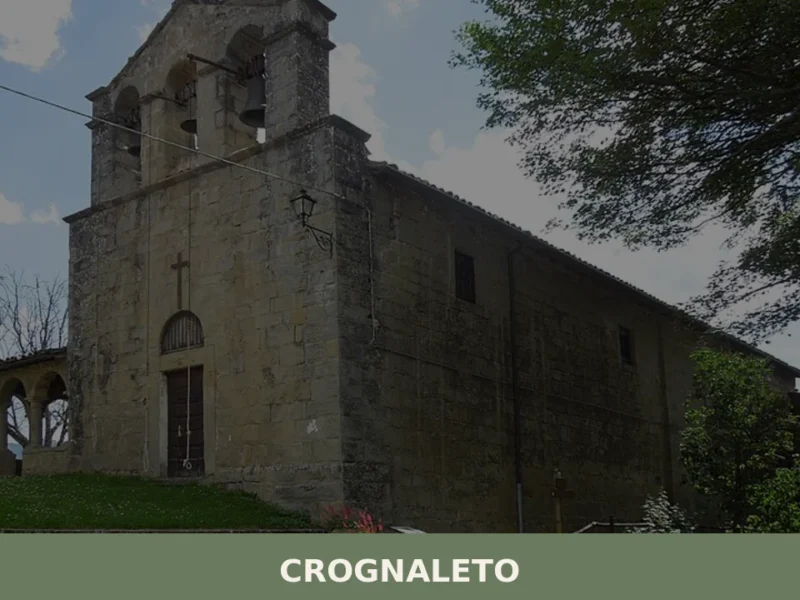
Crognaleto
Crognaleto, a scattered municipality in the province of Teramo, stands out for its average altitude of 1094 meters above sea level, positioning itself as one of the highest centers in the Gran Sasso d’Italia massif. Its territory, extensive and fragmented into over twenty hamlets, offers a diverse panorama of mountain landscapes and rural views that […]
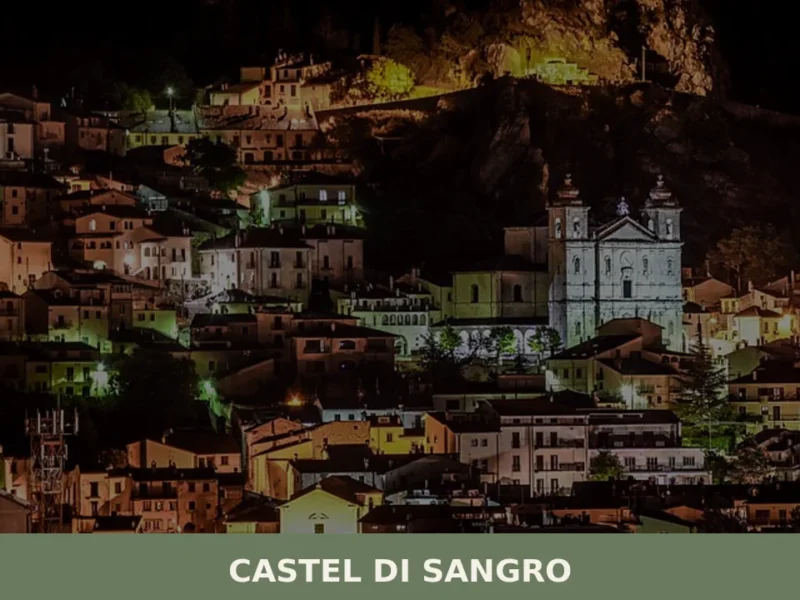
Castel di Sangro
At 793 metres above sea level, on the plain where the River Sangro meets the Zittola stream, Castel di Sangro occupies a strategic position that the Samnites already controlled in the 4th century BC. Today it has 6,128 inhabitants and retains an urban layout split between the upper town — the hill with the remains […]

📝 Incorrect information or updates?
Help us keep the Goriano Sicoli page accurate and up to date.