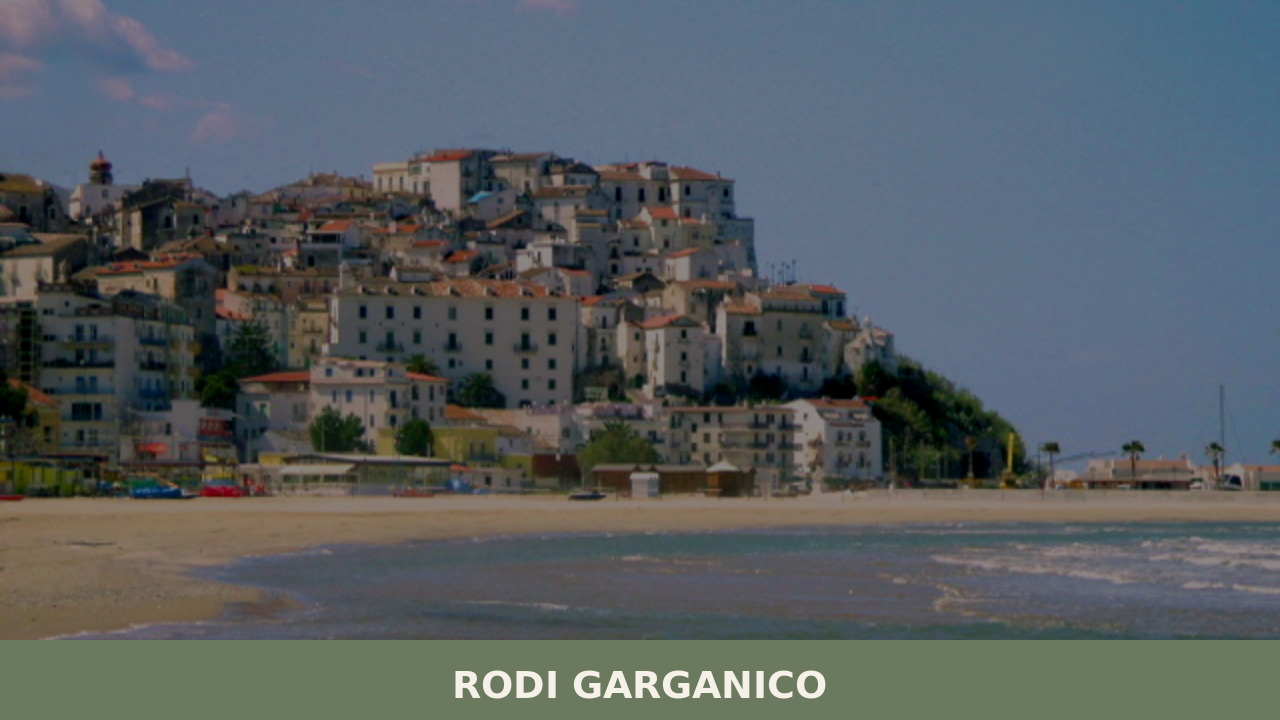
A coastal village of 3,302 inhabitants on the Gargano promontory, Rodi Garganico offers a medieval centre, IGP citrus groves, and an authentic Adriatic harbour life.
Salt air drifts through lanes so narrow your shoulders nearly brush both walls. Somewhere below, fishing boats knock against the harbour’s stone lip, a metronome keeping time with the Adriatic swell. Above the rooftops, orange groves terrace the hillside in dark, glossy rows — the scent sharp enough to taste. This is Rodi Garganico, a settlement of 3,302 people set at 42 metres above sea level on the northern coast of the Gargano promontory, in the province of Foggia. Understanding what to see in Rodi Garganico begins here, where the old town meets the water and every stone wall carries the residue of centuries.
The name itself is a contested inheritance. One theory traces “Rodi” to Greek colonists from the island of Rhodes who may have established a trading post along this stretch of coast as early as the 7th century BC. Another links it to the Latin iridos, referring to a local flower. What is certain is that the site has been inhabited since antiquity, its position offering a natural vantage over the sea routes connecting the Adriatic’s eastern and western shores. Archaeological fragments recovered in the area confirm Daunian and, later, Roman presence, though the settlement as it exists today took its essential shape during the medieval period.
Under Norman rule in the 11th and 12th centuries, the town was fortified and integrated into the broader defensive network of the Gargano peninsula. A watchtower system — remnants of which still punctuate the coastline — guarded against Saracen raids that had plagued the region for generations. The town’s economy consolidated around fishing and citrus cultivation, two pillars that persist to this day. By the 18th century, Rodi Garganico had become a notable exporter of oranges and lemons, its groves fed by a microclimate unusually mild for southern Italy’s Adriatic side.
The 20th century brought emigration, as it did to much of the Mezzogiorno. The population contracted, but the old centre — a tight labyrinth of whitewashed houses, external staircases, and arched passageways — survived largely intact, spared the speculative building that erased other coastal towns. Today, the village holds the character of a place that was never wealthy enough to demolish its own past.
The old quarter is built on a rocky spur directly above the sea. Its layout is medieval: concentric, defensive, with sudden flights of steps and blind alleys that once confused invaders. Whitewashed walls are interrupted by carved stone doorways dating to the 16th and 17th centuries. The district is compact — walkable in thirty minutes — but rewards slow exploration, particularly in the low light of early morning when shadow lines are sharpest.
Dedicated to the patron saint of sailors, this church anchors the old town’s highest point. Its origins are Romanesque, though successive restorations have layered Baroque elements onto the façade and interior. Inside, wooden statues of saints line the nave, and a 17th-century wooden crucifix hangs above the altar — objects of active devotion, not museum display. The festa in honour of San Nicola each October remains the town’s most significant religious event.
Set slightly apart from the centre, this sanctuary houses a Byzantine-influenced wooden icon of the Virgin that local tradition dates to the early medieval period. The building itself has been reworked over centuries, but the devotional atmosphere is unbroken. A procession carries the icon through town in early July, accompanied by fireworks launched from boats in the harbour — a spectacle that fuses sacred and secular with unselfconscious ease.
Rodi Garganico’s orange and lemon orchards hold IGP (Protected Geographical Indication) status — a formal recognition of their distinctiveness. The Gargano orange (Arancia del Gargano) is smaller and more aromatic than commercial varieties, grown in traditional walled gardens called giardini that use ancient irrigation channels. Some groves can be visited, particularly during the spring blossom or winter harvest.
The working harbour remains the town’s social anchor, where fishermen mend nets on the quay in the afternoon. Along the coastline to the east, several trabucchi — wooden fishing machines cantilevered over the water on long arms and cables — survive in varying states of repair. These structures, unique to the Gargano and parts of the Abruzzo coast, are engineered entirely from wood and rope, and some still function during calm seas.
The kitchen of Rodi Garganico is defined by two things: the sea and the groves. Fresh fish — particularly anchovies, red mullet, and cuttlefish — appears grilled, baked, or stewed with tomatoes and capers. Paposcia, a flatbread native to the Gargano, is split and filled with raw tomato, olive oil, and local cheese. The IGP citrus fruits find their way into marmalades, liqueurs, and candied preparations, but they are most striking eaten fresh, straight off the tree, their flavour intensely floral and slightly bitter compared to standard supermarket varieties.
Olive oil from the surrounding hills — pressed from Ogliarola garganica olives — accompanies nearly everything. Small trattorias in the old town and along the harbour serve straightforward, ingredient-driven meals; expect handmade orecchiette and troccoli pasta, often with vegetable sauces built on wild chicory, turnip tops, or broad beans. Portions are generous, prices moderate, and printed menus sometimes replaced by a verbal recitation of whatever arrived fresh that morning.
Summer — July and August — brings the largest crowds and warmest swimming conditions, with Adriatic water temperatures reaching 25°C. The Festa della Madonna della Libera in early July is the town’s marquee event, drawing visitors from across the Gargano. But the village is arguably more itself in the shoulder months. May and June offer warm days, flowering citrus groves, and an unhurried pace. September and October bring softer light, cooler evenings, and the San Nicola celebrations in mid-October. Winter is quiet, sometimes raw with Adriatic wind, but the citrus harvest runs from November through March, and the town functions without the seasonal closures that affect some coastal settlements.
Practical note: accommodation ranges from small B&B operations in the old town to larger holiday apartments closer to the beaches. Booking ahead is essential in August; at other times, availability is rarely a problem.
The nearest major airport is Bari Karol Wojtyła Airport, approximately 200 km to the southeast — a drive of roughly two and a half hours via the A14 motorway (exit at Poggio Imperiale or San Severo) followed by the SS89 coastal road, which winds spectacularly along the Gargano’s northern edge. Foggia, the provincial capital, lies about 100 km to the southwest and is connected to Rodi Garganico by the Ferrovie del Gargano regional rail line — a slow but scenic route that terminates at Rodi’s small station. In summer, hydrofoil services occasionally link Rodi Garganico’s harbour to the Tremiti Islands, a 90-minute crossing. From Rome, the drive is approximately 370 km (four hours); from Naples, roughly 280 km (three and a half hours). A car is strongly recommended for exploring the wider Gargano.
The province of Foggia extends well beyond the Gargano coast, reaching into the broad plateau of the Tavoliere and the sub-Appennine hills to the west. Inland, the landscape shifts from sea-level flatlands to rolling terrain marked by wheat fields and wind farms. Candela, set high in the Daunian sub-Apennines near the border with Campania, offers a dramatically different perspective on Puglia — stone-built, hill-perched, with views that run for kilometres across the valley floor. Its silence and altitude feel like a different region entirely from Rodi’s salt-edged coastline.
Closer to the Gargano but still firmly inland, Casalnuovo Monterotaro occupies a ridge in the northern Daunian hills, surrounded by olive groves and small-scale agriculture. Together, these villages illustrate the breadth of Puglia’s Foggia province — a territory that ranges from Adriatic fishing ports to isolated hilltop settlements within the span of a two-hour drive. Visiting them in combination with Rodi Garganico gives a far more complete picture of this often-overlooked corner of southern Italy.
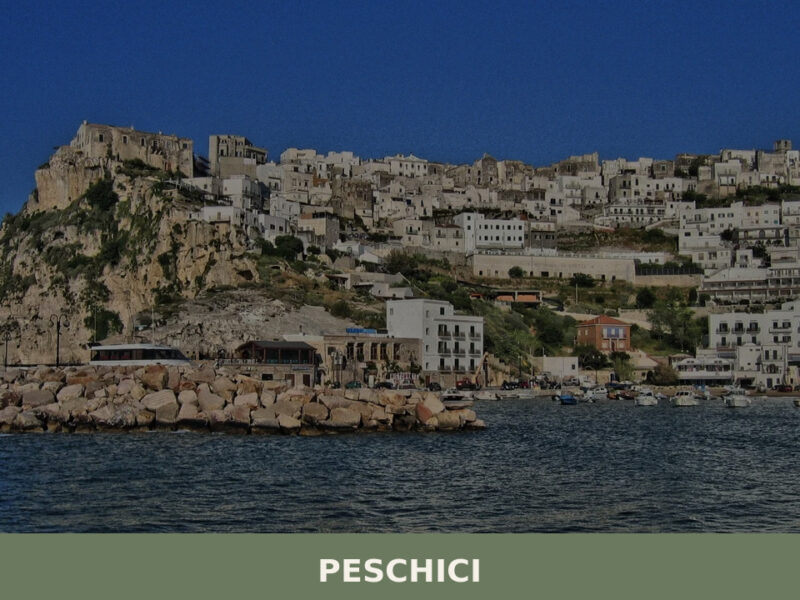
Perched on a rocky promontory above the turquoise waters of the Adriatic Sea, Peschici is one of the most enchanting coastal villages in Puglia’s Gargano peninsula. With its whitewashed houses, narrow alleyways, and dramatic clifftop setting, this small town of 4,283 inhabitants offers a captivating blend of history, natural beauty, and Mediterranean charm. If you’re […]
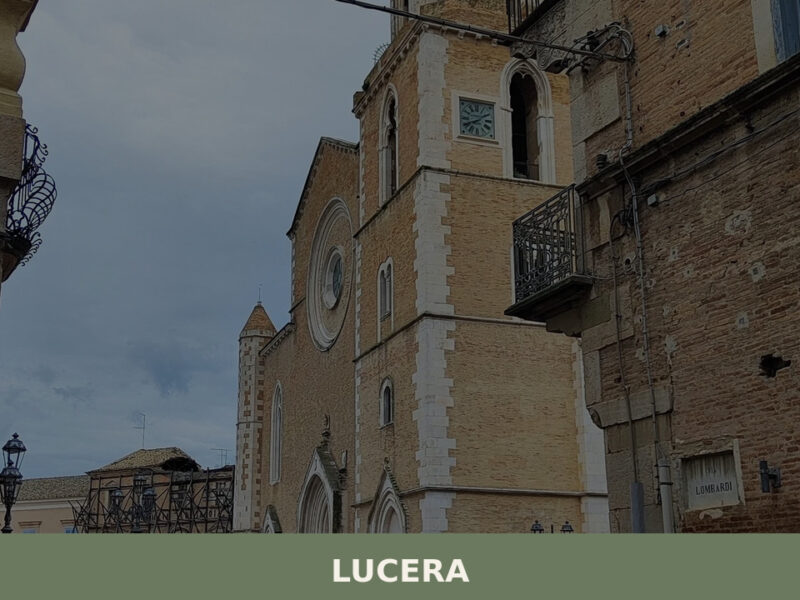
Discover Lucera, a historic hilltop city in Puglia where Roman ruins, a Saracen past, and Angevin grandeur converge amid the sun-drenched Tavoliere plain.
A working agricultural village on the Tavoliere plain near Foggia, Stornarella offers wheat-field panoramas, rural chapels, and the elemental cuisine of northern Puglia.
📝 Incorrect information or updates?
Help us keep the Rodi Garganico page accurate and up to date.