


Bassano in Teverina
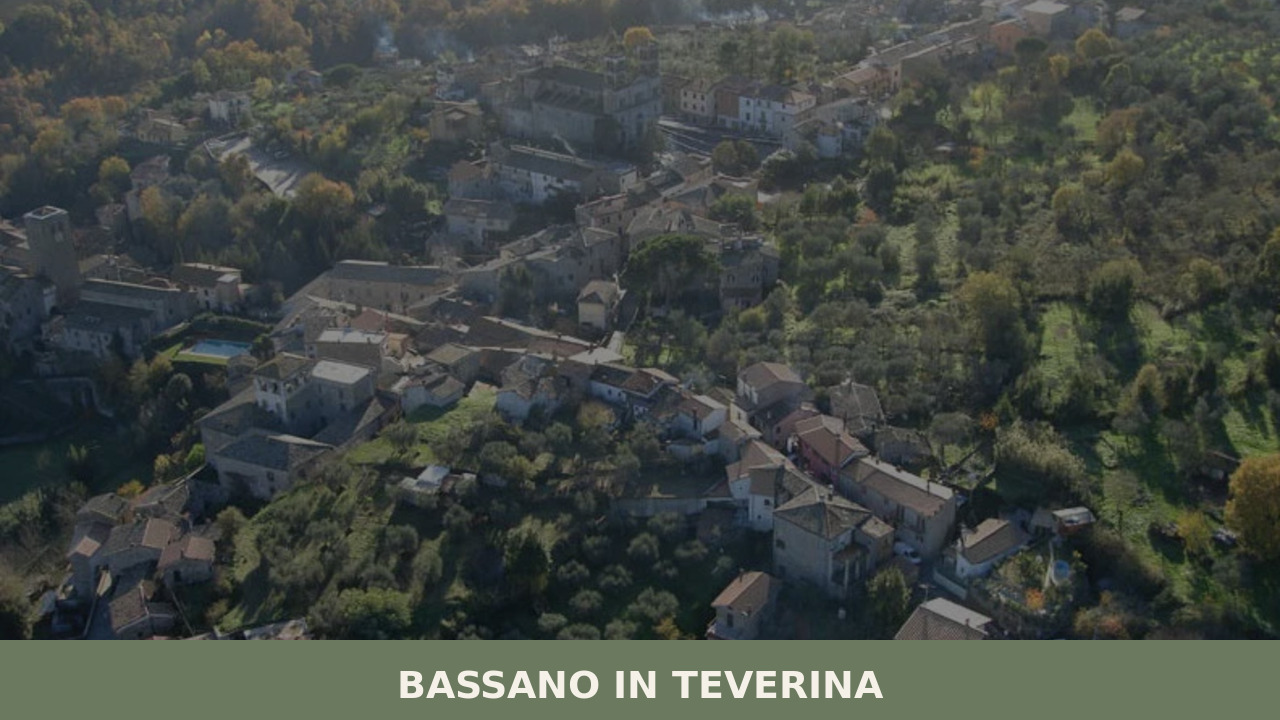
Standing at 304 metres above sea level, with a population of 1,260, Bassano in Teverina occupies a tuff plateau overlooking the Tiber valley in the province of Viterbo. The village owes the second part of its name to the river that flows just a few kilometres to the east — a geographical reference that distinguishes […]
Discover Bassano in Teverina
Standing at 304 metres above sea level, with a population of 1,260, Bassano in Teverina occupies a tuff plateau overlooking the Tiber valley in the province of Viterbo. The village owes the second part of its name to the river that flows just a few kilometres to the east — a geographical reference that distinguishes it from other places with the same name. Anyone wondering what to see in Bassano in Teverina will find a compact urban centre, still enclosed by its medieval defensive walls, where local stone — a yellowish tuff quarried from the surrounding pits — defines the appearance of façades, arches and foundations.
History and origins of Bassano in Teverina
The earliest documented traces of the area date back to the Etruscan period: ceramic fragments and necropolis remains found in the zone confirm human presence prior to Roman colonisation. The place name “Bassano” probably derives from the Latin praedium Bassianum, referring to an estate owned by the gens Bassia. The specification “in Teverina” was officially added in 1862, after Italian Unification, to distinguish the municipality from the many other places called Bassano across the peninsula, in particular as recorded in historical sources.
During the Middle Ages, the settlement passed through the hands of several feudal families linked to papal authority. Between the 12th and 13th centuries, Bassano was contested between local lords and the Holy See, which claimed direct dominion over it. In the 14th century the village fell within the sphere of the Prefects of Vico, a powerful dynasty of the Tuscia region, before passing to the Anguillara family and later to the Colonna. Each transfer of power left its mark on the urban layout: watchtowers, access gates, extensions to the defensive walls. With the definitive consolidation of papal authority, Bassano remained part of the Papal States until 1870.
The patron saints Fidentius and Terentius, celebrated on 27 September, are two 3rd-century martyrs venerated throughout the Viterbo area of Tuscia. Their cult connects Bassano to a devotional network that extends well beyond the municipal boundaries, with processions and rites that still mark the community’s calendar today.
What to see in Bassano in Teverina: 5 main attractions
1. Church of Saints Fidentius and Terentius
The village’s main place of worship is dedicated to its two patron saints and preserves interior architectural elements dating from interventions between the 16th and 18th centuries. The local tuff façade features a sober portal with a stone lintel. Inside, there are side altars decorated with stuccoes and canvases from the Lazio school. The church serves as the liturgical focal point for the patronal feast on 27 September.
2. Medieval walls and access gate
The circuit of walls, still legible along much of its perimeter, defines the shape of the historic centre. The main gateway into the village, with a round arch built from tuff blocks, marks the transition between the modern area and the old core. Along the walls, vantage points open up towards the Tiber valley and the Amerini Mountains on the Umbrian side.
3. Baronial Palace
A 16th-century structure located in the centre of the village, the palace reflects the shifts in power that marked Bassano’s history. The building features defensive elements — windows framed in peperino stone, thick load-bearing walls — combined with residential details added in later centuries. The edifice overlooks the main square and forms the hub of the village’s urban layout.
4. Watchtower
Dating from the medieval period, the tower rises above the surrounding buildings and served as a lookout point over the valley below. The structure, square in plan, is built from tuff blocks laid in a regular pattern. From its position, the view on clear days spans an arc from Monte Soratte to the hills of the Terni basin.
5. Panoramic walk along the Tiber Valley
A walkway running outside the walls — accessible from the main gate — follows the edge of the tuff plateau and offers a sequence of views over the river valley. The path, roughly one kilometre long, passes through areas of spontaneous Mediterranean vegetation including oaks, broom and wild olives. It is a prime spot for observing the territory’s morphology: the Tiber, the tuff gorges, and the cultivated fields on the alluvial plain.
Food and local produce
The table in Bassano in Teverina reflects the culinary tradition of the Viterbo Tuscia, a territory where peasant cooking is built on legumes, cereals, olive oil and pork. Tuscia DOP extra virgin olive oil, produced mainly from Canino, Frantoio and Leccino cultivars, is the base condiment for almost every dish. Among first courses, fettuccine with giblet sauce and umbrichelli — hand-rolled long pasta with a round cross-section — dressed with tomato and garlic are permanent fixtures on local tables. Acquacotta, a wild vegetable soup with egg and pecorino, is the most distinctive dish of Viterbo’s cuisine. Pecorino Romano DOP, also produced in this part of Lazio, appears both grated over pasta and served at the table with honey and fresh broad beans in spring. Also worth noting is Nocciola Romana DOP, a hazelnut cultivated in the province of Viterbo with production concentrated mainly in the Cimini Mountains but also present in the surrounding territory.
The gastronomic calendar follows agricultural rhythms: the olive harvest between October and November, the winter slaughter that yields coppa, lonza and salsicce aged in tuff cellars, and the gathering of porcini mushrooms in the surrounding oak woods. Wine from the territory falls under the Colli Etruschi Viterbesi DOC designation, with whites based on Trebbiano and Malvasia and reds from Sangiovese and Montepulciano grapes. During the patronal feast on 27 September and at other summer gatherings, communal dinners are organised in the village squares, where visitors can try fregnacce — crêpes made from flour, water and eggs dressed with ragù — and ciambelle al mosto, traditional grape-must doughnuts from the harvest season.
When to visit Bassano in Teverina: the best time of year
The hillside climate of Tuscia makes the months between April and June and between September and October the most suitable for a visit. In spring, the vegetation of the Tiber valley reaches its peak lushness and daytime temperatures range between 18 and 24 degrees. Summer can be hot, with highs exceeding 35 degrees in July and August, but the altitude of 304 metres ensures better air circulation than the surrounding plain.
The key date is 27 September, the feast day of Saints Fidentius and Terentius, when the village comes alive with the procession, religious rites and convivial events in the squares. Those who visit in autumn can witness the olive harvest and find freshly pressed new-season oil at local mills. Winter is quiet, with temperatures that rarely drop below zero, and the village lends itself to short visits that can be combined with an exploration of the wider municipal territory.
How to reach Bassano in Teverina
By car, Bassano in Teverina is reached from the A1 Milan–Naples motorway by taking the Orte exit, from which the village lies about 12 kilometres to the west along the provincial road. From Rome the distance is roughly 80 kilometres, a little over an hour’s drive. From Viterbo, the provincial capital, it is approximately 25 kilometres to the south-east.
The nearest railway station is Orte, served by both high-speed trains (Rome–Florence line) and regional services. From Orte, it is necessary to continue by private vehicle or with the local Cotral bus service. The nearest airport is Leonardo da Vinci – Fiumicino, about 120 kilometres away; alternatively, Perugia Sant’Egidio airport is roughly 80 kilometres distant and is connected to the area via the Terni–Orte motorway link.
Other villages to discover in Lazio
The province of Viterbo holds a high concentration of smaller towns that preserve medieval and Renaissance structures in good condition. North-west of Bassano, towards Lake Bolsena, Gradoli deserves attention for its Palazzo Farnese, built to a design attributed to Antonio da Sangallo the Younger, and for its position on the western shore of the largest volcanic lake in Europe. The village is also known for its wine production linked to the Aleatico di Gradoli DOC designation, a sweet wine made from aromatic grapes.
Closer to Bassano, in the direction of the Cimini Mountains, Villa San Giovanni in Tuscia is a small settlement that extends along a wooded ridge just a few kilometres from Lake Vico. Its location, on the edge of the Lake Vico Nature Reserve, makes it a starting point for hikes through the beech and chestnut woods surrounding the volcanic crater. Together with Bassano, these villages form a coherent itinerary across Tuscia, a territory where volcanic geology, feudal history and agriculture intertwine in a concrete and visible way.
Nearby Villages near Bassano in Teverina
In Lazio More villages to discover
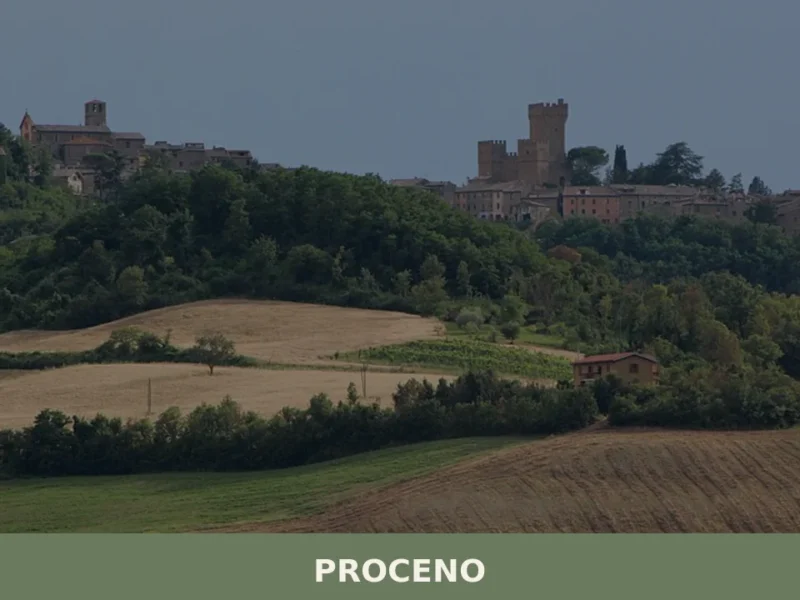
Proceno
A 418 meters above sea level, in northern Lazio, the village of Proceno developed around a Fortress documented as early as the 12th century. This architectural element, central to the settlement’s development, still defines the structure of the historic center today. With a population of 519 inhabitants, Proceno is part of the Viterbo Tuscia region, […]
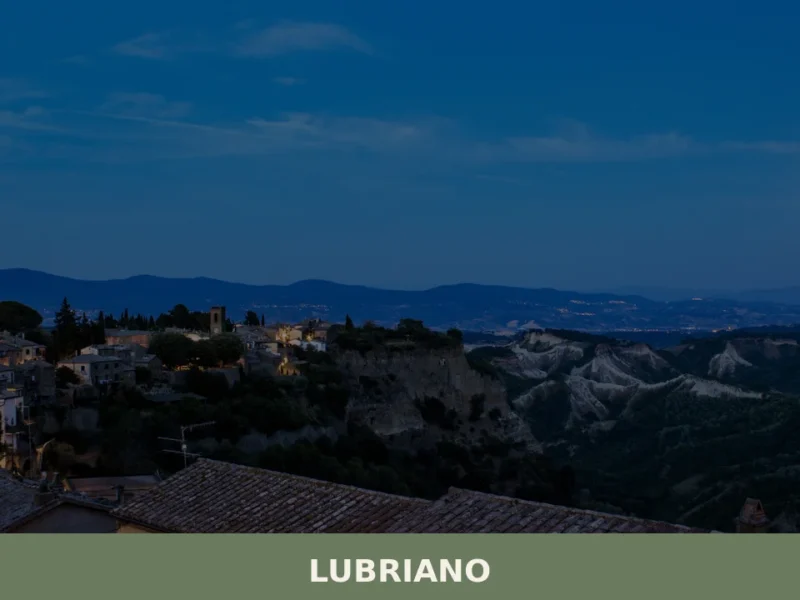
Lubriano
Lubriano has 864 inhabitants and occupies a tuff plateau at 441 metres above sea level, separated from the more famous Civita di Bagnoregio by a calanchi valley nearly two hundred metres deep. The municipal boundary runs along the edge of a gorge that geologists classify as one of the most active in Tuscia for erosion. […]
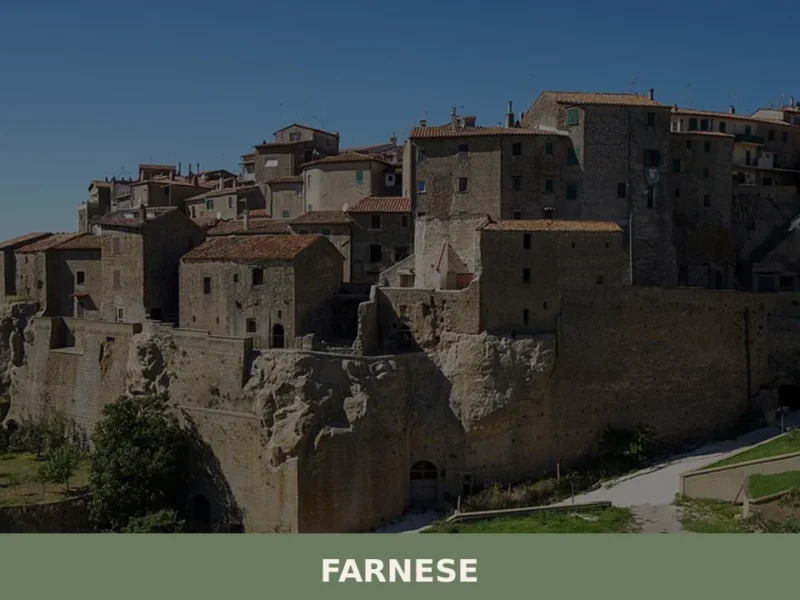
Farnese
The morning light, a pale gold filtering through the narrow aperture of a medieval archway, illuminates the rough-hewn basalt paving stones of Farnese. A faint scent of woodsmoke and damp earth hangs in the cool air, carried on a breeze that rustles the leaves of an ancient oak on the village’s periphery. Here, at 341 […]




📝 Incorrect information or updates?
Help us keep the Bassano in Teverina page accurate and up to date.