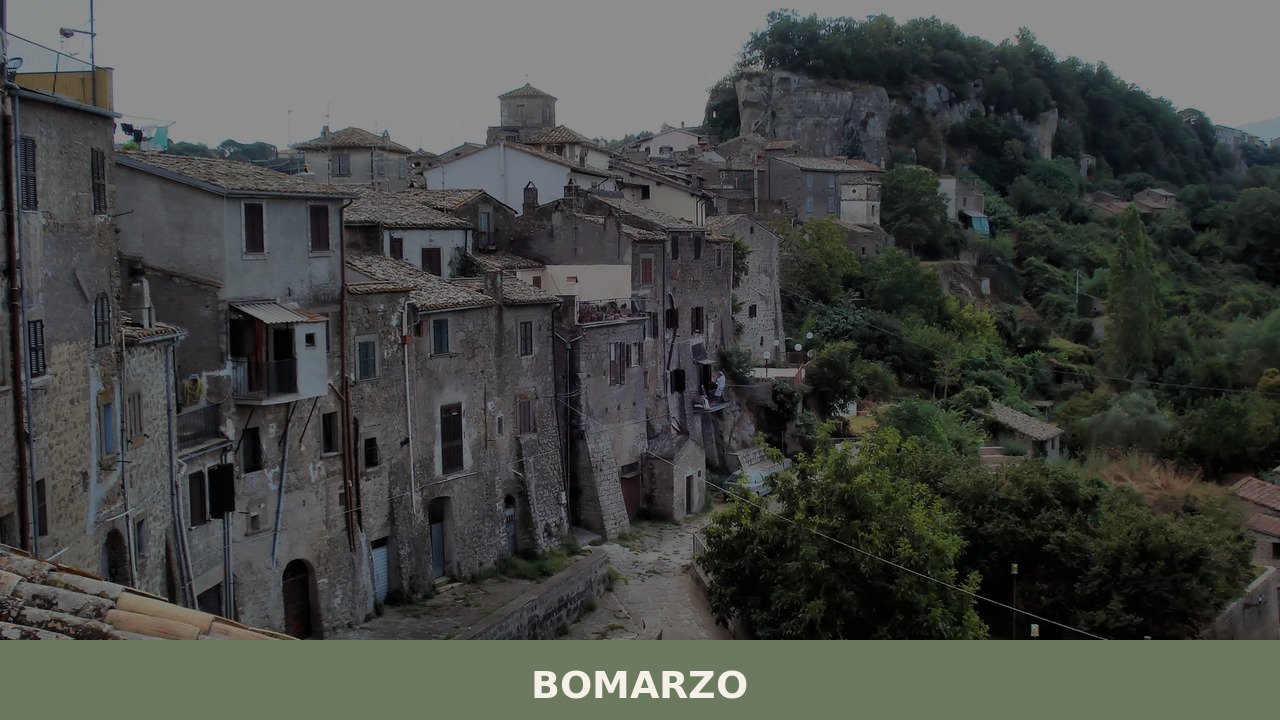
Light filters through the stone archways of a very small Lazio village where the Cimini hills slope toward the Tiber valley. Bomarzo sits at 263 metres above sea level, its modest buildings arranged without grand central piazza or theatrical vistas. The rhythm here is one of daily life: voices in narrow lanes, washing strung between windows, the sound of a bell marking time.
Bomarzo lies in the province of Viterbo, in the region of Lazio, with a current population of 1,679 residents. The village draws international visitors primarily for one reason: the Parco dei Mostri, a 16th-century garden sanctuary commissioned by Pier Francesco Orsini. Beyond this celebrated site, the village itself reveals a quieter appeal—a place where religious observance, local attachment to the landscape, and domestic memory shape the everyday experience of those who live there.
The Parco dei Mostri stands as an unusual monument of the Renaissance: a garden that speaks not of rational order but of wonder, fear and the power of nature to surprise the human mind.
The Village and Its Territory
Bomarzo occupies a position within the volcanic plateau of the Cimini hills, an ancient landscape shaped by geological forces rather than urban planning. The village’s own buildings—church, palazzo, domestic dwellings—follow the contours of the terrain and the logic of water flow rather than a predetermined scheme. Stone is the dominant material: local tufa and travertine form the walls, thresholds and street surfaces. The patron saint, Sant’Anselmo, holds a place in the religious calendar and local observance, though without elaborate festive display.
The neighbouring comuni of Viterbo province—Bassano in Teverina, Vitorchiano, Soriano nel Cimino, Graffignano, Vasanello, Orte, Vallerano and Vignanello—form a network of similar small settlements across the same hills and valleys. None dominates the landscape; each maintains its own administrative identity and local continuity. This is a territory of modest villages rather than major urban centres, where agricultural rhythms and family ties remain stronger than tourist infrastructure.
The Parco dei Mostri: The Village’s International Landmark
The Parco dei Mostri, also known as the Sacred Grove, is an elaborate garden commission from the 16th century. Pier Francesco Orsini initiated this work, creating a space that defies easy classification. The park contains monumental stone carvings—mythological creatures, allegorical figures, and architectural fantasies—arranged across woodland ground. Visitors encounter a dragon, a giant turtle, faces emerging from rock, and buildings of unconventional design. The garden is neither a formal Renaissance composition nor a purely decorative pleasure ground; instead it occupies a space between reason and spectacle, between classical allusion and personal vision.
The park lies within the administrative territory of Bomarzo and remains the village’s primary point of contact with international cultural tourism. Those arriving to see the Parco dei Mostri find themselves in a real village, not a theme park or heritage site separated from ordinary life. The presence of the park has shaped Bomarzo’s modern identity without overwhelming its residential character.
Religious Life and Local Memory
The village church and the figure of the patron saint anchor religious observance at Bomarzo. Sant’Anselmo’s feast day draws local participation rooted in family tradition rather than elaborate public ceremony. Religious practice here follows patterns established over centuries: baptism, marriage, funeral mass, and seasonal observances mark the passage of individual and collective time.
The church building itself speaks to the village’s material history. Like other structures in Bomarzo, it is constructed in local stone and reflects the architectural vocabulary of the region rather than any singular grand design. Religious imagery, local burial sites, and the accumulated dedications of families create a landscape of private devotion made public through architecture and ritual.
Food and Agricultural Tradition
Bomarzo sits within a region where olive groves, vineyards and grain cultivation have defined the economy for centuries. The volcanic soil of the Cimini hills produces wines and oils distinct from other Lazio territories. Local cooking relies on these agricultural products: preserved vegetables, cured meats, bread, wine and cheese appear on tables according to season and family practice. The village itself contains no celebrated restaurants or food-tourism infrastructure; instead, food remains embedded in domestic rhythm and family meals.
Planning Your Visit to Bomarzo
Access to Bomarzo is possible by car or regional transport. The village lies within reasonable distance of Viterbo, the provincial capital, and can be reached as part of a broader exploration of the Cimini hills and their villages. If you arrive by car, parking is available near the village centre and at the Parco dei Mostri. Regional buses serve connections from Viterbo, though schedules are limited; check local transport authority websites for current routes.
The best time to visit depends on your priorities. Spring and autumn offer moderate temperatures and clearer light for exploring the village streets and the park’s woodland. Summer can be warm, though the altitude provides some relief. Winter is quieter and wetter. Visitors planning to see the Parco dei Mostri should allow a minimum of two to three hours for the garden itself; the village merits a slow walk of an hour or more if you wish to observe domestic architecture and the small squares where local life unfolds.
Bomarzo has limited commercial accommodation and dining options within the village itself. Nearby larger centres such as Viterbo offer hotels and restaurants. If you plan to stay locally, book ahead and contact the municipal office or official website for current information on available services. The village is not designed for day-tripper speed; those who come here benefit from arriving without rigid schedules, allowing time to move at the pace of the place itself.
| Departure Point | Distance | Approximate Travel Time |
|---|---|---|
| Viterbo | 25 km | 35–45 minutes by car |
| Rome (Fiumicino) | 95 km | 1 hour 45 minutes by car |
| Orvieto | 50 km | 1 hour by car |
Nearby Villages in the Cimini Landscape
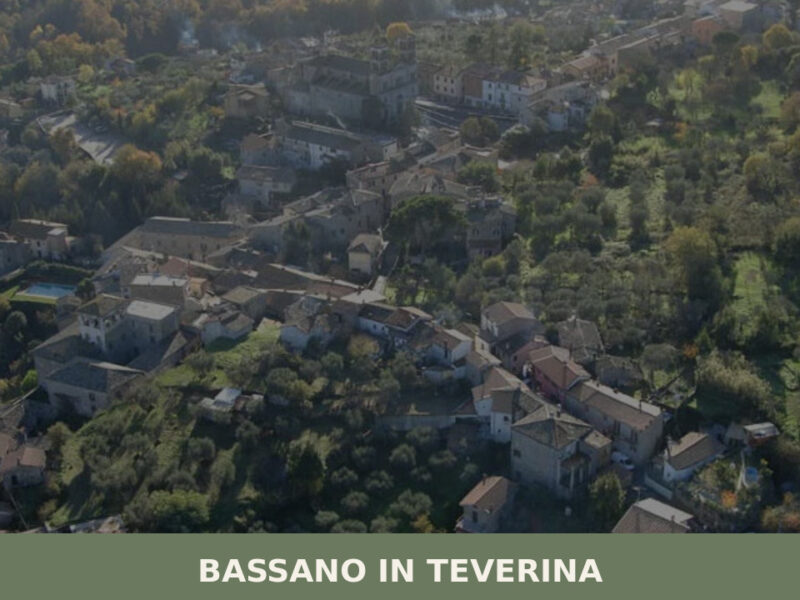
The province of Viterbo contains many small villages within a short drive of Bomarzo, each with distinct character. Bassano in Teverina occupies higher ground to the north and maintains strong agricultural traditions. Celleno and Civitella d’Agliano are smaller settlements with their own local histories. Carbognano and Canepina offer alternative routes through the hills. None of these villages offers the singular international draw of Bomarzo’s Parco dei Mostri, but each contributes to the territorial texture of the region—a landscape where small communities maintain continuity across centuries without seeking to become destinations.
 Mountain