


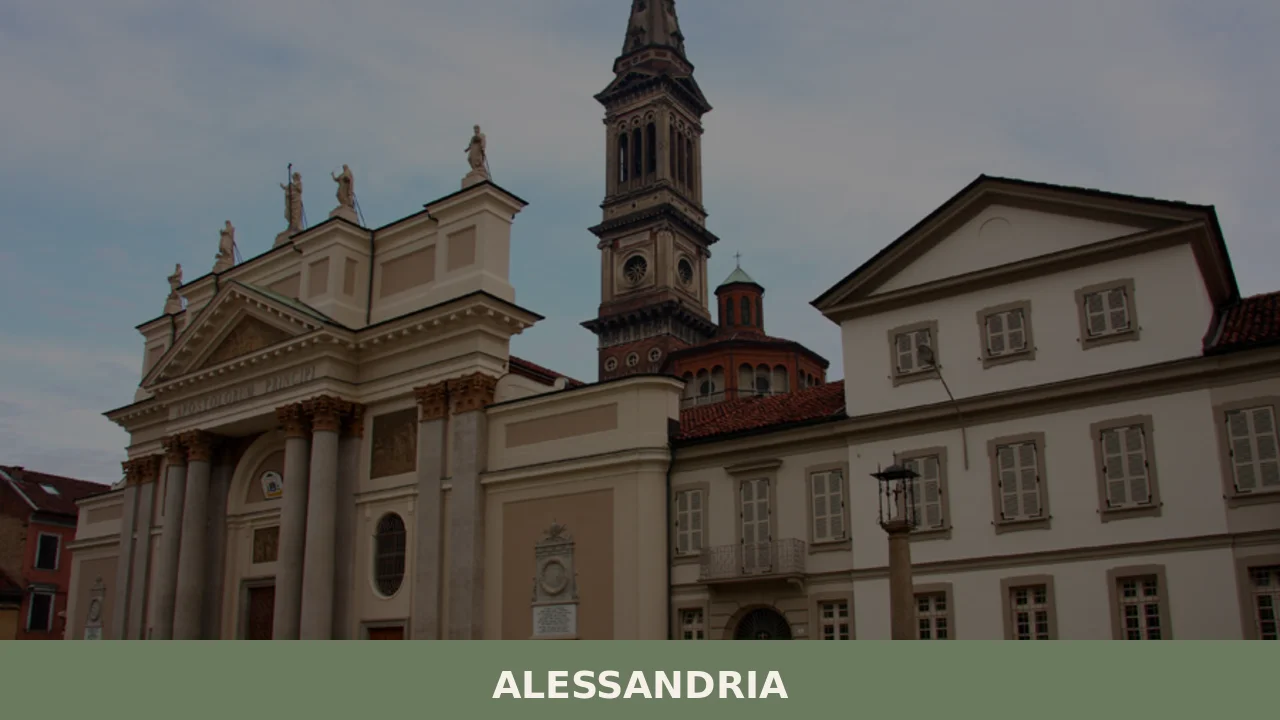
Alessandria
What to see in Alessandria: city at 95m in Piemonte with a military Citadel and Borsalino Museum. Explore 5 attractions, rabaton and Gavi DOCG wines.
Discover Alessandria
In 1168, as Barbarossa descended into Italy for the fifth time, a handful of villages in the western Po plain decided to merge into a new city, naming it after Pope Alexander III — an act of political defiance built on mud and straw.
Today Alessandria, with its 91,059 inhabitants and an altitude of just 95 metres above sea level, remains the only major Italian city born not from an ancient settlement but from a deliberate medieval strategic decision.
A provincial capital in the heart of Piemonte, it stands at the confluence of the Tanaro and Bormida rivers, two waterways that have determined both its fortunes and its disasters. Asking what to see in Alessandria means traversing eight centuries of military, civic and industrial history compressed into an urban fabric that has reinvented itself many times over.
History and Origins of Alessandria
The city’s name is a direct tribute to Pope Alexander III, who in 1167–1168 supported the Lombard League in its resistance against Frederick I of Swabia. The founding took place officially in 1168, when the inhabitants of Gamondio (present-day Castellazzo Bormida), Marengo, Borgoglio, Roboreto and other minor settlements united to create a fortified outpost. The emperor, scornful, called it “Civitas Palea” — city of straw — alluding to the fragility of its defences.
But in 1174–1175, the imperial siege failed, and that city of straw held firm. The episode consolidated Alessandria’s role as a Guelph stronghold in the Po plain, a role it maintained in the following decades within the Lombard League.
During the fourteenth and fifteenth centuries, the city fell under the rule of the Visconti and then the Sforza, following the fate of the Duchy of Milan.
With the Treaty of Utrecht in 1713, Alessandria became part of the Kingdom of Sardinia under the House of Savoy, which turned it into a military stronghold of the first order. On 14 June 1800, the plain of Marengo — just a few kilometres from the centre — was the scene of the famous battle in which Napoleon Bonaparte defeated the Austrians under General Melas, an event that redrew the political map of post-revolutionary Europe.
The city subsequently housed one of the most important Savoyard garrisons and contributed to the Risorgimento uprisings of 1821, when a group of garrison officers rose up demanding a constitution.
Between the nineteenth and twentieth centuries, Alessandria underwent a profound industrial transformation. The founding of Borsalino in 1857 by Giuseppe Borsalino brought the city to international attention: the felt hats produced here became a global symbol of elegance, exported from Hollywood to Buenos Aires. In the decades that followed, the city developed a diversified manufacturing base, from goldsmithing to mechanical engineering.
Among the notable figures linked to the city is Umberto Eco, born in Alessandria in 1932, a semiotician, philosopher and world-renowned novelist, author of “The Name of the Rose.” The population, which had exceeded 100,000 in the 1970s, later stabilised at around 90,000, retaining its character as a human-scale urban centre, far from the congestion of the large northern metropolises.
What to See in Alessandria: 5 Top Attractions
1. The Military Citadel
Built between 1732 and 1745 at the behest of the House of Savoy, the Citadel of Alessandria is one of the best-preserved eighteenth-century fortresses in Europe.
It stands on the left bank of the Tanaro, connected to the historic centre by the Cittadella Bridge. The plan follows a hexagonal star shape, with six bastions, moats, counterguards and ravelins designed according to the principles of French-school military engineering. The casemates, gunpowder magazines and the internal church of Sant’Antonio are still legible in their original structure. Used as a barracks until 2007, it is now the subject of a restoration and enhancement project. The sheer scale of the complex — over 74 hectares — makes it one of the largest permanent fortifications still standing in Italy.
2. Cathedral of Saints Peter and Mark
The Cathedral, dedicated to Saints Peter and Mark, faces onto Piazza del Duomo in the city centre. The current building is the result of a neoclassical reconstruction completed in 1810, after the original medieval cathedral was demolished by the French to make way for new Napoleonic military structures. The design is the work of architect Cristoforo Valizzone.
The interior, with three naves and side chapels, houses paintings from the Piedmontese school and a fifteenth-century baptismal font salvaged from the earlier structure. The bell tower, approximately 46 metres tall, is one of the vertical landmarks on the city’s skyline. The cathedral is the seat of the Diocese of Alessandria, established in 1175, just seven years after the city’s own founding.
3. Palazzo Ghilini
Palazzo Ghilini, located in Piazza della Libertà, is the most important Baroque building in Alessandria. It was built between 1730 and 1733 to a design by the architect Benedetto Alfieri, uncle of the playwright Vittorio Alfieri, for the marchional Ghilini family. The façade, articulated by pilasters and crowned by a central pediment, rises over three storeys with an entrance portal leading to an atrium with a monumental staircase.
Today it houses the Prefecture and the Provincial administration. The inner courtyard, with a colonnaded loggia, is accessible to visitors and deserves a stop to appreciate the proportions of the architectural layout. The building represents the pinnacle of aristocratic patronage in the eighteenth-century city.
4. Borsalino Hat Museum
Housed inside Palazzo Borsalino, the Borsalino Hat Museum documents the history of the famous manufacturing company founded in 1857. The exhibition itinerary presents original machinery, moulds, wooden hat blocks and a collection of hats spanning more than a century of fashion and costume. Visitors can see models worn by actors, heads of state and international public figures.
The museum also tells the social history of the factory, which at its peak employed thousands of workers from Alessandria, transforming the city into a globally recognised manufacturing district. The exhibition is currently located at the Palazzo Borsalino complex on Via Cavour.
5. Piazza della Libertà and the Historic Centre
Piazza della Libertà is the geometric and civic centre of Alessandria, the convergence point of the city’s main arteries. Palazzo Ghilini, the Town Hall and other institutional buildings face onto it, forming a coherent architectural ensemble of eighteenth- and nineteenth-century character.
From here, the streets of the historic centre branch out, alternating continuous arcades — a distinctive feature of Alessandria’s urban planning — with minor churches such as Santa Maria di Castello and noble palazzi with Baroque and neoclassical façades.
The pedestrian-friendly atmosphere beneath the arcades makes walking enjoyable in every season, providing shelter from rain and from the summer heat of the plain. The Saturday morning market brings the surrounding streets to life with stalls selling local agricultural produce.
What to Eat in Alessandria: Traditional Cuisine and Local Products
Alessandria’s gastronomic tradition belongs to the broader canon of Piedmontese cooking, with variations that derive from its lowland position, proximity to the Monferrato hills and the availability of raw ingredients tied to cereal farming and cattle rearing. It is a cuisine that favours animal fats — butter and lard — over olive oil, and makes extensive use of fresh egg pasta, boiled meats and garden vegetables.
The influence of neighbouring Liguria can be detected in the use of aromatic herbs and in focaccia-based preparations, while the bond with Monferrato brings to the table a wine culture that permeates the entire local food tradition.
Among the most representative dishes are rabaton, gnocchi made from ricotta, spinach (or chard), eggs and Parmesan, typical of the Alessandria tradition and documented as a local speciality.
They are shaped by hand, dusted with flour and baked in the oven with butter and sage after an initial boiling. Another cornerstone dish is polenta, prepared with stone-ground cornmeal and served as an accompaniment to braised meats, stews and cheeses.
Bollito misto alla piemontese, served with the traditional sauces — bagnet verd made with parsley and bagnet ross made with tomato — is the dish for special occasions and winter fairs, presented on steaming trolleys with different cuts of beef, cotechino sausage and hen.
The Alessandria area produces quality vegetables linked to the alluvial plain of the Tanaro. The cardo gobbo (cardoon), a variety grown in the Nizza Monferrato area (in the province of Asti but culturally contiguous), frequently appears on Alessandria tables, eaten raw in bagna cauda or baked in the oven with béchamel sauce.
Among cheeses, the Piedmontese tradition brings toma and robiola to the table, produced in various versions in the surrounding valleys and hills. Grissini, originating in the Turin tradition but widespread throughout Piemonte, accompany every meal. Dry biscuits such as baci di dama — two hazelnut-paste hemispheres joined by dark chocolate — belong to the confectionery tradition of lower Piemonte and are also made in several Alessandria pastry shops.
The most significant gastronomic event is linked to the autumn fairs, when white truffle from Monferrato and seasonal produce enliven the markets.
The covered market in Alessandria, located in Piazza Marconi, offers year-round stalls from local producers selling fruit, vegetables, cured meats and cheeses from the area. In autumn, festivals in neighbouring municipalities — often reachable in just a few minutes by car — celebrate specific products such as chestnuts, truffles and porcini mushrooms. The patron saint’s feast day on 10 November, dedicated to the Madonna della Salve and San Baudolino, is an occasion to find the most established traditional dishes back on the table.
The province of Alessandria is crossed by some of Piemonte’s most important wine appellations.
The Monferrato territory, which extends south of the city towards the hills, produces DOC wines including Barbera del Monferrato, Grignolino del Monferrato Casalese and Dolcetto. The Gavi zone, to the south-east, is known for Gavi DOCG, a white wine made from Cortese grapes, recognised as one of the few great white appellations of Piemonte.
Wine bars in the city centre allow visitors to taste these wines, and several wineries in the surrounding hills welcome guests by reservation, offering an oenological complement to the urban visit.
When to Visit Alessandria: The Best Time
Alessandria has a continental climate, with hot and humid summers — temperatures regularly exceed 30°C between July and August — and cold winters, often accompanied by thick fog across the Tanaro plain. Spring, particularly the months of April and May, offers the most favourable conditions for exploring the city and the surrounding hills: long days, mild temperatures between 15 and 22°C, and the Monferrato countryside in full bloom. September and the first half of October are also excellent periods, when the summer heat subsides and truffle season begins to animate the territory.
The patron saint’s feast falls on 10 November, in honour of the Madonna della Salve and San Baudolino, patron of the city.
Celebrations include religious services, markets and cultural events. The Christmas period brings markets and light installations to the historic centre, beneath the arcades. If possible, avoid the central weeks of January and February, when fog can significantly reduce visibility and temperatures drop below zero. For those interested in the food and wine heritage, autumn remains the ideal season: truffle fairs, the grape harvest and local produce festivals are concentrated between October and November, creating a packed calendar of events in the Monferrato municipalities a short distance from Alessandria.
How to Get to Alessandria
Alessandria is a significant road and rail junction in Italy’s north-western quadrant.
By car, it is reached from the A21 motorway (Turin–Piacenza) with direct exits at Alessandria Est or Alessandria Ovest, and from the A26 motorway (Genova Voltri–Gravellona Toce) which links the city to the port of Genoa and to Lake Maggiore. Turin is approximately 90 km away (about one hour’s drive), Milan approximately 100 km, and Genoa approximately 80 km. These distances place Alessandria at the centre of a logistical triangle that makes it easily accessible from three regional capitals.
Alessandria railway station is one of the main junctions in southern Piemonte, served by regional and Intercity trains on the Turin–Genoa, Turin–Piacenza and Milan–Genoa routes.
Journey times by train are approximately 75 minutes from Torino Porta Nuova and approximately 90 minutes from Milano Centrale on fast regional services. The nearest airport is Turin-Caselle, approximately 110 km away, reachable in about an hour and a half by car. Milan Malpensa airport, approximately 150 km away, offers a wider range of international connections.
Urban public transport, operated by AMAG Mobilità, covers the main city routes and connections with neighbouring municipalities.
Other Villages to Discover in Piemonte
Visitors to Alessandria have the opportunity to explore a side of Piemonte less well known than the circuits of Turin and the Langhe. To the north-east, Novara offers another face of the Piedmontese Po plain, with the Antonellian dome of San Gaudenzio dominating the urban skyline and a rice-growing tradition that has shaped both landscape and gastronomy.
The distance between Alessandria and Novara is approximately 80 km, covered in just over an hour along the A26 and A4: a route that crosses the rice paddies of the Vercelli area, radically changing the landscape from cereal-growing hills to waterlogged plains.
The two cities share the condition of often-underestimated provincial capitals, yet both possess significant architectural and cultural heritage.
In the opposite direction, towards the mountains, Ala di Stura represents an immersion into the Valli di Lanzo, approximately 170 km from Alessandria. This small mountain settlement, at over 1,000 metres in altitude, is a starting point for alpine hikes towards the lakes of Malciaussia and the Pian della Mussa.
The contrast with Alessandria could not be starker: from the river plain to high-altitude pastures, from eighteenth-century military history to the alpine culture of Walser hamlets. Those with time for a multi-day Piemonte itinerary can build a route that takes in the Alessandria lowlands, the Monferrato hills and the pre-alpine valleys, crossing three landscapes and three distinct traditions of the same region within just a few hours.
In Piedmont More villages to discover
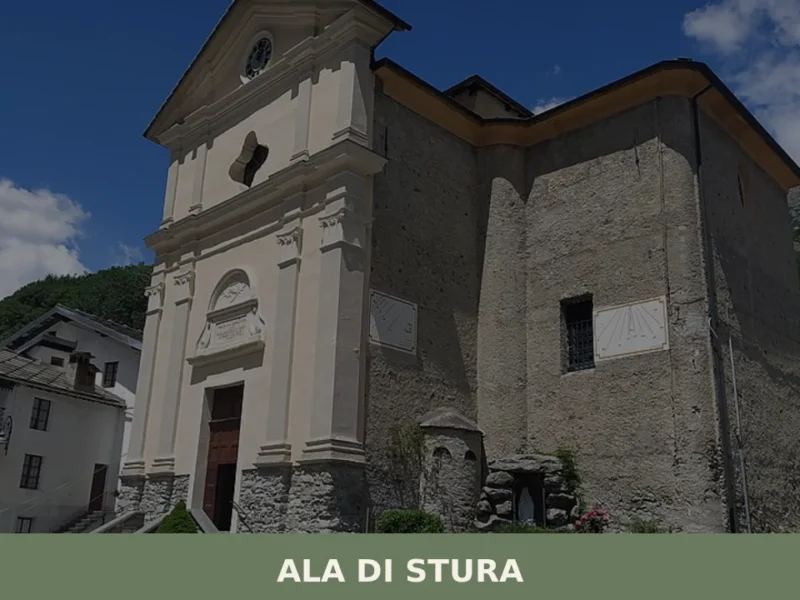
Ala di Stura
Every year on 4 September, in Ala di Stura, the bells of the Parish Church of San Grato ring out with special fervour, announcing the patron saint’s feast day. This annual ritual, rooted in centuries of mountain history, is more than a simple religious celebration: it is a call to a community that, at 1,080 […]
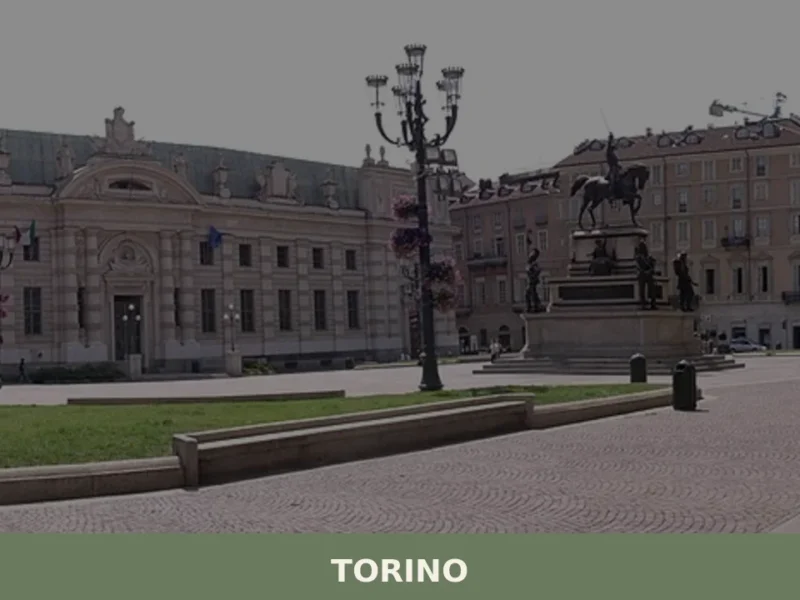
Torino
What to see in Torino: the city at 239m altitude with 841,600 residents. Explore 5 key attractions and Piedmontese cuisine. Read the full guide now.
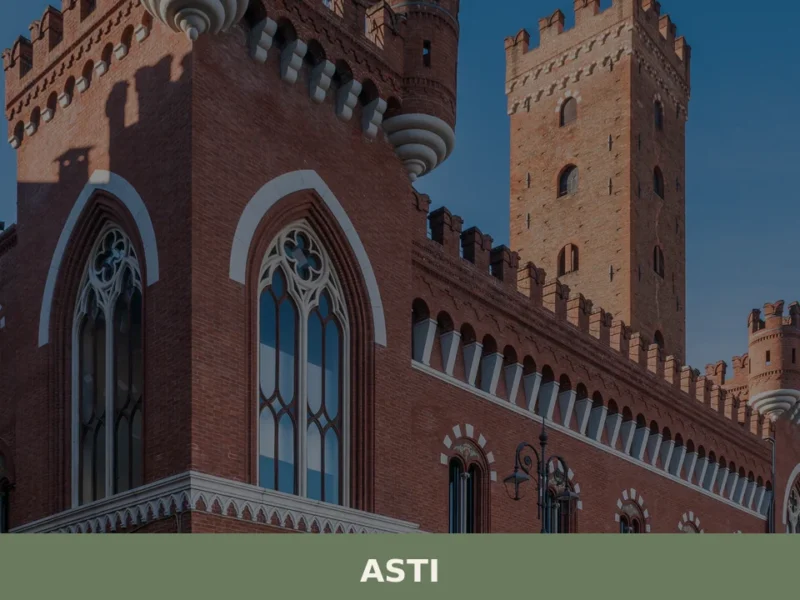
Asti
What to see in Asti: a city of 73,421 residents at 123m. Explore the Gothic Cathedral, Torre Rossa, Palazzo Alfieri and Barbera d'Asti DOCG. Plan your visit now.



📝 Incorrect information or updates?
Help us keep the Alessandria page accurate and up to date.