


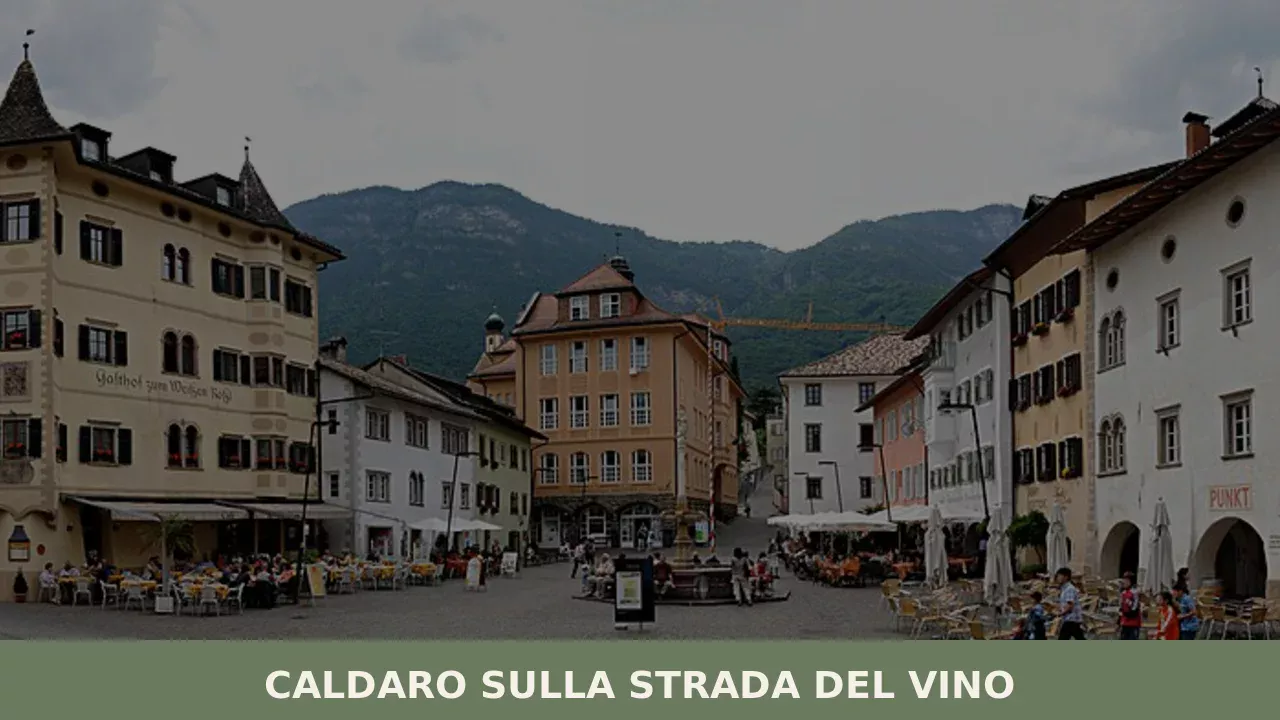
Caldaro sulla strada del vino
Caldaro sulla strada del vino — Kaltern an der Weinstraße in German — has 7,735 inhabitants and over 600 hectares of vineyards, the largest cultivated wine-growing area in South Tyrol. The place name itself declares the vocation of this centre in the province of Bolzano, which grew along the trade route linking the Bassa Atesina […]
Discover Caldaro sulla strada del vino
Caldaro sulla strada del vino — Kaltern an der Weinstraße in German — has 7,735 inhabitants and over 600 hectares of vineyards, the largest cultivated wine-growing area in South Tyrol. The place name itself declares the vocation of this centre in the province of Bolzano, which grew along the trade route linking the Bassa Atesina (Lower Adige) to the Adige Valley. Anyone wondering what to see in Caldaro sulla strada del vino should start right here: with a territory where viticulture is not a scenic backdrop but the economic and landscape framework that has defined every aspect of civic, religious and architectural life in the village.
History and origins of Caldaro sulla strada del vino
The earliest documented settlements in the Caldaro area date back to the pre-Roman period: archaeological finds near the lake — the warmest lake in the Alps, with summer temperatures reaching 28 °C — attest to the presence of Raetian communities. The Latin name Caldarium, from which the modern Caldaro derives, most likely refers to the warmth of the waters or the local microclimate, an etymology still debated among scholars but consistent with the climatic conditions of the basin. With Romanisation, the area became part of the road network connecting Verona to Augusta, and its commercial vocation strengthened.
In the Middle Ages, Caldaro came under the influence of the Counts of Tyrol. The town obtained market rights in the 13th century, and from that point it grew around the central square — today Piazza Mercato (Market Square) — which remains the focal point of public life. Local noble families built residences and Ansitze (manor houses) that still punctuate the urban fabric: among them, Castel Campan and Residenza Kränzel document the social stratification between landowners and the farming community. The Counter-Reformation left a deep mark on religious architecture, with the reconstruction of the parish church dedicated to Our Lady of the Assumption, completed in Baroque forms in the 17th century. Annexation by Italy in 1919, after centuries of Habsburg rule, initiated the phase of institutional bilingualism that still characterises Caldaro today, where approximately 75% of the population is German-speaking.
What to see in Caldaro sulla strada del vino: 5 key attractions
1. Piazza Mercato and the historic centre
The civic core of Caldaro is arranged around the main square, flanked by buildings with frescoed facades and Renaissance loggias. The town hall, recognisable by its clock tower, dominates the northern side. The pedestrian axis running through the centre preserves the layout of the medieval market town, with low arcades and inner courtyards accessible through entrance halls. A walk that deserves at least an hour of unhurried attention.
2. Parish Church of the Assumption
Rebuilt between 1630 and 1640, the church houses a Baroque high altar and an altarpiece attributed to Josef Schöpf. The bell tower, older than the main body, dates to the 14th century and features Gothic mullioned windows in the belfry. Inside, the stucco work and painted cycles document the Counter-Reformation’s investment in the Bassa Atesina, transforming a Gothic building into a manifesto of the new Catholic aesthetic.
3. South Tyrol Wine Museum
Housed in the Kössler cellar, one of the oldest production buildings in the centre, the South Tyrol Wine Museum displays 16th-century presses, carved barrels and winemaking tools. The exhibition traces the technical evolution from monastic viticulture to the modern DOC system. Among the most notable pieces is an oak lever press over four metres long, dated 1570.
4. Lake Caldaro
With a surface area of approximately 1.4 km² and a maximum depth of just 5.6 metres, Lake Caldaro is a glacial basin surrounded by vineyards and reed beds. The water reaches swimmable temperatures as early as May. The biotope on the southern shore — a protected area since 1972 — supports common reeds, water lilies and nesting populations of great crested grebe. Two public bathing establishments provide regulated access to the shore.
5. The noble residences (Ansitze)
Caldaro has over thirty Ansitze, manor houses built between the 15th and 18th centuries by the landowners who controlled wine production. Residenza Kränzel, now open to the public with a contemporary art garden and wine cellar, offers the most accessible example. Castel Campan and the Pfauenburg manor are visible from the outside and illustrate the relationship between defensive architecture and the agricultural landscape in the Bassa Atesina.
Traditional cuisine and local products
The table in Caldaro reflects the bilingualism of the territory: dishes from the Tyrolean tradition sit alongside Trentino influences. Schlutzkrapfen — rye-dough half-moons filled with spinach and ricotta, dressed with melted butter and chives — are the most common first course in the trattorias of the centre. Knödel are prepared in the speck version (Speckknödel) and in a sweet variation with apricots (Marillenknödel). Speck Alto Adige IGP, cold-smoked with beechwood and juniper, appears on every cutting board. Graukäse, a lean grey-paste cheese from the farming tradition, is served with oil and vinegar in the preparation known as Graukäse mit Essig und Öl. Kaiserschmarren, a shredded sweet omelette with lingonberry jam, closes the meal in the Buschenschänke, the farm taverns where own-produced goods are served.
Wine is the product that defines Caldaro. Lago di Caldaro DOC (Kalterersee), a light red from Schiava grapes (Vernatsch), is the historic denomination of the territory: an easy-drinking wine with notes of bitter almond and cherry, intended for everyday consumption. Local cellars also produce Gewürztraminer Alto Adige DOC, Pinot Bianco and Lagrein. The South Tyrol Wine Road, the oldest wine-tourism route in Italy, established in 1964, passes through Caldaro linking more than seventy cellars. In October the traditional Harvest Festival (Kalterer Weintage) takes place, with tastings in the square and special openings of private cellars. The Touring Club Italiano lists Caldaro among the leading wine centres of the Alpine arc.
When to visit Caldaro sulla strada del vino: the best time
The microclimate of the Caldaro basin provides around 300 days of sunshine per year and milder temperatures compared to the rest of South Tyrol. From mid-April to the end of May the vine rows are in bloom and daytime temperatures range between 18 and 24 °C: this is the best period for walking or cycling the paths through the vineyards without the summer crowds. Summer — from June to August — draws bathers to the lake and temperatures exceed 30 °C; it is the busiest season. September and October bring the grape harvest, the colours of the foliage and the Kalterer Weintage: for those interested in wine culture, these weeks are the most significant. Winter is mild but quiet, with Christmas markets enlivening Piazza Mercato from the end of November to Epiphany.
How to reach Caldaro sulla strada del vino
Caldaro is reached from the Brenner motorway A22, Egna-Ora exit, continuing for approximately 8 km along the provincial road heading north-west. From Bolzano the distance is 15 km (20 minutes by car); from Trento approximately 50 km (45 minutes). The nearest railway station is Ora, on the Brenner line, connected to Caldaro by SAD scheduled buses running hourly. Verona-Villafranca airport is 160 km away (approximately 1 hour and 40 minutes); Innsbruck airport 130 km. The municipal website provides updated information on parking and local transport. In summer a bicycle rental service connects the centre to the lake and neighbouring villages along dedicated cycle paths.
Other villages to discover in Trentino-Alto Adige
Visitors to Caldaro can extend their exploration towards Andriano, a wine-producing centre of just a few hundred inhabitants situated to the north-west, on the opposite side of the Adige Valley. Andriano shares Caldaro’s winemaking vocation — it produces Pinot Bianco of recognised quality — but is smaller in scale and more intimate in feel, with the church of Sant’Andrea and the surrounding farmsteads documenting a different settlement pattern, more dispersed across the agricultural landscape.
About forty kilometres to the north-east, climbing towards the Salto di Merano, lies Avelengo, a mountain village at 1,290 metres above sea level. The contrast with Caldaro is stark: from the vineyards of the Bassa Atesina you move to high-altitude pastures, larch forests and the Haflinger horse breed, which takes its German name from Avelengo. The two villages, less than an hour’s drive apart, represent the two extreme faces of Trentino-Alto Adige: the Mediterranean character of the wine-growing basin and the Alpine character of the Salto plateau.
In Trentino-South Tyrol More villages to discover
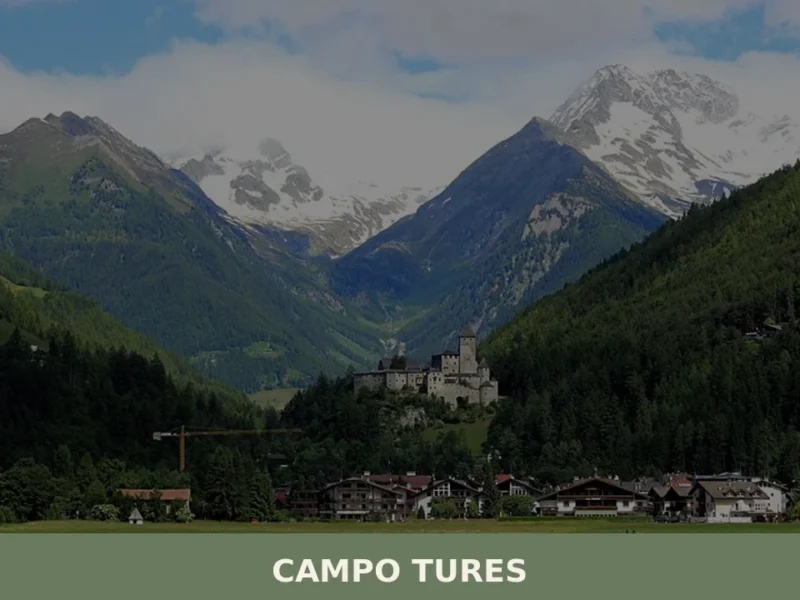
Campo Tures
Tures Castle, first documented in 1136, dominates Campo Tures from a rocky spur at the entrance to the Tures Valley, a side valley of the Aurina Valley. The village has 5,321 inhabitants, spread across an elevation of 864 metres, in a basin where the Aurino torrent slows before continuing south. Understanding what to see in […]
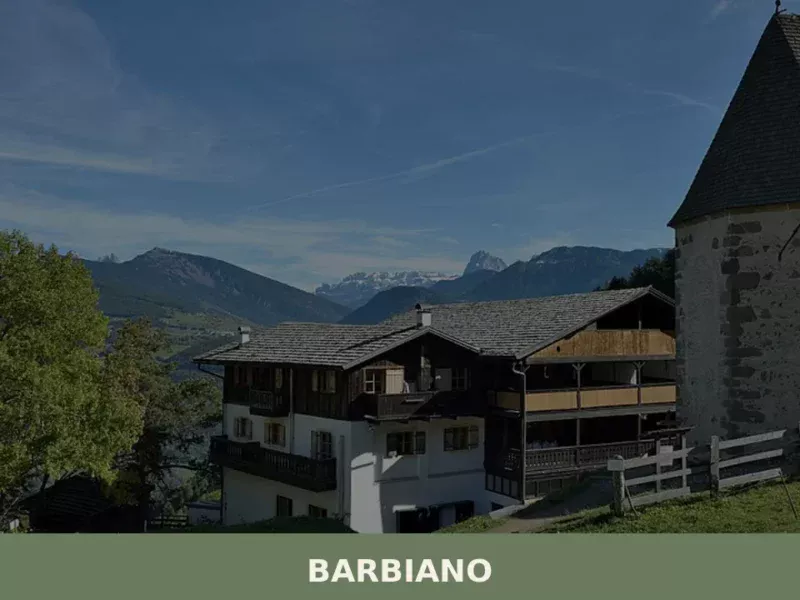
Barbiano
Barbiano covers 25.26 square kilometres on the right-hand slope of the Isarco Valley, spread across five hamlets — Barbiano village, Colma, San Giacomo, Saubach and Dreikirchen — each with its own architectural identity and historical function. Understanding what to see in Barbiano means crossing a territory that rises from 471 metres on the valley floor […]
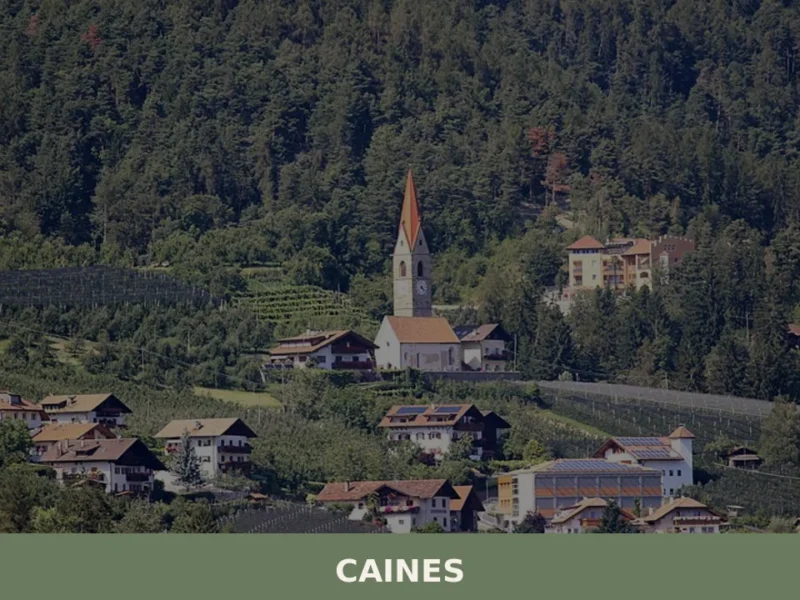
Caines
With just 398 registered inhabitants and an elevation of 592 metres above sea level, Caines — Kuens in German — is one of the smallest municipalities in the province of Bolzano. It extends across the sun-facing slope of the middle Passiria Valley, a few kilometres from Merano, on a natural terrace overlooking the confluence of […]
📝 Incorrect information or updates?
Help us keep the Caldaro sulla strada del vino page accurate and up to date.