


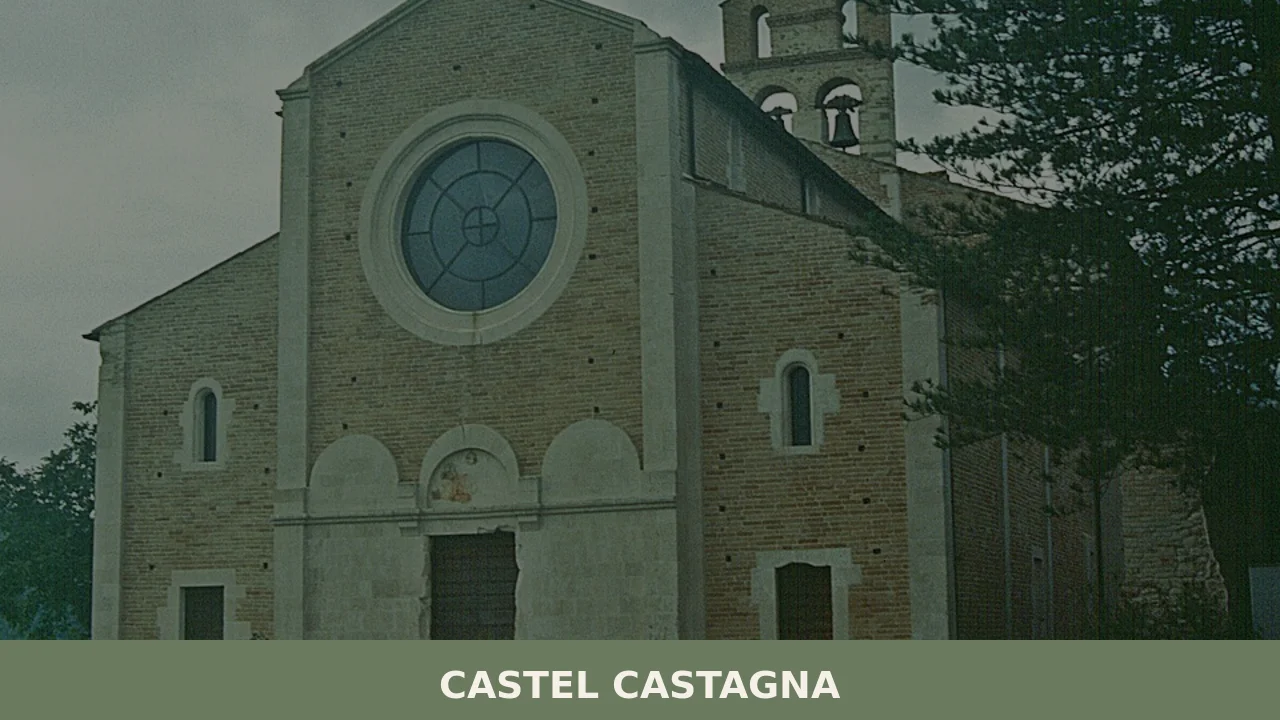
Castel Castagna
At 452 metres above sea level, on the eastern slope of the Gran Sasso, the municipality of Castel Castagna today counts 429 inhabitants spread between the main settlement and the hamlets scattered along the cultivated hillsides of the province of Teramo. Anyone wondering what to see in Castel Castagna will find answers in a territory […]
Discover Castel Castagna
At 452 metres above sea level, on the eastern slope of the Gran Sasso, the municipality of Castel Castagna today counts 429 inhabitants spread between the main settlement and the hamlets scattered along the cultivated hillsides of the province of Teramo. Anyone wondering what to see in Castel Castagna will find answers in a territory where human presence is documented as far back as the early Middle Ages and where a 12th-century Romanesque church — Santa Maria di Ronzano — preserves a cycle of frescoes that art historians consider among the most significant in Abruzzo. The landscape is made up of oak trees, durum wheat fields and kitchen gardens rising towards the pastures.
History and origins of Castel Castagna
The place name appears in medieval documents with reference to the extensive chestnut groves that covered the hillside — a food and economic resource of central importance for the rural communities of the area. The Latin form Castrum Castaneae also indicates the existence of a fortified structure, probably an outpost linked to controlling the routes that connected the Adriatic coast with the Apennine passes of the Gran Sasso. The territory fell within the orbit of the Abbey of San Giovanni in Venere and subsequently under Norman rule, following the feudal events common to much of the Teramo area.
During the Angevin and Aragonese periods, Castel Castagna passed between various local lords. The village suffered the consequences of the earthquakes that cyclically strike the Apennine area, and the population fluctuated over the centuries depending on famines and epidemics. With Italian unification and the crisis of the peasant economy, the municipality experienced a gradual depopulation — a phenomenon that has not yet stopped. Its inclusion in the list of municipalities of the Gran Sasso Mountain Community documents the attempt to coordinate policies for the development of the mountain and hill territory.
The patron saint of the village is San Pietro Martire, whose feast day falls on 6 April and represents the main community event of the year, with a procession and celebrations that also involve the neighbouring hamlets.
What to see in Castel Castagna: churches, landscapes and rural architecture
1. Church of Santa Maria di Ronzano
Built in the 12th century in Romanesque forms, this church preserves inside a cycle of frescoes datable to between 1181 and 1220 depicting scenes from the New Testament. The façade features a lunette portal and a central mullioned window. Scholars have identified stylistic influences from both Benedictine and Apulian traditions, a sign of Castel Castagna’s position along cultural routes that crossed the Apennines. It is considered one of the most significant Romanesque monuments in the province of Teramo.
2. The old town and the stone houses
The historic core of Castel Castagna preserves buildings in local stone with carved portals and external staircases — construction elements widespread in Abruzzese rural architecture. The walls show the use of irregular sandstone and limestone blocks, materials quarried directly from the surrounding terrain. Some houses still retain their outdoor wood-fired ovens, once shared among several families.
3. The centuries-old chestnut groves
The chestnut woods that give the village its name extend across the north-western slope of the municipal territory. These are coppiced and fruit-bearing trees, some with trunks over a metre in diameter, indicating an age of several centuries. In autumn, the chestnut harvest remains an activity practised by the inhabitants, and the fruits are used both fresh and dried for flour production.
4. The public fountain and the wash house
In the lower part of the village stands a stone fountain with an adjacent basin, used until the mid-20th century as a communal wash house. The structure, fed by a natural spring, documents the water supply system of hillside communities before the modern aqueduct network. The water still flows and is used by the nearby vegetable gardens.
5. The trails towards the Gran Sasso
From the territory of Castel Castagna, footpaths and mule tracks lead upwards towards the higher elevations of the Gran Sasso d’Italia massif. The routes pass through distinct vegetation bands — oak woods at lower altitudes, beech forests above 900 metres — and offer a direct view of the Corno Grande ridge (2,912 m). These are historic paths, used for vertical transhumance between summer pastures and the valley floor.
What to see in Castel Castagna: local cuisine
The food tradition of Castel Castagna follows the agricultural calendar of the Teramo hills. The dishes most deeply rooted in local custom include sagne e fagioli — hand-cut fresh pasta with beans grown in family vegetable gardens — and pallotte cace e ove, cheese and egg fritters fried in olive oil. Chestnuts appear in soups, as flour for rustic desserts and in the preparation of caldarroste (roasted chestnuts) during autumn evenings. The extra virgin olive oil from the Dritta variety, common on the Teramo hills, is a product that falls within the DOP Aprutino Pescarese designation of the neighbouring areas.
There are no large restaurants in the municipality: dining is provided by a few family-run trattorias and agriturismos in the hamlets, where menus follow seasonal availability. In summer, dishes based on garden vegetables — peppers, courgettes, tomatoes — dressed with local oil are common. In winter, legume soups, cornmeal polenta and lamb prevail. The wine comes from Montepulciano and Trebbiano vines cultivated in the lower hill areas.
When to visit Castel Castagna: the best time of year
The climate of Castel Castagna is typical of the Apennine hills: cold winters with possible snowfall between December and February, moderate summers with temperatures that rarely exceed 30 degrees. Spring, from April to June, is the period when the meadows are in bloom and the chestnut groves put out new leaves — daylight is long and the days allow for extended hikes. Autumn, from mid-September to November, brings the chestnut harvest and the colours of the high-altitude beech forest, with a chromatic range from ochre yellow to dark red.
The feast of San Pietro Martire, on 6 April, is the time of year when the community comes together most visibly. In autumn, food festivals dedicated to chestnuts and woodland products are held, organised by the local pro loco association and open to outside visitors. During the summer, the hamlets host open-air dinners and small markets selling local products. In the winter months the village is quiet: a condition that may appeal to those looking for a calm base for snow excursions at the higher elevations of the Gran Sasso.
How to reach Castel Castagna
By car, from the A24 motorway (Rome–L’Aquila–Teramo), the most convenient exit is Basciano-Castel Castagna. From there, continue on the provincial road for about 10 kilometres in a north-westerly direction. From Teramo the distance is approximately 25 kilometres, reachable in just over half an hour. From Rome the total journey is about 180 kilometres (two and a half hours). From Pescara it takes about 70 kilometres following the A25 and then the A24.
The nearest railway station is Basciano, on the Teramo–Giulianova line, from which it is necessary to continue by private vehicle or with local transport services running at reduced frequency. Abruzzo Airport in Pescara is approximately 75 kilometres away. For those coming from the north, an alternative is the A14 Adriatic motorway with an exit at Giulianova or Roseto degli Abruzzi, from where you head up the Vomano valley.
Other villages to discover in Abruzzo
Those visiting Castel Castagna who wish to deepen their knowledge of inland Abruzzo can head towards the Pescara side, where Carpineto della Nora offers a similar hillside landscape in terms of altitude and agricultural structure, with a compact old town and proximity to the Maiella National Park. Comparing the two villages highlights the differences between the Teramo and Pescara sides in the historical management of the land and in local building techniques.
Further south, in the province of Chieti, Casalanguida represents an example of a hill village oriented towards the coast, with an agricultural vocation tied to viticulture and olive growing. The difference in horizon — the Gran Sasso behind Castel Castagna, the Adriatic Sea visible from Casalanguida — tells of two different ways of inhabiting the Abruzzese hills, both marked by the same history of agricultural labour, emigration and slow demographic recovery that is common to the region’s hinterland.
In Abruzzo More villages to discover
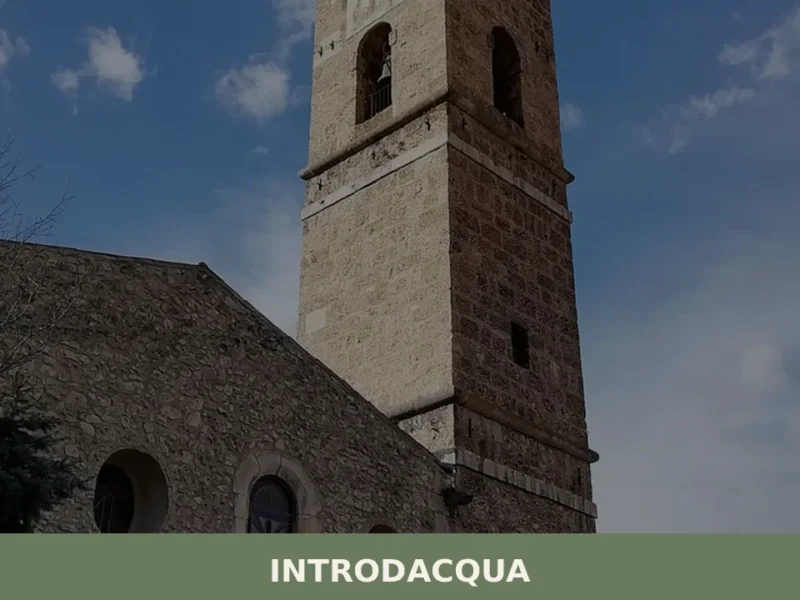
Introdacqua
At 642 metres above sea level, at the exact point where three watercourses — the Gizio, the Nera and the San Callisto — converge in the Peligna valley, stands Introdacqua, whose Latin name Intro Acquas records this confluence of waters. The village has a current population of 2,117 and retains an urban layout reflecting at […]
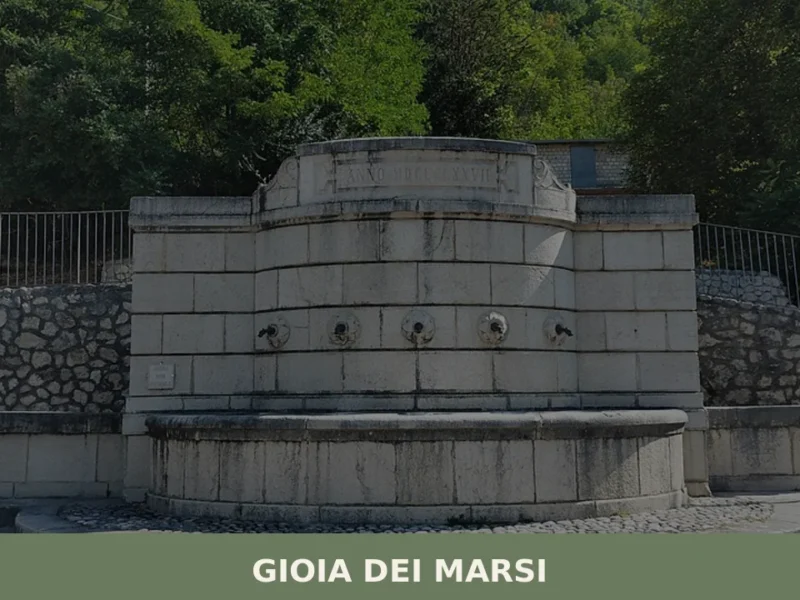
Gioia dei Marsi
Gioia dei Marsi has a population of 2,091 and sits at 725 metres above sea level on the eastern edge of the Fucino, the plain that until 1875 was the largest lake in peninsular Italy. The draining of the lake radically transformed the economy and landscape of this Marsican settlement, shifting its centre of gravity […]
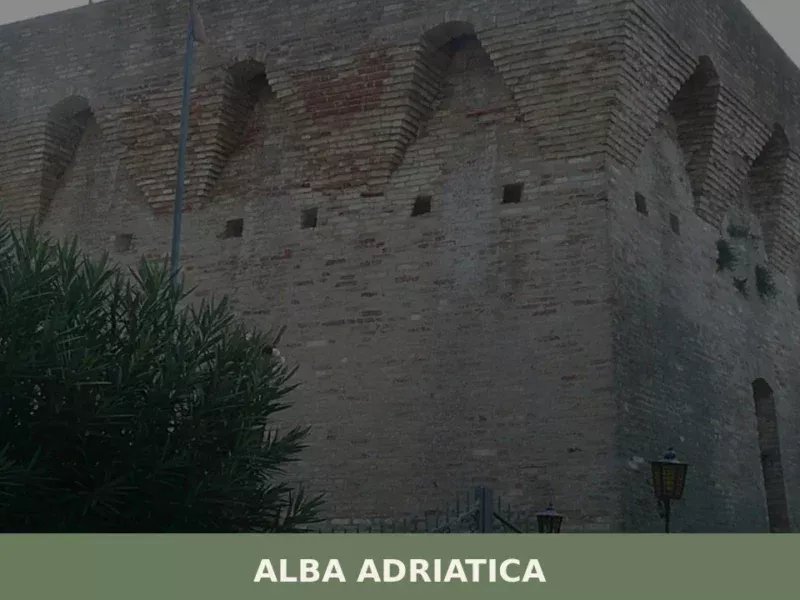
Alba Adriatica
Until 1956, this locality did not exist as an independent municipality: it was a hamlet of Tortoreto, known as Tortoreto Stazione because of the railway stop on the Adriatic line. The administrative separation created a coastal town that today has 12,760 inhabitants spread across a territory sitting just 5 metres above sea level. Understanding what […]


📝 Incorrect information or updates?
Help us keep the Castel Castagna page accurate and up to date.