


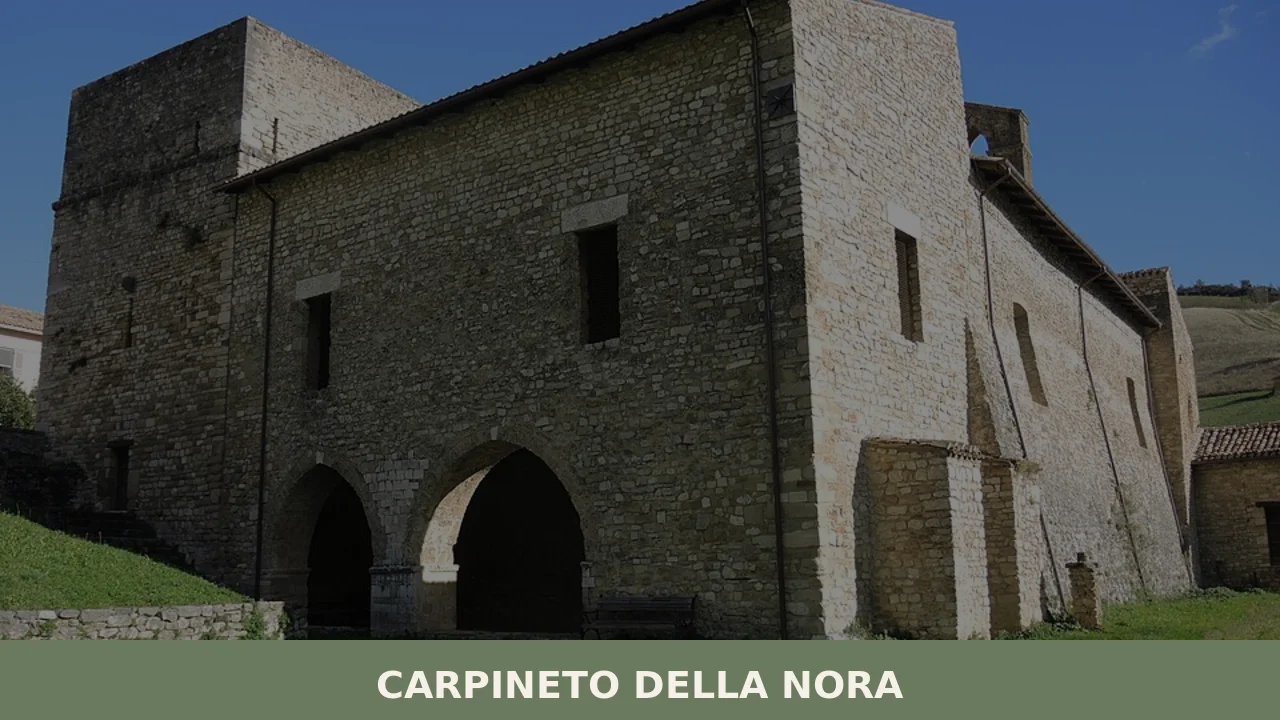
Carpineto della Nora
 Hills
Hills
At 535 metres above sea level, on the ridge separating the Nora valley from the Pescara plain, Carpineto della Nora has a current population of 536 — a number that has halved since post-war censuses. Anyone looking into what to see in Carpineto della Nora will find a settlement built entirely from local stone, spread […]
Discover Carpineto della Nora
At 535 metres above sea level, on the ridge separating the Nora valley from the Pescara plain, Carpineto della Nora has a current population of 536 — a number that has halved since post-war censuses. Anyone looking into what to see in Carpineto della Nora will find a settlement built entirely from local stone, spread along a ridge facing the Maiella massif to the south and Gran Sasso to the north-west, with an urban layout that preserves its original medieval plan of tightly packed houses designed to withstand the tramontana winds.
History and origins of Carpineto della Nora
The place name is made up of two distinct elements: “Carpineto” derives from the Latin carpinus, the European hornbeam (Carpinus betulus), a tree still widespread in the surrounding woods; “della Nora” refers to the Nora stream, a tributary of the Pescara, which marks the natural eastern boundary of the municipal territory. The earliest documented reference to the village dates to the Norman period, when the Catalogus Baronum (1150–1168) recorded the fief among the holdings subject to military service in the Giustizierato d’Abruzzo.
During the Middle Ages, Carpineto passed through the hands of several feudal families. In the 15th century the territory fell under the Cantelmo, lords of Popoli, and later under the Alarçon y Mendoza family. Its position along a secondary route connecting the Adriatic coast to the Apennine interior gave the village a role as both a garrison point and a transit stop for shepherds and merchants. The earthquakes that struck Abruzzo over the centuries — the 1706 Maiella earthquake in particular — caused repeated damage, forcing partial reconstructions that layered different periods onto the same built fabric.
After Italian Unification, the municipality was initially called simply “Carpineto”. The addition “della Nora” was introduced in 1862 by Royal Decree to distinguish it from other municipalities with the same name across the country, including Carpineto Romano in Lazio.
What to see in Carpineto della Nora: 5 main attractions
1. Church of San Bartolomeo Apostolo
Dedicated to the patron saint of the village, celebrated on 24 August, the parish church has a stone façade with a carved portal and a single-nave interior containing lateral altars in stucco dating from the 17th and 18th centuries. The bell tower, visible from the valley below, is one of the defining vertical landmarks of the village’s profile.
2. Medieval historic centre
The old settlement stretches along the ridge in a system of narrow, parallel streets connected by stone staircases. The houses feature load-bearing walls of local limestone ashlar, with occasional carved lintels and portals dating to the 16th and 17th centuries. The compactness of the urban layout reveals the original defensive logic behind the settlement.
3. Ruins of the watchtower
In the upper part of the village, the remains of a fortified structure from the medieval period are still visible, part of the visual surveillance system that linked settlements along the Nora valley. From this point, the view extends towards the Maiella range and, on clear days, as far as the Gran Sasso massif.
4. Hornbeam woods along the Nora stream
The municipal territory is crossed by paths that descend towards the Nora stream, through mixed woods of European hornbeam, downy oak and Turkey oak. The area provides habitat for species such as the green woodpecker and the spectacled salamander. The routes are not marked as an official hiking network, but they are walkable and regularly used by the local population.
5. Historic fountains and wash-houses
Along the village streets and in the immediate surroundings stand stone fountains that served as water-supply points and public wash-houses. Some of these structures, featuring monolithic basins, document the water management system in Abruzzo’s hill communities before the arrival of modern aqueducts.
Food and local produce
The cooking of Carpineto della Nora follows the repertoire of the Pescara hill tradition. Handmade pasta — sagne e ceppe, maccheroni alla chitarra — is dressed with lamb ragù or sugo di pallottine, small meatballs cooked directly in tomato sauce. The extra-virgin olive oil produced at lower elevations within the municipal territory falls within the area of the DOP Aprutino Pescarese, one of Abruzzo’s longest-established olive-oil designations, with Dritta and Leccino as the predominant cultivars.
The territory also produces dried pulses — chickpeas and lentils — grown on small terraced plots around the village. During the feast of San Bartolomeo in August, it is customary to prepare arrosticini and porchetta for communal open-air meals. There are no restaurants in the conventional sense: dining relies on family-run trattorie and agriturismi in the surrounding countryside, where the number of covers can be counted on one hand and booking is essential.
When to visit Carpineto della Nora: the best time
The main event of the year is the patron saint feast of San Bartolomeo on 24 August, which brings emigrants and descendants of local families back to the village and temporarily doubles the population. Summer, from June to September, offers daytime temperatures between 25 and 30 degrees, tempered by the altitude and hill breezes — evenings regularly drop below 20 degrees. Spring, from April to June, is the best time for walks in the surrounding woods, when flowering broom colours the hillsides yellow and the paths along the Nora are at their most accessible.
Winter brings occasional snowfall that transforms the landscape but makes some stretches of road challenging. Anyone visiting between November and March should check conditions on the secondary roads. The village does not have many accommodation options: it is best to plan a visit as a stop on a wider itinerary through the province of Pescara, using facilities in the valley below.
How to reach Carpineto della Nora
From Pescara, Carpineto della Nora is roughly 40 kilometres to the south-west, reachable in about 50 minutes via the provincial road that follows the Nora valley. From the A25 Roma–Pescara motorway, the most convenient exit is Torre de’ Passeri–Caramanico Terme, from which it is approximately 15 kilometres on provincial roads.
The nearest railway station is Scafa–San Valentino on the Roma–Pescara line, about 20 kilometres from the village. Public transport connections are limited to a handful of daily services operated by TUA (Trasporto Unico Abruzzese) — a car is the most practical option. Pescara’s Abruzzo Airport is 45 kilometres away. For those arriving from Rome, the distance is approximately 190 kilometres, covered in about two and a half hours via the A24 and A25. Up-to-date information on road conditions and municipal services is available on the official municipal website.
What to see in Carpineto della Nora and in nearby villages
The position of Carpineto della Nora, on the eastern slope of the Maiella, places it within a circuit of small hill towns that share the same geological and cultural makeup. A few kilometres to the south, Abbateggio overlooks the Orfento Valley with a stone-built historic core of Maiella rock and direct access to one of the deepest canyons in the National Park. It is a village where the pastoral economy has left legible traces in the architecture of homes and animal shelters.
To the north, on the Teramo side of Gran Sasso, Arsita represents a parallel case of a hill community grappling with depopulation, but one with an active programme to restore its historic centre and develop scattered hospitality. Linking Carpineto, Abbateggio and Arsita in a single itinerary means crossing three different valleys and two national parks — Gran Sasso and Maiella — covering roughly 80 kilometres of roads that cut across the Abruzzo Apennine ridge.
Frequently asked questions about Carpineto della Nora
What is the best time to visit Carpineto della Nora?
The best time to visit Carpineto della Nora is late spring (April-June) for pleasant walks amidst flowering broom and accessible paths along the Nora stream, or summer (June-September) for comfortable temperatures between 25-30 degrees, cooled by altitude and breezes. The village's main event, the Feast of San Bartolomeo, takes place on August 24th, offering a lively local experience with communal meals. Winter (November-March) brings occasional snow, making some secondary roads challenging, so check conditions if planning a visit during this period.
What are the historical origins of Carpineto della Nora?
Carpineto della Nora's name originates from 'Carpineto' (Latin *carpinus* for hornbeam trees, still common locally) and 'della Nora' (referring to the Nora stream). Documented since the Norman period (1150–1168) in the *Catalogus Baronum*, it served as a feudal holding and a strategic transit point between the Adriatic coast and the Apennine interior. Historically, it passed through families like the Cantelmo and Alarçon y Mendoza. The 'della Nora' addition was officially introduced in 1862 by Royal Decree to differentiate it from other Italian villages named Carpineto, solidifying its unique identity shaped by its natural surroundings and medieval past.
What to see in Carpineto della Nora? Main monuments and landmarks
In Carpineto della Nora, explore the **Church of San Bartolomeo Apostolo**, dedicated to the patron saint, notable for its stone façade, carved portal, and prominent bell tower. Wander through the **Medieval historic centre**, a maze of narrow streets and stone staircases lined with houses built from local limestone. Don't miss the **Ruins of the watchtower** in the upper village for panoramic views of the Maiella and Gran Sasso massifs. Discover the **Historic fountains and wash-houses**, testaments to traditional water management, and consider a walk through the **Hornbeam woods along the Nora stream**, even if routes aren't officially marked.
What are the main natural or scenic attractions of Carpineto della Nora?
Carpineto della Nora offers charming natural attractions. The **Hornbeam woods along the Nora stream** provide a serene environment for walks through mixed forests of European hornbeam, downy oak, and Turkey oak, home to species like the green woodpecker and spectacled salamander. Although not an official hiking network, these paths are regularly used by locals. For breathtaking scenic views, head to the **Ruins of the watchtower** in the upper village, where you can admire the majestic Maiella range and, on clear days, the distant Gran Sasso massif, showcasing the village's strategic position between valleys.
Where to take the best photos in Carpineto della Nora?
For memorable photos in Carpineto della Nora, start with the panoramic views from the **Ruins of the watchtower** in the upper village, offering stunning backdrops of the Maiella and Gran Sasso massifs. Capture the picturesque **bell tower of the Church of San Bartolomeo Apostolo**, a defining vertical landmark visible from the valley below. The **Medieval historic centre** itself, with its tightly packed stone houses, narrow streets, and ancient portals dating to the 16th and 17th centuries, provides countless opportunities for evocative shots of traditional Abruzzese architecture and village life.
Are there museums, churches or historic buildings to visit in Carpineto della Nora?
Yes, Carpineto della Nora features several historic buildings and structures. The primary site is the **Church of San Bartolomeo Apostolo**, the parish church with a distinctive stone façade, carved portal, and bell tower, housing 17th and 18th-century stucco altars. Visitors can also explore the well-preserved **Medieval historic centre**, characterized by its stone houses, ancient lintels, and portals. The **Ruins of the watchtower** offer a glimpse into the village's defensive past, while the **Historic fountains and wash-houses** dotted around the village provide insight into traditional water management. These sites are generally accessible public spaces.
What can you do in Carpineto della Nora? Activities and experiences
In Carpineto della Nora, you can immerse yourself in nature with walks through the **Hornbeam woods along the Nora stream**, particularly enjoyable in spring when the hillsides bloom. Explore the fascinating **Medieval historic centre**, discovering its stone architecture and ancient layout. Experience local traditions by joining the **Feast of San Bartolomeo on August 24th**, which often includes communal open-air meals with traditional *arrosticini* and *porchetta*. For an authentic taste of Abruzzo, seek out the small, family-run trattorias and agriturismi in the surrounding countryside, where booking in advance is highly recommended for a genuine culinary experience.
Who is Carpineto della Nora suitable for? Families, couples, hikers, solo travelers?
Carpineto della Nora is ideal for **cultural explorers** and **history enthusiasts** who appreciate well-preserved medieval villages built from local stone, offering a glimpse into traditional Abruzzese life. It appeals to **nature lovers** and **light hikers** interested in scenic walks through hornbeam woods and panoramic views of the Maiella and Gran Sasso. **Foodies** seeking authentic, family-run culinary experiences will also find it rewarding. Given limited local accommodation, it's perfect for **day-trippers** or **travelers on a wider itinerary** through the Pescara province, looking for an off-the-beaten-path, tranquil hill village experience.
What to eat in Carpineto della Nora? Local products and specialties
Carpineto della Nora offers traditional Pescara hill cuisine. Specialties include handmade pastas like *sagne e ceppe* and *maccheroni alla chitarra*, typically served with rich lamb ragù or *sugo di pallottine* (small meatballs in tomato sauce). The area is renowned for its **DOP Aprutino Pescarese extra-virgin olive oil**, primarily from Dritta and Leccino cultivars. Local dried pulses, such as chickpeas and lentils, are also cultivated. During the Feast of San Bartolomeo in August, visitors can enjoy classic Abruzzese *arrosticini* (skewered lamb) and *porchetta* (roasted pork), often prepared for communal outdoor meals.
📷 Photo Gallery — Carpineto della Nora


Nearby Villages near Carpineto della Nora
In Abruzzo More villages to discover
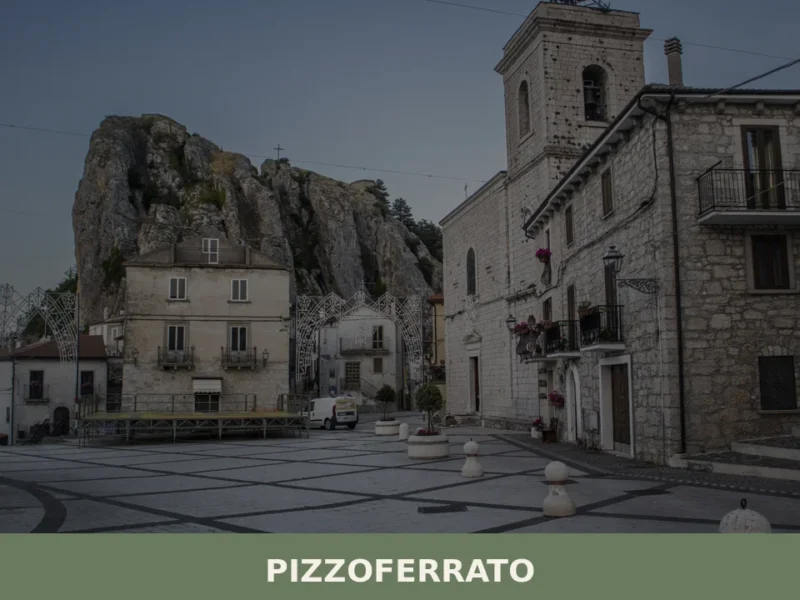
Pizzoferrato
 Mountain
What to see in Pizzoferrato, Italy? Explore this mountain village at 1251 m (4104 ft) altitude. Discover ancient churches and Majella National Park. Read our guide!
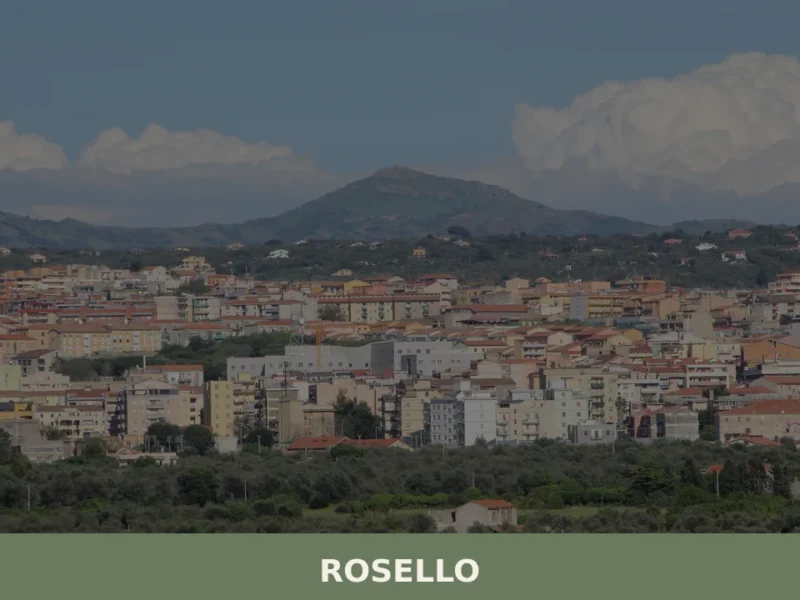
Rosello
Mountain
what to see in rosello: Explore Rosello, Italy, a village founded in the 11th century, with its historic chapel and artistic legacy. Discover its WWII history and Abruzzese charm.
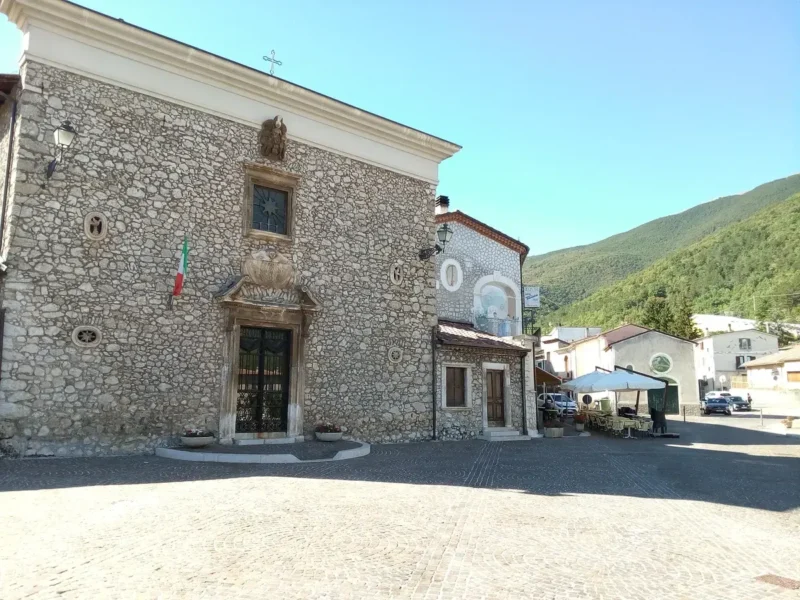
Collelongo
Mountain
At 915 metres above sea level, in the innermost stretch of the Valle Roveto, Collelongo has 1,108 inhabitants and a position that keeps it close to the Apennine ridges of the province of L’Aquila. In this article History and origins of Collelongo What to See in Collelongo: Main Attractions Traditional cuisine and products of Collelongo […]
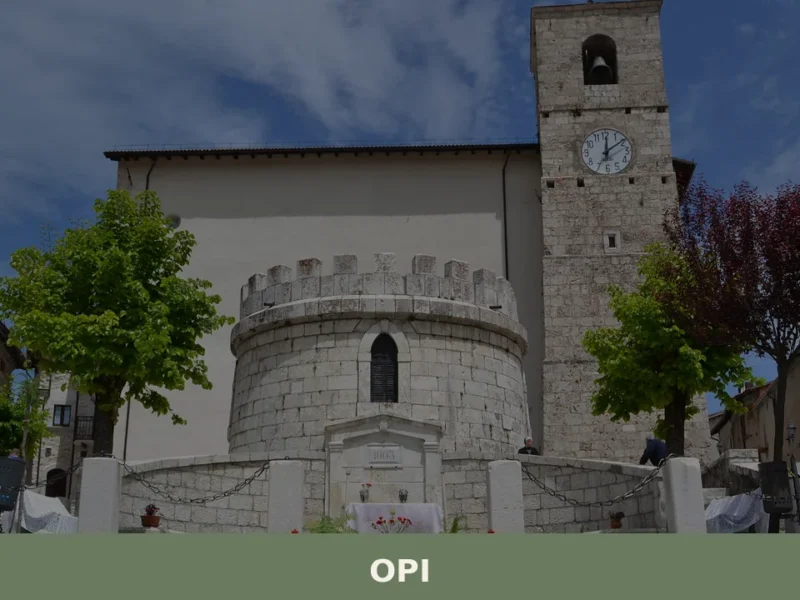
Opi
Mountain
What to see in Opi, Abruzzo, Italy: explore 3 historic monuments, the National Park of Abruzzo, and the Val Fondillo Necropolis. Discover how to get there.
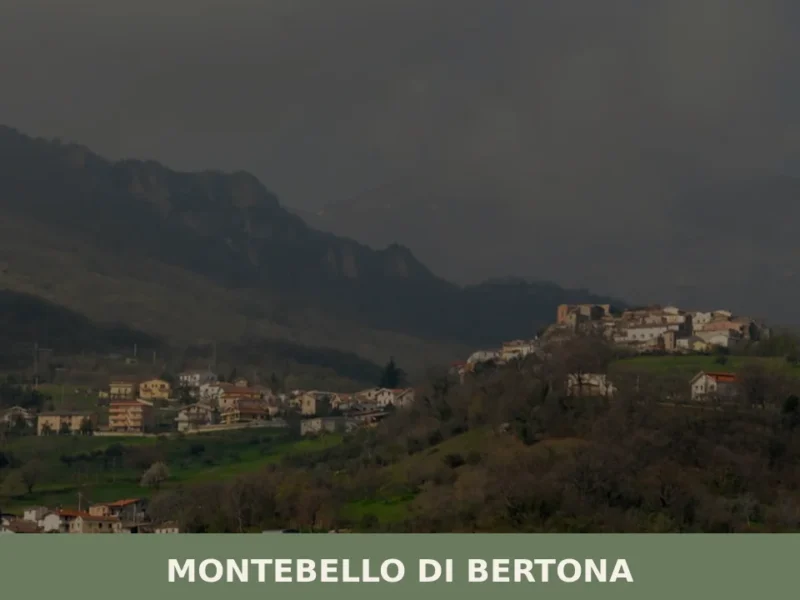
Montebello di Bertona
Mountain
What to see in Montebello di Bertona, Italy: Discover a village of 994 inhabitants in Gran Sasso National Park. Explore historic sites and natural trails. Read our guide.
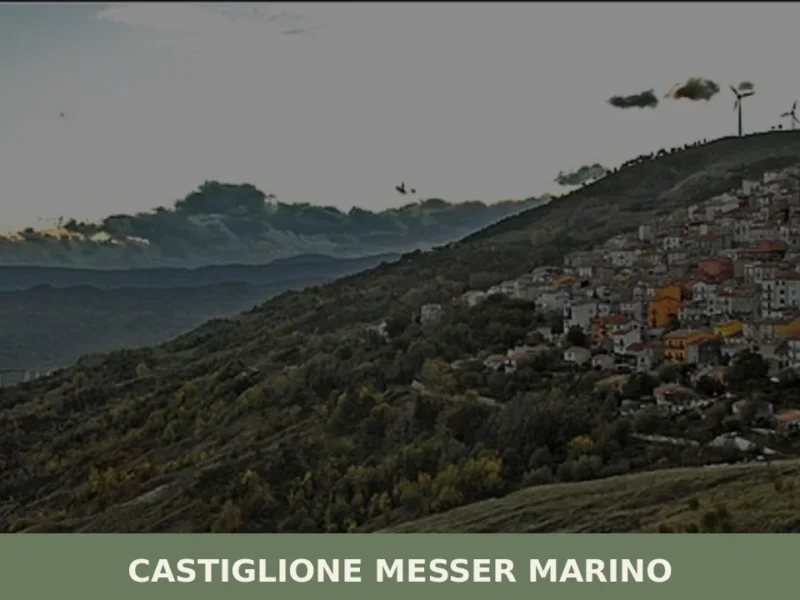
Castiglione Messer Marino
Mountain
At 1,081 metres above sea level, on the ridge separating the Trigno valley from the Sinello valley, Castiglione Messer Marino has a current population of 1,518 and retains an urban layout that clearly reveals its fortified origins. The village’s very name documents a direct link to the D’Aquino family, feudal lords who controlled its fate […]
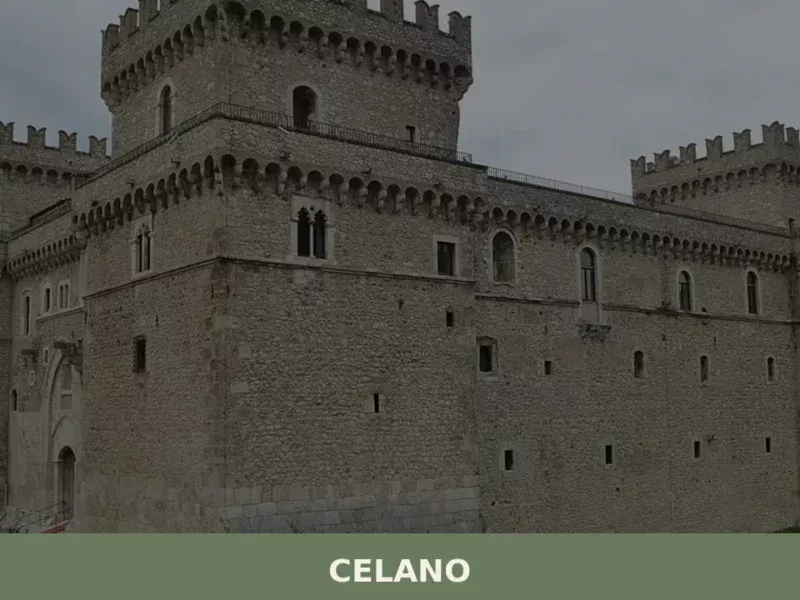
Celano
Mountain
The Castello Piccolomini in Celano, with its four corner towers and curtain wall enclosing a perimeter of over one hundred metres, commands the Fucino plain from an altitude of 840 metres. Anyone wondering what to see in Celano will find an unequivocal starting point here: a fortress that has endured six centuries of history, earthquakes […]
Montefino
Hills
What to see in Montefino, Abruzzo, Italy: the Castello di Corte, the Chiesa di San Giacomo and the olive oil festival. Village at 375 m. Discover the full guide.
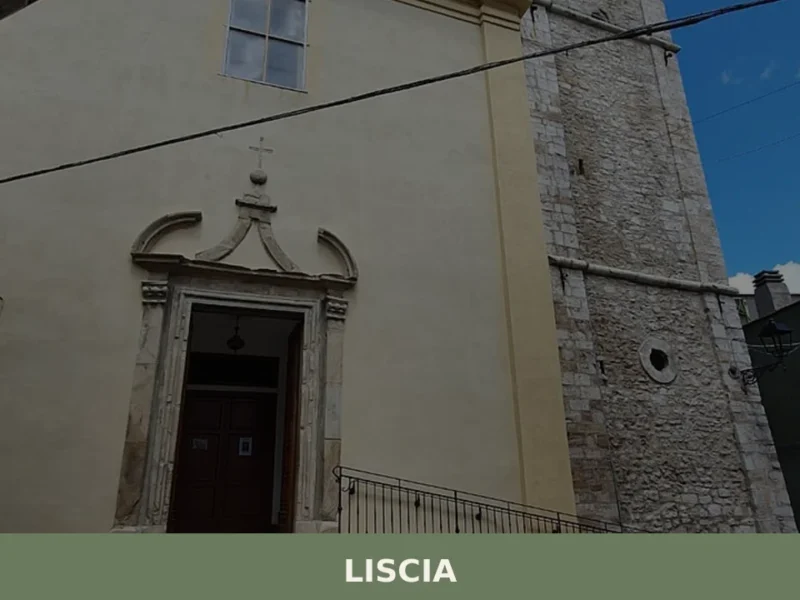
Liscia
Mountain
What to see in Liscia: 642 residents, alt. 740 m. Discover Saint Michael's Church and arrosticini! Explore history and cuisine.
Civitella Roveto
Hills
At 528 metres above sea level, on the eastern side of the Valle Roveto, Civitella Roveto has a current population of 3,327, spread between the old town and the hamlets along the River Liri. The valley, a natural corridor between the Marsica and Lazio, determined the strategic role of this settlement for centuries. Understanding what […]




🏡 Know Carpineto della Nora better than we do?
If you’re a local or have been there, your knowledge matters: add what’s missing or fix a detail on this page.