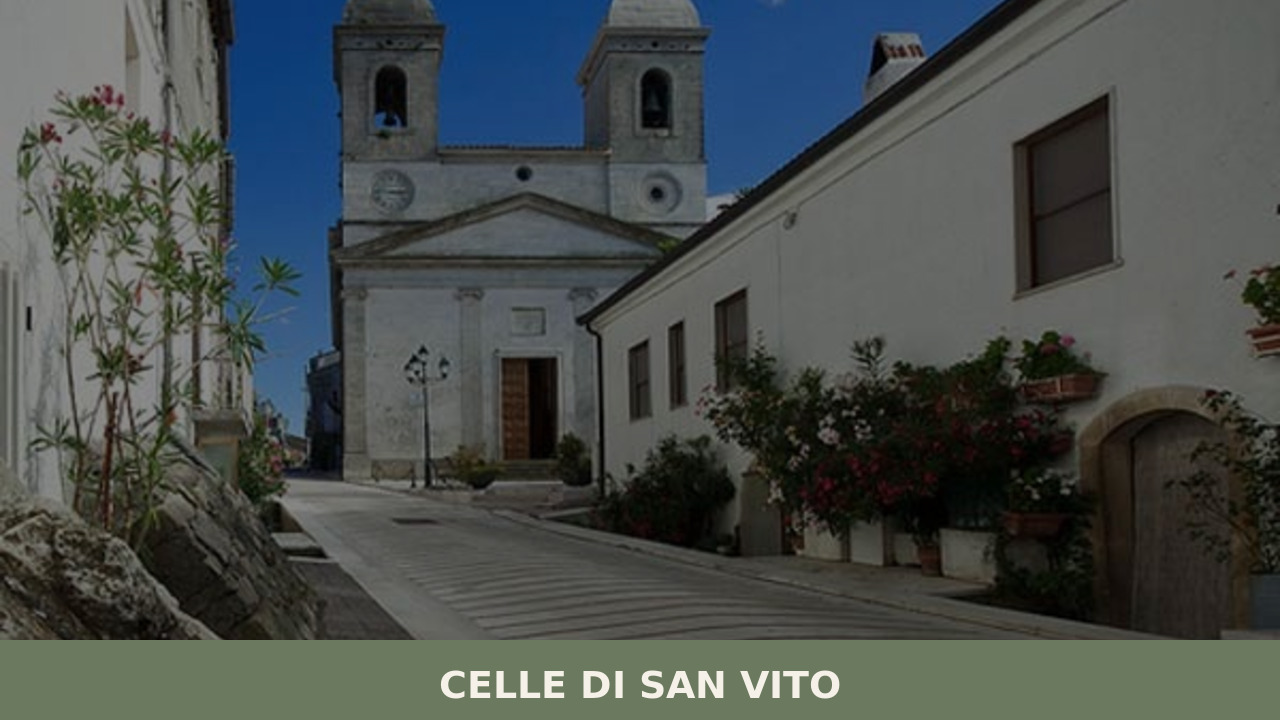
A 148-resident Franco-Provençal enclave at 726 metres in the Daunia sub-Apennines. Discover what to see in Celle di San Vito, from medieval stone lanes to linguistic heritage.
Morning fog lifts off the Daunia sub-Apennines and settles into the stone lanes like milk pooling in a bowl. At 726 metres above sea level, the air carries a sharpness that belongs more to mountain hamlets than to the plains of Foggia province. Voices here switch between Italian and an old Franco-Provençal dialect — a linguistic fossil surviving in a village of just 148 residents. Understanding what to see in Celle di San Vito, Italy’s smallest municipality by population in Puglia, requires slowing to the rhythm of a place where centuries compress into a single cobbled street.
The name “Celle” likely derives from the Latin cellae, referring to small monastic storerooms or hermit dwellings that once dotted these ridgelines. The village’s origins trace to the 13th and 14th centuries, when a community of settlers from Provence — soldiers, craftsmen, and their families — arrived in this corner of the Capitanata, probably in connection with the Angevin administration of the Kingdom of Naples. They brought with them a variant of Franco-Provençal, a language that would persist here for more than seven hundred years, long after it faded from many of its original territories in France and Switzerland.
Throughout the medieval and early modern periods, Celle di San Vito existed under various feudal lordships tied to the broader political fortunes of southern Italy. Its elevation made it a natural lookout point over the Fortore and Celone valleys, but also isolated it from the commercial routes that enriched lowland towns. The village never grew large. Instead, it calcified into a form of preservation — its dialect, its building patterns, its annual rituals passed down through a shrinking but tenacious population.
In 1999, the Italian state recognised Franco-Provençal as a protected linguistic minority under Law 482/1999. Celle di San Vito and the neighbouring village of Faeto remain the only two communities in southern Italy where this language is still spoken in daily life — a distinction that has drawn the attention of linguists and cultural preservationists from across Europe.
The compact medieval core unfolds along a single principal axis of pale limestone houses, many bearing bilingual street signs in Italian and Franco-Provençal. Doorways are low, built for an era of shorter statures and fierce winters. The signage programme, installed as part of minority language preservation efforts, turns the village itself into an open-air document of linguistic survival.
The parish church of Santa Caterina stands as the settlement’s spiritual and architectural anchor. Its modest façade — rough-cut stone, a simple rose window — reflects the economic realities of a mountain village rather than the baroque ambitions of Puglia’s lowland towns. Inside, devotional statues and a restrained altar mark centuries of unbroken parish life.
The remains of the feudal palazzo, once seat of the local lordship, occupy a position at the village’s high point. While much of the structure has been absorbed into surrounding domestic buildings over the centuries, fragments of its original stonework and an arched entrance survive — a reminder that even the smallest settlements in the Mezzogiorno carried their own hierarchy of power.
Footpaths radiate from the village into beech and oak woods along ridges that separate the Tavoliere plain from the interior valleys. At this altitude, the terrain is folded and green through spring, turning amber by late summer. The trails offer views south toward the flat agricultural expanse of the Foggia plain — a landscape contrast as sharp as any in the region.
Celle di San Vito hosts periodic cultural gatherings dedicated to the preservation of its Franco-Provençal heritage, including language workshops, oral history recordings, and small festivals featuring traditional songs. These events are intimate — sometimes numbering fewer attendees than participants — and they reveal a community actively engaged in documenting itself before the last fluent speakers are gone.
The kitchen of Celle di San Vito belongs to the upland Daunia tradition — robust, built on legumes, cured pork, and handmade pastas shaped for thick sauces. Orecchiette and cavatelli appear on tables here, though local variations sometimes carry Franco-Provençal names passed down orally. Lamb from the surrounding pastures, slow-cooked with wild herbs gathered on the hillsides, is a fixture of feast days. Dried sausages, prepared in the cold months when the altitude aids curing, hang in cellars across the village.
The broader Foggia province contributes olio extravergine d’oliva Dauno DOP, produced at lower elevations where olive groves dominate the landscape. Local bread, baked in large loaves with hard durum wheat flour characteristic of Puglia, remains a daily staple. Dining options in the village are limited — as one would expect from a settlement of 148 people — but agriturismi in the surrounding hills offer meals rooted in seasonal, hyperlocal ingredients.
Spring — late April through June — brings the surrounding hillsides into full colour and keeps temperatures moderate at this altitude, typically between 12°C and 22°C. The trails are at their best, and the light has a clarity that sharpens the views toward the Tavoliere. Summer can be warm but remains cooler than the stifling plains below, making the village a natural retreat from the heat that blankets Foggia city. Autumn brings mushroom foraging in the surrounding forests and the quiet beauty of beech trees turning gold.
Winter at 726 metres is genuinely cold, with occasional snowfall that silences the lanes and reduces the village to its most elemental form. If cultural events tied to the Franco-Provençal heritage are your primary interest, check with the municipal administration for specific dates, as schedules vary year to year and are often announced only weeks in advance. Regardless of season, bring layers — the altitude earns its weather.
Celle di San Vito sits in the western Daunia, approximately 55 km west of Foggia. By car, take the SS90 from Foggia toward Troia and Lucera, then follow provincial roads climbing into the sub-Apennines — the final stretch involves switchbacks that reward patient driving. From Bari, the distance is roughly 180 km (approximately two hours and thirty minutes). The nearest motorway access is the A16 (Napoli–Canosa), with the Candela exit providing the most direct route south toward the village.
The nearest train station is in Foggia, served by Trenitalia high-speed and regional lines connecting to Bari, Naples, and Rome. From Foggia, a car is effectively essential — bus services to the upper Daunia villages are infrequent and designed for commuters rather than visitors. The closest airport is Bari Karol Wojtyła (BRI), approximately 190 km to the southeast; Naples Capodichino (NAP) is roughly 170 km to the west and may be more convenient depending on your direction of travel.
The Daunia sub-Apennines hold a constellation of small communities, each carrying its own layer of history. To the north, Celenza Valfortore occupies the Fortore valley with a medieval centre built around its own feudal past and a landscape shaped by the river that gives it half its name. The two villages share the quiet determination of places that refuse to empty entirely, even as demographics press against them.
Further south and lower in elevation, Ascoli Satriano offers a different scale — a town with deeper archaeological roots stretching back to the Daunian civilization and Roman period, set on the transitional zone where the Apennine foothills flatten into the grain-producing plains. Together, these villages sketch a cross-section of Puglia’s interior: from Franco-Provençal mountain isolates to ancient Italic settlements, the province of Foggia reveals itself most honestly away from the coast.
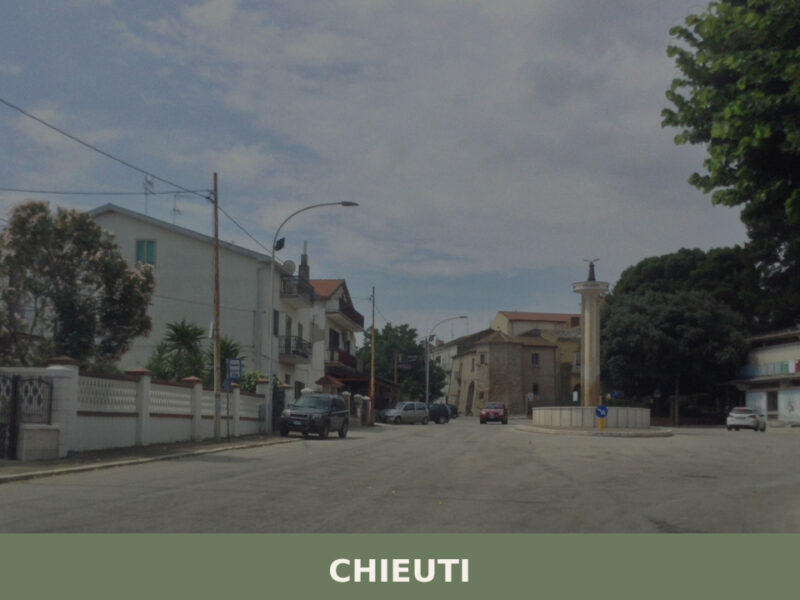
An Arbëreshë hilltop village of 1,518 people in the province of Foggia, Chieuti preserves five centuries of Albanian-Italian heritage in its streets, language, and traditions.
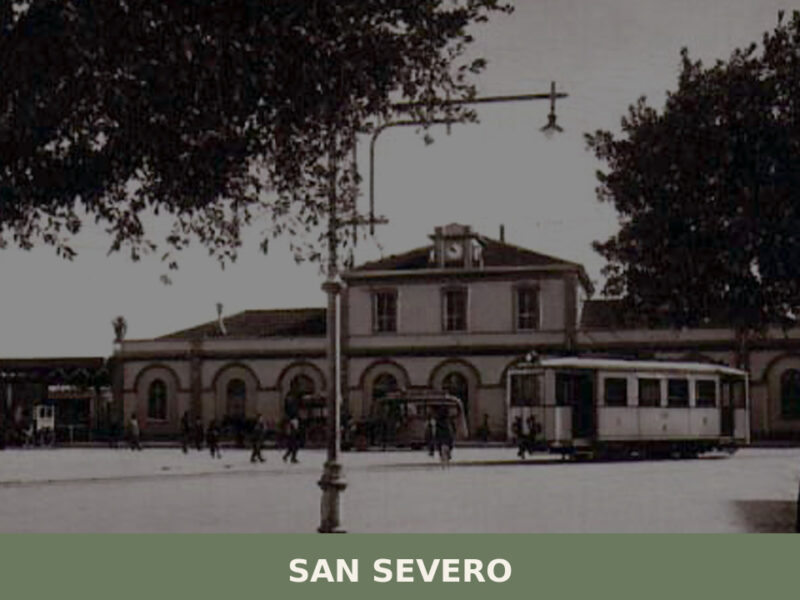
A ridge-top village above the Tavoliere plain in Foggia province, San Paolo di Civitate holds Roman ruins, Norman battlefield history, and an unhurried agricultural life.
A hilltop village of 1,357 inhabitants in the Province of Foggia. Explore Casalnuovo Monterotaro's stone lanes, rural landscape, and the traditions of inland Puglia.
📝 Incorrect information or updates?
Help us keep the Celle di San Vito page accurate and up to date.


