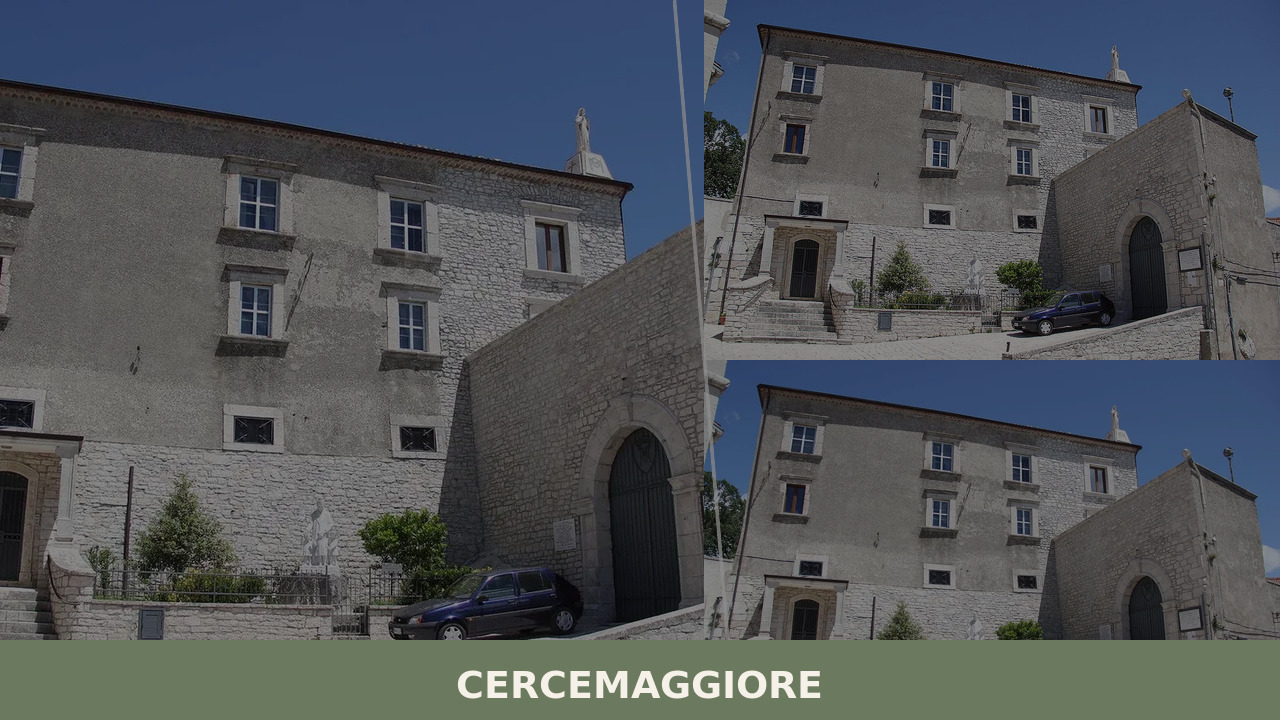
Morning mist spills across the rooftops at 930 metres, thinning as the sun reaches the bell towers. The air carries woodsmoke and the faint sound of a dog barking somewhere below the ridge. Cercemaggiore sits high in the Molise Apennines, a settlement of 3,601 people where stone houses line narrow streets that have changed course […]
Morning mist spills across the rooftops at 930 metres, thinning as the sun reaches the bell towers. The air carries woodsmoke and the faint sound of a dog barking somewhere below the ridge. Cercemaggiore sits high in the Molise Apennines, a settlement of 3,601 people where stone houses line narrow streets that have changed course little in centuries. Understanding what to see in Cercemaggiore begins here — at the intersection of mountain silence and a layered, often overlooked past that rewards those willing to slow down and look carefully.
The name likely derives from the Latin quercus maior — “the greater oak” — a reference to the dense oak forests that once blanketed this part of the Molise highlands. Settlement in the area predates the medieval period; archaeological evidence points to Samnite and Roman presence across the surrounding territory. But it was during the Norman and Lombard eras that Cercemaggiore took recognizable shape as a fortified hilltop village, its position on a high ridge serving both defensive and agricultural purposes.
Through the feudal centuries, the village passed between various baronial families who left their mark on its churches and civic buildings. Like many communities in inland southern Italy, Cercemaggiore experienced significant emigration in the late 19th and early 20th centuries, particularly to North America. The population contracted, and the village entered a long, quiet period of demographic decline that continues — albeit more slowly — today. What remains is a compact, well-preserved historic centre whose architecture speaks to its medieval and early modern past.
The village’s religious identity has been shaped profoundly by the Sanctuary of Santa Maria della Libera, a site of Marian devotion that has drawn pilgrims from across the region for centuries. This blend of rural isolation and spiritual significance gives Cercemaggiore a particular character — neither entirely forgotten nor overwhelmed by modernity.
Set just outside the village centre, this sanctuary is the spiritual heart of Cercemaggiore. The church houses a venerated wooden statue of the Madonna and dates in its current form to the late medieval period. The interior features painted vaults and votive offerings accumulated over centuries — a physical record of collective faith. The surrounding grounds offer sweeping views across the Molisan hills.
Cercemaggiore’s old quarter unfolds along a tight network of stone-paved lanes and stairways climbing toward the highest point of the ridge. Houses are built from local limestone, many with arched doorways and iron balconies. The fabric is authentically medieval in its irregularity — no grid, no uniformity, just the organic logic of a community that built upward and inward against the mountain wind.
Dedicated to the village’s patron saint, this church anchors the centro storico. San Mercurio, a Roman soldier martyred during the persecution of Christians, is honoured each year with a procession. The church’s modest façade conceals an interior with Baroque-era altarpieces and carved wooden choir stalls — restrained ornamentation that reflects the resources of a small mountain parish.
The baronial palace stands as evidence of Cercemaggiore’s feudal history. While not a grand aristocratic residence by Neapolitan standards, its solid stone construction and positioning within the village’s upper quarter speak to the local power structures that governed life here for centuries. Portions of the building have been adapted for civic use over the years.
The surrounding woodlands — oak, beech, and chestnut — offer marked trails that wind through terrain largely unchanged since the forests gave the village its name. Monte Saraceno, whose name recalls the Saracen incursions that once threatened these valleys, provides a vantage point over much of the upper Molise landscape. In autumn, the canopy turns copper and gold.
The cooking of Cercemaggiore belongs to the pastoral tradition of the Molise interior. Cavatelli — small hand-rolled pasta made without eggs — appears at most tables, often dressed with a slow-cooked ragù of pork or lamb. Sheep’s milk cheeses, including caciocavallo and fresh scamorza, are produced by small dairies in the surrounding area. Cured meats, particularly soppressata and ventricina, reflect the pig-rearing traditions of the Apennine highlands. Foraged ingredients — wild chicory, mushrooms, truffles — appear seasonally.
Bread still holds a central place: large loaves baked in wood-fired ovens, with a thick crust and dense crumb, sometimes flavoured with fennel seeds. Local Molise region wines, particularly Tintilia del Molise DOC — a red grape indigenous to the region — pair naturally with the robust, unadorned flavours of the table. Dining options within the village are limited to a handful of trattorie and agriturismi, where menus follow the seasons rather than any fixed card.
At 930 metres, Cercemaggiore experiences a genuine mountain climate. Winters are cold and sometimes snowy, lending the village a stark, quiet beauty but limiting accessibility. Spring arrives late — April and May bring wildflowers to the surrounding meadows and mark the beginning of comfortable walking weather. Summer temperatures remain moderate compared to the coastal lowlands, making July and August pleasant months to explore the historic centre and forests without the oppressive heat found at lower elevations.
The most significant event in the village calendar is the feast of Santa Maria della Libera, which draws pilgrims and visitors from across the region and the Italian diaspora. Autumn, particularly October, is ideal for those interested in the local food culture: mushroom and truffle foraging is underway, new wine is being pressed, and the oak forests reach their most vivid colour. Weekdays outside of festival periods are exceptionally quiet — expect few other visitors and an unhurried pace.
Cercemaggiore lies in the province of Campobasso, in the Molise region of southern Italy. By car, the village is accessible from the A1 motorway (Rome–Naples) by exiting at Caianello and following the SS 17 and connecting provincial roads northeast into the Molise highlands — a drive of roughly 90 minutes from Naples. From Campobasso, the regional capital, the distance is approximately 35 kilometres, mostly along winding but well-maintained mountain roads.
Rail connections are limited. The nearest train station with regular service is Campobasso, from which onward travel requires a car or infrequent local bus. The closest major airports are Naples Capodichino (approximately 130 km) and Bari Karol Wojtyła (approximately 170 km). A rental car is effectively essential for reaching Cercemaggiore and exploring the surrounding territory at your own pace. Road conditions in winter may require snow chains or winter tyres.
Cercemaggiore occupies a position near the borders of Molise, Campania, and Puglia — a convergence zone where the Apennine highlands begin their descent toward the Adriatic plain. This makes it a natural base for exploring lesser-known villages that share its character of quiet persistence. To the southeast, across the Puglia border, Rocchetta Sant’Antonio offers its own dramatic hilltop silhouette and a history shaped by the same feudal families and transhumance routes that defined life in these mountains.
Further into the Puglia lowlands, the town of Cerignola presents a contrasting landscape — vast cereal fields and olive groves replacing the forests and pastures of the highlands. Together, these villages trace a cross-section of southern Italian geography and culture, from mountain to plain, from pastoral economy to agricultural heartland. Travelling between them reveals how profoundly terrain has shaped the character of each community.
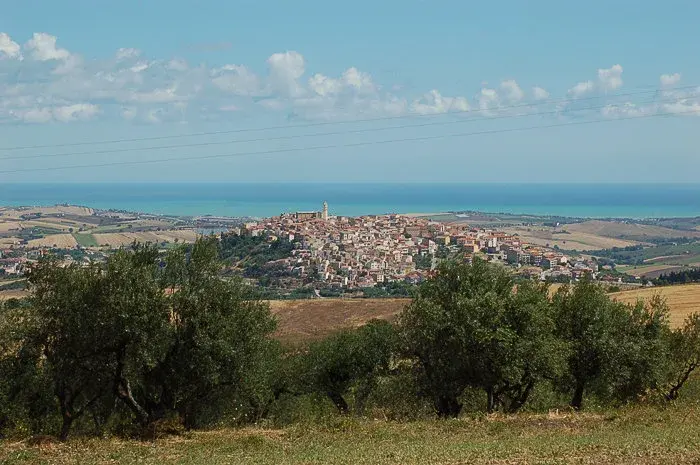
Morning light moves across the rooftops in a slow wave, catching the sandstone walls of old houses before spilling into the main piazza. At 273 metres above sea level, Montenero di Bisaccia sits on a hill that commands views stretching from the Apennine ridgeline to the Adriatic coast — a rare double horizon. With just […]
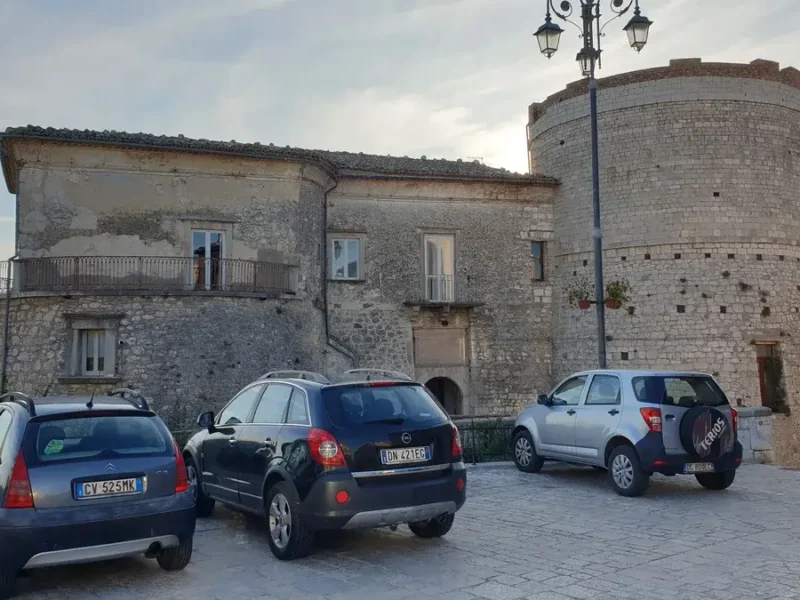
Morning light hits the limestone walls of Ferrazzano at an angle that turns every alley into a corridor of pale gold. At 872 metres above sea level, the air carries a sharpness that the lower towns of Molise never know — a clarity that makes the distant Adriatic coast visible on days when the haze […]
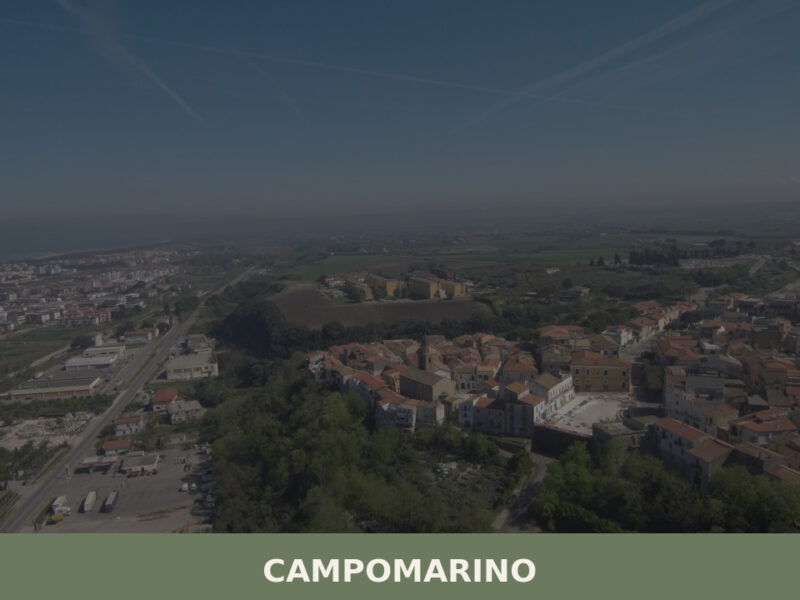
Campomarino straddles a Molise hilltop and the Adriatic shore. Explore its Arbëreshë heritage, three historic churches, and the unspoiled coast of Campomarino Lido.
📝 Incorrect information or updates?
Help us keep the Cercemaggiore page accurate and up to date.


