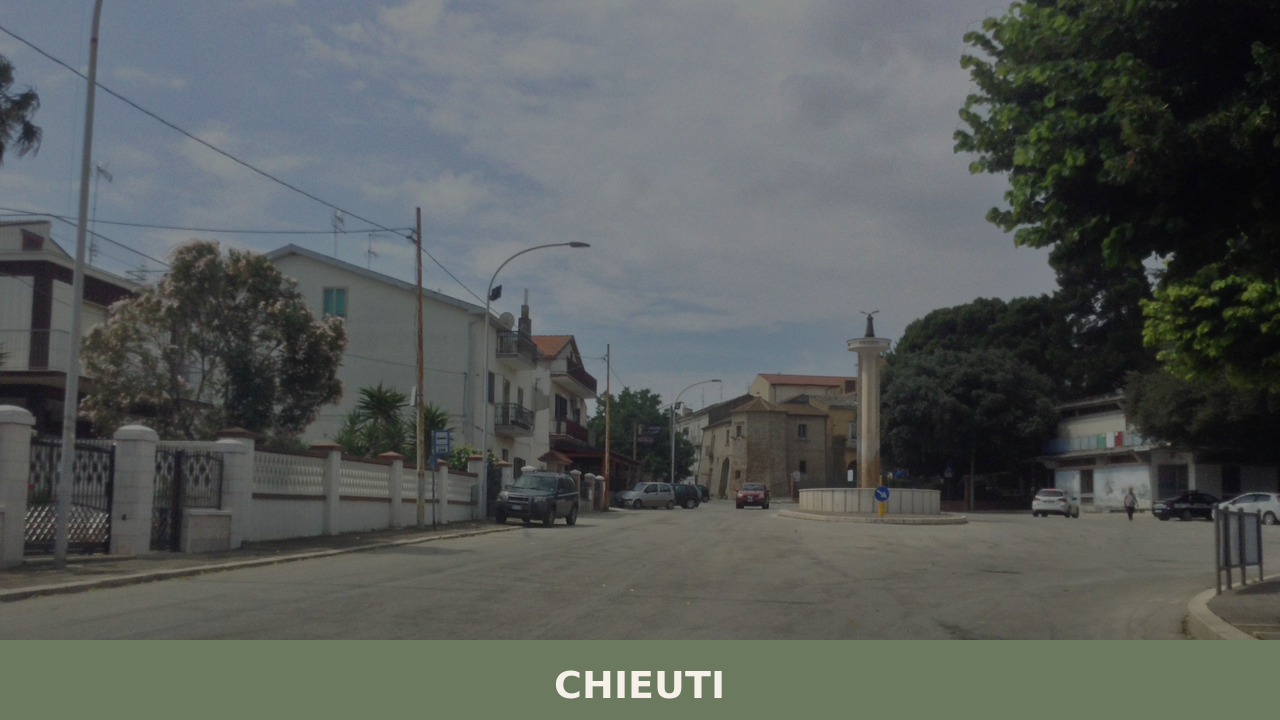
An Arbëreshë hilltop village of 1,518 people in the province of Foggia, Chieuti preserves five centuries of Albanian-Italian heritage in its streets, language, and traditions.
Morning light catches the limestone facades along Corso Skanderbeg before anyone has opened a shutter. A rooster crows from a courtyard somewhere behind the church, and the dialect drifting from the only open bar is not quite Italian — it is Arbëreshë, a language carried here from Albania five centuries ago and still spoken at kitchen tables. At 224 metres above sea level, this hilltop settlement of 1,518 people in the province of Foggia occupies a quiet fold between the Apennine foothills and the Adriatic. Knowing what to see in Chieuti begins with understanding that the village itself is the artifact.
Chieuti belongs to the constellation of Arbëreshë communities scattered across southern Italy — settlements founded by Albanian refugees who crossed the Adriatic in the fifteenth century, fleeing the Ottoman conquest of the Balkans. The migration occurred in waves between the 1460s and the early 1500s, following the death of the Albanian national hero Gjergj Kastrioti Skanderbeg in 1468. Chieuti’s founders were part of this exodus, and they were granted land by local feudal lords who needed to repopulate territories left sparse by plague and conflict. The village name itself likely derives from an older toponym predating the Albanian settlement, possibly linked to a pre-existing rural chapel or farmstead, though its precise etymology remains debated among local historians.
For centuries, the community maintained a dual identity — administratively part of the Kingdom of Naples, culturally rooted in Albanian language, religious rites, and customary law. The village followed the Byzantine Greek rite, distinct from the surrounding Latin Catholic parishes, though over time it transitioned to the Roman rite while preserving linguistic and folk traditions. Feudal control passed through various noble families until the abolition of feudalism in the Napoleonic period. Through the unification of Italy and the mass emigrations of the twentieth century, Chieuti’s population shrank, but the Arbëreshë identity persisted — a living seam in the cultural fabric of northern Puglia.
Today, the Arbëreshë heritage is formally recognised and protected under Italian law as a linguistic minority. Older residents still speak the language fluently, and efforts to transmit it to younger generations continue through local cultural associations and school programmes. The village’s street names, its annual festivals, and the rhythms of its communal life carry the imprint of a migration story half a millennium old.
The main parish church anchors the upper village with a solid, unadorned facade typical of rural Apulian ecclesiastical architecture. Inside, the nave preserves devotional statues and altarpieces accumulated over several centuries. The church’s focal role becomes vivid during the annual festa, when the statue of the Madonna is carried through the streets in a procession that draws the entire community outdoors.
The main street, named for the Albanian national hero, threads through the old quarter past low-arched doorways, exterior staircases, and narrow side alleys that dead-end against garden walls. The architecture is modest — whitewashed stone, iron balconies, terracotta roof tiles — but the street plan itself records the logic of a defensive hilltown. Walk it slowly; the details reveal themselves at a pace slower than a car allows.
Among the few noble residences in a village of farmers and artisans, Palazzo Ferrante represents the feudal presence that once governed daily life. Its portal and upper-floor windows carry restrained decorative stonework that distinguishes it from the domestic architecture surrounding it. The building stands as a marker of the social hierarchies that shaped the community’s history for centuries.
From the edges of the village, particularly along its southern and eastern margins, the terrain drops away to reveal a wide agricultural plain extending toward the Adriatic coast. On clear days, the Tremiti Islands are visible as faint silhouettes on the horizon. The view explains why this ridge was chosen for settlement — it offered both defensibility and a sightline to approaching danger or incoming weather.
Chieuti’s identity as an Arbëreshë village is its most distinctive cultural asset. Commemorative plaques, bilingual signage, and the local cultural centre document the Albanian-Italian heritage. Visitors interested in linguistic minorities will find that conversations with older residents — when approached with respect — offer a more textured understanding than any museum panel could provide.
The cooking in Chieuti reflects the agricultural economy of the northern Tavoliere plain: hard wheat, olive oil, wild greens, and preserved vegetables form the foundation. Handmade pasta shapes — orecchiette, cavatelli, and troccoli — appear at most tables, dressed with simple sauces of tomato, anchovy, or broccoli rabe. Lamb, raised on the surrounding hillsides, is roasted for feast days. The Arbëreshë heritage surfaces in certain preparations and names that differ from standard Apulian recipes, though the core ingredients remain the same. Local bakeries produce dense, chewy breads using semolina flour, baked in forms that have not changed meaningfully in generations.
Olive oil from this part of Foggia province tends to be robust and slightly peppery, pressed from varieties adapted to the drier, hillier terrain above the Tavoliere. Small-scale producers sell directly; asking at a bar or alimentari for a local recommendation is the most reliable strategy. There is no formal restaurant scene to speak of — Chieuti is not that kind of village — but agriturismi in the surrounding countryside offer full meals rooted in seasonal produce, and the few local establishments serve honest, unfussy food at prices that reflect the local economy rather than a tourist one.
Late spring — May and early June — offers warm days, green fields, and wildflowers along the roadsides without the crushing heat that settles over the Tavoliere in July and August. The annual festa in honour of the patron saint, typically held in summer, is the one moment when Chieuti’s population visibly swells; emigrated families return, the streets fill with music and processions, and the Arbëreshë identity is performed publicly with pride. If witnessing this matters to you, check dates locally in advance, as schedules can shift year to year.
Autumn brings the olive harvest and a particular quality of light — low, golden, cutting laterally across the stone facades — that rewards photographers. Winters are quiet and can be sharp; the elevation and exposure to winds from the north make Chieuti noticeably cooler than the coastal towns. For a village of this size, there is no dedicated tourist office, so practical planning — confirming accommodation, checking opening hours for the church — should be done before arrival. A visit here is best understood not as a destination in itself but as part of a slower itinerary through the villages of the province of Foggia.
Chieuti sits in the far northern reaches of Puglia, close to the border with Molise. By car, the A14 Adriatic motorway connects the village to the wider Italian road network; the nearest exit is Poggio Imperiale, roughly 15 kilometres to the east. From Foggia, the provincial capital, the drive is approximately 70 kilometres north along the SS16 or via the A14, taking just over an hour. From Bari, expect a drive of around two and a half hours (200 km). The nearest mainline railway station with regional and intercity services is Lesina or San Severo, both reachable from Foggia on the Trenitalia Adriatic line; from either station, a local bus or car is needed for the final stretch. The closest airport is Foggia’s Gino Lisa, though it offers limited commercial flights; Bari Karol Wojtyła Airport, roughly 210 kilometres to the southeast, is the more practical choice for international travellers. Renting a car is strongly advisable — public transport connections to a village of this size are infrequent and not designed around tourist schedules.
Chieuti sits at the northern edge of a region whose village life becomes increasingly dramatic as you move south and east along the coast. From here, a drive of roughly two hours delivers you to the Gargano promontory and the fishing port of Vieste, where white limestone cliffs drop directly into transparent water and the old town stacks itself above a working harbour. The contrast with Chieuti is instructive: Vieste has shaped itself around the sea, while Chieuti turned its back on the coast and faced the interior, a choice dictated by agricultural necessity and the defensive logic of hilltop settlement.
Closer to Foggia, and sharing something of Chieuti’s quiet, inland character, is Castelluccio dei Sauri, a small agricultural village on the Tavoliere plain. It offers a different angle on the same story — how communities in the province of Foggia adapted to the land, built modestly, and preserved local traditions against the centrifugal pull of emigration and modernisation. Taken together, these villages form a portrait of Puglia that tourist itineraries rarely assemble: not a highlight reel, but a patient, layered understanding of place.
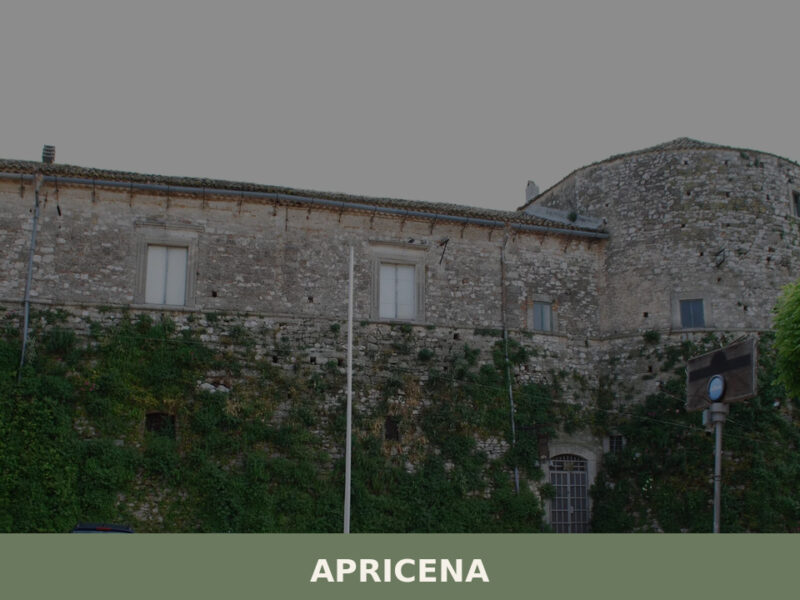
Discover Apricena, a stone-quarrying town in Puglia's Gargano area. Explore medieval heritage, local cuisine, and authentic Southern Italian charm.
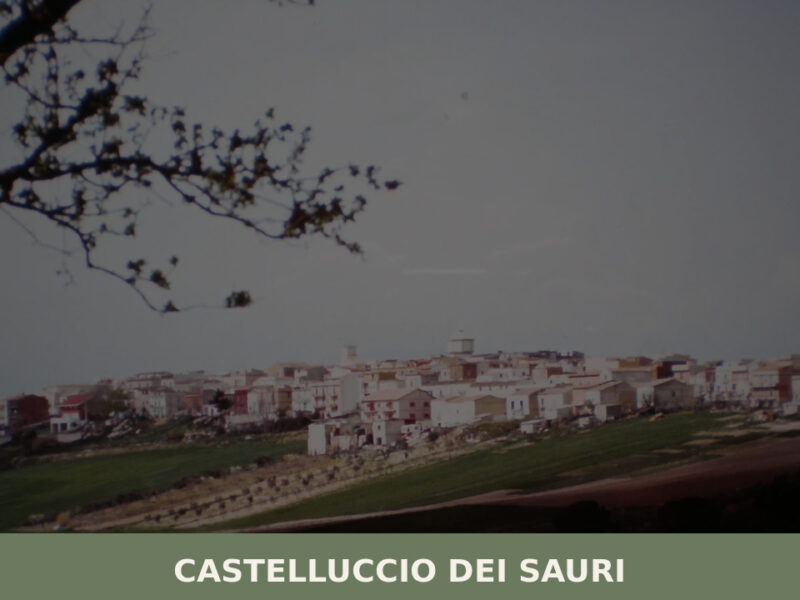
A hilltop village of 2,024 inhabitants overlooking Puglia's Tavoliere plain. Castelluccio dei Sauri offers ancient tratturi routes, quiet stone lanes, and the deep agricultural traditions of the Capitanata.
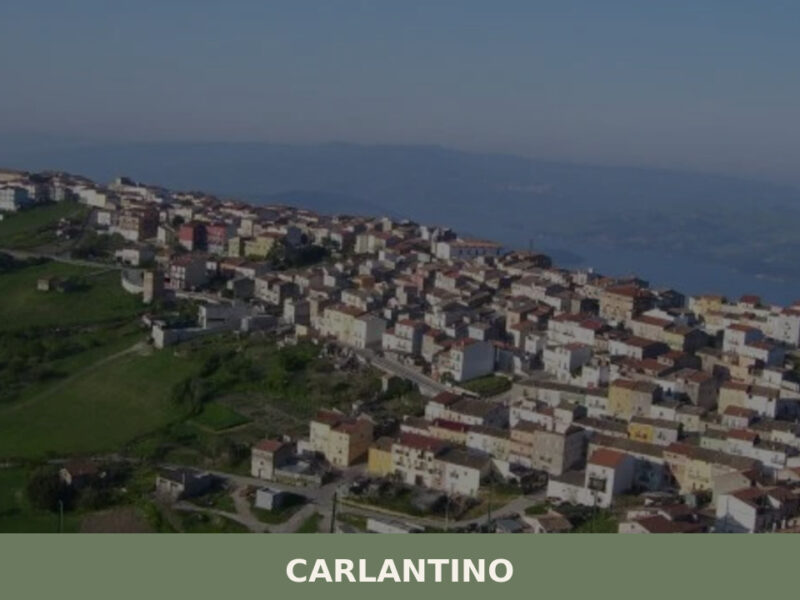
Discover Carlantino, a tiny hilltop village overlooking Lake Occhito in Puglia's Daunia hills. Explore its history, nature trails, and renowned black truffles.
📝 Incorrect information or updates?
Help us keep the Chieuti page accurate and up to date.