


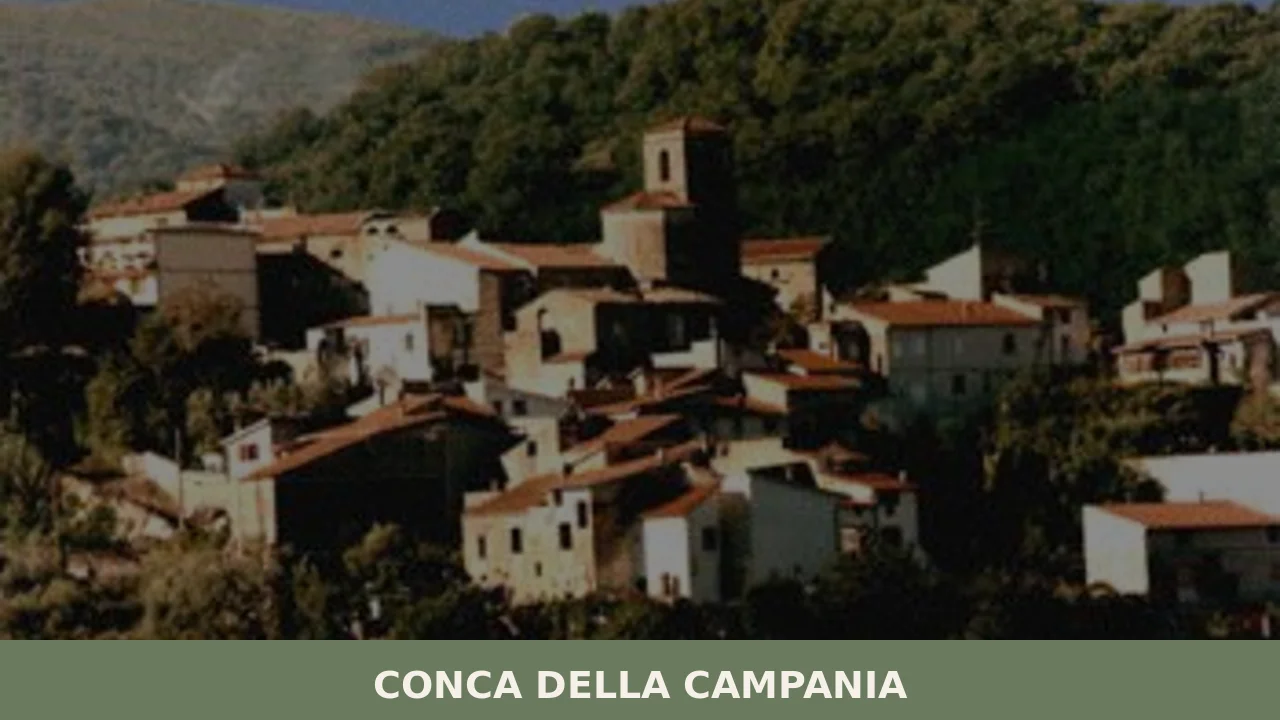
Conca della Campania
At 420 metres above sea level, on the hilly ridge separating the Volturno valley from the Lazio side, Conca della Campania today has 1,154 inhabitants spread between the main settlement and the hamlets scattered along the ridgelines. The municipal territory falls within the province of Caserta, on the border with Molise and Lazio, a frontier […]
Discover Conca della Campania
At 420 metres above sea level, on the hilly ridge separating the Volturno valley from the Lazio side, Conca della Campania today has 1,154 inhabitants spread between the main settlement and the hamlets scattered along the ridgelines. The municipal territory falls within the province of Caserta, on the border with Molise and Lazio, a frontier position that has shaped every phase of its history. Asking what to see in Conca della Campania means engaging with a landscape where Romanesque churches, fortified farmsteads and Turkey oak woods form a geography that remains clearly legible.
History and origins of Conca della Campania
The place name “Conca” most likely derives from the shape of the terrain: a natural hollow surrounded by higher ground that forms, precisely, an orographic basin. The addition “della Campania” was made official after Italian Unification to distinguish the municipality from identically named centres in other regions. Human presence in the area is documented as far back as the Samnite period: the territory fell within the district of the Pentri, the Samnite tribe that controlled the communication routes between the Tyrrhenian and Adriatic seas through the Apennine passes.
In the medieval period the settlement followed the fortunes of the Principality of Capua and later the Kingdom of Naples. The feudal structure conditioned the urban layout: the village organised itself around a defensive core placed at the highest point, with houses arranged in a ring along the slopes. Over the centuries the fief passed between various noble families of southern Italy, each of which left traces in the religious and civic architecture. The main church, dedicated to Saint Sebastian, patron saint of the village together with Maria SS. della Libera, represents the identity-defining focal point of the community, a liturgical and topographical reference.
The nineteenth century brought emigration as a structural phenomenon. The population, which during its phases of greatest expansion had reached figures significantly higher than today’s, began a demographic decline that continued through the twentieth century and has not yet been halted. The damage of the Second World War, with the front passing along the Gustav Line in the winter of 1943–44, worsened an already critical situation. Post-war reconstruction partly altered the appearance of the village, but several buildings still retain pre-twentieth-century architectural elements, readable in the local stone masonry and the carved portals.
What to see in Conca della Campania: 5 main attractions
1. Church of San Sebastiano
The central religious building of the village, the church dedicated to the patron saint features a limestone façade with a sculpted portal. The interior, with a single nave, preserves side altars in stucco and canvas dating from the Baroque period. Its commanding position over the main square makes it the orientation point for any route through the old town.
2. Sanctuary of Maria SS. della Libera
A place of Marian devotion deeply rooted in the local community, the sanctuary is a pilgrimage destination during the patronal celebrations. The structure, remodelled across several periods, maintains an architectural sobriety consistent with the rural religious architecture of the upper Caserta area. Inside, the image of the Madonna della Libera, co-patron of the municipality, is venerated.
3. Old town and civic architecture
The houses of the historic core display local stone masonry — limestone and grey tuff — with brick inserts. Some portals datable to between the seventeenth and eighteenth centuries feature worked jambs and architraves with inscriptions. The covered passageways and external staircases document an organisation of domestic space typical of the hilltop settlements of the northern Terra di Lavoro.
4. Hill trails and Turkey oak woods
The municipal territory, ranging between 300 and 600 metres in altitude, is crossed by a network of unpaved paths connecting the rural hamlets. The dominant vegetation is mixed woodland of Turkey oak and downy oak, with an understorey rich in cyclamens in autumn and wild orchids in spring. The trails offer viewpoints towards the Matese mountain range and the middle Volturno valley.
5. Farmsteads and rural architecture of the hamlets
The hamlets of the municipality preserve farmstead complexes with defensive features — dovecote towers, walled enclosures, external ovens — that document an agro-pastoral economy organised around self-sufficient units. Some of these structures, still inhabited or undergoing restoration, retain the original arrangement of spaces: stable on the ground floor, living quarters on the first level, storage under the roof.
Traditional cuisine and local products
The table in Conca della Campania reflects the food culture of the Campanian-Molisan Apennines. First courses revolve around handmade pasta — cavatelli, lagane, sagne — dressed with pork ragù or with pulses, particularly beans and grass peas. Pork remains the backbone of local gastronomy: home processing yields sausages, soppressata, capocollo and cured lard that span the entire culinary year. Extra virgin olive oil, obtained from cultivars common in the upper Caserta area, accompanies almost every dish.
The territory falls within the production area of several Campanian products with geographical indication. Wood-oven-baked bread, often in large loaves, is still part of the daily diet for many families. In autumn, the gathering of porcini mushrooms and chestnuts supplements the diet and feeds a small local trade. The trattorias in the area, few in number and family-run, offer menus tied to the seasonality of ingredients, with generous portions and prices lower than the regional average. The municipal website provides up-to-date information on active dining establishments.
When to visit Conca della Campania: the best time
The hilltop elevation ensures summers that are less sweltering than on the Caserta plain: in July and August, maximum temperatures average between 28 and 32 degrees, with noticeable night-time temperature swings. Spring, from April to June, is the most suitable period for walking excursions: the vegetation is at its fullest, the days are long and the rain, though present, tends to be concentrated in brief episodes. Autumn offers the advantage of the woodland colours and the mushroom and chestnut season, but requires appropriate gear for trails that can become muddy.
The patronal festivities — linked to Saint Sebastian (20 January) and Maria SS. della Libera — are the moments of greatest community vitality, with processions, music and collective food preparation. Winter, cold and sometimes snowy, reduces the possibilities for outdoor activities but reveals a bare and silent landscape with its own precise aesthetic rigour. For those seeking information on local events, the Touring Club Italiano publishes periodic updates on festivals and events in smaller Italian municipalities.
What to see in Conca della Campania and in nearby villages
The northern side of the province of Caserta and the bordering Molisan area form a system of hilltop villages that share history, dialects and agricultural practices. To the north-east, along the Volturno valley, Ciorlano occupies a comparable position in terms of altitude and isolation: its old town, marked by the 1980 earthquake, is the subject of a slow recovery process that deserves a careful visit, especially for those interested in minor architecture and the demographic dynamics of small Apennine municipalities.
Further east, still in the Volturno basin, Ailano retains a compact urban layout and a mother church with elements of historical and artistic interest. Combining a visit to Conca della Campania with these nearby centres allows you to build a two- or three-day itinerary through an area rarely reached by organised tourism, where population density is low and the balance between built space and natural landscape tilts decidedly in favour of the latter. It is a stretch of inland Italy that rewards those who travel slowly and with a topographic map in their backpack.
In Campania More villages to discover
Caianello
A crossroads village of 1,752 inhabitants in Caserta province, Caianello hides medieval lanes and olive groves above its famous motorway junction.
San Potito Sannitico
In 1927, the municipality of San Potito acquired the suffix “Sannitico”, an addition that recognizes its connection to the historical territory of the Samnites and distinguishes it from homonyms. This small town of 1,952 inhabitants, situated 230 meters above sea level in the province of Caserta, developed on the slopes of the Matese Massif, a […]
Vitulazio
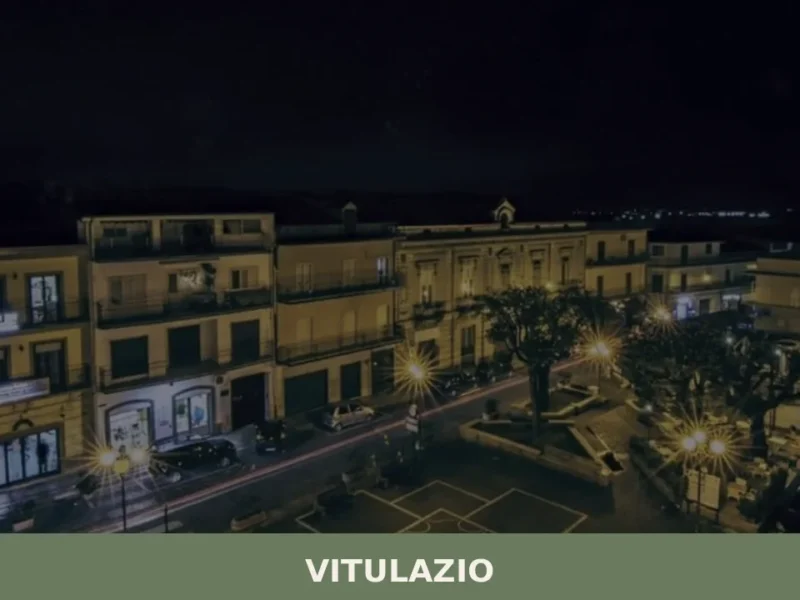
What to see in Vitulazio: 7,646 residents, 57m above sea level in Caserta province. Visit the Agnena Sanctuary, historic centre and taste PAT products like 'Ndunderi. Plan your trip.




📝 Incorrect information or updates?
Help us keep the Conca della Campania page accurate and up to date.