


Genova
What to see in Genova: city at 18 m above sea level with UNESCO Rolli palaces and Europe’s largest aquarium. Plan your visit with our full guide.
Discover Genova
In 1099, the Genoese fleet helped conquer Jerusalem during the First Crusade, and from that expedition it brought back the ashes of Saint John the Baptist — which still rest in the cathedral today. A port active since at least the 5th century BC, a Maritime Republic that rivalled Venice, Pisa and Amalfi for nearly eight centuries, and one of the largest medieval old towns in Europe: this is the context for anyone wondering what to see in Genova.
The city stretches along a narrow coastal strip between the Ligurian Sea and the first Apennine foothills, at just 18 metres above sea level in its port area, with its 558,745 inhabitants spread across an urban fabric that climbs steeply towards the surrounding hills.
History and Origins of Genova
The Latin name Genua is documented from at least the 3rd century BC, and its etymology remains a matter of debate among linguists.
The most widely accepted hypothesis traces it to a pre-Indo-European root meaning “knee” or “angle”, referring to the shape of the coastline, which forms a pronounced inlet at that point. Another theory links it to the Ligurian word for “mouth” — understood as an opening, a gateway to the sea. As early as 209 BC the city was destroyed by the Carthaginians under Mago, Hannibal’s brother, but it was quickly rebuilt by the Romans as a strategic base for controlling western Liguria.
The pre-Roman oppidum occupied the Castello hill, the same rise where the church of Santa Maria di Castello stands today.
The medieval period marked Genova’s rise as an international maritime power. In 1099, during the First Crusade, the Genoese fleet led by Guglielmo Embriaco took part in the capture of Jerusalem, obtaining commercial privileges across the Levant in return. In 1261, the Treaty of Nymphaeum, signed with the Byzantine emperor Michael VIII Palaiologos, granted the Genoese near-exclusive control of trade routes in the Black Sea.
The Republic of Genova — formally established as a free commune as early as the 12th century — reached its financial peak in the 16th century, when the banker Andrea Doria reformed the constitution in 1528 and the Genoese patrician families became the principal creditors of the Spanish crown. The historian Fernand Braudel called that period “the century of the Genoese”.
Among the notable figures linked to the city, the most universally known is Christopher Columbus, born in Genova in 1451 according to the documentation now prevailing among historians.
The house traditionally identified as his childhood home stands near Porta Soprana. Niccolò Paganini, the violin virtuoso, was born in the now-vanished alley of Passo di Gatta Nova in 1782. Giuseppe Mazzini, founder of Young Italy, was born in 1805 at Via Lomellini 11, where the museum dedicated to him is located today. In demographic terms, Genova reached its population peak in the 1970s with over 800,000 residents, before gradually declining to the current 558,745, reflecting a trend common to the large industrial cities of northern Italy.
What to See in Genova: 5 Unmissable Attractions
1. The Palazzi dei Rolli and the Strade Nuove
Inscribed on the UNESCO World Heritage List since 2006, the Palazzi dei Rolli form a system of aristocratic residences that between the 16th and 17th centuries were drawn by lot to host state visits. They are distributed along Via Garibaldi (formerly Strada Nuova, opened in 1551), Via Balbi and Via Cairoli. Palazzo Rosso, Palazzo Bianco and Palazzo Doria-Tursi — now home to the Musei di Strada Nuova — hold works by Rubens, Van Dyck and Veronese. The entrance halls of these buildings feature monumental staircases, frescoed loggias and courtyards with nymphaea that reflect the wealth of Genova’s merchant families.
The Rolli system comprised 163 palazzi, of which 42 have been included in the UNESCO site.
2. The Cathedral of San Lorenzo
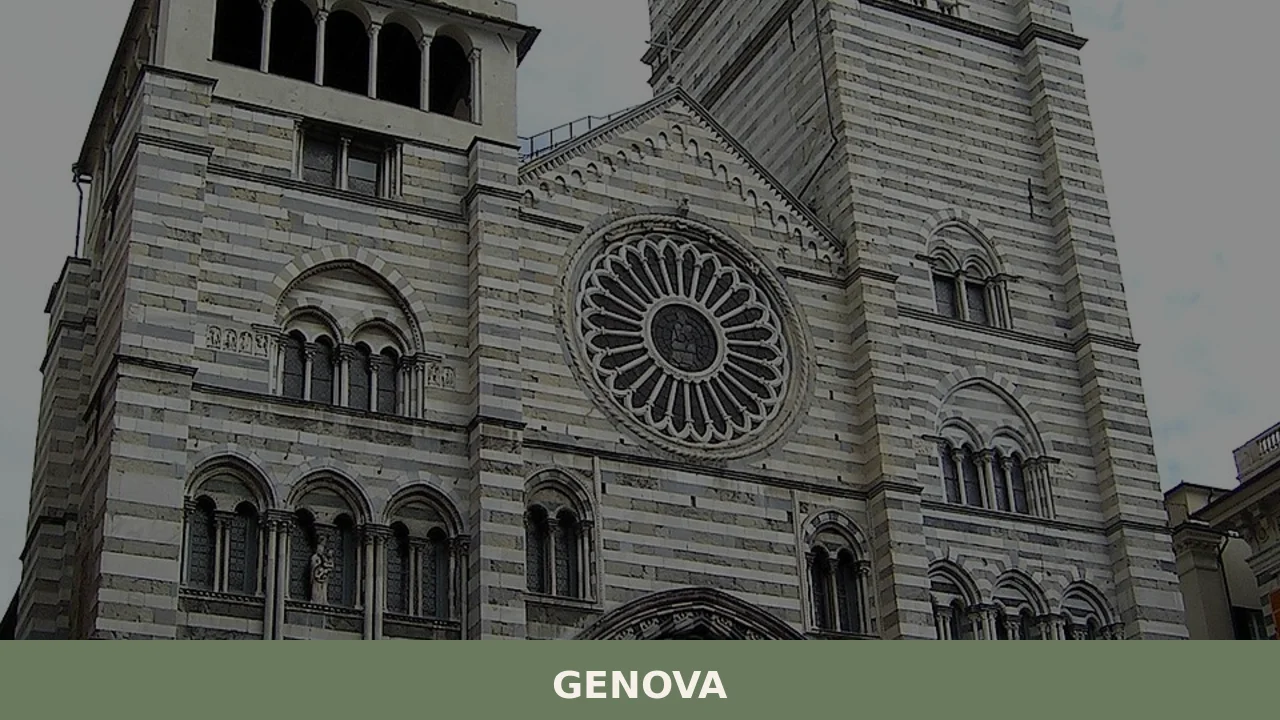
Consecrated in 1118 by Pope Gelasius II, the Cathedral of San Lorenzo dominates the square of the same name with its Gothic façade in alternating white and black bands — the bichromatic style typical of Ligurian religious architecture, achieved by alternating Carrara marble and Promontorio stone. The three-nave interior houses the Chapel of Saint John the Baptist, a 15th-century work attributed to Domenico and Elia Gagini, which contains the relics of the city’s patron saint.
In the Treasury Museum, designed by architect Franco Albini in the 1950s with an underground layout considered a masterpiece of modern museography, visitors can find the Sacro Catino — a green glass dish that medieval tradition identified as the Holy Grail, brought to Genova after the conquest of Caesarea in 1101.
3. The Aquarium of Genova
Opened in 1992 for the Colombiadi — the celebrations marking the five-hundredth anniversary of the discovery of the Americas — the Aquarium of Genova is the largest in Italy and one of the biggest in Europe, with over 70 tanks and approximately 12,000 specimens from 600 different species.
The building, designed by architect Renzo Piano together with Peter Chermayeff, extends along the Porto Antico pier over approximately 27,000 square metres. The main dolphin tank, holding four million litres of water, and the reconstruction of a Red Sea coral reef are the points of greatest scientific and educational interest. In 2013 the Cetacean Pavilion was added, expanding the exhibition area by a further 3,000 square metres.
4. The Old Town and the Caruggi
Covering an area of approximately 113 hectares, the old town of Genova is considered the largest in Europe among those of medieval origin. The caruggi — the narrow alleyways that branch out between the port and the hills — form an irregular network where the distance between the façades of facing buildings can shrink to less than one metre.
Piazza San Matteo, enclosed by the Doria family residences, preserves its 13th-century layout intact. Sottoripa, the arcade running along the old port, was already functioning as a commercial exchange zone in the 12th century and is among the oldest urban porticoes in Italy. At Via del Campo 29 rosso — the street number made famous by Fabrizio De André’s song — there is now a small museum dedicated to the Genoese singer-songwriter.
5. Boccadasse and the Lanterna
The neighbourhood of Boccadasse, reachable on foot along Corso Italia from the Albaro area, retains the structure of a fishing village with colourful houses overlooking a small pebble cove. Boats hauled up onto the beach and nets spread out to dry compose a scene that holds its own against the urban pressure of the surrounding city. About three kilometres to the west, the Lanterna — Genova’s symbolic lighthouse — rises 77 metres on the hill of Capo di Faro.
Built in its current form in 1543, it is the tallest lighthouse in the Mediterranean and the second oldest still in operation in Europe.
The museum at its base traces the city’s maritime history through documents and nautical instruments.
What to Eat in Genova: Local Cuisine and Regional Products
Genoese cuisine developed at the crossroads of two worlds: the sea, which provided oily fish and trade routes for spices, and the Apennine hinterland, where vegetables, aromatic herbs and olive trees were cultivated. Ligurian frugality — well known and sometimes caricatured — produced a gastronomy that transforms humble ingredients into complex preparations. Extra virgin olive oil, basil, pine nuts and walnuts form the base of many dishes, while the influence of trade with the Middle East introduced the use of spices and dried fruit in meat and fish recipes as far back as the Middle Ages.
The most renowned dish is pesto alla genovese, a raw sauce prepared in a marble mortar with a wooden pestle, using Genoese basil (small, convex leaves with no minty notes in the aroma), Vessalico garlic, pine nuts, Parmigiano Reggiano, Pecorino Fiore Sardo, coarse salt and Ligurian extra virgin olive oil. It traditionally accompanies trofie — short, twisted fresh pasta — or trenette, dressed together with potatoes and green beans. Another signature dish is focaccia genovese, roughly two centimetres thick, with a golden crust and soft crumb, topped with oil and coarse salt crystals.
In Genova it is eaten at breakfast, dipped in cappuccino — a habit that surprises visitors from outside Liguria.
Among local products, Genoese basil has been awarded DOP certification (Protected Designation of Origin) under the name “Basilico Genovese DOP”, and is grown in the Pra’ area and the western part of Genova.
Focaccia di Recco col formaggio, made in the nearby town of Recco from two paper-thin layers of unleavened dough filled with fresh stracchino cheese, holds IGP recognition (Protected Geographical Indication). Farinata — a thin, crisp flatbread of chickpea flour, water, oil and salt, baked in a copper pan in a wood-fired oven — is mentioned in Genoese documents from at least the 13th century. Cima alla genovese, a pocket of veal belly stuffed with eggs, vegetables, peas, pine nuts and marjoram, is the traditional Sunday and holiday dish.
The Mercato Orientale, housed since 1899 in the cloister of the former Augustinian convent on Via XX Settembre, is the city’s main covered food market and the place to find traditional Genoese products under one roof. The Feast of Saint John the Baptist, on 24 June, is the occasion for the patron saint celebrations with the traditional bonfire on the harbour and the procession of the casket containing the saint’s relics.
During the summer months, numerous food festivals in the hillside neighbourhoods and outlying districts offer traditional dishes, from focaccia and farinata to pansotti in walnut sauce — stuffed pasta filled with a mix of wild herbs called “preboggion”.
On the wine side, the Genoese hills fall within the production area of the Golfo del Tigullio-Portofino DOC, which includes whites based on Vermentino and Bianchetta genovese.
Bianchetto, a native variety that had almost disappeared and is now being recovered, produces a light, savoury wine that pairs well with seafood. In the Polcevera Valleys, directly behind the city, the Val Polcèvera DOC is produced, including Coronata — a white made from Vermentino and Bianchetta grapes grown on terraces — which was considered the everyday table wine of the Genoese until the mid-20th century.
When to Visit Genova: The Best Time
Genova’s Mediterranean climate makes the city worth visiting all year round, but the optimal period varies depending on your interests. From April to June temperatures range between 15°C and 25°C, tourist numbers are moderate, and the light does justice to the painted façades of the old town.
24 June, the feast day of the patron saint Saint John the Baptist, transforms the Porto Antico with the traditional bonfire and fireworks — it is the date most deeply felt by the Genoese. September and October offer the advantage of a sea still warm enough for the beaches of Boccadasse and Vernazzola, and a city less crowded than in August.
Genova’s winter is mild (rarely below 5°C) and allows visitors to explore the museums and old town without the summer crowds.
The City of Genova organises the annual Suq Festival, a theatre and cultural programme in the Porto Antico held in June, and the Festival della Scienza in October — the latter is the largest science communication event in Italy, with over 200 sessions spread across eleven days.
The International Boat Show, hosted at the Fiera di Genova in September, draws visitors from the nautical sector across Europe and fills the city’s hotel capacity, a factor to consider when planning your trip.
How to Get to Genova
Genova is connected to the Italian motorway system by the A7 (Milan–Genova, 145 km from the Lombard capital, approximately one hour and forty minutes’ drive), the A10 (Genova–Ventimiglia, towards the Riviera di Ponente and France), the A12 (Genova–Rosignano, towards the Riviera di Levante, Tuscany and Rome) and the A26, which links it to Alessandria and Piedmont. The main motorway exits are Genova Ovest (for the Porto Antico and the old town), Genova Est (for the exhibition centre and trade fair district) and Genova Nervi (for the eastern part of the city).
Genova Piazza Principe railway station, a short walk from Via Balbi and the Palazzi dei Rolli, is served by high-speed and Intercity trains.
From Milano Centrale the journey takes approximately one hour and thirty minutes; from Roma Termini about four hours and thirty minutes. The Cristoforo Colombo Airport is located in Sestri Ponente, six kilometres from the centre, reachable by Volabus (dedicated shuttle, 30 minutes) or taxi.
The light metro, with eight stations from Brin to Brignole, crosses the city from north-west to east, and a network of funiculars and public lifts — a legacy of the steep terrain — connects the centre to the hillside neighbourhoods, an urban feature that is virtually unique in the Italian landscape.
Other Villages to Explore in Liguria
Visitors to Genova who wish to explore inland Liguria can reach Favale di Malvaro, a small settlement in the Val Fontanabuona behind the Levante coast.
About 50 kilometres from Genova and reachable in just over an hour by car, Favale is linked to a remarkable migration story: between the late 19th and early 20th centuries, a significant portion of its population emigrated to California, and the descendants of those Ligurians founded the Bank of America.
The village, with its handful of residents and a landscape of chestnut forests and terraced hillsides, offers a radically different perspective from Genova’s monumental scale — a rural, vertical Liguria made up of footpaths and scattered hamlets.
On the opposite side of the region, in the western Riviera within the province of Imperia, Diano Arentino sits on the hills overlooking the Gulf of Diano, surrounded by olive groves that produce the Taggiasca olive.
Reachable from Genova in about one hour and forty minutes via the A10, the village allows visitors to combine a trip to the great port city with an immersion in Liguria’s olive-growing hinterland.
A three- or four-day itinerary that includes Genova, the Val Fontanabuona with Favale and the Diano area with Diano Arentino covers three distinct faces of Liguria: the maritime metropolis, the farming mountains and the Mediterranean hillside.
In Liguria More villages to discover
Fontanigorda
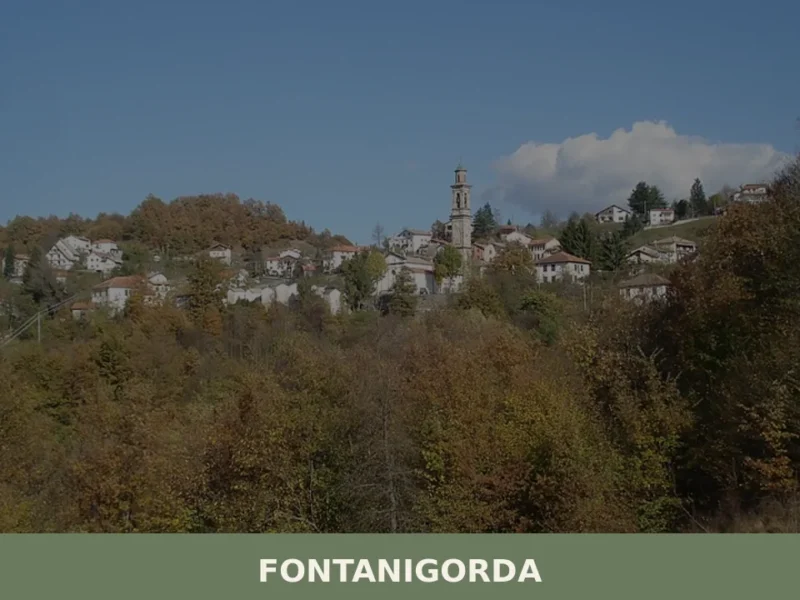
At 819 meters above sea level, in the heart of the upper Trebbia Valley, Fontanigorda appears as an alpine settlement in the province of Genoa. Its documented origin dates back to 1153, when it appears in annals as “Fontana Gordana,” a reference to the abundance of water in its territory. This village, with a population […]
Coreglia Ligure
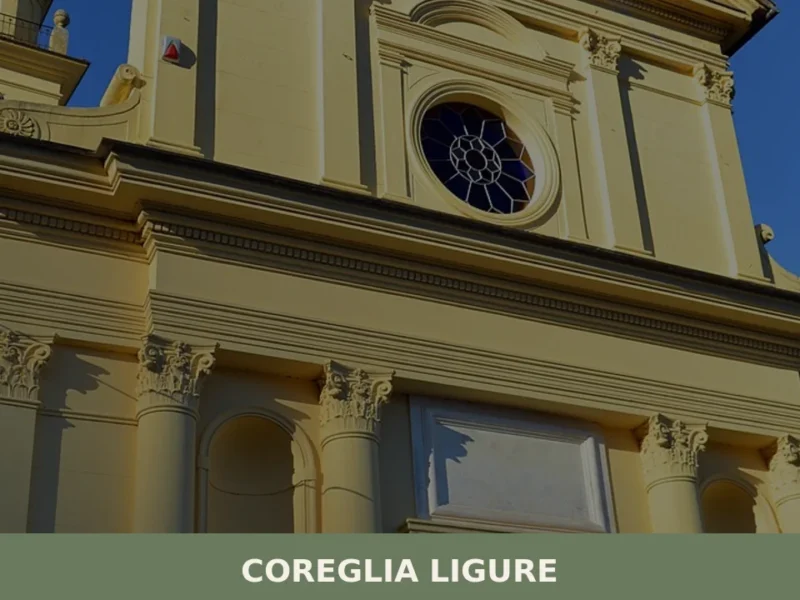
Coreglia Ligure, a comune of just 257 inhabitants in the province of Genova, sits at 65 metres above sea level on the eastern slope of the Fontanabuona valley — one of the most densely settled inland corridors of the Ligurian Apennines. The village’s economy historically revolved around slate extraction and olive cultivation, two activities that […]
Gorreto
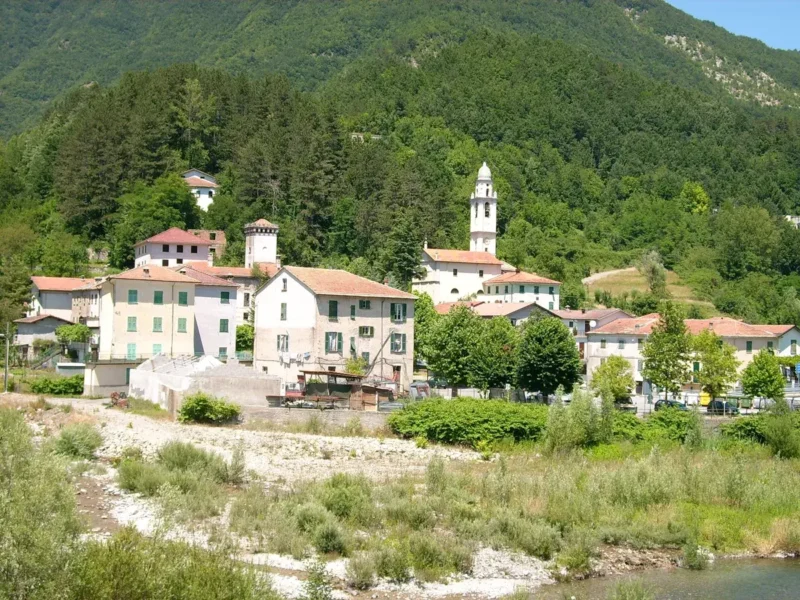
Gorreto: Complete Editorial Guide The stone bridge over the Trebbia, with its centuries-old arches, marks the entrance to Gorreto, a village that reveals itself with the discretion of a place that has watched the passage of people and goods for centuries. At 533 metres above sea level, in the province of Genova, this settlement of […]


📝 Incorrect information or updates?
Help us keep the Genova page accurate and up to date.