


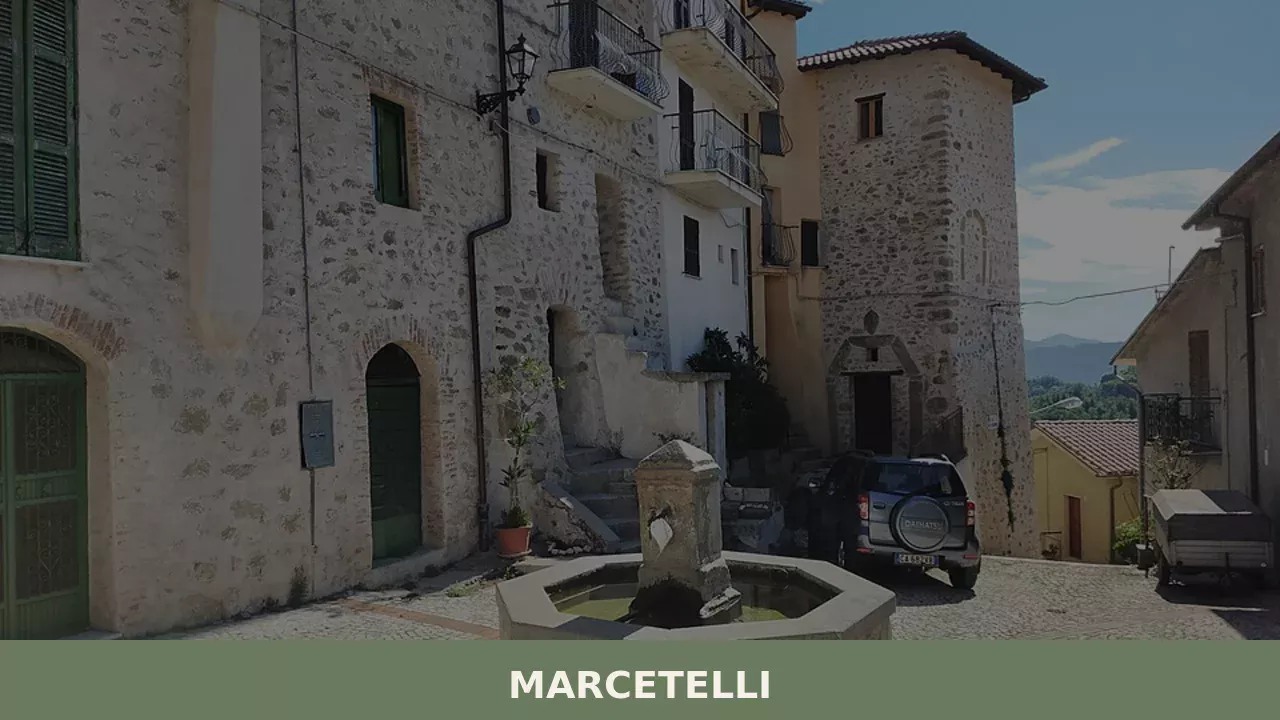
Marcetelli
What to see in Marcetelli, a village at 930m in Rieti province with 82 residents. Explore Lago del Salto, the Church of San Venanzio and PAT-certified Guanciale amatriciano. Plan your visit now.
Discover Marcetelli
At 930 metres above sea level, in the province of Rieti, Marcetelli is one of the smallest municipalities in Lazio with just 82 residents.
Guanciale amatriciano and Cacio fiore, both certified as PAT products (Traditional Agri-food Products), reflect the deep-rooted connection this area has with livestock farming and cheese production in the Rieti mountains.
Understanding what to see in Marcetelli starts with this reality: a high-altitude settlement that has preserved its historic urban structure, surrounded by Apennine landscape that has always governed the rhythms of daily life and local productive activity.
History and Origins of Marcetelli
Marcetelli’s roots go back to the medieval period, as evidenced by the village’s urban layout, which remains recognisable in its current form.
According to available historical sources, the name of the municipality may derive from an ancient landowner or from a Latin term connected to the agricultural management of the territory, although specific documentation on the etymology remains incomplete.
The area falls within the historical region of Sabina reatina, a zone that throughout the Middle Ages was contested among various local lordships and subject to the influence of important Benedictine abbeys that controlled large portions of the surrounding mountain territory.
During the late Middle Ages, Marcetelli was part of a network of small defensive settlements dotting the Apennine passes between Lazio and Abruzzo.
This strategic position along transhumance routes shaped the community’s economic development, which was based from the outset on sheep farming, cheese production and the wool trade.
The settlement consolidated around religious structures and a defensive core that still defines the morphology of the village today.
The ecclesiastical and feudal allegiances of the territory shifted several times over the centuries, following the political fortunes of the Papal States, under whose jurisdiction Marcetelli remained for several centuries until Italian unification.
With Italian unification in 1861, Marcetelli became part of the Kingdom of Italy as an autonomous municipality in the province of L’Aquila, before being transferred to the province of Rieti following the administrative reorganisation of 1927 under the Fascist regime.
The twentieth century left a deep mark on the village, as it did on most small Apennine settlements, through waves of emigration that progressively reduced the resident population. From the demographic peaks of earlier centuries, the community has declined to its current 82 inhabitants — a figure that places Marcetelli among the smallest municipalities in the whole of Lazio and makes its survival as an autonomous administrative entity a noteworthy fact.
What to See in Marcetelli: Main Attractions
Parish Church of San Venanzio
The main place of worship in Marcetelli is dedicated to San Venanzio di Camerino, the patron saint whose feast day is celebrated every year on 18 May.
The church serves as the focal point of the village’s communal and religious life, and it retains architectural elements characteristic of the local building traditions of the Rieti hinterland. The façade and interior reflect the austerity typical of mountain churches, where simplicity of form combines with popular devotion.
The sacred furnishings and the structure of the altar are worth examining closely, as they document the continuity of religious practice in this territory across several centuries.
Medieval Historic Centre
Marcetelli’s historic centre preserves its medieval urban layout, with a succession of local stone houses, carved doorways and small squares that once served as gathering points for the community.
Walking through the village means reading directly the architectural layering of several centuries, with dwellings built up against one another and following the natural contours of the hillside.
The limestone used in the buildings was quarried locally, and its warm yet austere colouring defines the entire chromatic palette of the village. Visitors to Marcetelli will find this urban compactness one of the most significant aspects to observe.
Views over Lago del Salto
One of the most notable landscape features visible from Marcetelli is Lago del Salto, an artificial reservoir created in 1940 with the construction of a dam on the Salto river. The lake, one of the largest in Lazio, opens out at the foot of the mountain system on which the village stands, offering a broad view over the water and the surrounding wooded shores.
Climbing to the higher points of the village to look out over this expanse of water within its Apennine setting is one of the most concrete experiences Marcetelli offers the visitor.
The contrast between the forest and the lake’s surface changes with the seasons.
Surrounding Mountain Territory
The municipal territory of Marcetelli, at 930 metres above sea level, gives direct access to hiking trails that pass through the beech and Turkey oak woodland typical of the Rieti Apennines.
The natural areas around the village are part of the landscape system of the Valle del Salto, characterised by alternating upland meadows, wooded formations and rocky outcrops. Walking trails accessible from the edge of the village allow visitors to explore the area directly, reaching viewpoints over the lake and the surrounding peaks.
This natural dimension is an integral part of what to see in Marcetelli for those who enjoy hiking.
Minor Religious Architecture and Votive Chapels
As in many villages of the Lazio Apennines, the territory of Marcetelli contains votive chapels and roadside shrines distributed along the access routes to the village and along rural paths. These small religious structures, often dedicated to the Madonna or to the patron saints of livestock, document the devotional practices associated with sheep farming and transhumance. Their distribution across the territory reflects ancient droving routes and property boundaries.
Observing them in the context of the mountain landscape allows visitors to read a devotional geography that has built up over many centuries.
Local Cuisine and Products of Marcetelli
The cuisine of Marcetelli belongs to the gastronomic tradition of the Rieti mountains, a geographical area where sheep and pig farming has always formed the basis of the rural economy.
The culinary influences of this territory reflect its position on the border between inland Lazio and Abruzzo: on one side the cheese-making tradition of the Sabina, on the other the cured pork tradition characteristic of the L’Aquila side of the mountains.
The historically limited agricultural resources favoured the development of a cuisine that makes use of every part of the farmed animals, turning lesser cuts into elaborate preparations through preservation techniques refined over generations.
Among the traditional local dishes, home-made egg pasta served with mutton or wild boar ragù is the quintessential first course of mountain tables.
Coratella di agnello — lamb offal cooked with onion and vinegar — prepared mainly at Easter, is a prime example of the offal-based cooking typical of this part of the Apennines.
Brodo di castrato, a broth made from long-simmered castrated mutton with seasonal vegetables, traditionally accompanied the coldest months of the year and was considered a restorative food for those working outdoors. Pulses, particularly local lentils and chickpeas, feature in many traditional preparations as the base of thick, substantial soups.
Three certified PAT products (Traditional Agri-food Products) are associated with this territory.
Cacio fiore (PAT) — municipalities: Marcetelli, Rieti, Leonessa, Amatrice, Cittareale, Posta — is a soft fresh cheese made from sheep’s milk, using a curdling technique that employs wild thistle flower instead of animal rennet. This practice, documented as far back as Roman times, produces a cheese with a delicate, slightly acidic flavour.
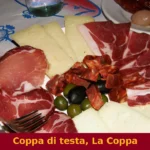
Guanciale (PAT) — municipalities: Marcetelli, Rieti, Amatrice, Accumoli, Leonessa, Posta, Cittareale — is made from pork cheek, salted and cured with natural aromatics.
Guanciale amatriciano (PAT) — municipalities: Marcetelli, Amatrice, Accumoli, Cittareale, Posta, Leonessa — is the most prized variant, produced according to the specific traditional methods of the Amatrice area and used as an essential ingredient in the preparation of classic pasta all’amatriciana.
Visitors to the area in summer can find these products in local shops and at markets in neighbouring villages. The feast of San Venanzio on 18 May can be an opportunity to meet local producers and buy cheese and cured meats directly from them.
In a territory with few commercial outlets, buying directly from farmers and small-scale producers remains the main way to take these foods home.
Festivals, Events and Traditions of Marcetelli
The main festival in Marcetelli is the one held in honour of patron saint Venanzio di Camerino, celebrated every year on 18 May.
San Venanzio was a Christian martyr of the third century, originally from Camerino, whose veneration spread across various parts of central Italy.
The 18 May celebration is the central moment of the village’s religious and communal life: the day includes a solemn Mass in the parish church and, traditionally, a procession carrying the image of the saint through the streets of the village. These celebrations are one of the rare occasions when the dispersed community of residents and emigrants gathers together in the village of origin.
Alongside the patron saint’s feast, Marcetelli’s traditional calendar reflects the rhythms of agricultural and pastoral life in the Rieti mountains.
The festivities tied to the liturgical year — Christmas, Easter, Corpus Domini — are observed with the customs typical of Apennine villages in this area, including floral decorations and collective participation in religious services. The memory of transhumance, though no longer actively practised, lives on in local culture through vocabulary, recipes and the accounts of the village’s older residents.
When to Visit Marcetelli and How to Get There
The best time to visit Marcetelli is from May to September.
Spring — particularly the month of May with the patron saint’s feast on the 18th — combines the activity of the local celebration with a climate that is still fresh and pleasant at this altitude.
Summer brings temperatures noticeably lower than those on the Lazio plain, with highs that rarely exceed 25°C at 930 metres, making it a practical option for those looking to escape the summer heat.
Those who prefer autumn scenery with the colours of the beech woodland will find the second half of October the most visually rewarding time from a natural perspective. Winter, with possible snowfall, gives the village a distinctive appearance but requires caution on the roads. For up-to-date information on events and accessibility, you can consult the Marcetelli municipal website.
To reach Marcetelli by car, the most direct route from the motorway is via the Rieti exit on the A24 Rome–L’Aquila motorway (Carsoli-Oricola junction), from which you continue north on the state road towards Rieti and then into the Valle del Salto — approximately 50–60 km in total from the capital.
From Rieti, the route to Marcetelli follows the provincial road along Lago del Salto for around 30 km.
The nearest railway station is Rieti, served by the regional Rome–Rieti line; from there, onward travel requires a car or local transport services.
The main reference airport is Rome Fiumicino Airport, approximately 120 km from the village, reachable in around 1 hour 45 minutes by car via the A24 motorway towards L’Aquila.
Other Villages to Explore in Lazio
Those who have chosen Marcetelli as a starting point for exploring inland Lazio will find, within a few hours’ drive, other centres of considerable historical and landscape interest.
In northern Lazio, close to the Tuscan border, Tessennano is a small municipality in the Tuscia area that shares with Marcetelli both its low population density and its compact medieval urban structure.
Still in the Viterbo area, Farnese offers a historic centre of considerable interest, with Renaissance architecture connected to the history of the Farnese family, and fits into a nature-based itinerary that includes the Selva del Lamone forest.
For those travelling towards the southern inland part of Lazio, Bassano in Teverina is a Tiber Valley settlement with Etruscan and medieval roots, useful for building an itinerary that cuts across the region.
Staying within the Lazio Apennines closer to Marcetelli, Accumoli is an essential stop for understanding the recent history of the mountain villages of the Rieti area: struck by the 2016 earthquake, Accumoli is today working through a reconstruction process that has made the village a symbolic site in the broader story of Apennine communities and seismic vulnerability.
Visiting it alongside Marcetelli means building a more complete picture of the reality facing small mountain municipalities in Lazio — with their distinctive histories, their certified traditional products and the demographic pressures that these territories share.
An itinerary taking in Marcetelli, Accumoli and the villages of the Valle del Salto can form a coherent slow-travel route through the Rieti hinterland.
In Lazio More villages to discover
Castelnuovo di Farfa
What to see in Castelnuovo di Farfa: 1,032 inhabitants at 358 m in the Sabina. Explore the medieval castle, San Nicola church and PDO cacio fiore. Plan your visit now.
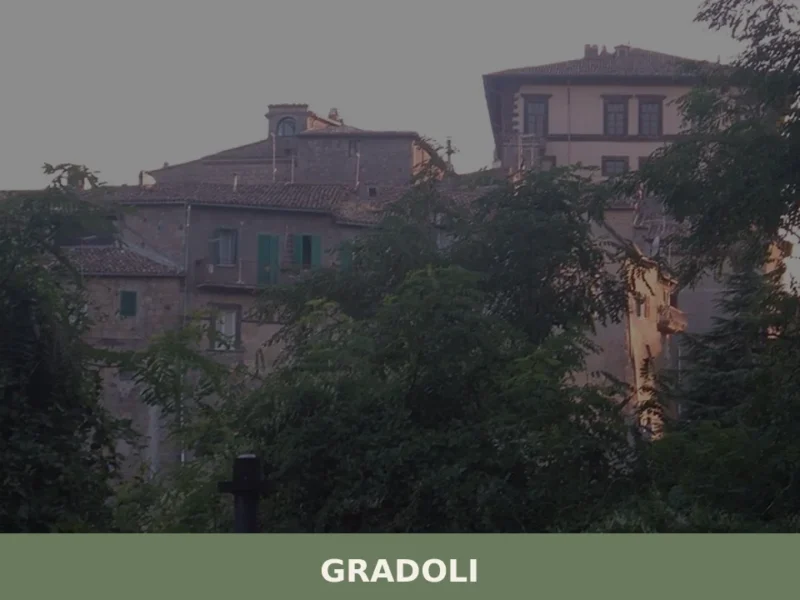
Gradoli
The distant chime of the Collegiate Church’s bells drifts across the valley, carried on a breeze that often stirs the leaves of ancient olive groves. At 470 meters above sea level, Gradoli presents itself not as a grand pronouncement, but as a quiet assertion of history and life etched into the volcanic landscape of northern […]
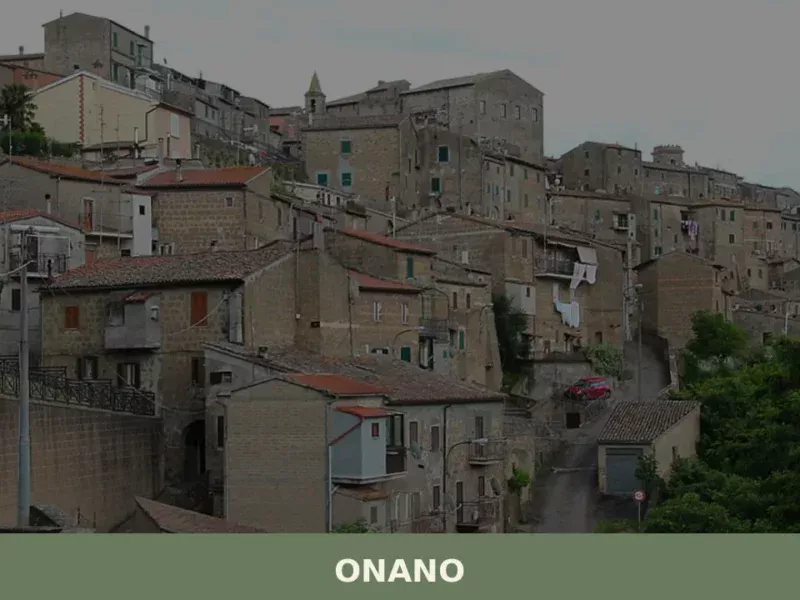
Onano
Onano has 898 inhabitants and sits at 485 metres above sea level on the southern slopes of Lake Bolsena, in the province of Viterbo. The municipal territory, stretching across lentil fields and oak groves, borders both Umbria and Tuscany — a point of triple regional convergence that has shaped the town’s economic and linguistic history. […]


📝 Incorrect information or updates?
Help us keep the Marcetelli page accurate and up to date.