


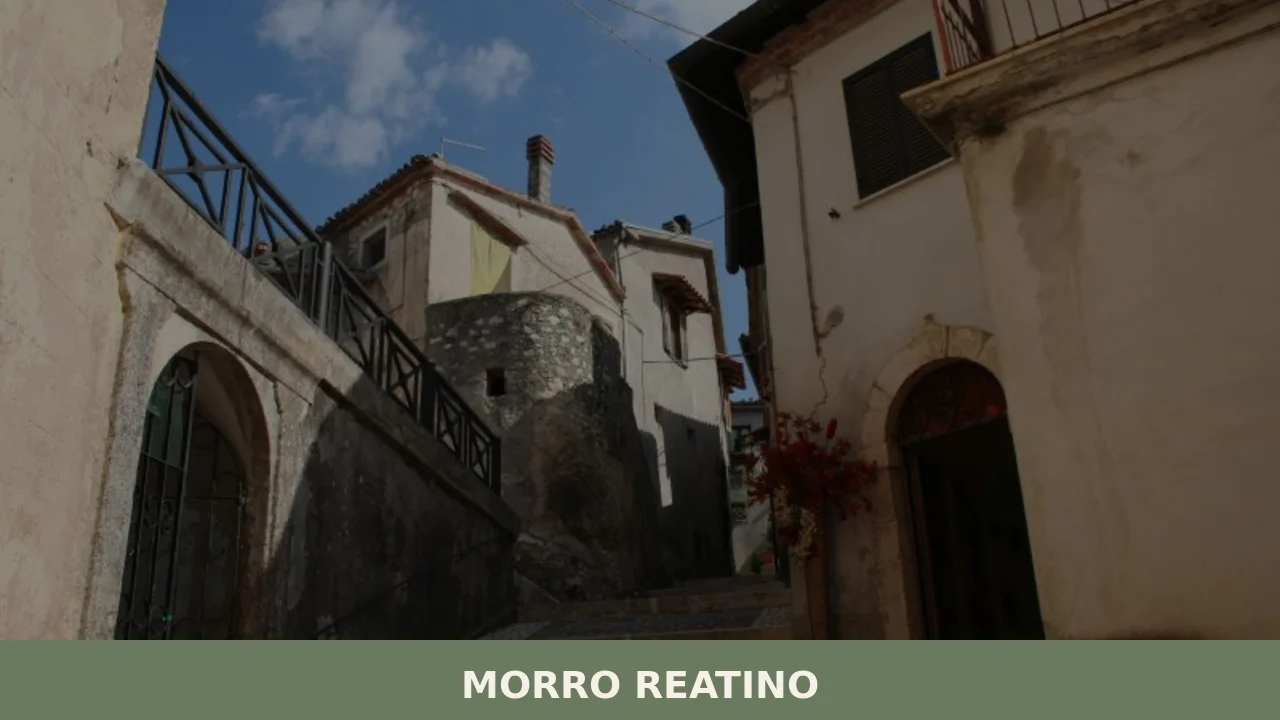
Morro Reatino
What to see in Morro Reatino: a village at 750 m in Rieti with 353 residents. Visit the medieval church of San Lorenzo, the historic centre, and discover PAT-certified guanciale amatriciano.
Discover Morro Reatino
At 750 metres above sea level, in the mountain zone of the province of Rieti, Morro Reatino has a current population of 353 and ranks among the best-preserved historic centres in inland Lazio.
Those asking what to see in Morro Reatino will find a layered answer: medieval religious buildings, a limestone urban fabric that follows the contours of the hill, and a landscape shaped by the central Apennines.
The village developed in an area that historically served as a transit and control point between the Sabina and the Rieti valleys, and this position influenced its urban form, its defences and its economy for centuries.
History and Origins of Morro Reatino
The place name “Morro” most likely derives from the Latin term murus or, according to an alternative interpretation recorded in local historical sources, from a pre-Roman root indicating a rocky outcrop or spur.
The addition of “Reatino” distinguishes this settlement from the similarly named municipality of Morro d’Alba in the Marche and places it firmly within the territory of Rieti. The earliest documentary evidence of the village dates to the medieval period, when control of the Apennine routes was contested between secular lordships and ecclesiastical bodies.
Its elevated position at 750 metres made the site defensible and well-suited to surveillance of the surrounding territory.
Throughout the Middle Ages, the village fell within the orbit of the great feudal families who divided up mountainous Lazio among themselves, shifting between the authority of the bishops of Rieti and noble houses of varying backgrounds.
The compact urban layout — houses pressed tightly together along narrow, winding routes — reflects the defensive requirements of that period: every architectural element, from the tower to the walls and the gateways, served a specific function of control and protection. As the Papal States consolidated their hold between the fourteenth and fifteenth centuries, Morro Reatino came firmly under papal administration, losing some of its feudal autonomy but gaining a degree of political stability.
In the modern era, the village followed the fortunes of the wider Rieti province.
Italian unification in 1861 incorporated it into the newly formed Kingdom of Italy as an independent municipality, and since then its population has undergone the steady demographic decline that has affected all mountain centres in the Lazio Apennines.
From several thousand residents during its most prosperous centuries, Morro Reatino has fallen to its current 353 inhabitants — a figure that reflects twentieth-century rural depopulation, but also the determined continuity of a community that has kept alive its agricultural practices, religious festivals and traditional food production.
What to See in Morro Reatino: Main Attractions
Church of San Lorenzo Martire
The church dedicated to Saint Lawrence, patron of the village, is the spiritual and architectural focal point of Morro Reatino.
The building stands in the oldest part of the historic centre and retains structural elements from its medieval origins, although later modifications altered sections of the façade and interior. The dedication to Saint Lawrence, a third-century martyr, is documented from the earliest sources that mention the village, and the feast day on 10 August still marks the civic and religious calendar of the community.
The details of the entrance portal and the proportions of the interior nave are well worth close attention.
Tower and Medieval Defensive Structures
Morro Reatino’s original defensive system included a watchtower and sections of perimeter walls — features typical of Apennine settlements built in the medieval period to control the surrounding territory.
The tower dominates the village’s skyline from outside and remains its most recognisable landmark. Several stretches of the curtain wall are still legible within the urban layout, absorbed into residential buildings or visible along routes through the historic centre.
Approaching the village along the provincial road, it becomes clear how the tower was designed to command a wide view over the valley below.
Historic Centre and Urban Layout
Walking through the historic centre of Morro Reatino means moving through an urban layout that has retained its medieval logic of clustering around a main axis, with lateral branches leading to more outlying dwellings.
The houses in local limestone, the arched doorways and the covered passages connecting the different levels of the village form a coherent and readable whole. What to see in Morro Reatino goes beyond individual monuments: the connective fabric — the paving, the retaining walls, the fountains — tells the material history of a mountain community through centuries of adaptation to the land.
Natural Landscape and Apennine Views
At 750 metres, Morro Reatino offers a commanding viewpoint over the Rieti landscape.
From the edges of the historic centre, views open out towards the surrounding Apennine ridges, with pronounced seasonal variation: beech and Turkey oak woodland in autumn, open pastures in summer, snow cover in the winter months. The municipal territory includes areas of woodland with natural interest, well-suited to walking along marked trails.
This natural dimension is one of the main reasons why the village is classified among the Mountain Villages of Lazio.
Fountains and Historic Public Spaces
As in all Apennine villages of this scale, the public spaces of Morro Reatino — small squares, fountains, open areas in front of religious buildings — served for centuries as places of social gathering and water management.
The stone fountains still present in the historic centre document the traditional water supply system, which drew on local springs channelled through stone conduits. These elements, often passed over by visitors in a hurry, offer precise insights into the daily life of the village in past centuries and deserve attention during any visit.
Traditional Cuisine and Local Products of Morro Reatino
The cuisine of the Rieti area, of which Morro Reatino forms part, is rooted in the agro-pastoral economy of the central Apennines.
For centuries the community lived from sheep and cattle farming, cereal cultivation on the less steep ground, and domestic processing of animal products — a practice that generated a technically accomplished tradition of cured meats, cheeses and preserved foods.
Its geographic position, straddling the Sabina, the Cicolano and the Amatriciano, allowed for exchanges and influences with the cuisines of these sub-regions, all of which make intensive use of lamb, mountain pulses and hand-made pasta.
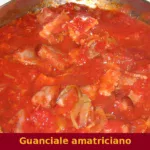
Among the dishes of the local tradition, pasta alla gricia and pasta all’amatriciana are the most widely known, prepared using techniques that treat cured pork cheek as the essential fat — with no substitutes.
Lamb alla cacciatora, slow-cooked with local aromatic herbs and wine, is a main course found throughout the Rieti mountain area. Pulse soups — particularly lentils and grass peas — served with homemade bread were the everyday food of farming families and still feature on local menus today.
Coratella of lamb, prepared with onion and white wine, is another dish deeply rooted in the pastoral culture of the territory.
The Rieti area and its surroundings have a number of agri-food products with official recognition.
Among the certified products linked to Morro Reatino are: Cacio fiore (PAT) — municipalities: Rieti, Morro Reatino, Monteleone Sabino, Accumoli, Amatrice; Guanciale (PAT) — municipalities: Rieti, Amatrice, Accumoli, Antrodoco, Borbona, Borgo Velino, Castel di Tora, Castel Sant’Angelo, Cittaducale, Collalto Sabino, Colli sul Velino, Concerviano, Configni, Contigliano, Corbara, Cottanello, Greccio, Labro, Lago, Leonessa, Longone Sabino, Magliano Sabina, Marcetelli, Micigliano, Mompeo, Montasola, Montebuono, Monteleone Sabino, Montopoli di Sabina, Morro Reatino, Nespolo, Orvinio, Paganico Sabino, Pescorocchiano, Petrella Salto, Poggio Bustone, Poggio Catino, Poggio Mirteto, Poggio Moiano, Poggio Nativo, Posta, Pozzaglia Sabina, Rieti, Rivodutri, Roccantica, Salisano, Scandriglia, Selci, Stimigliano, Tarano, Torricella in Sabina, Torri in Sabina, Turania, Vacone, Varco Sabino; Guanciale amatriciano (PAT) — municipalities: Amatrice, Accumoli, Antrodoco, Borbona, Borgo Velino, Castel Sant’Angelo, Cittaducale, Colli sul Velino, Leonessa, Micigliano, Morro Reatino, Posta, Rieti.
The best opportunities to buy these products are concentrated mainly in the summer months, when local festivals and seasonal markets bring producers from the surrounding valleys into the village square.
The feast day on 10 August is traditionally the occasion when the community puts its local products on display and shares them with visitors.
Those wishing to purchase cheeses and cured meats outside this period can contact local producers directly or visit the shops in the provincial capital of Rieti, a few dozen kilometres away.
Festivals, Events and Traditions of Morro Reatino
The feast of Saint Lawrence the Martyr, celebrated on 10 August, is the main event in the civic and religious calendar of Morro Reatino.
The date coincides with the night of the Perseid meteor shower — popularly known as the Tears of Saint Lawrence — and this astronomical event has historically added a folk dimension to the celebration alongside its liturgical significance. The feast includes a solemn mass in the parish church, a procession carrying the statue of the saint through the streets of the historic centre, and communal gatherings in the main square.
As in all villages of this scale, preparations involve the entire community for several days beforehand.
Beyond the patron saint’s feast, the village shares with the wider Rieti area a number of traditions tied to the agricultural and pastoral calendar: winter pig slaughtering, the movement of livestock to summer pastures and the spring cheese-making process were all events that structured collective time, and they survive in part among families still connected to agricultural activities. Minor religious traditions — rogation processions, the blessing of the fields, local votive feasts — complete a calendar that interweaves devotion and seasonality in a way consistent with Apennine rural culture.
When to Visit Morro Reatino and How to Get There
The best period to visit the village runs from May to September.
In spring the mountain vegetation is at its most vigorous and temperatures allow for easy walking.
July and August bring the patron saint’s feast on 10 August, which draws visitors and former residents returning for the occasion. Autumn offers the woodland’s intense colour display, with the beeches and Turkey oaks shifting from green to red and ochre between October and November.
Those looking for quieter conditions to explore the historic centre without crowds should consider the shoulder seasons — March to May or September. For up-to-date information on events and services, the Morro Reatino municipal website is the official reference.
If you are travelling by car, the most direct route follows the Via Salaria (State Road 4), exiting towards Rieti and then continuing to the villages in the eastern mountain sector of the province. From Rome the journey covers around 100 kilometres.
The nearest railway station is Rieti, served by the Rome Tiburtina–Rieti line with a journey time of approximately 1 hour and 20 minutes.
From Rieti onward travel requires a car or local transport services.
Visitors coming from outside the region can use Rome Fiumicino Airport, approximately 130 kilometres away, and hire a car to reach the village in under two hours via the A1 motorway and then the Salaria. The provincial road leading to the historic centre is surfaced but has narrow stretches: drivers of larger vehicles are advised to check local road conditions before setting out.
Other Villages to Explore in Lazio
Inland and lakeside Lazio offers a number of historic centres that share with Morro Reatino their medieval character and their position within landscapes of considerable interest.
Visitors who have seen Morro Reatino and wish to extend their itinerary through Lazio will find a concentration of notable villages around Lake Bolsena: Capodimonte, on the promontory extending into Lake Bolsena, has a Renaissance historic centre built around the Farnese castle, while Gradoli, on the northern shores of the same lake, is known for the Palazzo Farnese and a food tradition centred on freshwater fish.
Both offer an interesting contrast to the mountain character of Morro Reatino, making it possible to build an itinerary that moves through distinct geographical environments within a few days.
A possible route through the smaller villages of Lazio is further completed by Lubriano, positioned on a tufa spur with direct views towards Civita di Bagnoregio, and Onano, a small settlement in northern Lazio with a compact historic centre and a food identity tied to mountain lentils.
These four villages — all in Lazio but in different provinces and geographical contexts — allow for a varied itinerary that takes in the lake, the tufa landscapes of Tuscia and the Rieti Apennines: three distinct environments linked by the same human scale of their historic centres and the same quality of their built heritage.
Visiting them in sequence brings out the variety of lesser-known Lazio, a region that even many Italian travellers have yet to fully explore.
In Lazio More villages to discover
Tessennano
In the heart of Viterbo’s Tuscia region, 302 meters above sea level, lies Tessennano, a settlement with 284 residents. Its hillside location, distant from major thoroughfares, has defined its profile through the centuries. For those wondering what to see in Tessennano, the village presents a historical layering perceptible in its architecture. The settlement develops around […]
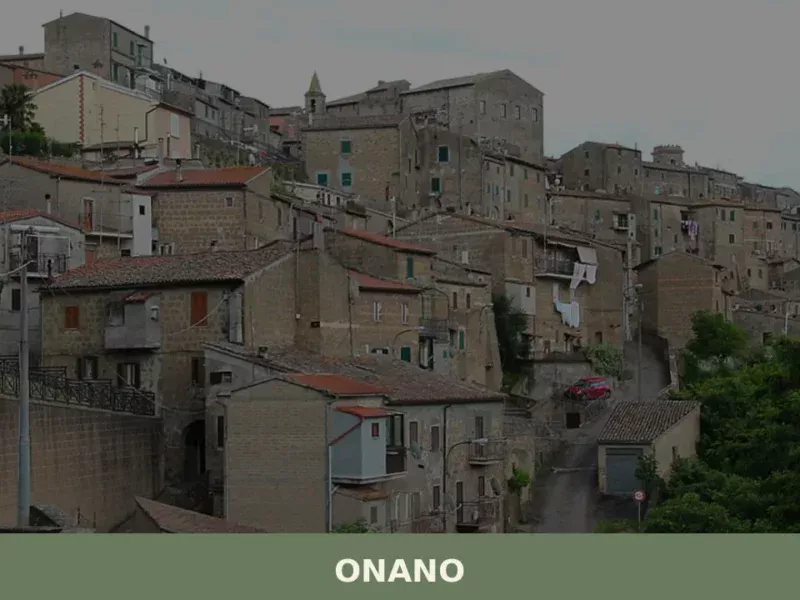
Onano
Onano has 898 inhabitants and sits at 485 metres above sea level on the southern slopes of Lake Bolsena, in the province of Viterbo. The municipal territory, stretching across lentil fields and oak groves, borders both Umbria and Tuscany — a point of triple regional convergence that has shaped the town’s economic and linguistic history. […]
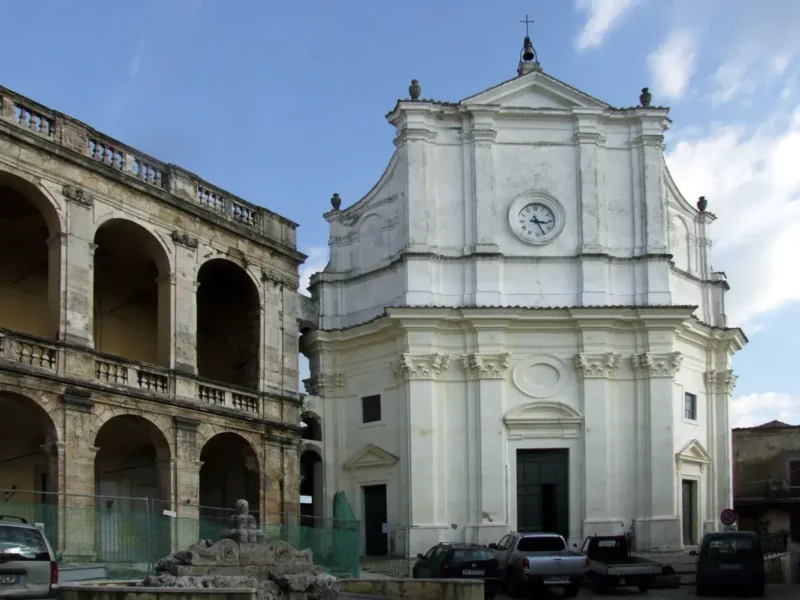
Cantalupo in Sabina
What to see in Cantalupo in Sabina: a hill village at 297 m in Rieti with 1,738 residents. Explore the medieval centre, the San Biagio feast and PAT-certified guanciale. Plan your visit now.

📝 Incorrect information or updates?
Help us keep the Morro Reatino page accurate and up to date.