


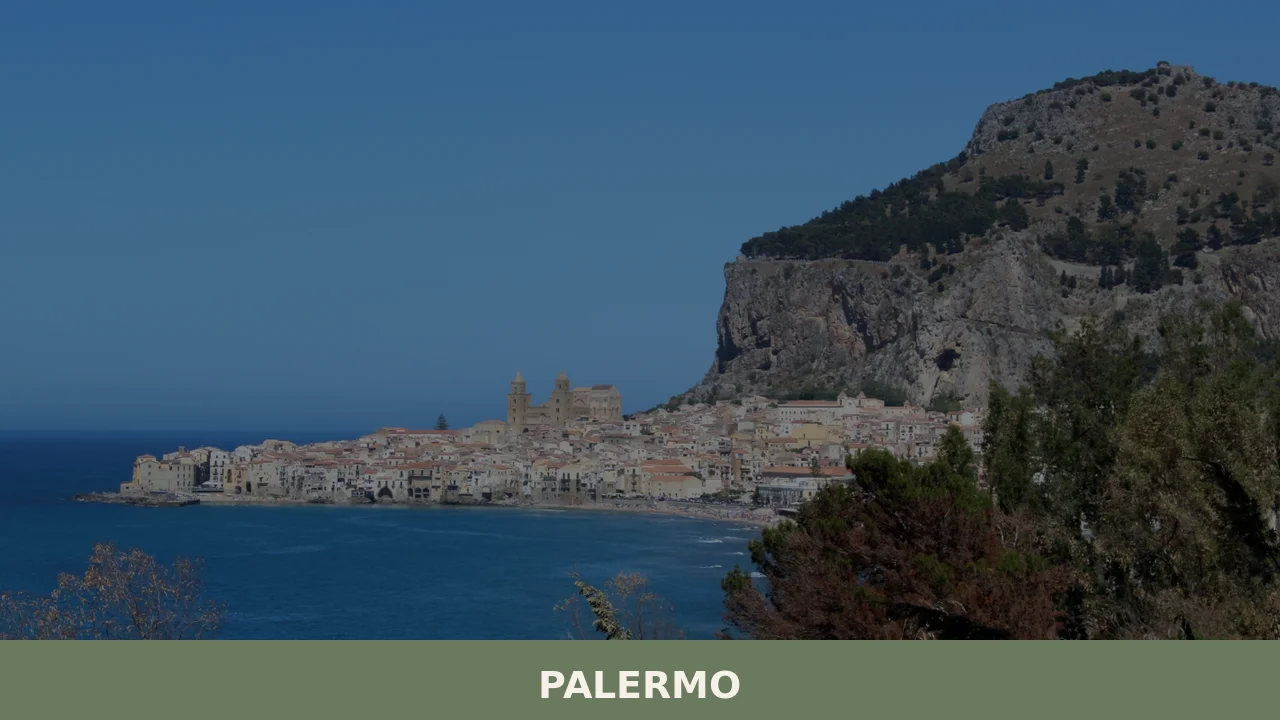
Palermo
What to see in Palermo: from the Palatine Chapel mosaics to Ballaru00f2 Market. Home to 654,987 people and 2 PAT-certified products. Plan your visit with this complete guide.
Discover Palermo
Palermo stands 14 metres above sea level, on the edge of a coastal plain that the Phoenicians chose as a trading post as early as the 8th century BC, giving the city the name Zyz, meaning “flower.” From that ancient founding to the present day, the city has passed through Greek, Roman, Arab, Norman, Swabian, Aragonese and Bourbon rule, accumulating one of the most layered monumental legacies in Italy.
With a population of 654,987, it is the capital of the province of the same name and the most populous city in Sicily.
Anyone researching what to see in Palermo will find a catalogue of monuments, markets, churches and palaces that few Italian cities can match for density and variety.
History and origins of Palermo
The city’s founding dates to the 8th century BC, when Phoenician seafarers established a trading settlement on the promontory between the Papireto and Kemonia rivers — two waterways now built over — that defined the peninsula on which the original nucleus took shape.
The Phoenician name Zyz was later Latinised by the Greeks into Panormus, meaning “all harbour,” reflecting the favourable shape of the coastline. The Carthaginians controlled the city when the Romans captured it in 254 BC during the First Punic War, incorporating it into their provincial network.
Under Rome, Panormus became a municipally ranked city and a centre of thriving grain trade that fed the empire’s granaries.
The most decisive turning point in Palermo’s urban history came with the Arab conquest, completed in 831 AD after a prolonged siege. The Arabs transformed the city into one of the most culturally active centres in the medieval Mediterranean: they reorganised its street layout, introduced sophisticated irrigation systems, cultivated citrus fruits, cotton and sugar cane, and built mosques where Christian basilicas had previously stood.
The population grew to around 300,000, making Palermo one of the largest cities in Europe in the 10th century. This period came to an end with the Norman conquest of 1072, when Robert Guiscard and his brother Roger de Hauteville entered the city after years of military campaigns across Sicily.
Under the Normans and later the Swabians, Palermo became the capital of a kingdom that encompassed southern Italy and parts of North Africa.
Frederick II of Swabia, born in Jesi in 1194 and crowned King of Sicily in 1198, turned the Palermitan court into a crossroads of cultures: Arabs, Greeks, Jews and Latins coexisted within the kingdom’s administrative and intellectual apparatus.
After Frederick’s death in 1250 and the decline of the Swabian dynasty, the city passed to the Angevins, against whom the popular uprising known as the Sicilian Vespers erupted on 30 March 1282 — an event that marked the beginning of Aragonese rule.
In the centuries that followed, first under the Spanish crown and then under the Bourbons, Palermo retained its role as the administrative capital of Sicily until Italian unification in 1861, when it was absorbed into the new Savoyard kingdom.
What to see in Palermo: main attractions
Palazzo dei Normanni and the Palatine Chapel
The Palazzo dei Normanni, originally the seat of Arab emirs and later the residence of the Norman kings, is the oldest royal palace in Europe in continuous use.
Inside, the Palatine Chapel, built at the behest of Roger II between 1130 and 1143, houses gold-ground mosaics covering the entire wall surface across more than 6,000 square metres. The fusion of Byzantine, Arab and Norman art within a single liturgical space has no parallel in the Western world. The palace today houses the Sicilian Regional Assembly; the chapel is open to visitors according to hours set by the managing authority.
Planning what to see in Palermo without including this complex would be a difficult omission to justify.
Palermo Cathedral
The Cathedral of the Assumption, which stands along Corso Vittorio Emanuele in the historic centre, was founded in 1185 by Archbishop Gualtiero Offamiglio on an earlier structure that had been converted into a mosque during the Arab period.
The current building is the result of architectural additions spanning from Catalan Gothic to Baroque, with the large dome added by Ferdinando Fuga in 1801.
Inside, the imperial and royal sarcophagi of Frederick II, Constance of Aragon, Roger II and Henry VI are preserved in red porphyry. The royal tombs are a consistent draw for those exploring what to see in Palermo from a historical and monumental perspective.
Ballarò Market
The Ballarò Market, active in the Albergheria district and considered Palermo’s oldest market, occupies a series of streets opening near Piazza Casa Professa. Documented since the Arab era, the market retains a rhythm and layout that owe much to the layout of North African souqs: stalls selling fruit, fish, spices, meat and street food follow one after another along a route that shifts in colour and smell with every few metres.
The produce on display reflects the agricultural seasons of the Palermo plain.
The market operates every day, with the greatest activity in the morning hours.
Santa Maria dell’Ammiraglio and San Cataldo
Piazza Bellini is home to two 12th-century buildings that express two distinct aspects of Norman architecture.
The Church of Santa Maria dell’Ammiraglio, known as the Martorana, was founded in 1143 by Admiral George of Antioch and contains Byzantine mosaics of exceptional quality, including the celebrated depiction of Roger II being crowned by Christ. A short distance away, the Church of San Cataldo, with its three red domes of Islamic inspiration, was built around 1160 and presents a bare, solemn interior that contrasts sharply with the decorative richness of the Martorana. Both churches form part of the UNESCO site “Arab-Norman Palermo,” recognised in 2015.
Palazzo Abatellis and the Regional Gallery of Sicily
The Palazzo Abatellis, built in the late 15th century in Catalan Gothic style for the praetor Francesco Abatellis, houses the Regional Gallery of Sicily, a collection of artworks ranging from the medieval period to the 17th century. The most significant piece is the large fresco of the Triumph of Death, datable to the mid-15th century and still the subject of attribution debate, which covers an entire wall with a scene of extraordinary visual force.
The collection also includes works by Antonello da Messina, among them the celebrated bust of the Annunciate Virgin.
The palace is located in the Kalsa district, in the eastern part of the historic centre.
Traditional cuisine and local products of Palermo
Palermo’s gastronomic tradition is among the most elaborate and well-documented in southern Italian cooking, the direct result of centuries of cultural layering.
The Arabs introduced the use of sugar, citrus fruits, saffron and oriental spices; the Normans brought meat-processing techniques; the Spanish left their mark through chocolate and fried sweets. This sedimentation is reflected in a cuisine that moves with ease between sweet and savoury, between sea and inland, between the refinement of aristocratic pastry-making and the directness of popular street food.
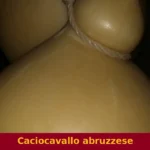
Among the most representative dishes is pane con la milza, known in dialect as pani câ meusa, made with boiled veal spleen and lung, fried in lard and served in a sesame roll with or without ricotta and caciocavallo cheese.
Pasta con le sarde combines fresh sardines, wild fennel, raisins and pine nuts in a sauce that brings together the scents of the sea and the countryside.
Sfincione, the local thick-based pizza topped with tomato, onion, anchovies and caciocavallo, is still sold today by street vendors in the historic markets.
Among the sweets, cassata siciliana in its modern form — sponge cake, ricotta, marzipan and candied fruit — is documented in various forms since the medieval period, with a codified recipe emerging from the convent kitchens of the 17th and 18th centuries.
In terms of certified products, Palermo falls within the production area of two Traditional Agri-food Products (PAT) recognised by the Italian Ministry of Agricultural Policy.
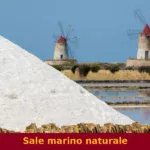
Natural sea salt (PAT) — produced in the municipalities of Palermo, Trapani, Marsala and Paceco — is extracted from coastal salt pans using the traditional method of solar evaporation and manual harvesting, a practice that dates back to Phoenician times along this stretch of coast.
Cotognata (PAT) — produced in Palermo, Messina, Catania and Siracusa — is a firm quince preserve made by cooking quince pulp with sugar for an extended period, then pouring it into traditional moulds and allowing it to set until it reaches a compact consistency that can be sliced.
Both products are available in the city’s historic markets and in specialist food shops throughout the centre.
The best time to find local produce in the markets is early in the morning, when fresh supplies arrive.
At Contessa Entellina, a village in the Palermo province with a history of Arbëreshë settlement dating to the 15th century, some of the inland area’s fruit and vegetable production feeds into the commercial channels that also supply the city’s markets.
Visitors to Palermo who want to explore the produce of the surrounding countryside may want to consider a day trip to one of these inland villages.
Festivals, events and traditions in Palermo
Palermo’s patron saint is Santa Rosalia, venerated in two separate celebrations throughout the year.
On 15 July, the Festino di Santa Rosalia takes place, commemorating the date in 1625 when the saint’s relics, discovered on Monte Pellegrino, were carried in procession through the city to bring an end to a plague epidemic. The celebration features a large nocturnal procession of the triumphal float along the Cassaro, accompanied by crowds, music and fireworks over the sea.
On 4 September, the date of the saint’s death according to religious tradition, the faithful make a pilgrimage on foot to the Sanctuary of Santa Rosalia on Monte Pellegrino, climbing the road that leads to the place where the saint lived and died in the 12th century according to official hagiography.
Beyond the patron saint’s festivals, the city’s calendar includes numerous events rooted in religious and popular tradition.
The Easter period is marked by processions through the historic districts, with confraternal group processions documented since the medieval period. Palermo’s Carnival, while lacking the wider recognition of those in Acireale or Sciacca, maintains a local tradition in the historic neighbourhoods.
The historic markets such as Ballarò and the Vucciria animate city life on a continuous basis, but reach their greatest intensity in the weeks leading up to the main religious festivals, when the offering of seasonal produce expands to include sweets and traditional preparations tied to the liturgical calendar.
When to visit Palermo and how to get there
The most favourable period for a visit is spring, between April and June, when temperatures range from 18 to 26 degrees Celsius, the days are long and the city has not yet reached the peak of summer tourist numbers.
September and October offer a sound alternative: the summer heat eases, the sea remains warm enough for swimming and autumn cultural events enliven the city’s programme. July and August see the highest visitor numbers, with temperatures frequently exceeding 35 degrees; those arriving during this period should expect long queues at the main monuments and considerable crowds in the historic markets.
Palermo’s winter is mild, with temperatures rarely dropping below 10 degrees, and allows for a more relaxed visit to the museums and historic centre.
If you are arriving by air, Palermo Falcone Borsellino International Airport is located at Punta Raisi, approximately 35 kilometres from the city centre, and is connected to the Central Station by the Trinacria Express rail service in around 50 minutes.
Those travelling by train can use the Trenitalia network, which serves Palermo Central Station with direct connections from Messina, Catania, Agrigento and Trapani.
By car, the A19 Palermo–Catania motorway connects the city to the Sicilian interior, while the A29 links Palermo with Mazara del Vallo and Trapani to the west. Those arriving from Messina take the A20.
For visiting the UNESCO sites and the historic centre, public transport or walking are preferable to a private car, given the traffic conditions in the city centre.
Those wishing to explore the more inland parts of the province can plan stops at villages such as Bompietro, in the Madonie mountains, or Cefalà Diana, which preserves one of the best-conserved Arab bath complexes in Sicily.
Those heading south can stop at Campofiorito, a small inland settlement reachable from the city in under an hour.
Where to stay in Palermo
Palermo’s accommodation offer is wide and covers all price ranges.
The historic centre holds the greatest concentration of bed and breakfasts and small boutique hotels carved out of period noble palaces, particularly in the Kalsa and Albergheria districts and along Via Maqueda.
Those looking for historic properties will find the centre the most fitting base for a visit focused on the monumental heritage.
For those who prefer a quieter setting, the hilly area around Monreale and the coastal towns to the north and south of the city offer agriturismi and holiday rentals. The Municipality of Palermo publishes up-to-date information on its official website about authorised accommodation and available tourist services.
In Sicily More villages to discover
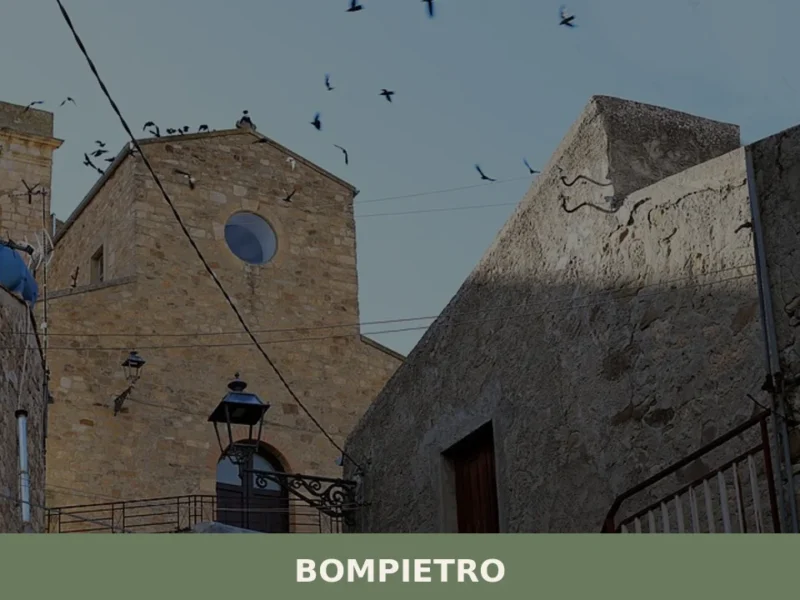
Bompietro
Morning light reaches Bompietro slowly, climbing over the Madonie range before it pours across the rooftops and into the narrow streets where older residents already occupy doorstep chairs. At 685 metres above sea level, the air carries a sharpness absent from the coast — part wild oregano, part cold stone. Fewer than 1,200 people live […]
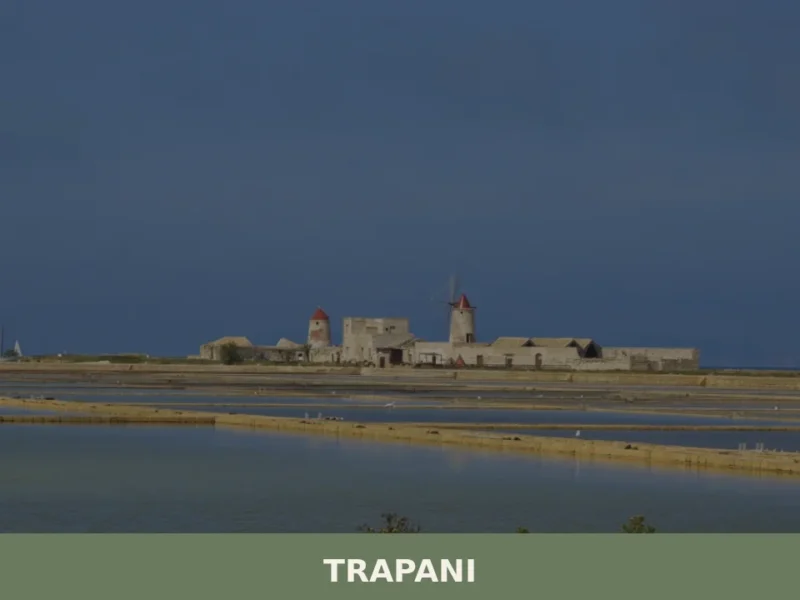
Trapani
What to see in Trapani: salt pans, Pepoli Museum, Procession of the Misteri and Trapanese pesto. City of 68,967 inhabitants. Plan your visit now.
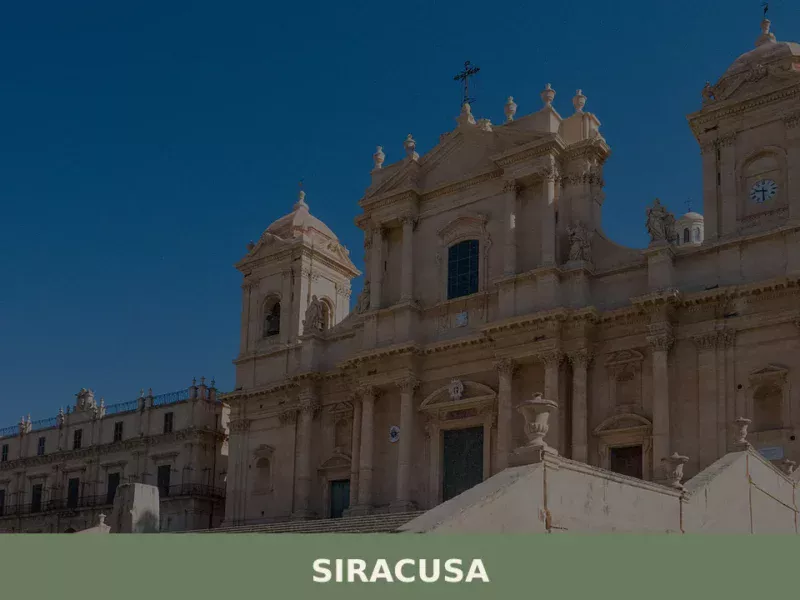
Siracusa
What to see in Siracusa: UNESCO city of 118,644 people. Explore the Greek Theatre, Ortigia, and the Catacombs of San Giovanni. Plan your visit with our complete guide.
📝 Incorrect information or updates?
Help us keep the Palermo page accurate and up to date.