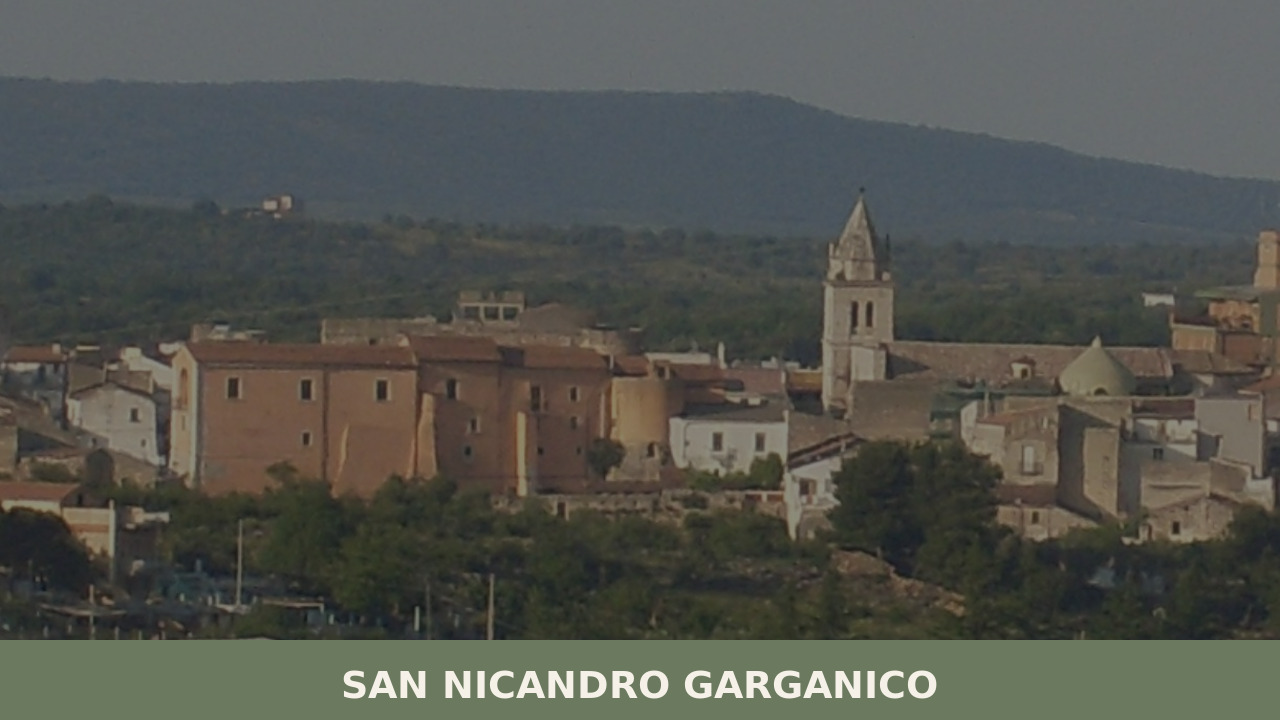
A hilltop settlement on the Gargano promontory with a Norman castle, prehistoric dolmen, and a living agricultural culture shaped by wheat, olives, and limestone.
Morning light hits the limestone facades along Corso Garibaldi and the air carries wood smoke from a bakery pulling the first loaves of the day from a stone oven. At 224 metres above sea level, the town sits on the western edge of the Gargano promontory, overlooking a plain that stretches toward the Tavoliere delle Puglie. With nearly 14,000 inhabitants, this is no abandoned hamlet — it is a living, working settlement where agriculture and daily ritual still shape the hours. Understanding what to see in San Nicandro Garganico begins here, on these sloped streets, before the crowds of the coastal Gargano arrive.
Human presence on this hilltop dates to the Neolithic period, evidenced by archaeological finds in the surrounding caves and rock shelters of the Gargano massif. The current settlement took shape during the early medieval period, when the strategic elevation offered natural defence against raids sweeping the Adriatic lowlands. The name “San Nicandro” derives from Saint Nicander, a Christian martyr venerated in the region since at least the early centuries of the Common Era. The suffix “Garganico” distinguishes the town from other Italian localities bearing the same patron saint, anchoring it firmly to the promontory that defines its identity.
Through the Norman and Swabian periods, the town fell under successive feudal lordships that shaped its compact urban core — a castle, a mother church, and a ring of tight streets designed as much for defence as for shelter from the wind. Under the Kingdom of Naples, San Nicandro became a ducal seat; the Cattaneo della Volta family held the fief for generations, leaving architectural traces still visible in the old quarter. The town’s relative isolation on the Gargano’s western flank kept it apart from the major trade routes, preserving a self-sufficient agricultural character — olives, wheat, livestock — that persists today.
A singular chapter in the town’s modern history unfolded in the 1930s and 1940s, when a local farmer named Donato Manduzio led a group of residents in converting to Judaism. This community, later recognised by the Chief Rabbinate of Rome, became one of the most unusual stories of religious conversion in twentieth-century Europe. Some descendants still live in the area, and the episode remains a point of quiet distinction for the town.
The castle occupies the highest point of the old town, its heavy walls a palimpsest of Norman foundations, Swabian reinforcements, and later Angevin modifications. The rectangular tower anchors the south-eastern corner. From the ramparts, the view reaches across the Tavoliere plain to the foothills of the Subappennino Dauno — a vantage point that explains precisely why this site was fortified in the first place.
Set within the medieval quarter, this church preserves a Romanesque portal and interior stonework that dates to the twelfth and thirteenth centuries. The nave is modest in scale, which only sharpens the effect of the carved capitals and fragmentary frescoes inside. It serves as a record of the town’s earliest organised worship, before later Baroque churches altered the skyline.
The mother church, dedicated to the town’s patron saint, stands near the castle and dominates the central piazza. Rebuilt and expanded over several centuries, its current façade carries Baroque elements, while the interior houses a venerated wooden statue of San Nicandro. The annual festa in June fills these streets with processions, band music, and the particular energy of a town honouring its founding saint.
On the outskirts of town, megalithic structures including a dolmen testify to prehistoric settlement across this limestone plateau. The Gargano’s caves and rock shelters have yielded Neolithic pottery, flint tools, and bone fragments now housed in regional museums. Walking among these sites, the terrain itself — scrubby garrigue, exposed karst, ancient dry-stone walls — feels unchanged across millennia.
The old quarter rewards those who walk slowly. Narrow alleys open into small courtyards; iron balconies lean over arched doorways. Palazzo Fioritto, among the noble residences built during the ducal period, displays a carved stone portal and interior courtyard typical of southern Italian aristocratic architecture. The streets themselves are the attraction — each turn reveals another layer of the town’s stratified past.
The cooking here follows the logic of the Gargano: wheat, olives, foraged greens, and the products of pastoral farming. Orecchiette and cavatelli appear at most tables, dressed with turnip tops, slow-cooked ragù, or a simple sauce of tomatoes grown in backyard plots. Bread is central — large, dense loaves baked from local semolina wheat, often eaten days after baking, firm enough to hold up in pancotto, a bread soup softened with broth and wild herbs. Olive oil from the Gargano has earned DOP recognition (Dauno Gargano), and the local variety, Ogliarola garganica, yields a peppery, green-gold oil that finishes nearly every dish.
Sheep’s milk cheeses — caciocavallo, ricotta forte with its sharp, fermented bite — appear as antipasti or grated over pasta. In autumn, the woods around the Gargano yield porcini mushrooms and wild asparagus. Small trattorias in the old town serve these dishes without ceremony: paper tablecloths, house wine in ceramic jugs, portions calibrated for people who have worked the land. For those exploring what to see in San Nicandro Garganico, the table is as much a part of the experience as any monument.
Late spring — May and early June — brings warm days without the fierce heat that locks down the Tavoliere in July and August. The landscape is green, wildflowers cover the Gargano’s limestone meadows, and the patron saint’s feast in June offers a window into the town’s communal life. Autumn, particularly October, has its own appeal: the olive harvest is underway, the light turns amber in the late afternoon, and the summer tourists along the Gargano coast have left. Winter is quiet and can be cold at this elevation, with occasional frost and fog, but the old town takes on a particular stillness that rewards the patient visitor.
Practical advice: accommodation options within San Nicandro itself are limited compared to the beach towns of Vieste or Peschici; an agriturismo in the surrounding countryside is often the better choice. Sundays and public holidays see most shops closed, so plan provisions accordingly. A car is essential for reaching outlying archaeological sites and the Gargano’s forested interior.
San Nicandro Garganico sits in the province of Foggia, along the northern edge of the Gargano promontory. By car, the A14 Adriatica motorway connects to the SS89, which runs along the Gargano coast and passes near the town; from Foggia, the drive is approximately 60 kilometres. The town has a railway station on the Ferrovie del Gargano line, linking it to San Severo and, from there, to the national Trenitalia network. The nearest airport is Foggia’s Gino Lisa, though for international flights, Bari Karol Wojtyła Airport (approximately 180 km south) offers far more connections. From Bari, the drive north takes roughly two hours along the A14 and SS89.
The province of Foggia spreads across dramatically varied terrain — from the flat, wheat-golden expanse of the Tavoliere to the mountainous interior of the Subappennino Dauno. South of San Nicandro, on the edge of that great plain, lies Cerignola, one of Italy’s largest municipalities by land area and a centre of olive oil and wine production. Its scale and agricultural intensity offer a striking contrast to the Gargano’s more compact, rocky settlements.
Further inland, climbing into the Dauno hills, Deliceto occupies a ridge at over 500 metres, its Norman castle surveying a landscape of oak woods and wind-scored slopes. Together, these three towns — San Nicandro on its Gargano shelf, Cerignola on the plain, Deliceto in the hills — map the range of what this often-overlooked province contains. Each is shaped by its particular elevation and exposure, and each rewards the traveller willing to step beyond the well-worn coastal routes.
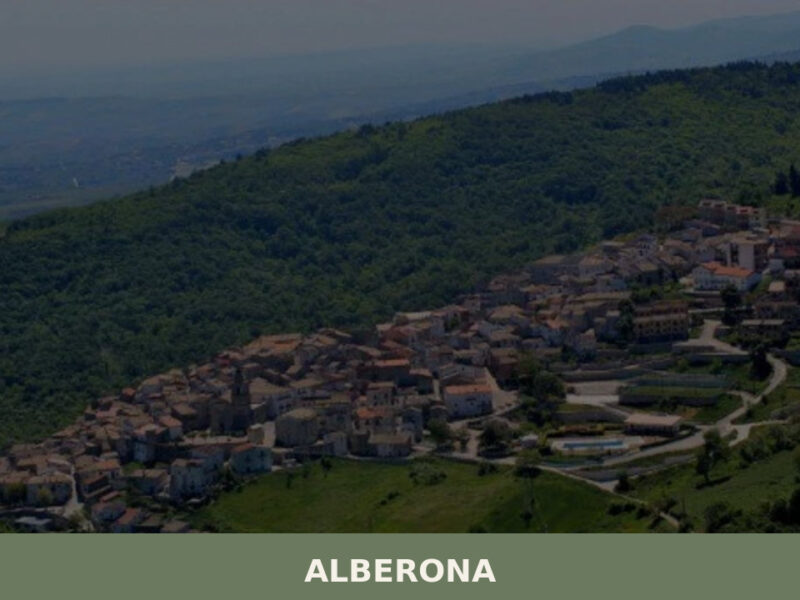
Explore Alberona, a hidden gem in Puglia's Apennines. Discover its attractions, rich history, and delightful local cuisine.
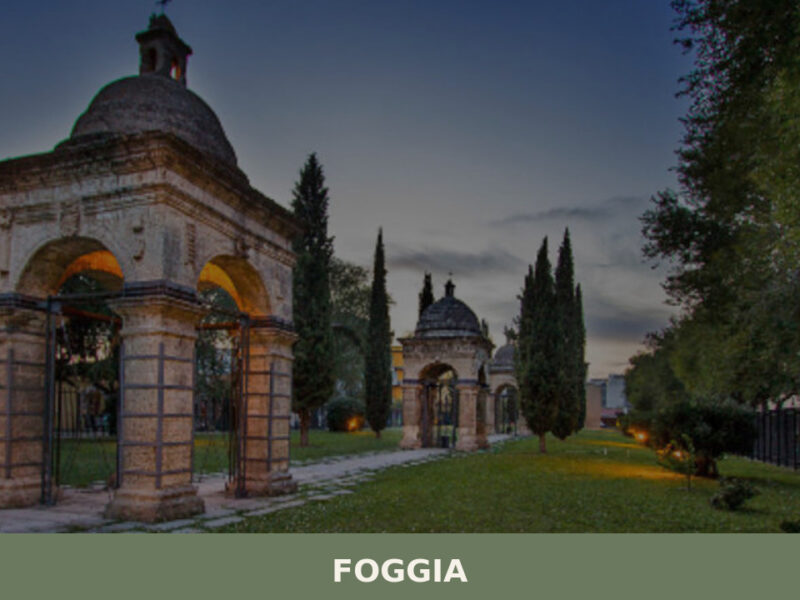
Foggia, capital of the Capitanata, holds medieval traces, Daunian artefacts, and the culinary traditions of Italy's largest wheat plain. A guide to its overlooked layers.
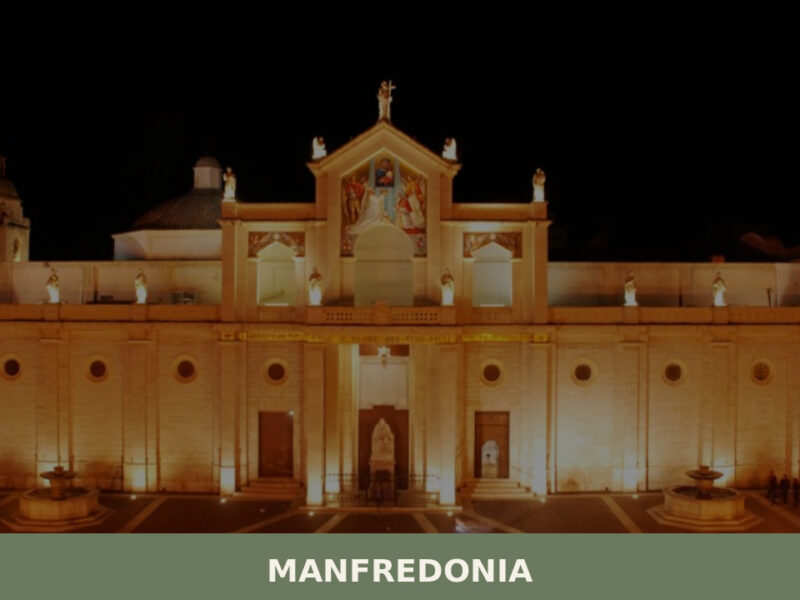
A port city founded by King Manfred on the Gargano coast, Manfredonia holds a medieval castle, pre-Roman carved stele, and one of Puglia's oldest carnivals.
📝 Incorrect information or updates?
Help us keep the San Nicandro Garganico page accurate and up to date.