


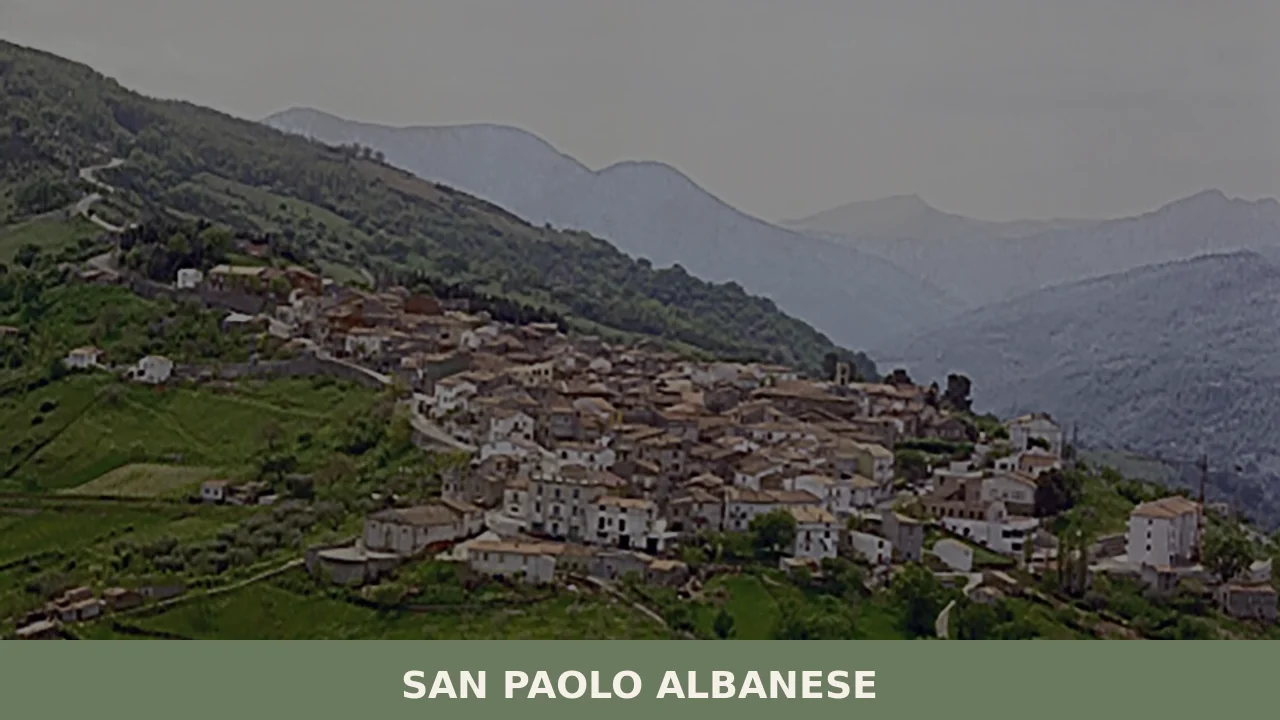
San Paolo Albanese
San Paolo Albanese, in the province of Potenza, stands out as Basilicata’s least populous municipality, recording a population of 280 inhabitants. This demographic reality gives the village an intimate dimension, where social relationships and the traditions of the Arbëreshë community remain strongly evident. For those wondering about what to see in san paolo albanese, the […]
Discover San Paolo Albanese
San Paolo Albanese, in the province of Potenza, stands out as Basilicata’s least populous municipality, recording a population of 280 inhabitants. This demographic reality gives the village an intimate dimension, where social relationships and the traditions of the Arbëreshë community remain strongly evident. For those wondering about what to see in san paolo albanese, the town offers a journey of discovery that unfolds through its streets and the evidence of its history, combining cultural aspects with the landscape, typical of the mountain towns in the Lucanian Apennines. The settlement, located 800 meters above sea level, is an example of human adaptation to the orographic context of the Pollino, featuring residential structures that reflect the needs of an existence tied to the land and the mountains.
History and Origins of San Paolo Albanese
The genesis of San Paolo Albanese is closely linked to the migrations of Albanian populations (Arbëreshë) who, starting from the 15th century, found refuge in Southern Italy following the Ottoman invasion of the Balkans. The village was founded around 1534 by refugees from Albania and Morea, who brought with them their language, religious rites, and customs, keeping them alive for centuries. The arrival of these communities was favored by local feudal lords, who saw their industriousness as a resource for repopulating and cultivating inland territories.
The name itself, “Albanese,” highlights this ethnic and cultural origin, while “San Paolo” refers to the patron saint of the original church. Over the centuries, the village has preserved its Arbëreshë identity, still manifested today in the language spoken by many residents, the gjuhë arbëreshe, and in the Byzantine-Greek rite that coexists with the Latin one. The cultural resilience of San Paolo Albanese is a subject of study for anthropologists and linguists, who recognize in these settlements an intangible heritage of significant historical and social value. The center has overcome periods of difficulty, including earthquakes and depopulation, but has maintained its roots firmly.
What to see in san paolo albanese: 5 Essential Attractions
San Paolo Albanese, with its altitude and its history, presents several points of interest for those wishing to deepen their knowledge of the territory and local culture.
1. Mother Church of San Rocco
The church dedicated to San Rocco, patron saint of the village, forms the core of religious and social life. Built upon pre-existing structures, the building displays architectural elements that have accumulated over time. Inside, one can observe decorations and works that reflect the community’s devotion. Its central location makes it a visual and symbolic landmark.
2. Museum of Arbëreshë Culture
To understand the uniqueness of San Paolo Albanese, a visit to the Museum of Arbëreshë Culture is essential. This institution collects and preserves objects, traditional costumes, documents, and testimonies of the daily life and customs of the Arbëreshë populations. It offers a detailed picture of the traditions kept alive through the centuries and of the gjuhë arbëreshe language.
3. The Historic Center
Walking through the streets of the inhabited center allows one to observe the village’s spontaneous architecture, characterized by stone constructions and passages that adapt to the terrain’s orography. The dwellings, often leaning against each other, form an urban network that narrates the town’s evolution. Here, the relationship between humans and the mountain environment is perceived.
4. Viewpoint in the Main Square
From the town’s main square, an observation point opens up to the surrounding landscape. San Paolo Albanese’s elevated position, 800 meters above sea level, allows one to take in the valleys and peaks of the Pollino National Park. It is a place where the village’s geographical dimension is fully revealed.
5. War Memorial and Public Fountain
The War Memorial, located in a public area, is a point for pause and reflection. Nearby, a historic fountain often serves as a gathering and exchange point for the community. These elements, despite their simplicity, are significant for the collective memory and daily life of the village, offering insights into what to see in san paolo albanese beyond sacred buildings.
Traditional Cuisine and Local Products
The cuisine of San Paolo Albanese reflects the Lucanian tradition and, in part, Arbëreshë influences, based on local produce and livestock farming. Among the most representative dishes are the lagane e ceci, a fresh pasta similar to tagliatelle, served with a simple but flavorful legume sauce. Another hearty dish is cutturiddi, lamb slow-cooked in a terracotta pot, often flavored with aromatic herbs gathered locally. Pork is widely used for producing cured meats like salsiccia lucana, flavored with sweet bell pepper.
Local products include Pecorino di Filiano DOP, a hard cheese made from sheep’s milk, typical of the province of Potenza. Also available are peperoni cruschi, sweet peppers dried and then quickly fried, which add a crispy note and a unique flavor to many dishes. Wild herbs from the Pollino, such as oregano and wild fennel, are used to enrich culinary preparations. The simplicity of ingredients and their freshness are fundamental to a gastronomy that preserves the flavors of the past. To learn more about Basilicata and its products, one can consult sources like Touring Club Italiano.
When to Visit San Paolo Albanese: The Best Time
The most favorable period to visit San Paolo Albanese extends from late spring to early autumn. The months of May and June offer mild temperatures and lush nature, ideal for outdoor explorations and walks in the surrounding mountains. September and October are also pleasant months, with autumn colors that define the landscape.
A significant moment for a local experience is August 16, when the village celebrates the Feast of San Rocco, its patron saint. During this day, religious celebrations and events involving the community take place, offering an opportunity to observe local traditions. The altitude of 800 meters above sea level makes summers cool and winters harsh, with possibilities of snowfall, which can give the village a particular appearance but make travel less convenient.
How to Get to San Paolo Albanese
San Paolo Albanese is located in an inland area of Basilicata, in the heart of the Pollino National Park. The main access is via State Road 653 “Sinnica,” which connects the Lucanian Ionian coast to the A2 Autostrada del Mediterraneo (Salerno-Reggio Calabria). For those arriving by car, the recommended exit from the A2 is Lauria Nord or Lauria Sud, then continuing on provincial roads towards Fardella and then San Paolo Albanese. The nearest train stations are in Nova Siri (on the Ionian line) or, for larger connections, in Potenza Centrale, from which it is necessary to continue by road transport. The nearest airport is Bari-Palese (approximately 180 km) or Lamezia Terme (approximately 150 km); both then require a transfer by car or bus to reach the village. Further information can be found on the official website of the Municipality of San Paolo Albanese or on Wikipedia Italy.
Other Villages to Discover in Basilicata
Basilicata is a region rich in small centers that preserve distinct histories and traditions. Exploring the villages surrounding San Paolo Albanese allows one to appreciate the cultural and landscape variety of the territory. A short distance away is Anzi, another mountain village in the province of Potenza, known for its astronomical observatory and its panoramic position, offering a different perspective on the region’s geographical formation.
Continuing the exploration of inland Basilicata, one can reach Armento, a center that holds important archaeological evidence dating back to the Magna Graecia and Roman eras. These villages, despite their specificities, share the identity of communities that have managed to maintain a deep connection with their historical and natural context, offering visitors a journey through the lesser-known facets of Basilicata.
In Basilicata More villages to discover
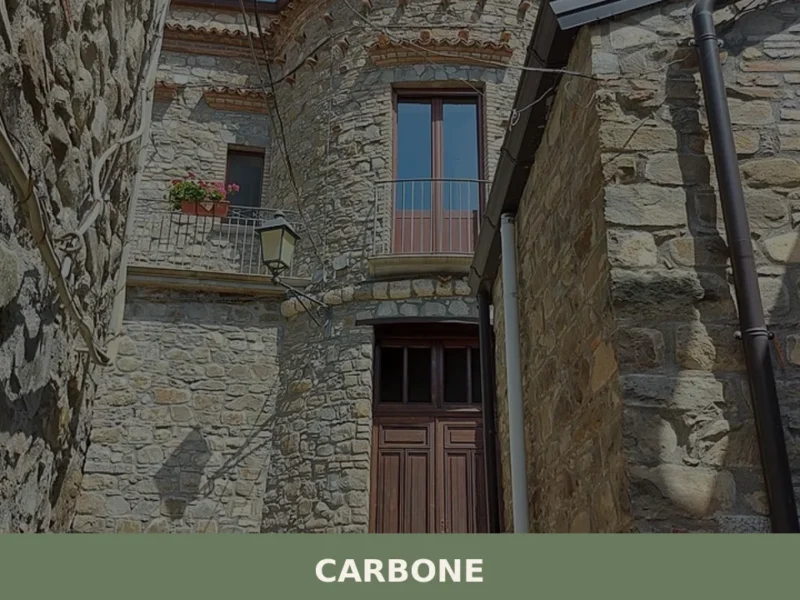
Carbone
In the heart of Basilicata, 692 meters above sea level, lies Carbone, a settlement whose history is deeply connected to the 10th-century foundation of the Abbey of San Luca by Basilian monks. This monastic settlement, which became one of the most influential in Southern Italy, influenced the village’s identity, affecting its architecture and culture for […]
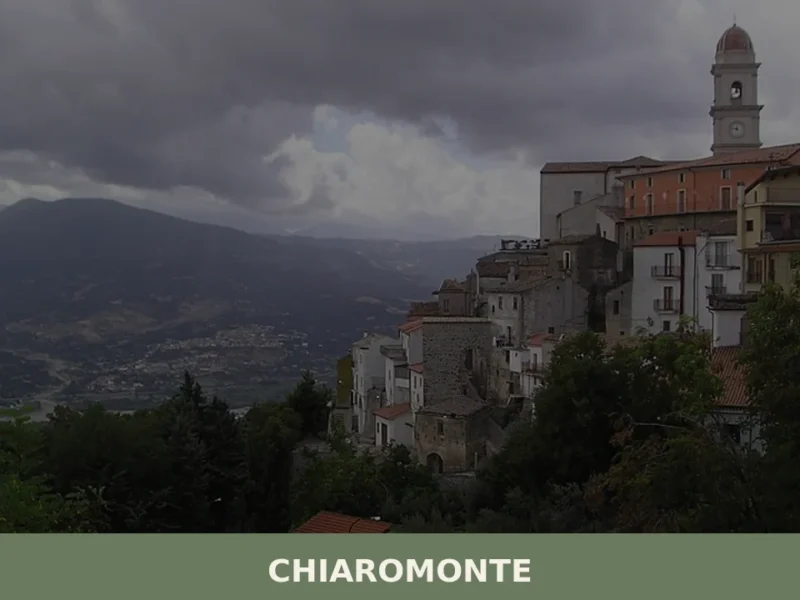
Chiaromonte
With a population of 1,964 inhabitants, Chiaromonte is located 794 meters above sea level in the province of Potenza. The village, whose presence has been documented since the medieval era, celebrates its patron, Saint John the Baptist, on June 24 and August 29. For those who venture into this mountain landscape, the desire to understand […]
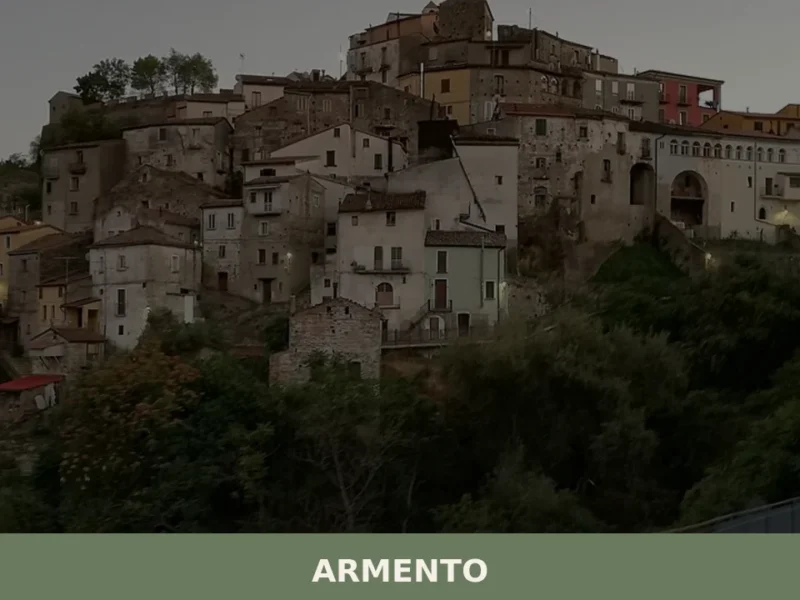
Armento
In 1814, a farmer unearthed a Lucanian funerary assemblage dating to the 4th century BC in the countryside around Armento: a golden crown, now held at the Antikensammlung in Munich, which confirmed the presence of a high-ranking Italic settlement in this part of the Val d’Agri. The village sits at 710 metres above sea level […]






📝 Incorrect information or updates?
Help us keep the San Paolo Albanese page accurate and up to date.