


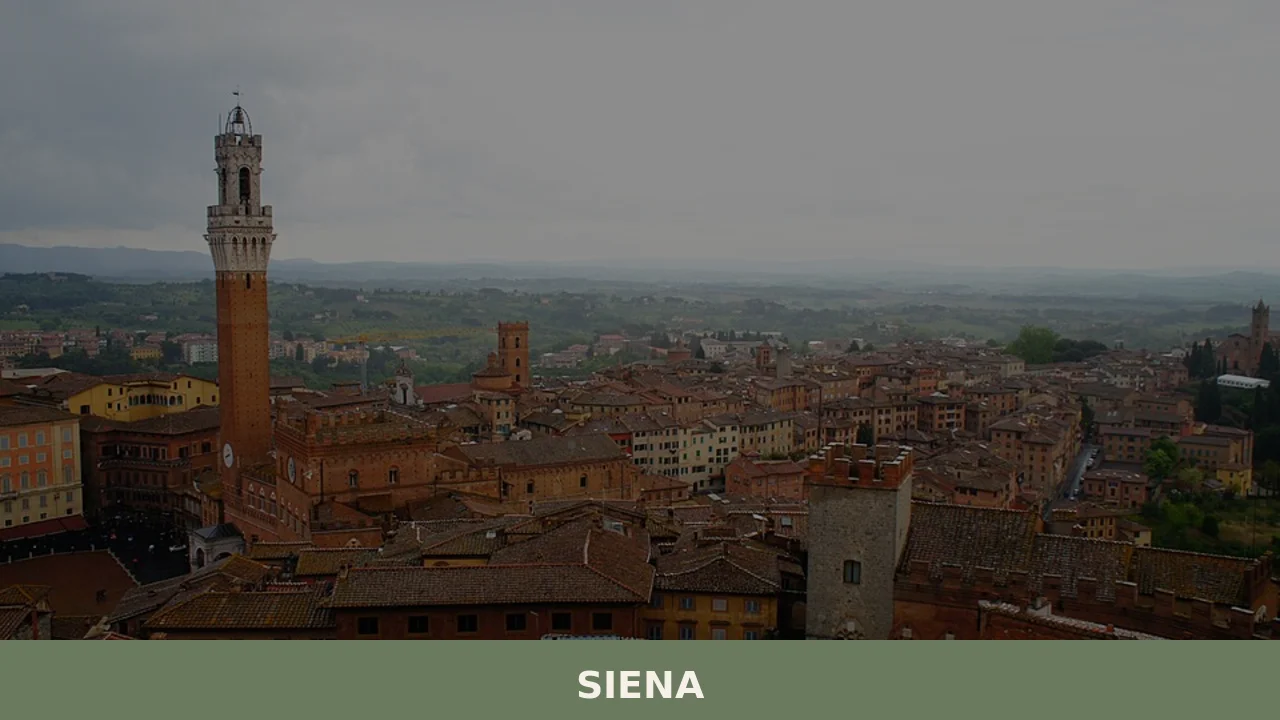
Siena
What to see in Siena: UNESCO centre at 322 m, population 52,883. Explore Piazza del Campo, the Cathedral, the Palio, and local foods like panforte and pici. Plan your visit.
Discover Siena
At 322 metres above sea level, with a population of around 52,883, Siena occupies a strategic position in central Tuscany, spread across three hills overlooking a territory of remarkable landscape variety. The provincial capital of the same-name province, the city retains a historic centre that UNESCO recognised as a World Heritage Site in 1995.
For anyone wanting to know what to see in Siena, the answer is detailed and substantial: medieval monuments of European significance, a leading artistic tradition, and a civic life that renews itself each year through rituals and celebrations of centuries-long continuity.
This guide follows a clear itinerary, from historical facts to practical information.
History and origins of Siena
The origins of Siena are documented as far back as the Etruscan period, with findings that confirm a settled presence in the area from at least the ninth and eighth centuries BC.
The Latin name Saena Julia appears in Roman sources, and the city was established as a Roman colony, probably under Augustus or in the early Imperial period.
Local tradition — lacking documented historical basis yet deeply rooted in the city’s identity — attributes the founding to Senio, son of Remus and nephew of Romulus: a legend that explains the symbol of the she-wolf with twins, still visible today in the city’s coat of arms and in numerous public sculptures.
The Roman urban layout has remained partially legible in the layout of certain streets in the centre, although medieval transformations substantially altered the original plan.
The period of greatest political and economic power coincided with the twelfth, thirteenth, and fourteenth centuries, when Siena established itself as one of the leading commercial and financial powers in Europe. The Republic of Siena, governed by an oligarchic system whose highest expression was the regime of the Nine (1287–1355), funded large-scale public works and encouraged the development of a painting school with European reach.
During this period, artists including Duccio di Buoninsegna, Simone Martini, and the Lorenzetti brothers worked in Siena, making the city one of the driving centres of Italian Gothic art.
The Palazzo Pubblico and the Torre del Mangia, the Cathedral with its marble façade, and the Campo — the shell-shaped piazza — were all completed or begun during this era. The rivalry with Florence, sustained over centuries, reached its most dramatic point at the Battle of Montaperti in 1260, when the Sienese army defeated the Florentines: a date still commemorated in the city’s civic consciousness today.
The Republic fell in 1555, when Spanish imperial troops in the service of Charles V captured the city after a long siege.
Siena was ceded to the Duchy of Florence in 1557, marking the end of its political independence.
During the modern era, however, the city retained its own cultural and institutional identity, preserving the Monte dei Paschi di Siena — founded in 1472 as the Monte di Pietà and reorganised in 1624 — which is considered one of the oldest banks in the world still in operation.
The Municipality of Siena played a decisive role in the preservation of this historical heritage and in the management of the territory throughout the centuries following Italian unification in 1861.
What to see in Siena: main attractions
Piazza del Campo
Recognised worldwide for its shell-like shape, Piazza del Campo is the civic and symbolic centre of the city.
Built from the second half of the thirteenth century, the piazza slopes down towards the Palazzo Pubblico and is divided into nine sectors by strips of white travertine, referencing the government of the Nine. With a central area of around 333 square metres, it hosts the Palio twice a year — Italy’s most famous horse race.
Visiting at any hour of the day means observing a public space that residents still fully inhabit.
Siena Cathedral (Cattedrale di Santa Maria Assunta)
The Cattedrale di Santa Maria Assunta, built from the twelfth century and expanded during the fourteenth, is one of the most elaborate examples of Italian Gothic architecture. The façade, clad in white and green marble, was partly designed by Giovanni Pisano. The interior houses works by Nicola Pisano, Donatello, Michelangelo, and Pinturicchio, the last of whom painted the frescoes in the Piccolomini Library, accessible from the left nave.
The inlaid marble floor — made up of 56 panels created between 1369 and 1547 by various artists — is one of the most extensive decorative cycles of its kind in Europe.
Palazzo Pubblico and Torre del Mangia
The Palazzo Pubblico, built between 1297 and 1342 in the Sienese Gothic style, is the historic seat of city government and today houses the Civic Museum.
Inside are Simone Martini’s fresco cycle — including the celebrated Maestà of 1315 — and Ambrogio Lorenzetti’s Allegory of Good and Bad Government (1338–1339), considered among the earliest secular representations of urban and rural landscape in European art.
Beside the palazzo stands the Torre del Mangia, completed in 1348 and 88 metres tall: from the top, there is a complete view over the piazza and the surrounding hills.
Museo dell’Opera del Duomo
Located in the unfinished wing of what was intended to be a new and larger cathedral — a project halted by the plague of 1348 — the Museo dell’Opera del Duomo holds some of the most significant works produced by the medieval Sienese school.
Among the centrepieces is Duccio di Buoninsegna’s Maestà, created between 1308 and 1311, a foundational work in the history of Western painting.
The museum also houses sculptures by Giovanni Pisano from the original cathedral façade and stained-glass windows from various periods.
Basilica of San Domenico
The Basilica of San Domenico, built from 1226 and extended during the fourteenth and fifteenth centuries, dominates the north-western part of the city from the top of a hill.
The interior, defined by a restrained Gothic style, contains the Chapel of Saint Catherine, dedicated to the patron saint of Italy and Europe, who was born in Siena in 1347. The chapel preserves several relics of the saint and frescoes by Sodoma (Giovanni Antonio Bazzi), executed in 1526.
The basilica is one of the main destinations for pilgrimage connected to the cult of Caterina Benincasa, canonised in 1461 and proclaimed patron saint of Italy in 1939.
Traditional food and products of Siena
Sienese cuisine developed within a historically agricultural territory, shaped by the production of cereals, legumes, pork and beef, olive oil, and wine.
The influence of farming tradition is evident in the prevalence of dishes built around simple ingredients, prepared with slow-cooking techniques, and in the widespread use of unsalted bread — the defining feature of Tuscan bread-making throughout the region.
Confectionery in particular has well-documented historical roots and is closely tied to the city’s major religious and civic celebrations.
Among the most representative dishes of the local gastronomic tradition, pici all’aglione holds a prominent place: pici are a fresh pasta, hand-rolled into long, irregular strands, thicker and rougher than spaghetti, served with a sauce made from large quantities of garlic, tomato, and chilli.
Ribollita, while found across Tuscany, also features in Sienese tradition with local variations based on cavolo nero, cannellini beans, and stale bread.
Among the main courses, scottiglia is an ancient mixed-meat dish — traditionally wild boar, chicken, pork, and veal — slow-cooked in a sauce of tomato, red wine, and spices.
In the category of sweet products, panforte is the best-known internationally. Made with honey, sugar, candied fruit, almonds, and a blend of spices including pepper, cinnamon, and coriander, panforte has documented origins in the thirteenth century and is produced in Siena in versions that differ according to whether pepper is included (panforte nero or panforte bianco).
Ricciarelli are another traditional confection: soft biscuits made from almond paste, sugar, and egg white, dusted with icing sugar, whose production in Siena is recorded from at least the fifteenth century.
Cavallucci complete the picture of Siena’s historic sweets: irregularly shaped biscuits containing anise, walnuts, sugar, and spices, most commonly associated with the Christmas season.
The wines of the surrounding territory are an integral part of the Sienese table.
The province of Siena includes well-established production areas such as Chianti Classico, Brunello di Montalcino, and Vino Nobile di Montepulciano, all carrying DOCG recognition.
On the food event front, the historic centre hosts markets and food-and-wine showcases throughout the year, tied to the contrade calendar, with spring and autumn being the seasons when the main organised tasting events are concentrated.
Festivals, events, and traditions of Siena
The city’s most deeply rooted civic and religious tradition is the Palio di Siena, the horse race held twice a year in Piazza del Campo: on 2 July, in honour of the Madonna di Provenzano, and on 16 August, in honour of the Assumption.
The city’s seventeen historic contrade compete in a race whose current form has documented origins in the seventeenth century, although equestrian contests in the piazza are recorded as far back as the Middle Ages.
Preparations for the Palio last months and involve the entire social life of the contrade — territorial organisations with a social and identity-forming role that remain fully active today.
The city’s patron saint is Ansano di Siena, a Christian martyr whose feast day is celebrated on 1 December. According to tradition, Ansano brought Christianity to Siena in the third century and is regarded as the city’s first apostle. The occasion is marked by solemn religious services at the Basilica of San Giovanni Battista al Fonte and in the city’s churches.
Alongside the Palio, Siena hosts a range of cultural events of national and international standing. The Palio dei Comuni, the Historical Procession that precedes each of the two races, and the contrada dinners — which are open to visitors — fill the summer months with a concentration of events that few cities of comparable size can match.
On the music front, the Accademia Musicale Chigiana, founded in 1932, organises the Chigiana International Festival each summer — a programme of concerts and classical music masterclasses that brings world-renowned performers to Siena.
The Estate Senese rounds out the summer programme with theatre, film, and dance events distributed across various venues in the historic centre.
When to visit Siena and how to get there
The period between April and June is a favourable window for visiting the city: temperatures are mild, the days are longer, and tourist numbers, while steady, do not reach the peaks of summer.
Those specifically interested in the Palio will need to plan their visit around 2 July or 16 August, bearing in mind that the city sees its highest visitor numbers on those days and that securing a position in Piazza del Campo for the race requires arriving several hours in advance.
For those who want to fully explore what to see in Siena without the pressure of large crowds, autumn — from September to November — offers ideal conditions, with the landscape of the surrounding hills changing colour week by week.
Siena is accessible by car from the A1 motorway via the Firenze Imprunetola–Firenze Certosa exit, then following the Florence–Siena dual carriageway (SGC Fi-Si) for approximately 70 kilometres. Alternatively, from the south, the Valdichiana exit on the A1 leads to Siena via around 50 kilometres of main roads.
Siena railway station is connected to Florence and Chiusi-Chianciano Terme by regional services operated by Trenitalia, with journey times ranging from 90 to 120 minutes from Florence.
The nearest airport is Florence Amerigo Vespucci, approximately 80 kilometres away, followed by Pisa Galileo Galilei Airport at around 115 kilometres. Travellers arriving by coach can use Autolinee Toscane services, which connect Siena with Florence, Arezzo, Grosseto, and the main cities of the region.
Where to stay in Siena
Siena offers a wide and varied range of accommodation, spread across the historic centre and the immediate outskirts.
The centre has historic hotels housed in period buildings, as well as numerous bed and breakfasts and guesthouses close to the main attractions. Those who prefer the countryside can choose from agriturismi on the surrounding hills, many of which lie along the roads connecting the city to the Chianti and Crete Senesi areas. During the days of the Palio, availability drops sharply and prices rise considerably: booking months in advance is essential during those specific periods.
Visitors to Siena can extend their itinerary towards Lunigiana, a sub-region of north-western Tuscany with very different historical and landscape characteristics.
Pontremoli, the main town of Lunigiana, retains a compact medieval centre with towers and historic buildings that document centuries of political change and cultural exchange.
Those looking for more contained itineraries might also consider Bagnone, a small settlement in the same area with a Visconti castle and a well-preserved medieval street plan.
For those wishing to explore Lunigiana further, Mulazzo and Casola in Lunigiana offer smaller village settings with monuments and walking routes through the Apennine valleys.
In Tuscany More villages to discover
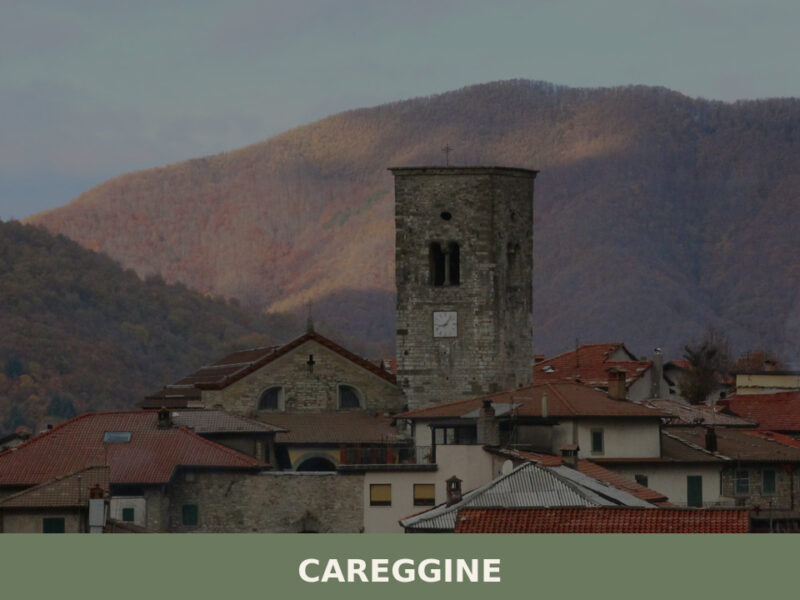
Careggine
Morning fog lifts from the Apuan Alps in slow, pale sheets, revealing a scatter of stone houses along a ridgeline above the Garfagnana valley. A church bell marks seven o’clock — the sound carries far in this thin, mountain air, reaching nobody in particular. With only 585 inhabitants, Careggine keeps its own unhurried tempo. Understanding […]
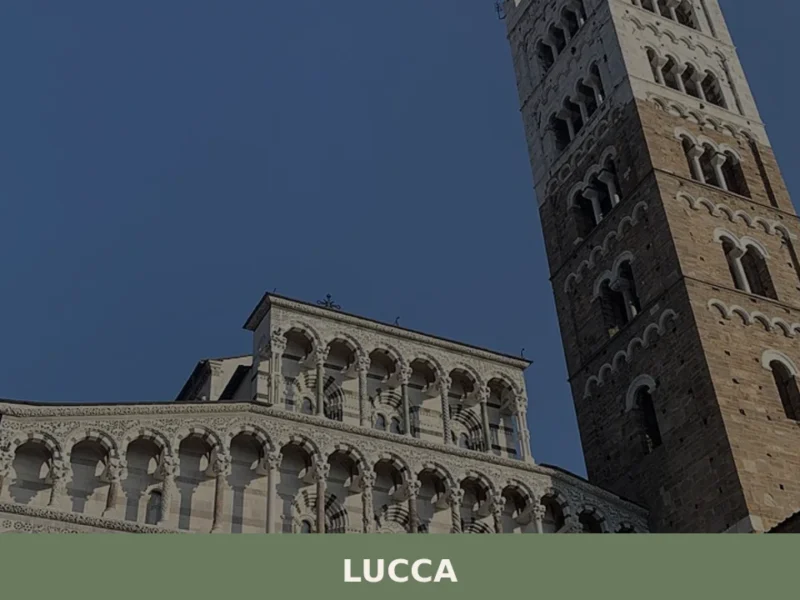
Lucca
Discover Lucca, Tuscany's enchanting walled village in Italy. Explore medieval streets, stunning architecture, and rich culture in this timeless Italian treasure.
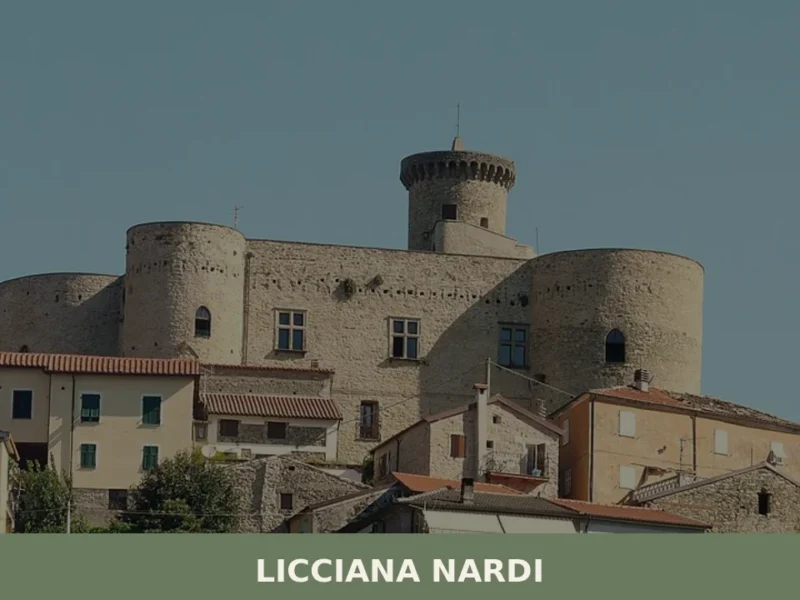
Licciana Nardi
The territory of Licciana Nardi includes six castles spread between the valley floor and the Apennine slopes, a concentration of defensive structures that documents the strategic role of this stretch of Lunigiana in controlling the routes between the Po Plain and the Tyrrhenian coast. With its 4,894 inhabitants distributed across 55 square kilometres at an […]
📝 Incorrect information or updates?
Help us keep the Siena page accurate and up to date.