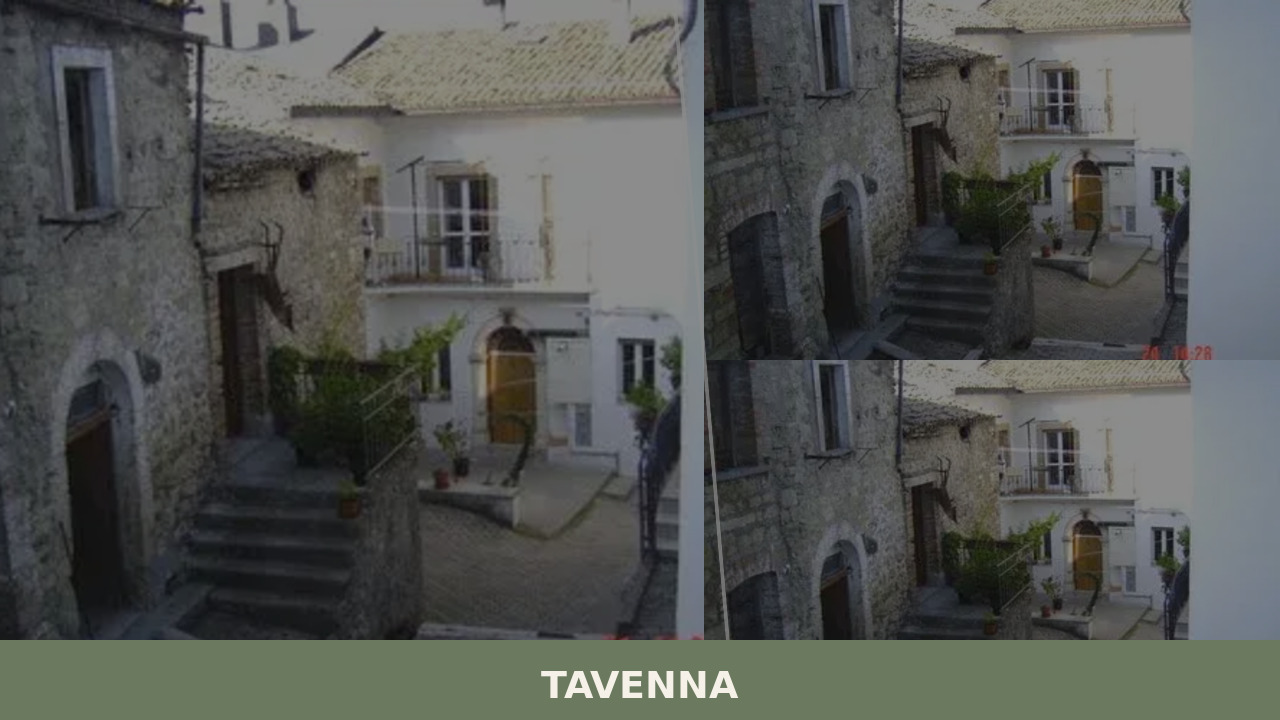
A complete guide to Tavenna in Molise: its medieval stone centre, parish church, panoramic hillside views, and the quiet rhythms of inland southern Italy.
Morning light catches the limestone facades along Corso Principale, turning them the colour of raw honey. A dog sleeps across a doorstep. Somewhere below the ridge, a rooster marks the hour. Tavenna sits at 550 metres above sea level in the province of Campobasso, a village of 601 inhabitants where the rhythms of southern Italian rural life persist with quiet stubbornness. If you are wondering what to see in Tavenna, the answer begins with the texture of the place itself — the worn stone, the iron balconies, the silence between church bells that stretches wide enough to hear the wind moving through the valley below.
The origins of Tavenna reach back to the medieval period, when small fortified settlements formed across the hills of Molise as part of the Lombard and later Norman reorganisation of southern Italy. The village likely developed around a feudal nucleus — a defensive tower or fortified dwelling — that offered protection to farming families working the surrounding land. The name “Tavenna” may derive from the Latin taberna, suggesting a waypoint or resting place along routes connecting the interior hills to the Adriatic coast, though the etymology remains debated among local historians.
Through the centuries, Tavenna passed between various feudal families, a common trajectory for small settlements in the Mezzogiorno. The village’s built fabric — its compact stone houses, narrow alleys designed to channel wind and shade, and the central church — reflects patterns of construction that date largely to the seventeenth and eighteenth centuries, though the underlying street plan is almost certainly older. Like many communities in inland Molise, Tavenna experienced significant emigration during the late nineteenth and twentieth centuries, a demographic shift that reduced its population but preserved much of its historic centre from the kind of redevelopment that transformed larger Italian towns.
What remains today is a settlement that functions as a kind of living document of Molisan rural architecture and social organisation — compact, self-contained, and built to human scale.
The core of Tavenna is best understood on foot. Stone-paved alleys branch off from the main corso, leading to small courtyards and covered passageways. External staircases climb to upper-floor dwellings in the traditional Molisan style. The density of the construction — walls touching walls, rooflines overlapping — speaks to a community designed for mutual protection and shared resources over many centuries.
At the heart of the village stands the parish church, the spiritual and spatial anchor of Tavenna’s layout. Its facade is modest, in keeping with the scale of the settlement, but the interior holds altarpieces and devotional objects that reflect centuries of local religious life. The bell tower, visible from the surrounding countryside, serves as the village’s most recognisable vertical element against the hillside.
Tavenna’s elevation at 550 metres provides open sightlines across the Molisan hills toward the Adriatic. From the edges of the village, particularly along the roads approaching from the south and east, the landscape unfolds in layered ridges of cultivated fields, oak woodland, and distant blue coast. On clear winter mornings, the definition of the terrain is extraordinary.
Scattered along the roads and paths radiating from the village are small chapels and votive shrines — edicole votive — built by families or confraternities over the centuries. These modest structures, often whitewashed and bearing ceramic tiles depicting saints, mark the transition between village and countryside, between the domestic and the sacred.
The terrain around Tavenna is a patchwork of olive groves, small-scale arable fields, and patches of Mediterranean scrubland. Walking the unpaved roads that connect Tavenna to neighbouring hamlets offers an encounter with a landscape that has been continuously farmed for centuries, shaped by the same hands that built the village itself.
The cuisine of Tavenna belongs to the broader tradition of inland Molisan cooking — a repertoire built on dried pasta, pork, legumes, olive oil, and foraged greens. Dishes such as cavatelli with a slow-cooked ragù, pallotte cacio e ova (cheese and egg balls fried and served in tomato sauce), and lamb prepared with wild herbs reflect a kitchen shaped by subsistence farming and seasonal availability. The olive oil produced in this part of Campobasso province, from cultivars adapted to the region’s altitude and clay soils, has a peppery quality that distinguishes it from coastal varieties.
Local bread, baked in wood-fired ovens and often made with a mix of wheat and semolina flour, remains a staple. Preserved pork products — sausages seasoned with fennel seed or chilli, cured meats hung in cool cellars — carry the flavour of a domestic tradition that predates industrial food production. Visitors should not expect formal restaurants in a village of this size; meals are more likely to come through agriturismi in the surrounding countryside or through the hospitality of local associations during festivals and sagre.
Late spring — May through mid-June — offers the most comfortable conditions for exploring Tavenna and its surroundings. Temperatures at 550 metres are moderate, the hills are at their greenest, and wildflowers edge the unpaved roads. Autumn, particularly October, brings a second period of fine weather, with harvest activity in the olive groves and vineyards adding purpose to the landscape. Summer can be warm but is generally less oppressive than in the lowland towns closer to the coast.
The village’s festa patronale — the patron saint’s feast — is the most significant event in the local calendar, typically drawing emigrants and their families back to Tavenna for processions, communal meals, and evening celebrations. Exact dates vary, so checking with the Comune di Tavenna in advance is advisable. Winter visits appeal to those who prefer solitude: the village is quiet, the light low and golden, and the surrounding landscape takes on a stark, graphic quality under frost or light snow.
Tavenna is located in the province of Campobasso, in the southern part of Molise. By car, the most practical approach is via the A14 Adriatica motorway, exiting at Termoli or Montenero di Bisaccia and following provincial roads inland through the hills — a drive of approximately 30 to 40 minutes from the coast. From Campobasso, the regional capital, the distance is roughly 70 kilometres, typically requiring just over an hour by car along the SS647 and connecting provincial roads.
The nearest train station with regular service is in Termoli, on the Adriatic rail line connecting Bologna, Pescara, and Bari. From Termoli, reaching Tavenna requires a car or one of the infrequent regional bus services operated by local transport companies. The nearest airports are Pescara (Abruzzo International Airport, approximately 120 km to the north) and Naples Capodichino (approximately 200 km to the southwest). Bari Karol Wojtyła Airport offers additional connections, roughly 200 km to the southeast. A rental car is, in practical terms, essential for visiting Tavenna and the surrounding villages.
Tavenna sits within a constellation of small hill villages that together form the fabric of inland Molise. Just a short drive away, Palata offers another example of a compact medieval settlement adapted to the rolling terrain of Campobasso province. Its stone architecture and agricultural surroundings echo the patterns found in Tavenna, but with its own distinct character and history. The two villages share a landscape and a way of life that rewards slow, attentive exploration.
For a contrast in scale and atmosphere, the coastal town of Termoli lies less than an hour’s drive to the northeast. Its fortified old town, cathedral, and working fishing port provide a vivid counterpoint to the quiet of the interior hills. Pairing a visit to Tavenna with time in Termoli — moving between the high silence of the ridge and the salt air of the Adriatic — captures the essential range of what Molise, Italy’s least-known region, has to offer the attentive traveller.
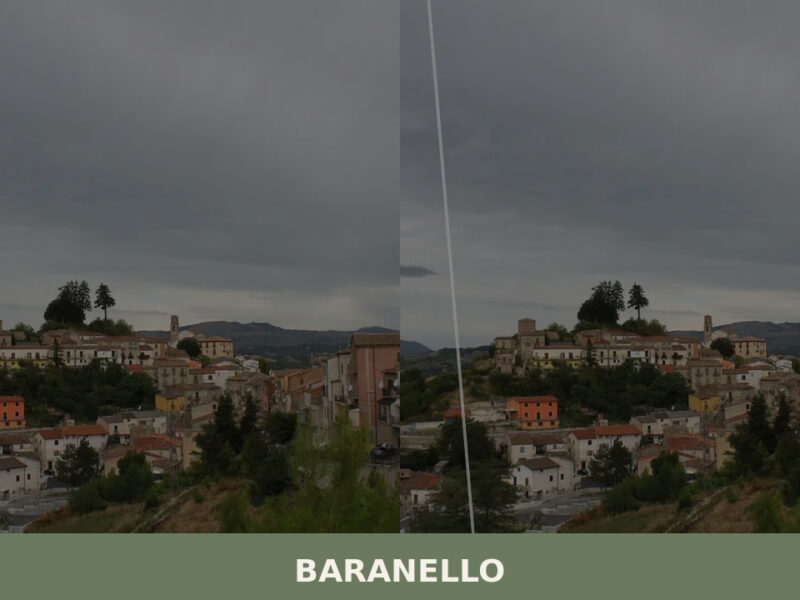
A documentary guide to Baranello in Molise — its civic museum, medieval churches, castle, and the quiet rhythms of an overlooked Italian hill village.
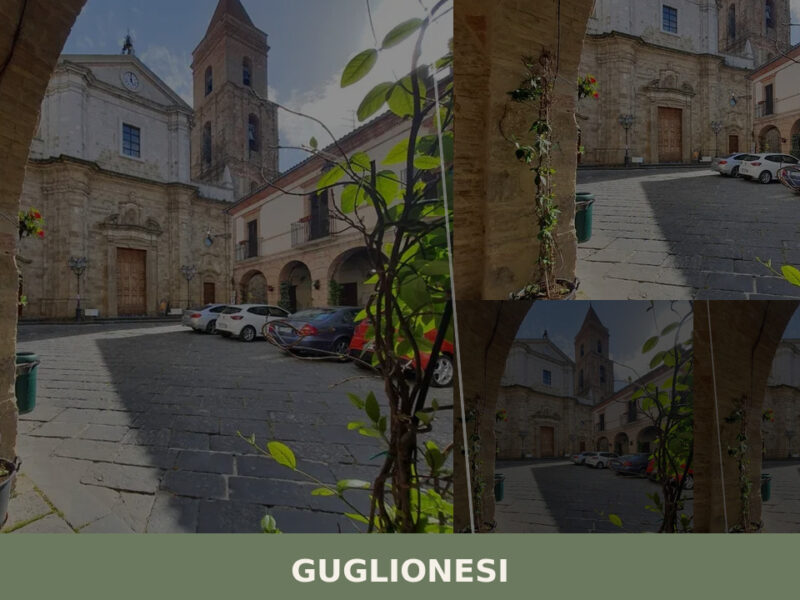
A hill town of nearly five thousand people in Campobasso province, Guglionesi offers Romanesque churches, Samnite archaeological traces, and wide Adriatic views across the Biferno valley.
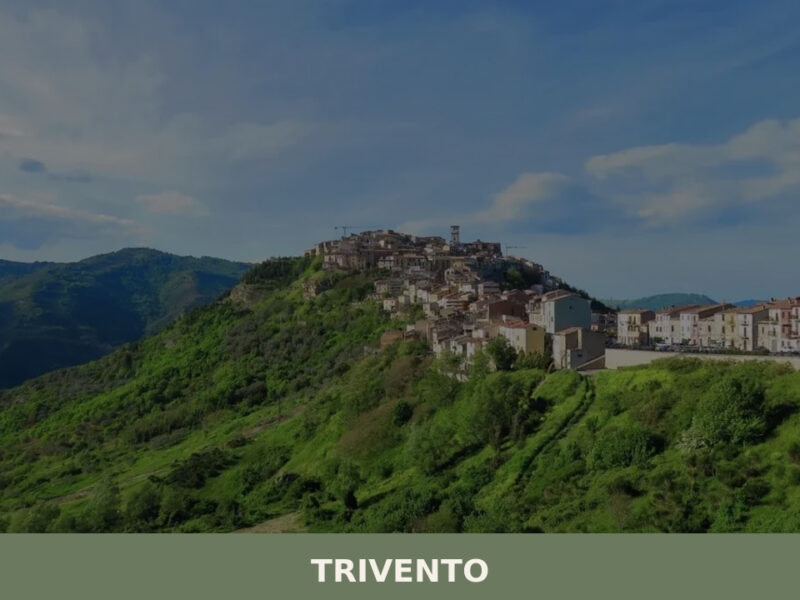
Morning fog lifts off the Trigno valley in slow, pale sheets, and Trivento emerges at 599 metres above sea level — a compact ridgeline of stone and tile roofs, church bells marking the quarter-hour across a town of 4,353 residents. The air carries woodsmoke and the faint resin scent of surrounding oak forest. If you […]
📝 Incorrect information or updates?
Help us keep the Tavenna page accurate and up to date.