


Toritto
With a population of 8,577, Toritto, a Puglian municipality located 240 meters above sea level in the province of Bari, offers a vantage point over the Murgia’s hilly landscape. Its origins are traced through legends and archaeological evidence that confirm its presence since Roman times. Here, among streets that retain a historical urban layout, it […]
Discover Toritto
With a population of 8,577, Toritto, a Puglian municipality located 240 meters above sea level in the province of Bari, offers a vantage point over the Murgia’s hilly landscape. Its origins are traced through legends and archaeological evidence that confirm its presence since Roman times. Here, among streets that retain a historical urban layout, it is possible to follow a path that reveals what to see in toritto, a town whose economy is historically tied to agriculture, particularly the renowned cultivation of almonds. The surrounding territory, characterized by olive groves and cultivated fields, defines its rural and productive identity.
History and origins of Toritto
The first traces of settlements in the Toritto area date back to the Bronze Age, as archaeological finds in the Pescari locality demonstrate. The area later saw Roman presence, likely connected to the Appian Way Traiana which bordered the region. The name itself, ‘Toritto’, is subject to various interpretations, some of which link it to the presence of watchtowers or an ancient pre-Roman deity.
During the medieval period, Toritto developed as an agricultural center, part of the vast feudal properties that characterized Puglia. It was under the dominion of several noble families, including the Carafa and the Capece, who influenced its urban and architectural development. Its hilly position offered natural defense and favored diversified agriculture, elements that contributed to its demographic and productive growth over the centuries. Its history reflects the events of the Bari Murgia, a territory that has maintained its distinctiveness while integrating into regional dynamics.
What to see in toritto: 5 must-see attractions
The Mother Church of San Nicola
Built in the heart of the inhabited center, the Mother Church of San Nicola is Toritto’s main place of worship. Its structure, resulting from successive modifications and expansions, features architectural elements ranging from Romanesque to Baroque. Inside, sacred artworks and altars are preserved, telling the story of the local community’s devotion. The facade, with its bell tower, forms a visual landmark in the urban landscape.
The Baronial Palace
Located near the Mother Church, the Baronial Palace represents the historical residence of the feudal families who controlled Toritto. Although it has undergone transformations over time, it still retains elements of its original grandeur. Its architecture reflects the power and influence of local lords, and it is an example of the noble residences found in Murgian towns. Today it houses municipal offices, but the external structure remains visible.
The Historic Center
Toritto’s ancient urban fabric develops around a dense network of streets and open spaces. Exploring the historic center means observing the spontaneous architecture of the houses, often built with local stone. Simple facades and wrought-iron balconies characterize the environment, while occasional stone portals reveal attention to constructive details. The urban layout reflects the town’s evolution over the centuries.
The Church of San Rocco
Dedicated to San Rocco, one of the town’s patron saints, this church is a significant place of worship for the people of Toritto. Its construction is linked to popular devotion to the saint, protector against epidemics. Every year, the church is central to the patron saint festival celebrations, becoming a focal point for the processions and rites that enliven the first Sunday of September.
Piazza Vittorio Emanuele
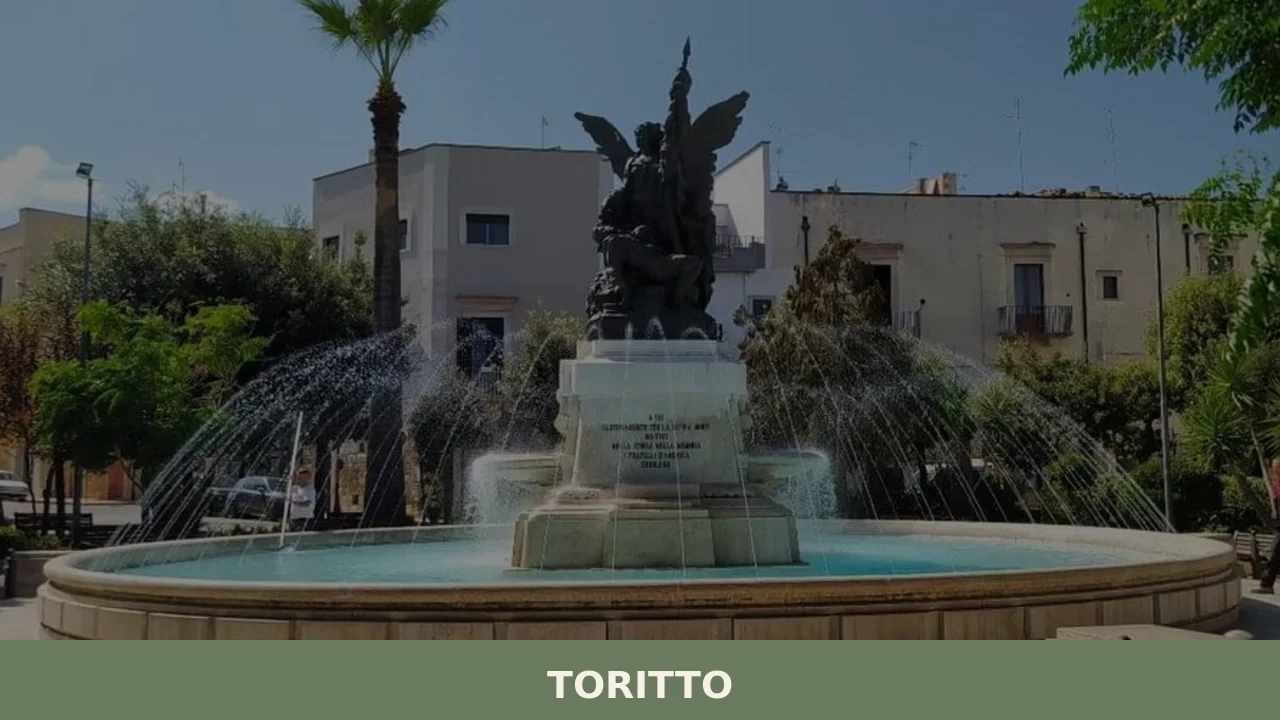
Toritto’s main square, Piazza Vittorio Emanuele, forms the hub of the town’s social life. Surrounded by buildings from various eras, it often hosts events and markets. A monument commemorating the fallen stands at its center. It is a place for meetings and passage, from which the main arteries of the inhabited center branch off, offering a perspective on daily life in Toritto.
Typical cuisine and local products
Toritto’s gastronomic tradition is deeply rooted in the agricultural production of its territory. The symbolic product is undoubtedly the Toritto Almond, an indigenous variety with an intense flavor and crunchy texture, used in pastry-making for traditional sweets like confetti and ‘sasanelli’. Alongside this excellent product, extra virgin olive oil, obtained from local cultivars like Coratina, represents a pillar of the Mediterranean diet.
Toritto’s cuisine offers dishes that highlight simple and genuine ingredients. Orecchiette, often prepared with turnip greens or meat sauces, are the quintessential first course. Legumes, such as fava beans and chickpeas, form the basis for soups and purées. The Altamura bread PDO, produced in the nearby city, accompanies every meal, while taralli, in sweet and savory versions, are a common snack. Festivities are an occasion to prepare specific sweets, passed down from generation to generation, keeping alive the memory of local flavors.
When to visit Toritto: the best time
Toritto’s Mediterranean climate makes the town accessible for most of the year. Intermediate seasons, spring and autumn, offer mild temperatures and ideal light for exploring the surrounding territory, characterized by olive groves and almond orchards. In particular, the almond blossom, between February and March, transforms the countryside into a striking landscape, while the olive harvest in autumn enlivens agricultural activities.
The most lively time for the community is the first Sunday of September, when the patron saint festival is celebrated in honor of San Rocco and the Madonna delle Grazie. During these days, the town comes alive with processions, music, and market stalls, offering an opportunity to observe local traditions and participate in collective rituals. Summer, with its long days, allows for enjoying evenings outdoors, although temperatures can be high.
How to get to Toritto
Toritto is reachable via several communication routes. By car, it is advisable to take the A14 motorway (Bologna-Taranto) to the Bari Nord exit, then continue on the SS96 towards Altamura. From Bari, the town is about 30 kilometers away.
For those traveling by train, the nearest railway station is Bari Centrale, from which intercity buses connect the provincial capital with Toritto. Bari’s ‘Karol Wojtyla’ International Airport (BRI) is the most convenient airport for reaching the location, offering connections to major Italian and European cities. From here, it is possible to rent a car or use public transport services. For more information, you can consult the official website of the Municipality of Toritto.
Other villages to discover in Puglia
Puglia, with its variety of landscapes and traditions, offers numerous other villages that warrant attention. A few kilometers from Toritto, the Murgia territory and the province of Bari feature towns that retain similar architecture and agricultural practices, reflecting a common territorial identity but with unique specificities.
For those wishing to continue exploring, consider a visit to Celle di San Vito, a small mountain village in the Daunia Mountains that stands out for its history and linguistic traditions, offering an interesting contrast to the hilly landscape. Alternatively, moving towards the Capitanata plain, Orta Nova features a historic center that develops around historical buildings and offers another perspective on life in Puglian villages, with a strong agricultural vocation.
In Apulia More villages to discover
Mola di Bari
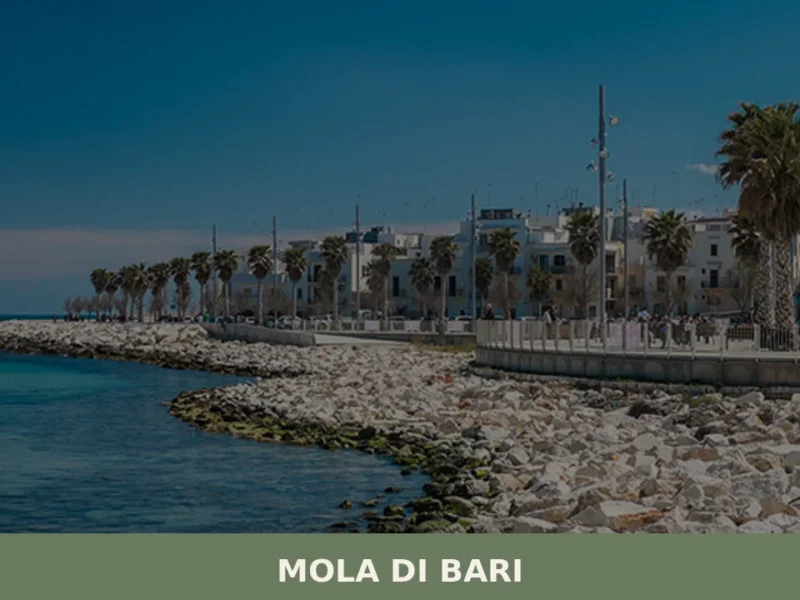
In 1278, Charles I of Anjou ordered the construction of a castle on the Adriatic coast south of Bari, at a spot where fishermen had been hauling their boats ashore for generations. That castle still stands, and it marks the exact centre of Mola di Bari, a town of 24,416 inhabitants spread out at just […]
Capurso
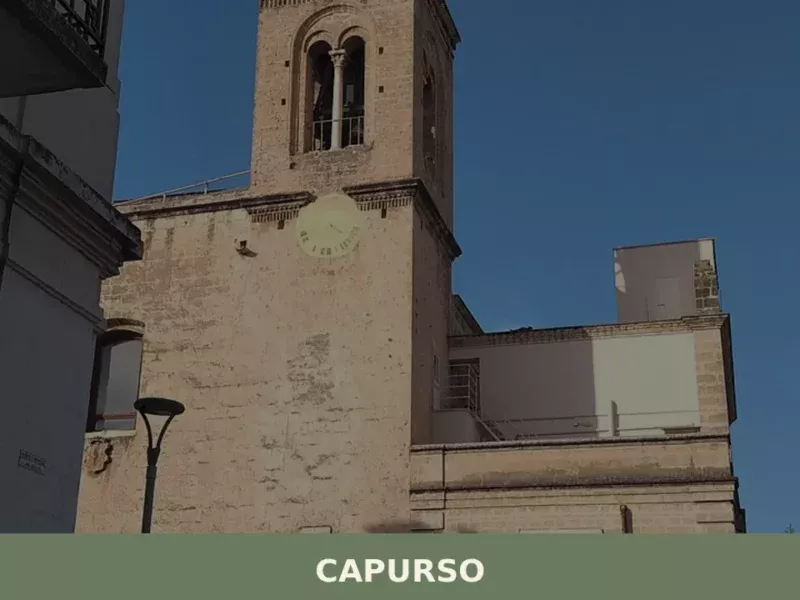
Every last Sunday of August, the streets of Capurso light up with illuminations reaching twenty metres in height, and the sheer weight of the crowd forces traffic to be diverted onto the provincial road to Cellamare. This is the climax of the feast of the Madonna del Pozzo, a devotional event that since 1705 has […]
Altamura
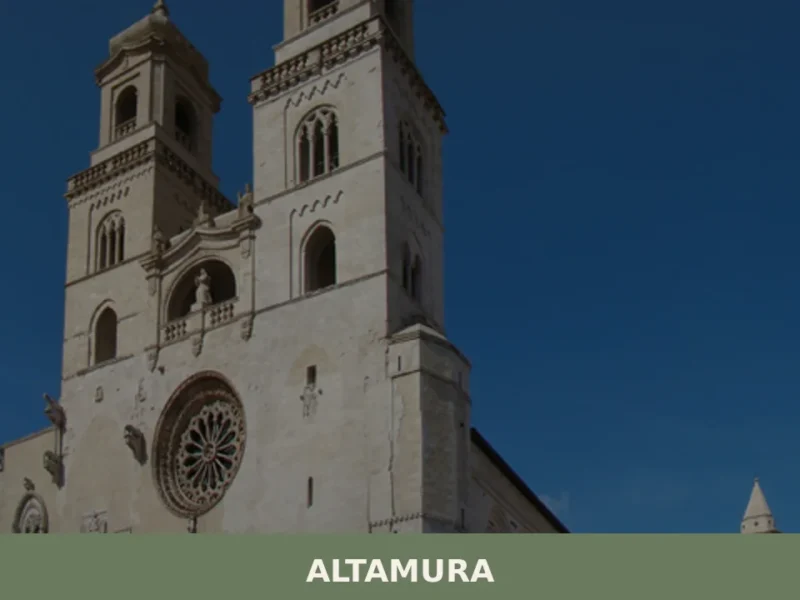
In 1993, inside the Lamalunga limestone quarry a few kilometres from the town centre, a skeleton of Homo neanderthalensis dating back approximately 150,000 years was brought to light — one of the most complete ever found in Europe. That discovery changed the perception of Altamura, transforming it from a bread-making town into a site of […]
📝 Incorrect information or updates?
Help us keep the Toritto page accurate and up to date.