


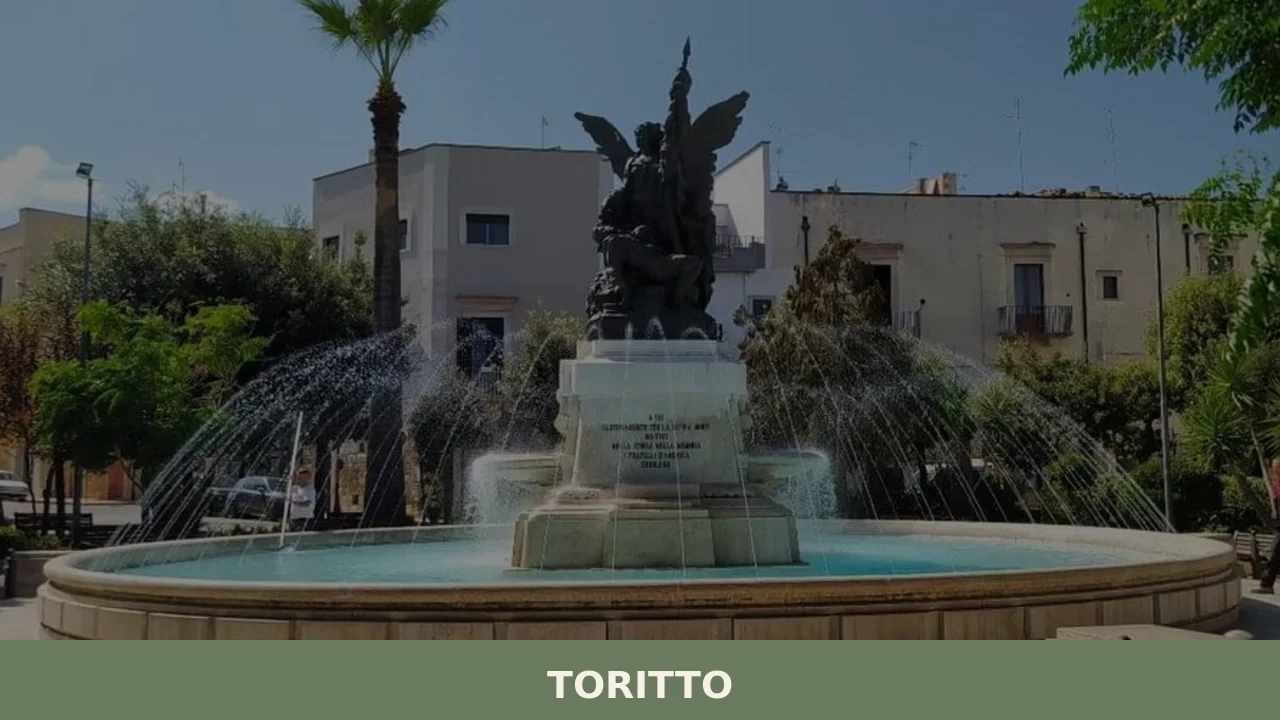
Toritto
 Hills
Hills
What to see in Toritto, Italy: Explore almond groves and the Chiesa Madre at 240 m. Discover vibrant festivals and indulge in local cuisine.
Discover Toritto
The 1564 Torre dell’Orologio stands in Toritto, a guardian of the village’s daily rhythm, its silver bell echoing across ancient almond groves. The clock tower’s presence attests to centuries of resilience, encapsulating the evolving life of this little Puglian town. As time passes, the stonework absorbs the warm hues of each setting sun, painting a picture of continuity against a backdrop of rustic fields and centuries-old olive trees.
When seeking what to see in Toritto, Puglia, visitors will find both history and tradition deeply etched into the village landscape.
Situated at an altitude of 240 m (787 ft) with a population of 8,031, Toritto invites exploration along its quaint streets. The highlights include visiting the Chiesa Madre, built in 1410, and exploring the agricultural expanse that supports the renowned almond and olive cultivation. This town, 20 km (12.4 mi) from the Adriatic Sea, remains a picturesque destination for travelers.
History of Toritto
Toritto’s origins may date back to around 800 AD, weaving a tapestry of enigmatic beginnings through to the present day. Despite its uncertain early years, historical records, such as those from 1069, confirm its existence, which grows in depth as a parish by 1171. This period laid the foundation for Toritto’s vibrant cultural and agricultural legacy that continues to flourish in modern times.
The medieval era introduced more robust institutional frameworks, as reflected by the construction of significant religious edifices and civic structures.
The Chiesa Madre, constructed in 1410, underlines this era’s architectural ambitions, embodying religious devotion and community organization that defined much of Puglia’s historical landscape. Notable figures of this period, intertwined with Toritto’s history, contributed to shaping a resilient village ethos apparent even today.
Transitioning from the Middle Ages to the present saw Toritto adapting to broader regional changes while retaining its distinct identity. The indisputable heritage is visible in its enduring structures, such as the Torre dell’Orologio, which acts as a marker of historical evolution. This continuity, coupled with agricultural prowess, particularly in almonds and olives, positions Toritto as a living narrative of the past converging harmoniously with contemporary life.
What to see in Toritto, Puglia: top attractions
Torre dell’Orologio
The ancient stone facade of the Torre dell’Orologio captures the passage of time with enduring grace.
Placed centrally, its 1564 inscription marks an era of civic pride and advancement. Visitors can marvel at its clockwork elegance, a testament to local craftsmanship. A visit here offers insight into timekeeping’s pivotal role in daily life, amidst the whispers of antiquity surrounding every stone.
Chiesa Madre
The Chiesa Madre rises majestically with its early 15th-century stonework basking in history. Dedicated to St. Nicholas, this church recounts ecclesiastical artistry through its sturdy yet graceful arches. Stepping inside, one encounters a nave that tells tales of centuries-old devotion, highlighted by intricate altars and solemn frescoes.
The church remains accessible to those eager to both witness and respect its sacred space.
Chiesa della Madonna della Stella
Pre-dating 1092, the Chiesa della Madonna della Stella quietly venerates its ancient roots. Its modest exterior belies the beauty found within, where art and faith merge seamlessly. For those venturing to its interior, a sense of serenity pervades the atmosphere, inviting reflection amidst history-laden walls. The church is a must for any itinerary, connecting past beliefs with contemporary homage.
Almond Groves
Extending across the rustic fields, the almond groves offer a visual feast with their rows of carefully cultivated trees. These groves epitomize the region’s agricultural expertise, with techniques refined over generations. At harvest, the air brims with the sweet scent of almonds, making an educational visit during this time particularly rewarding for those interested in agrarian traditions.
Olive Trees
Nearby, the venerable olive trees form the backbone of Toritto’s agricultural economy, their silver-green leaves shimmering in the Mediterranean sun.
These trees, some centuries old, symbolize resilience and prosperity. Visitors can sample locally produced oils that capture the landscape’s essence. The best time to witness this harmony is during the harvest months, when the village is alive with vibrant activity.
Local food and typical products of Toritto
Renowned for its agricultural output, Toritto’s culinary tradition is a delightful reflection of its verdant surroundings. Historically, the region’s diet has been shaped by both land and sea, with olive oil and almonds playing key roles. The Mediterranean climate enhances the production of robust flavors intrinsic to Puglian cuisine, celebrated for its simplicity and depth.
Typical dishes such as orecchiette con le cime di rapa (orecchiette pasta with turnip tops) highlight local produce’s primacy, while focaccia barese, laden with tomatoes and olives, offers a hearty taste of regional tradition.
These offerings celebrate simple ingredients elevated through time-honored techniques, fostering a connection between land and table.
The prized Pecorino cheese, matured to perfection, complements this culinary repertoire. From sheep grazed on nearby pastures, it offers a taste that reflects centuries of expertise. Certified products such as olive oil remain pivotal in local markets, granting visitors an authentic flavor of Puglian regional artistry.
Seasonal markets perpetuate this culinary celebration, particularly vibrant during harvest times. They provide an opportunity to engage directly with producers, ensuring an authentic taste of Toritto to bring home. November through February offer bustling gatherings where visitors can purchase these traditional products.
Festivals, events and traditions of Toritto
Toritto’s cultural calendar is particularly noted for the celebration of its patron saints, San Rocco and Madonna delle Grazie, with a grand feast on the first Sunday of September.
The streets come alive with processions, music, and local delicacies, creating an atmosphere of communal joy and reverence. This event is a true representation of Toritto’s vibrant spirit, reflecting both faith and festivity.
While this patron feast is central, smaller seasonal celebrations continue to enrich Toritto’s cultural fabric, intertwining with agricultural cycles. These occasions allow visitors to witness traditional dances and culinary showcases, integral to Toritto’s enduring community identity.
When to visit Toritto, Italy and how to get there
The best time to visit Toritto is during spring and autumn when mild weather complements exploration and festival participation. The climate allows for engaging experiences in the open fields and almond groves, providing a comprehensive view of both cultural and natural attractions. Summer, while appealing, can be hot, requiring sun protection and hydration for prolonged outdoor activities.
Accessibility is straightforward, with the village lying within proximity to Bari.
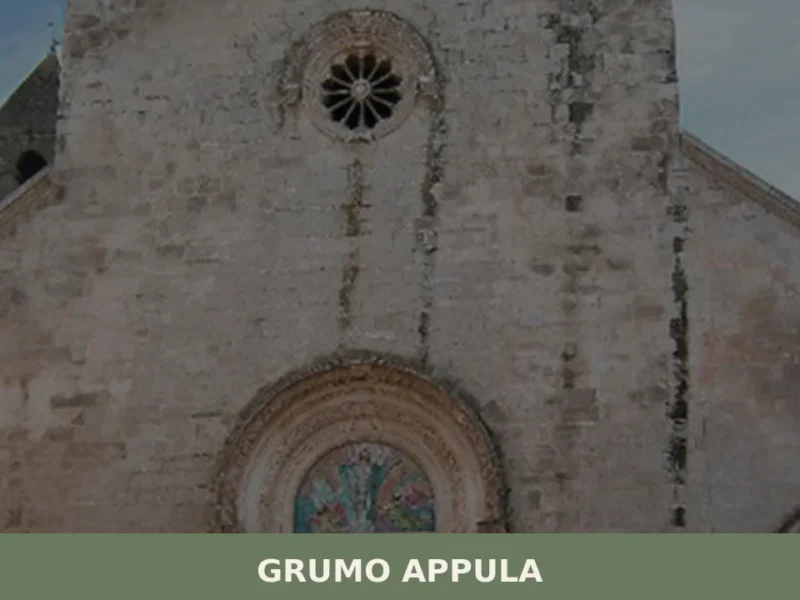
Visitors can reach Toritto via the A14 motorway, exiting at Modugno, and continuing for about 30 km (19 mi). Public transport options include train connections from Bari Centrale to the nearby station of Grumo Appula, 7 km (4.3 mi) away. International travelers may fly into Bari Karol Wojtyła Airport, approximately 30 km (18.6 mi) from Toritto.
Where to stay near Toritto
Accommodation in and around Toritto offers an intimate glimpse into local life through agriturismi (farm stays) and Bed and Breakfasts. Options like these enable visitors to enjoy the village’s atmosphere while experiencing personalized hospitality and regional produce. For details, consult regional tourism portals or inquire locally for recommendations.
Visitors to Toritto can extend their trip to Ruvo di Puglia, enhancing their exploration of shared agricultural traditions, or explore Barletta for its coastal proximity and historical sites.
Frequently asked questions about Toritto
What is the best time to visit Toritto?
Spring (March–May) and autumn (September–October) are the ideal seasons to visit Toritto. In February and March, the almond orchards burst into blossom, transforming the Murgia countryside into a striking white-and-pink landscape. Autumn brings the olive harvest, adding life to the rural surroundings. The most vibrant community moment is the first Sunday of September, when Toritto celebrates its patron saints San Rocco and the Madonna delle Grazie with processions, music, and market stalls — a great opportunity to experience authentic local traditions firsthand.
What are the historical origins of Toritto?
Toritto's history stretches back to the Bronze Age, with archaeological finds in the locality of Pescari confirming early settlement. The area later came under Roman influence, likely connected to the via Appia Traiana passing through the region. During the medieval period, Toritto developed as a feudal agricultural center under the dominion of noble families including the Carafa and the Capece, who shaped its urban and architectural character. The origin of the name 'Toritto' is debated, with interpretations linking it to watchtowers or pre-Roman deities.
What to see in Toritto? Main monuments and landmarks
Toritto's main landmarks are concentrated in its historic center. The Mother Church of San Nicola, featuring Romanesque and Baroque elements, is the town's principal place of worship and contains notable sacred artworks. Nearby, the Baronial Palace — once the residence of feudal lords — now houses municipal offices but retains its historic façade. The Church of San Rocco, dedicated to one of the patron saints, is central to the September festival. Piazza Vittorio Emanuele serves as the social heart of the town, surrounded by buildings of various eras and a war memorial.
Where to take the best photos in Toritto?
The most photogenic spots in Toritto include Piazza Vittorio Emanuele, where the historic buildings and the façade of the Mother Church of San Nicola create a classic Puglian townscape. The historic center's narrow streets, stone portals, and wrought-iron balconies offer excellent subjects for architectural photography. The surrounding Murgia countryside is especially spectacular between February and March, when the almond orchards are in full blossom, providing sweeping pastoral views from the town's 240-meter elevated position.
Are there museums, churches or historic buildings to visit in Toritto?
Toritto has several documented historic and religious buildings worth visiting. The Mother Church of San Nicola, at the heart of the village, preserves sacred artworks and altars spanning Romanesque and Baroque periods. The Church of San Rocco holds deep devotional significance for locals and becomes especially lively during the September patron saint festival. The Baronial Palace, though now used as municipal offices, retains its historic exterior. Visiting hours for these sites are best confirmed locally, as many southern Italian churches open primarily for morning Mass and festival periods.
What can you do in Toritto? Activities and experiences
Toritto offers experiences rooted in its agricultural and food traditions. Visitors can explore almond and olive groves in the surrounding Murgia countryside, particularly scenic during blossom season in February–March and harvest time in autumn. The first Sunday of September brings the patron saint festival with processions, music, and stalls — a genuine immersion in local culture. Food enthusiasts can seek out the renowned Toritto Almond in local shops and markets, used in traditional confections like confetti and sasanelli, alongside locally produced Coratina extra virgin olive oil.
Who is Toritto suitable for? Families, couples, hikers, solo travelers?
Toritto is best suited to travelers seeking authentic, off-the-beaten-track Puglia away from coastal crowds. Food and agriculture enthusiasts will appreciate the almond and olive oil culture, while history and architecture lovers can explore the medieval urban fabric and its Baroque churches. The peaceful countryside and mild climate make it appealing for couples and slow travelers. Families and solo visitors interested in traditional southern Italian village life will find the patron saint festival in September a particularly rewarding experience. It is less suited to those seeking beaches or nightlife.
What to eat in Toritto? Local products and specialties
Toritto's most celebrated product is the Toritto Almond, an indigenous variety prized for its intense flavor and crunchy texture, used in traditional sweets such as confetti and sasanelli. Extra virgin olive oil from the Coratina cultivar is a staple of local cuisine. Traditional dishes include orecchiette with turnip greens or meat sauces, legume-based soups using fava beans and chickpeas, and taralli in both sweet and savory versions. The nearby Altamura PDO bread — one of Italy's most recognized protected breads — accompanies virtually every meal in the area.
Nearby Villages near Toritto
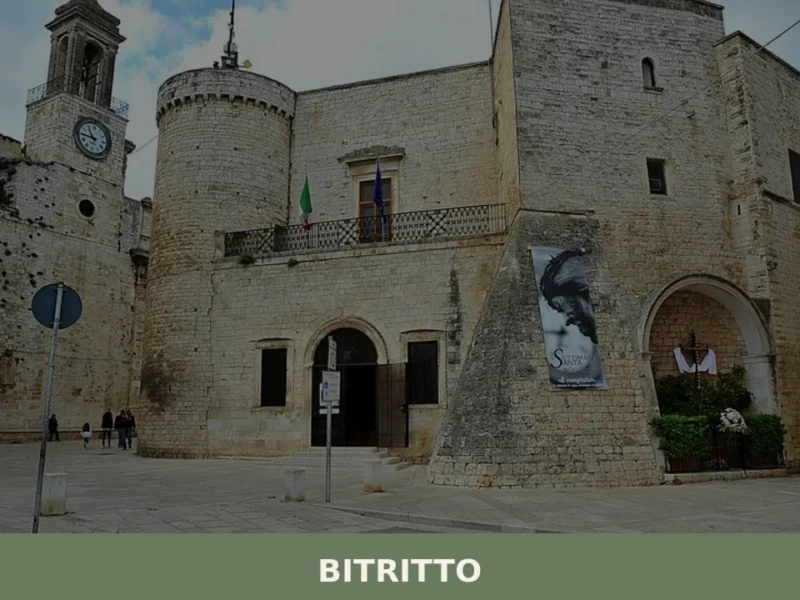
In Apulia More villages to discover
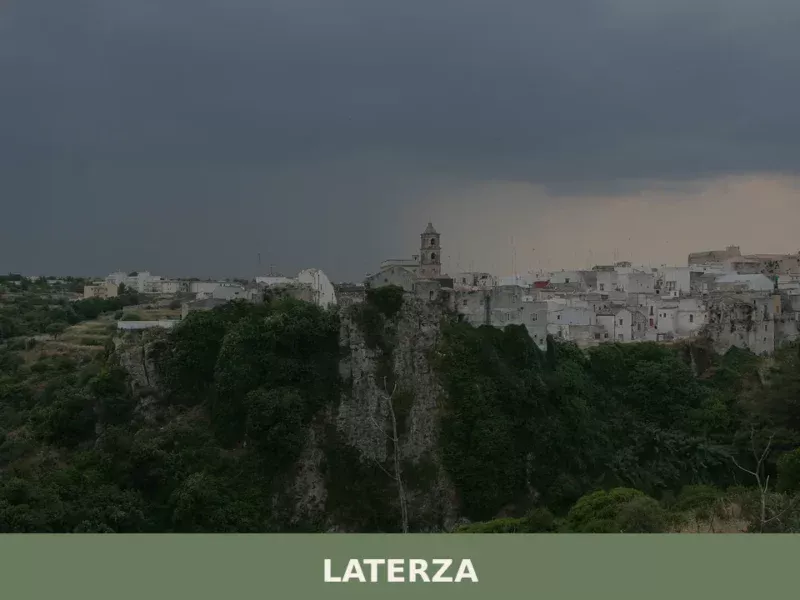
Laterza
 Sea
Sea
Discover what to see in Laterza, Puglia: the giant karst gravina, Byzantine rock churches, maiolica ceramics and famous bread. Practical travel guide.
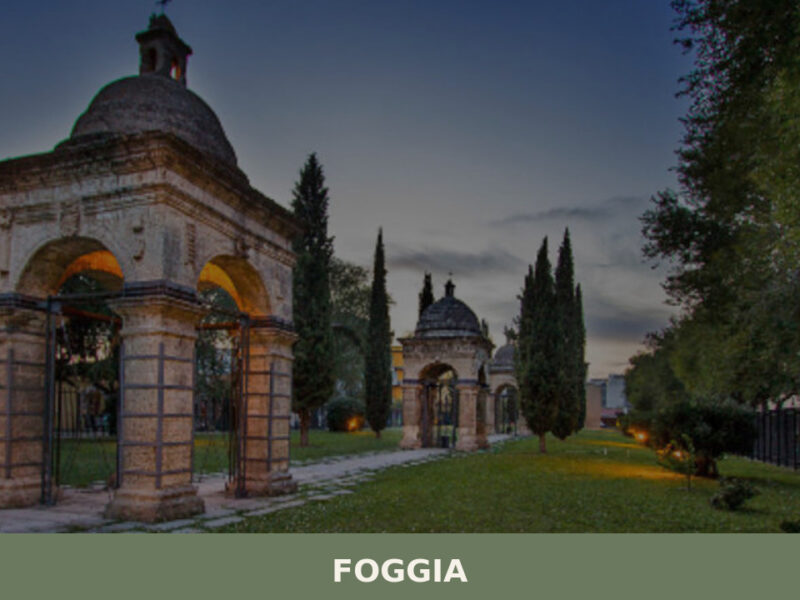
Foggia
 Plains
Foggia, capital of the Capitanata, holds medieval traces, Daunian artefacts, and the culinary traditions of Italy's largest wheat plain. A guide to its overlooked layers.
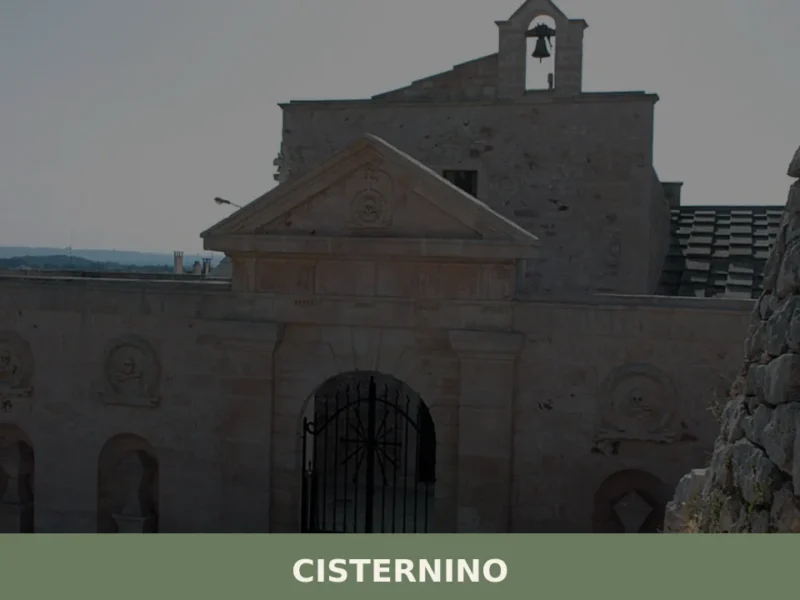
Cisternino
Hills
At 394 meters above sea level, in the heart of the Itria Valley, Cisternino features a compact urban layout, characterized by white lime buildings that line a network of narrow streets. This architecture, typical of Puglia’s “white village” style, reflects centuries of adaptation to the climate and terrain. Its elevated position offers a wide view […]
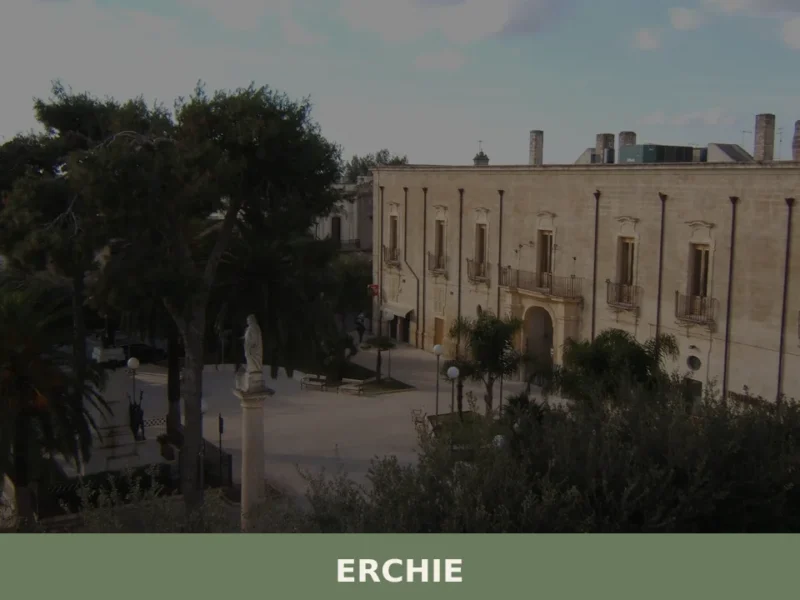
Erchie
Plains
Discover what to see in Erchie, Puglia u2014 a village at the crossroads of three provinces, with Baroque churches, masserie, and authentic Salento cuisine.
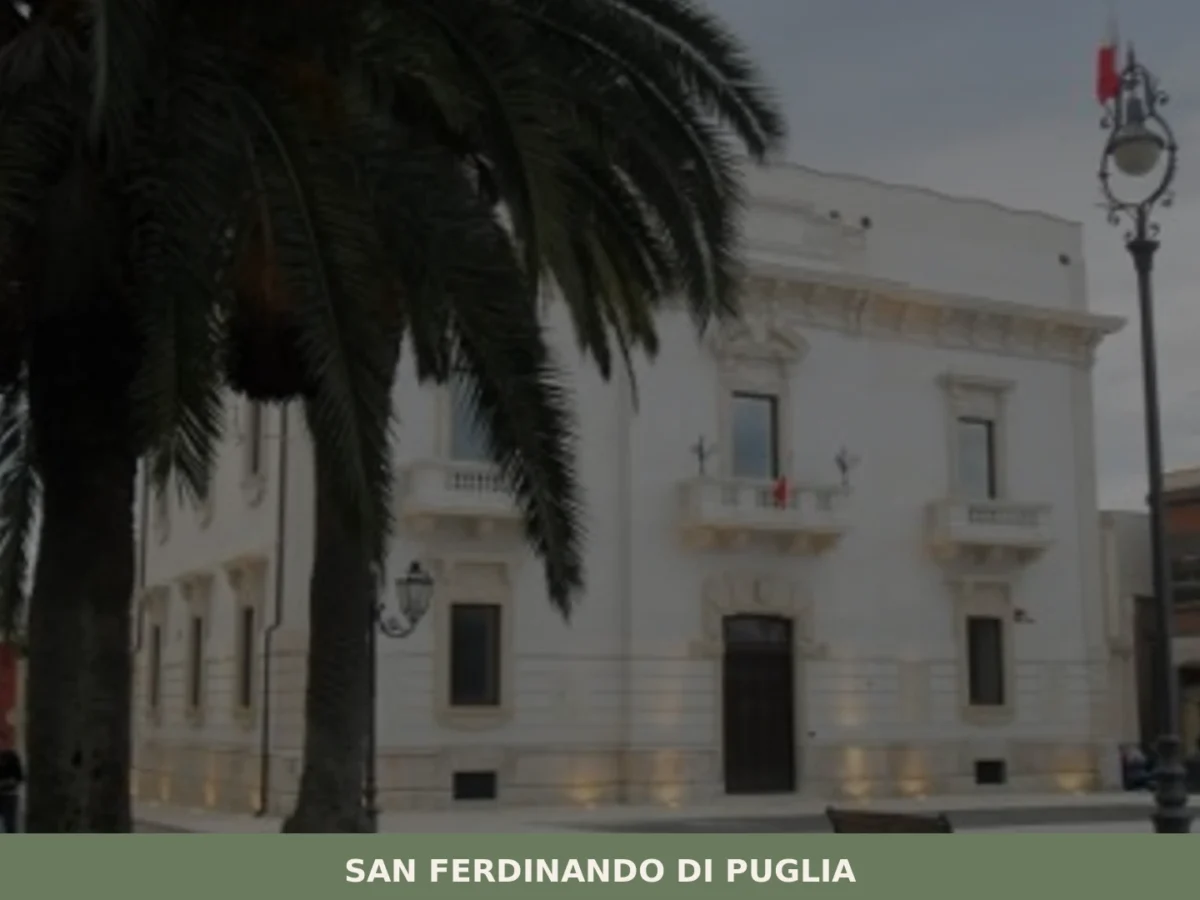
San Ferdinando di Puglia
Plains
What to see in San Ferdinando di Puglia: 5 must-visit attractions, from the historic centre to the churches. Discover the complete guide and plan your visit.
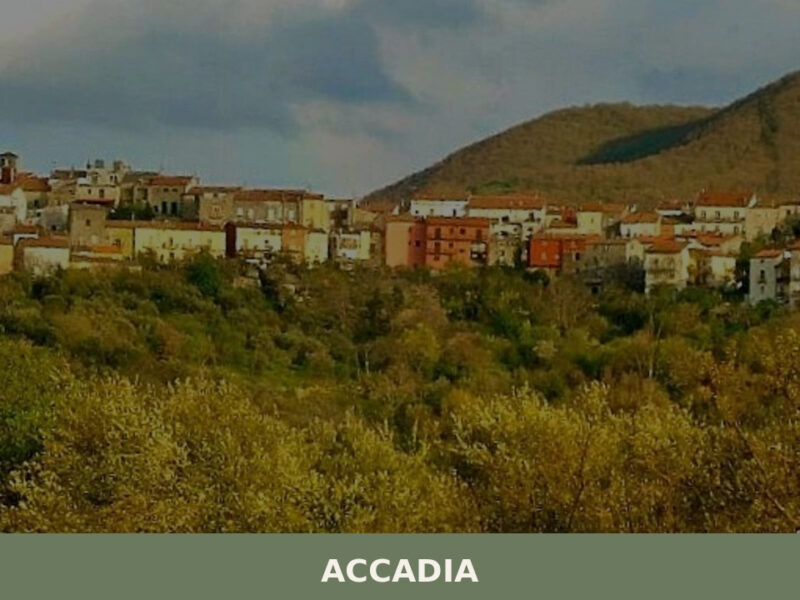
Accadia
 Mountain
Perched at 650 metres above sea level on the western edge of Puglia’s Subappennino Dauno, the small village of Accadia feels like a secret whispered between mountains and sky. Home to just over 2,200 inhabitants, this ancient hilltop settlement in the province of Foggia rewards visitors with crumbling medieval ruins, sweeping panoramas, and a fierce […]
Casalnuovo Monterotaro
Hills
A hilltop village of 1,357 inhabitants in the Province of Foggia. Explore Casalnuovo Monterotaro's stone lanes, rural landscape, and the traditions of inland Puglia.
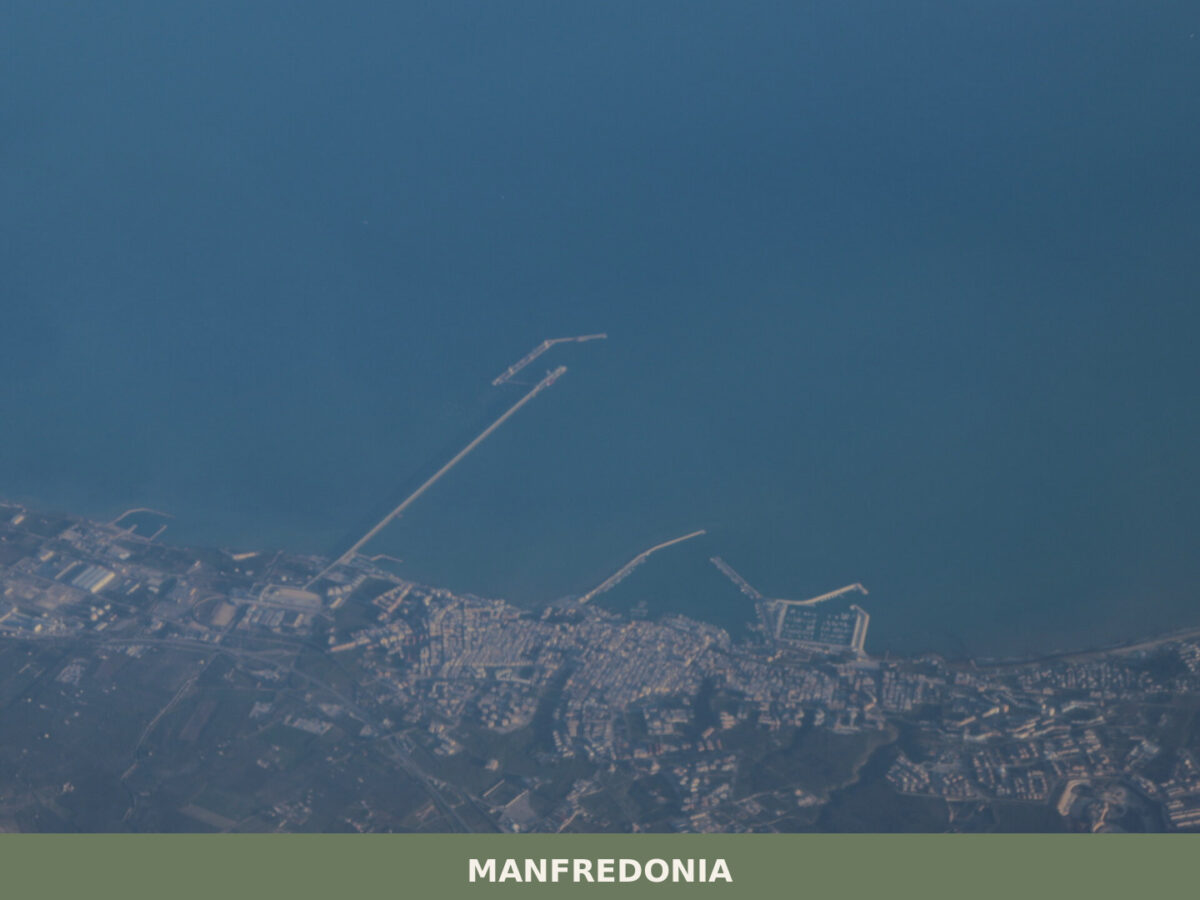
Manfredonia
Sea
A port city founded by King Manfred on the Gargano coast, Manfredonia holds a medieval castle, pre-Roman carved stele, and one of Puglia's oldest carnivals.
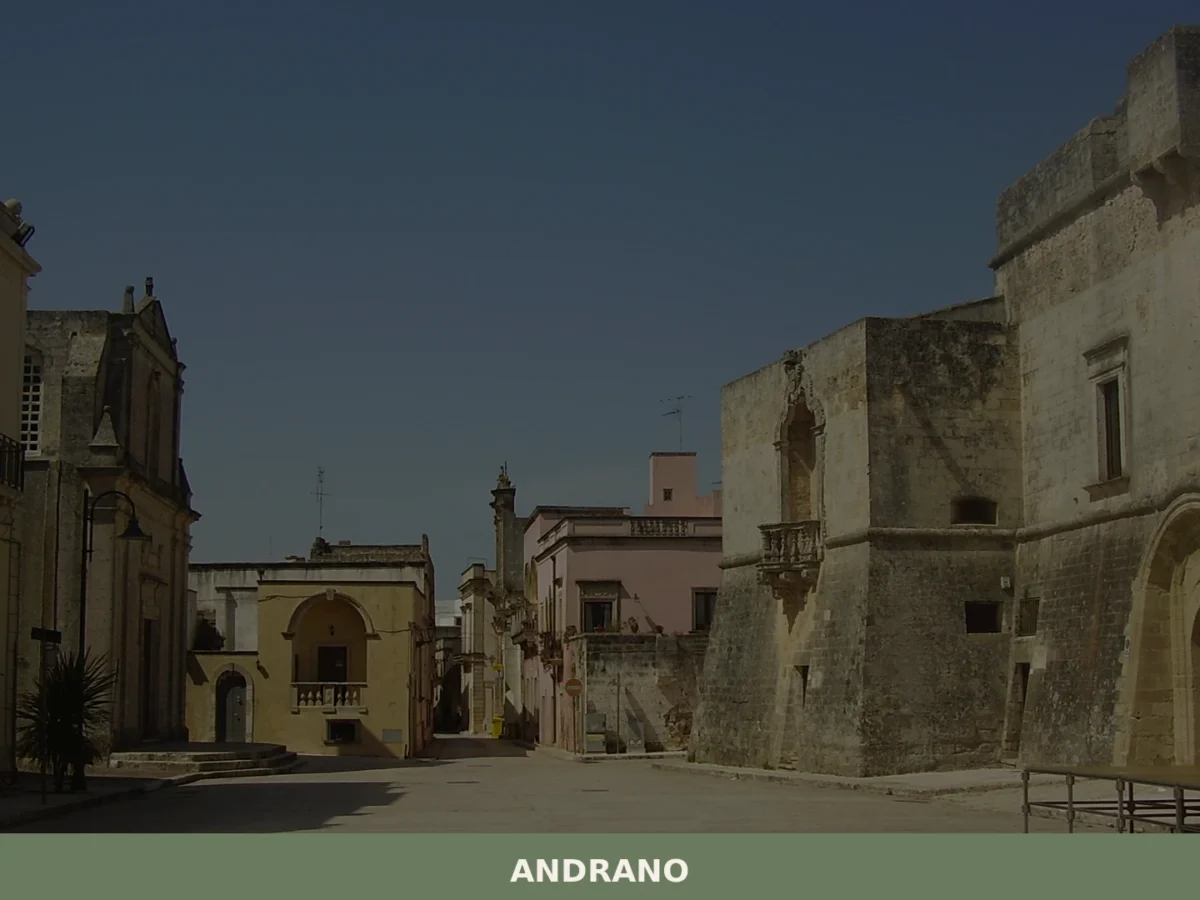
Andrano
Sea
Discover what to see in Andrano, a Lecce province comune with a medieval castello, Adriatic coastline and the hamlet of Castiglione d'Otranto. Complete travel guide.
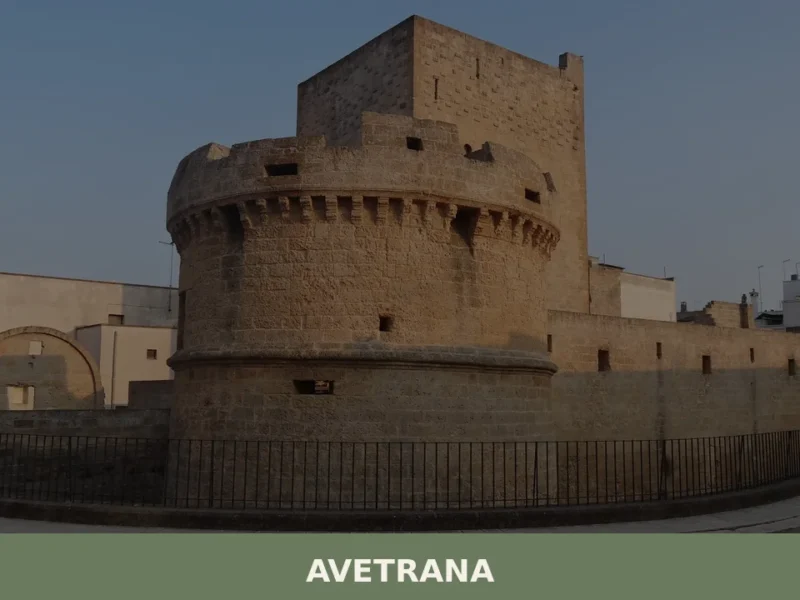
Avetrana
Plains
What to see in Avetrana, Italy: explore a 13th-century castle, the Chiesa Madre and Palazzo Imperiali. Population 6,277. Discover festivals, food and how to get there.


🏡 Know Toritto better than we do?
If you’re a local or have been there, your knowledge matters: add what’s missing or fix a detail on this page.