A hill village of 378 residents at 489 metres in the Daunian Subapennines. Volturara Appula offers medieval lanes, panoramic views over the Tavoliere, and the quiet of a place most travellers never find.
Morning light hits the stone facades of Via Roma in long, amber panels, and somewhere below a door hinge creaks — a woman carrying bread crosses the narrow lane, her footsteps the loudest sound for a full minute. This is Volturara Appula at half past seven, a village of 378 residents suspended at 489 metres above sea level on the western slopes of the Subappennino Dauno, in the province of Foggia. If you are wondering what to see in Volturara Appula, the answer begins with the silence itself — and with the layers of history compressed into a handful of streets that most travellers never find.
The name carries geological memory. “Volturara” likely derives from the Latin vultur — vulture — a reference to the raptors that still circle the thermals above these ridges, or possibly from volutaria, describing the rolling terrain. The suffix “Appula” was appended in 1863, after Italian unification, to distinguish this settlement from its Campanian namesake, Volturara Irpina. The distinction matters: this village belongs firmly to the Daunia, the ancient territory of the Daunian people who occupied northern Puglia long before Roman roads threaded through the landscape.
During the Norman period, Volturara Appula held strategic value as a fortified settlement along the ridgeline routes connecting the Tavoliere plain to the Apennine passes. The village fell under successive feudal lordships — first Norman, then Swabian under Frederick II, whose administrative reforms reshaped governance across the Capitanata. By the Angevin and Aragonese periods, Volturara Appula had passed through the hands of minor baronial families, its population fluctuating with the economic cycles that governed hill towns dependent on pastoral farming and grain.
The post-unification era brought emigration, a pattern that accelerated through the twentieth century and reduced the population from several thousand to the current 378. What remains is a settlement whose built fabric — thick-walled houses, a compact medieval street plan, churches scaled to a community that was once far larger — reads like a document of demographic change written in limestone and plaster.
The parish church dedicated to the Archangel Michael anchors the village’s spiritual life and its physical centre. Its stone portal opens onto a single nave interior where lateral altars hold polychrome wooden statues characteristic of southern Italian devotional art. The dedication to Michael connects Volturara Appula to the widespread cult of the archangel across the Daunia, radiating from the sanctuary at Monte Sant’Angelo on the Gargano.
Walking the centro storico means navigating a tight grid of alleys, arched passageways, and external staircases that climb to upper-floor entrances — a defensive layout common to Daunian hill villages. Stone lintels above doorways occasionally bear carved dates from the seventeenth and eighteenth centuries. The density of the plan, designed for a population many times its current size, gives the quarter an architectural intensity disproportionate to its few hundred residents.
At 489 metres, the village’s western edge provides unobstructed sightlines across the Tavoliere delle Puglie, the largest plain in southern Italy. On clear winter mornings, the flatland stretches to a faint horizon line, its geometry of wheat fields visible as a patchwork of green and ochre. These viewpoints require no ticket or signpost — a bench at the edge of the village and open sky are all the infrastructure provided.
Village fountains in the Subappennino Dauno served as social infrastructure — meeting points, laundry stations, water sources for livestock. Volturara Appula’s public fountain, located along a main route through the settlement, reflects this practical tradition. Its stonework, worn smooth by centuries of use, marks a point where daily life and hydraulic engineering once intersected in a place with no running water indoors.
The territory around Volturara Appula is crossed by unpaved roads and mule tracks connecting neighbouring hill villages — Motta Montecorvino, Pietramontecorvino, Celenza Valfortore. These routes pass through pastureland, small oak woods, and fields of wild fennel and asphodels. The terrain is moderate, the elevation gains gentle, and the likelihood of encountering another walker low. Bring water; shade is intermittent.
The cooking of Volturara Appula belongs to the pastoral and agricultural tradition of the Subappennino Dauno. Handmade pasta — orecchiette, cavatelli, and the lesser-known cicatelli — appears dressed with slow-cooked ragù of pork or lamb, or simply with turnip tops and anchovy. Bread, baked in large loaves from local durum wheat, remains central to the table; stale bread is never wasted but recycled into pancotto, a soup of bread simmered with vegetables, olive oil, and sometimes a beaten egg. Lamb and kid goat, roasted with potatoes and wild herbs, mark feast days and family gatherings.
The province of Foggia produces extra virgin olive oil recognised under the Dauno DOP designation, and the hills around Volturara Appula fall within this production zone. Local cheeses — caciocavallo, scamorza, and fresh ricotta — come from small dairies using milk from sheep and cattle grazed on Daunian pastures. Dining options in the village are limited; a small trattoria or agriturismo in the surrounding countryside is the most reliable option, but calling ahead is not a suggestion — it is a necessity.
Spring — late April through June — is the most rewarding season. Wildflowers colonise the hillsides, temperatures sit between 15 and 25 degrees Celsius, and the light across the Tavoliere is at its most articulate. Autumn, particularly October, brings a second window of mild weather and the olive harvest, when the scent of freshly pressed oil drifts through the village. Summer can be warm but rarely oppressive at this altitude; winter is cold, with occasional snow dusting the upper slopes of the Subappennino. The village’s patron saint feast — honouring San Michele Arcangelo — punctuates the calendar with a procession, outdoor stalls, and communal eating. Check locally for dates, as smaller hill village festivals follow liturgical rather than tourist schedules.
Practical note: services are minimal. There is no ATM in every village of this size; carry cash. Mobile phone signal can be intermittent in the valleys between settlements. The reward for these inconveniences is proportional: you will have the place almost entirely to yourself.
The nearest major airport is Bari Karol Wojtyła (BRI), approximately 160 kilometres to the southeast — roughly two hours by car via the A14 motorway and then the SS17 or provincial roads through the Daunian hills. Foggia, the provincial capital, lies about 40 kilometres east and is reachable by the A14 from Bari or by Trenitalia rail services on the main Adriatic line. From Foggia, the drive to Volturara Appula takes approximately 45 minutes via the SP130 or SS17, climbing steadily into the Subappennino. Public bus connections from Foggia exist but are infrequent and designed for residents, not visitors; a rental car is strongly recommended. Naples, on the Tyrrhenian side, is approximately 180 kilometres west — a drive of about two and a half hours via the A16 motorway, crossing the Apennine spine near Benevento.
Volturara Appula belongs to a constellation of small Puglian settlements that reward slow, deliberate exploration rather than rapid itinerary-ticking. From the Daunian interior, the landscape descends eastward toward the Gargano peninsula and the Adriatic coast. Peschici, perched on a limestone cliff above a long sandy beach on the Gargano’s northern coast, offers a dramatic counterpoint to Volturara Appula’s landlocked quiet — whitewashed houses, fishing boats, and the salt-thick air of a working coastal village.
Further offshore, the Isole Tremiti form a tiny archipelago in the Adriatic, reachable by ferry from the Gargano ports. The islands’ transparent waters and the medieval abbey of Santa Maria a Mare occupy a different register entirely from the hill villages of the interior, yet both belong to the same province of Foggia — a territory whose range, from sub-Apennine ridge to open sea, is often underestimated by travellers who associate Puglia only with the trulli of the Itria Valley or the baroque of Lecce. Volturara Appula is a corrective to that narrow view.
A ridge-top village above the Tavoliere plain in Foggia province, San Paolo di Civitate holds Roman ruins, Norman battlefield history, and an unhurried agricultural life.
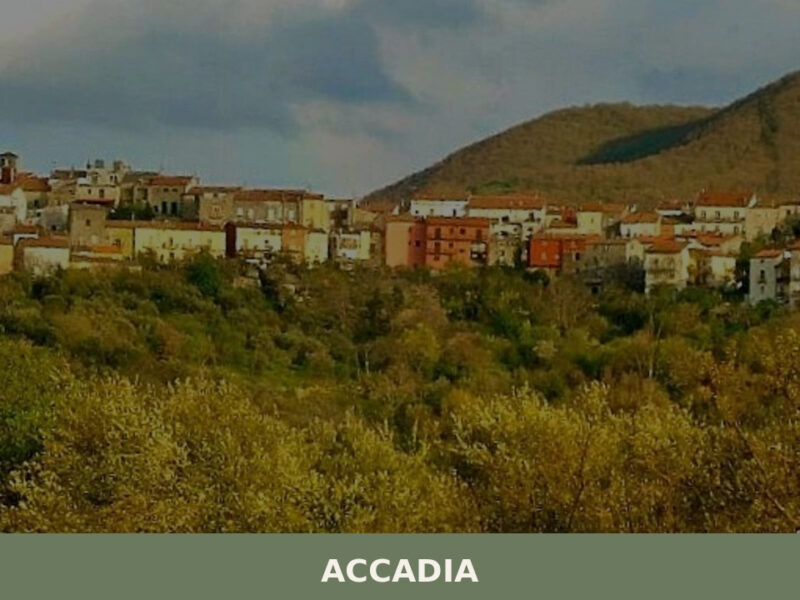
Perched at 650 metres above sea level on the western edge of Puglia’s Subappennino Dauno, the small village of Accadia feels like a secret whispered between mountains and sky. Home to just over 2,200 inhabitants, this ancient hilltop settlement in the province of Foggia rewards visitors with crumbling medieval ruins, sweeping panoramas, and a fierce […]
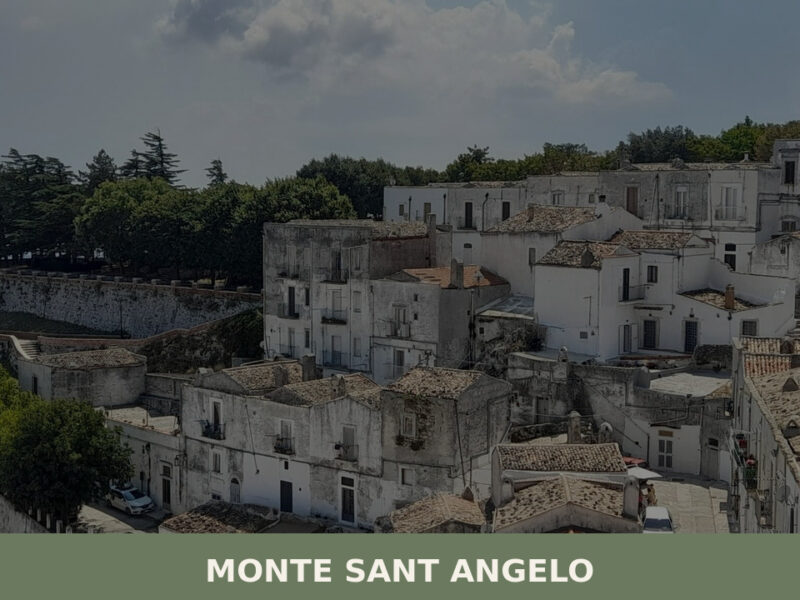
Monte Sant'Angelo, borgo garganico patrimonio UNESCO, incanta con il santuario di San Michele, il castello svevo e vicoli medievali. Scopri cosa vedere, come arrivare e quando visitarlo.
📝 Incorrect information or updates?
Help us keep the Volturara Appula page accurate and up to date.


