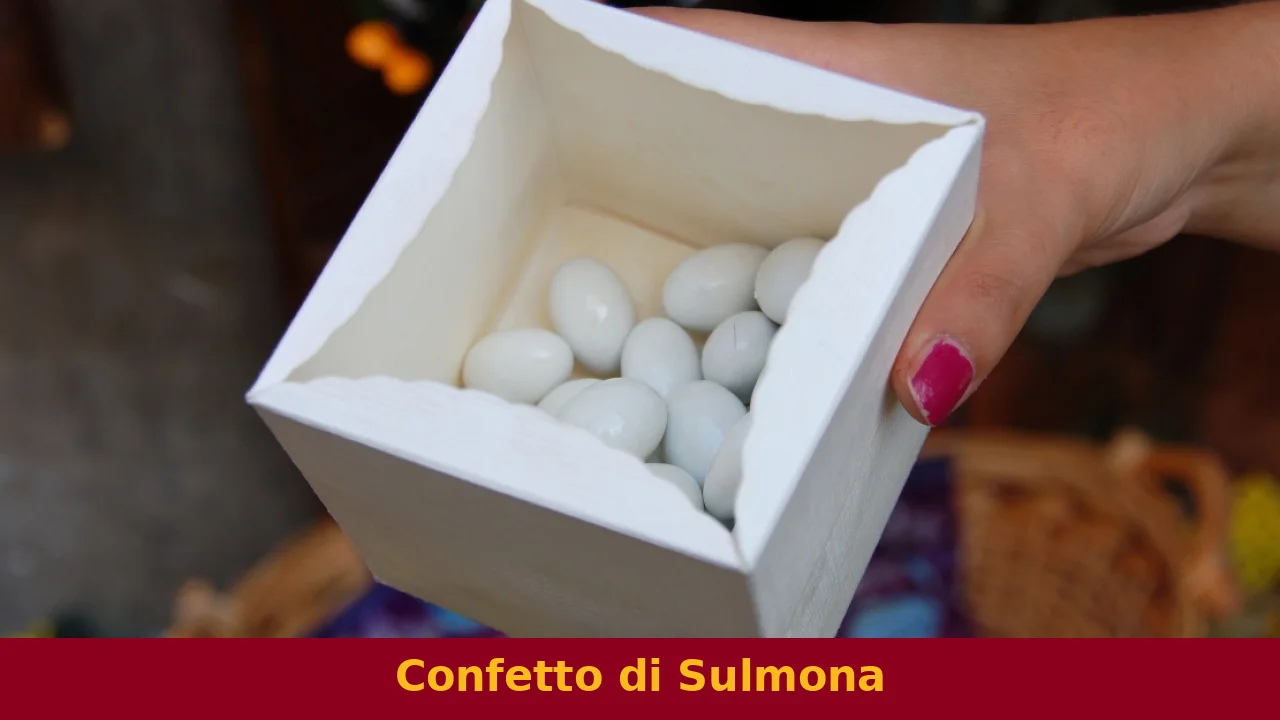
Among the sweets that define the gastronomic identity of Abruzzo, the Confetto di Sulmona stands out for its history and its unmistakable delicacy. This small creation of sugar and almond is not just a confection, but a symbol of celebration and a profound link with the city of Sulmona, in the core of the Peligna…
Among the sweets that define the gastronomic identity of Abruzzo, the Confetto di Sulmona stands out for its history and its unmistakable delicacy. This small creation of sugar and almond is not just a confection, but a symbol of celebration and a profound link with the city of Sulmona, in the core of the Peligna valley, where the art of its production has been passed down for centuries. The Confetto di Sulmona encapsulates the essence of a territory abundant in traditions, inviting an exploration that extends beyond a simple tasting, to uncover a true expression of Italian confectionery.
The Confetto di Sulmona is a confectionery specialty that traces its origins to the city of the same name, in the province of L’Aquila. Recognized as a Traditional Agri-food Product (PAT) of Italy, this confetto is the result of artisanal craftsmanship that combines whole, finely selected almonds with layers of crunchy sugar. Its distinctiveness lies not only in the quality of the ingredients but also in the skill with which it is made, a process that gives the sweet its characteristic smooth shape and its singular texture. The Confetto di Sulmona represents an excellence in the category “Fresh pasta and products from bakeries, biscuit makers, pastry shops, and confectioneries.”
The history of the Confetto di Sulmona extends into a distant past, intertwining with legends and documented historical facts. According to some accounts, the production of confetto in the Peligna valley dates back to the Roman conquest in the 1st century BC, suggesting an ancient origin for this delicacy.
However, more certain sources place the documented origins of confetto art in Sulmona in the 15th century. During that period, a small artisanal workshop operated at the Santa Chiara monastery, where the nuns dedicated themselves to this art. Their skill helped spread the renown of Sulmona’s confetti, which began to be appreciated and sought after even beyond local borders.
The true period of economic and productive development for Sulmona’s confetto occurred in the 20th century. It was then that numerous factories emerged, some of which already had 19th-century foundations, solidifying Sulmona’s reputation as the confetto capital. Among these, Fabbrica Pelino stands out, a name that has become synonymous with excellence and tradition in the sector.
The prominence of the Confetto di Sulmona has reached international levels. A significant example is the special tribute sent by Fabbrica Pelino on the occasion of the wedding of Prince William of England and Kate Middleton, a gesture that highlighted the global prestige and recognition of this product. This history, abundant in anecdotes and dedication, demonstrates the profound connection between the confetto and Sulmona’s cultural identity. To further explore its origins, you can consult sources like Wikipedia.
The Confetto di Sulmona is inextricably linked to the city of Sulmona and the broader province of L’Aquila, in the core of Abruzzo. This geographical area, known as the Peligna valley, provides a favorable setting for the confectionery tradition. The valley, encircled by mountains and traversed by rivers, has historically supported the development of artisanal activities thanks to the availability of resources and a strategic position for trade.
The production of confetto is an expression of local culture and ingenuity, which developed in an environment where craftsmanship and attention to detail have always been valued. The proximity to towns like Celano, with its Piccolomini castle, or Caramanico Terme, known for its waters and historic center, helps create an itinerary of discovery that connects gastronomic excellences with the scenic and cultural attractions of the region. The confetto tradition is not merely an economic matter, but an element of social life that manifests in local celebrations and events. Visiting the Peligna valley allows one to appreciate not only the product but also the context that generated it, making the experience more comprehensive and meaningful.
The production of Confetto di Sulmona follows a process that, while having evolved with the introduction of technologies, retains its artisanal core. At the center of each confetto is an almond, typically of the “Pizzuta d’Avola” variety or other high-quality almonds, selected for their size and flavor.
The core of the process is the “confettatura,” a procedure that takes place in large rotating vessels called “bassine.” The almonds are gradually coated with thin layers of sugar syrup, which is applied hot and then left to dry. This operation is repeated multiple times, with intermediate resting and drying periods, to allow the sugar to crystallize and form a uniform, crunchy coating. The duration and frequency of these applications determine the thickness of the coating and, consequently, the final texture of the confetto.
During the confettatura, the skill of the master confectioner is crucial. It is they who control the temperature, humidity, and rotation speed of the bassine, adapting the process to environmental conditions and the characteristics of the almonds. Despite its apparent simplicity, each phase requires precision and sensitivity to achieve the desired smooth surface and crunchiness.
In addition to the classic almond version, there are variations of Confetto di Sulmona that may include other fillings, such as hazelnuts, chocolate, or candied fruit, and coatings of different colors or flavors, while maintaining the same care in production. The artisanal mastery is what guarantees the quality and distinctiveness of this product.
The Confetto di Sulmona is distinguished by a series of sensory characteristics that make it recognizable and appreciated.
Externally, the confetto has an oval or rounded shape, depending on the type of almond used. Its surface is smooth, glossy, and free of imperfections, a sign of careful craftsmanship. Traditionally, confetti are white, a color symbolizing purity and celebration, but today they are also found in a wide range of pastel and vibrant colors, often used for specific occasions or as decorative elements.
With the first bite, a distinct crispness is perceived from the outer layer of crystallized sugar. This crispness then gives way to the slightly softer, buttery texture of the inner almond, which melts gently on the palate. The balance between these two elements is one of the keys to its appeal.
The aroma is delicate, dominated by notes of toasted almond and sugar. It is not an overpowering scent, but subtle, foreshadowing the sweet and enveloping flavor.
The flavor is predominantly sweet, but not cloying. The sweetness of the sugar balances with the characteristic taste of the almond, which provides a slight bitter or toasted note, depending on the variety. The result is a balanced taste that lingers pleasantly in the mouth, inviting another sampling. The combination of these elements makes the Confetto di Sulmona a refined and memorable tasting experience.
The Confetto di Sulmona, while traditionally associated with celebrations and special occasions, also finds various applications in cooking and as a decorative element.
The most well-known use is undoubtedly for weddings, where white confetti symbolize purity and prosperity. They are distributed as favors or offered to guests during the reception. Besides weddings, they are central to baptisms, communions, confirmations, and graduations, each with its distinctive color (pink or light blue for birth, white for communion and confirmation, red for graduation).
Confetti can be offered as a small delight at the end of a meal, accompanying coffee or a digestif. Their sweetness and crunchy texture make them an excellent complement to conclude a dinner.
Thanks to their variety of colors and shapes, Sulmona confetti are ideal for decorating wedding cakes, ceremonial sweets, and patisserie desserts. They can be used whole, crushed, or arranged in artistic compositions to add a touch of elegance and taste.
Confetti can be paired with passito wines or sweet liqueurs, creating an interesting contrast between the confetto’s crispness and the nectar’s smoothness. Some chefs also use them, in moderation, to add a crunchy note or a touch of sweetness to more elaborate desserts, such as mousses or ice creams.
Beyond culinary use, Sulmona confetti are a valued gift, packaged in elegant boxes or bags, and represent a distinctive souvenir of the Abruzzo region. Their versatility makes them a valuable element both for the table and for social gatherings.
The Confetto di Sulmona holds a particular position in the Italian confectionery landscape for several reasons that highlight its distinctiveness.
Its history, which traces its origins to the 15th century and perhaps even earlier, makes it a symbol of an unbroken confectionery tradition. Very few products can boast such a close and documented link with the past, with references ranging from monastic workshops to modern historical factories. This historical continuity is not just a narrative, but an element that has allowed techniques and recipes to be refined over centuries.
Production requires specific artisanal skill, passed down from generation to generation. Despite industrialization, the crucial stages of confettatura maintain a manual imprint and a sensitivity that distinguish Sulmona’s product. This attention to detail and to the quality of raw materials, particularly selected almonds, elevates the confetto beyond a simple sweet.
The Confetto di Sulmona is intrinsically linked to the city and the Peligna valley, becoming an expression of Abruzzese identity. It is not a generic confetto, but a product that evokes a place, its people, and its traditions. This territorial connection is reinforced by the presence of historic companies like Fabbrica Pelino, which have helped forge the product’s image and reputation globally, as demonstrated by the English royal wedding episode.
Beyond taste, the confetto takes on symbolic and decorative value. Its shapes and colors, from classic floral arrangements to modern designs, make it a central element in any celebration, transforming it from a simple sweet into a vehicle for messages and sentiments. This aesthetic and symbolic dimension, combined with its sensory quality, makes the Confetto di Sulmona a product not only to be savored but also to be admired and offered, affirming its position as a true representation of Italian confectionery.
The Confetto di Sulmona has obtained recognition as a Traditional Agri-food Product (PAT) of Italy. This status is an important certification confirming its production according to traditional methods established over time, within a specific geographical area.
The PAT designation, assigned by the Ministry of Agricultural, Food, and Forestry Policies, guarantees the product’s authenticity and typicality. It is not a Protected Designation of Origin (DOP) or a Protected Geographical Indication (IGP), but a recognition that identifies products with at least 25 years of verified production connected to the territory. For the Confetto di Sulmona, the PAT highlights its long history, the continuity of processing techniques, and its firm establishment in the gastronomic culture of Abruzzo.
This recognition helps protect the originality of the confetto and enhance its market value, distinguishing it from similar products that cannot claim the same tradition and connection to the Sulmona territory. It is a seal of quality that reassures consumers of its authenticity and adherence to ancient knowledge.
To savor and purchase the authentic Confetto di Sulmona, the ideal place is undoubtedly the city of Sulmona itself. Here you will find the historic confetto factories, some of which offer the chance to visit their workshops and buy fresh products directly. Fabbrica Pelino, for example, is a key destination where you can discover the entire range of confetti and the artistic creations made with them.
In addition to the factories, numerous gastronomic specialty shops and pastry shops in Sulmona’s historic center offer a wide selection of confetti, from classic white ones to colored and flavored variants, perfect for any occasion.
For those wishing to explore Abruzzo, the Confetto di Sulmona is often available at local markets and food and wine fairs held throughout the region. These events provide an excellent opportunity to meet producers and also discover other traditional products from ABRUZZO.
A trip to the province of L’Aquila can include a stop in nearby towns like Alfedena or Celano, where, although not direct producers, it is easy to find Sulmona confetti for sale in local shops, often alongside other Abruzzese excellences.
Purchasing the Confetto di Sulmona is not just buying a sweet, but bringing home a piece of Italian history and tradition. It is an invitation to explore Abruzzo, a region that offers an abundant heritage of flavors and experiences to discover, from its Italian traditional food products to the beauty of its landscapes.
📷 Photo: Ra Boe · CC BY-SA 3.0 de · All credits →
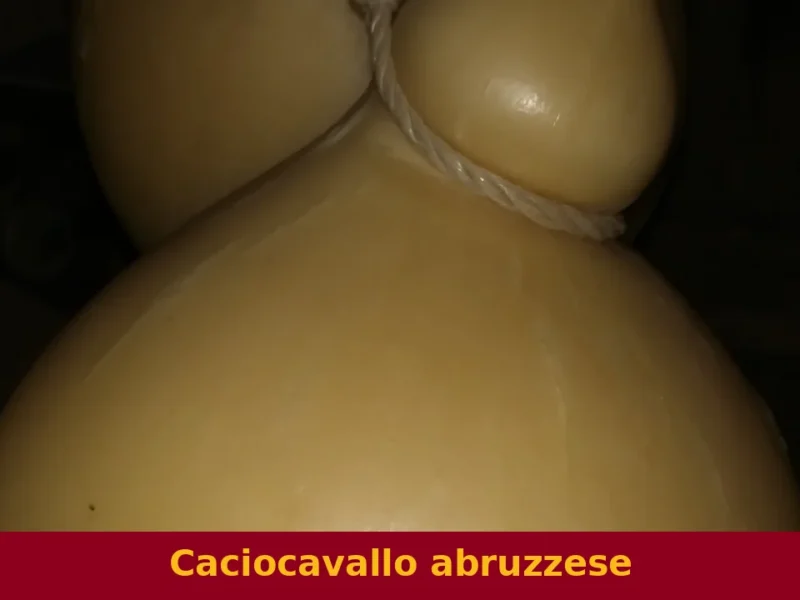
Among the peaks and valleys of Abruzzo, where the echo of traditions resounds strongly, a cheese is born...
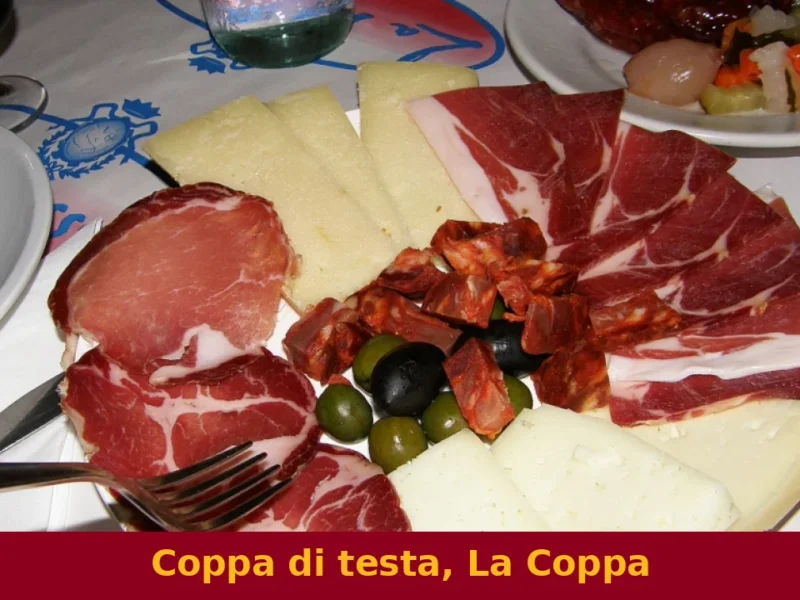
Within Abruzzo's verdant expanse, amidst mountain pastures and ancient traditions, a cured meat awaits discovery, telling tales of...
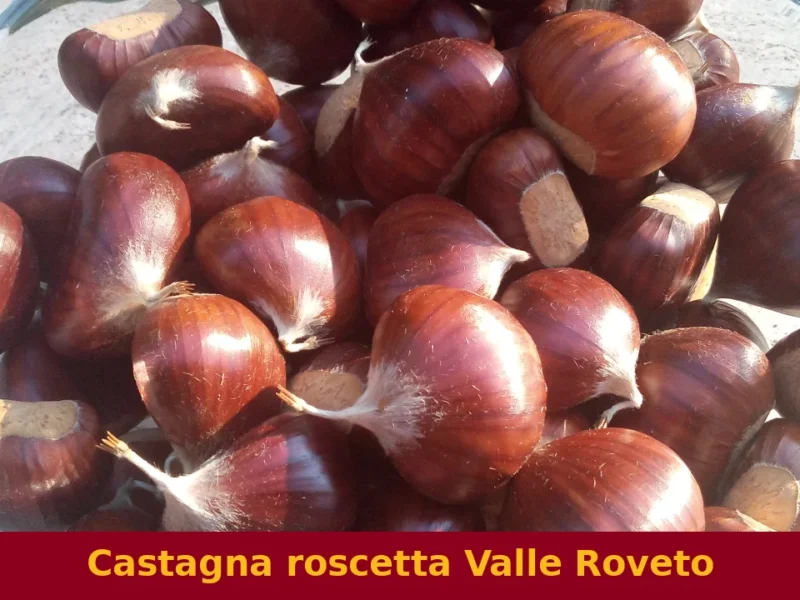
When autumn dyes the Abruzzo woods with ochre and bronze, a special fruit prepares to tell its story:...
A complete guide to Tavenna in Molise: its medieval stone centre, parish church, panoramic hillside views, and the quiet rhythms of inland southern Italy.

Diano Arentino sits at 331 metres above sea level in the province of Imperia, one of several small settlements that make up the historical Comunitas Diani — a confederation of villages documented in medieval records across the olive-rich hills behind the Gulf of Diano. With a population of roughly 700, the village maintains an economy […]
Discover Sassari, a captivating village in Sardegna, Italy. Explore its rich history, vibrant culture, stunning architecture, and authentic Italian charm.
📝 Incorrect information or updates?
Help us keep the Confetto di Sulmona page accurate and up to date.