When the unmistakable aroma of a golden soffritto begins to spread, it is often guanciale amatriciano that takes center stage, anticipating the pleasure of a dish that has made Italian gastronomy history: Amatriciana. This ingredient, essential for the famous sauce, is not just a cured meat, but the vibrant core of a culinary tradition rooted…
When the unmistakable aroma of a golden soffritto begins to spread, it is often guanciale amatriciano that takes center stage, anticipating the pleasure of a dish that has made Italian gastronomy history: Amatriciana. This ingredient, essential for the famous sauce, is not just a cured meat, but the vibrant core of a culinary tradition rooted in the mountains of Lazio and Abruzzo. Guanciale amatriciano, with its unmistakable texture and intense flavor, is the secret behind the perfect balance of one of the most beloved sauces, capable of transforming a simple pasta dish into a profound and enveloping taste experience.
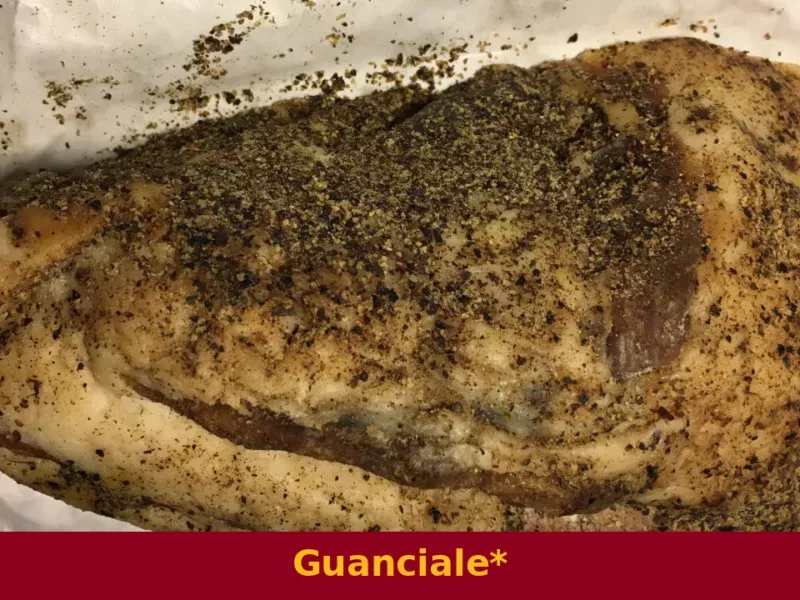
Guanciale amatriciano is a cured meat obtained from the pig’s jowl, characterized by a layer of lean meat traversed by veins and a generous fatty portion that, once cooked, releases a unique flavor and crispness. It is distinguished by its triangular or teardrop shape and the presence of rind on one side. Its preparation follows traditional methods that involve salting, the addition of spices such as black pepper, chili pepper and, sometimes, garlic and rosemary, followed by a curing period that varies depending on the size of the piece, but generally extends for at least 60-90 days. This process gives guanciale amatriciano its compact yet melt-in-the-mouth texture when cooked, and its penetrating, slightly spicy aroma. It is recognized as a Traditional Agri-food Product (PAT), a certification that confirms its historical and cultural link with its territory of origin and its production according to methods established over time.
The history of guanciale amatriciano is intimately linked to that of its territory and, in particular, to the birth of Amatriciana sauce, an icon of Italian cuisine. Its origins are found in the agro-pastoral tradition of the mountain areas straddling Lazio and Abruzzo. Until 1927, the municipalities of Amatrice and Accumoli, today in the province of Rieti, were part of the province of L’Aquila. This historical affiliation explains why guanciale amatriciano is considered a traditional product of both Lazio and Abruzzo.
Initially, “guanciale” was a fundamental food for shepherds, who carried it with them during transhumance. Easy to preserve and rich in energy, it was the main ingredient of “gricia”, considered the ancestor of Amatriciana, a simple dish based on guanciale, pecorino, and pepper. The introduction of tomato, which occurred between the 17th and 18th centuries, then gave rise to the “red” version of the sauce, definitively establishing guanciale as an irreplaceable element. Its production, based on processing the pig’s jowl, reflects the need to use every part of the animal, typical of rural economies, transforming a cut of meat into a valuable cured meat through handed-down preservation techniques. Its reputation has been consolidated over centuries, becoming a symbol of a gastronomic heritage that has evolved while maintaining its strong roots.
The production area of guanciale amatriciano is historically concentrated in the mountain and hill areas surrounding the municipalities of Amatrice and Accumoli, in the province of Rieti (Lazio), and Campotosto, in the province of L’Aquila (Abruzzo). This area, characterized by a mountain climate with cold winters and cool summers, offers ideal conditions for curing meats. The average altitude and pure air contribute to giving guanciale its peculiar sensory characteristics.
The proximity between Lazio and Abruzzo in these areas is not only geographical but also cultural and gastronomic. History has seen these territories interconnected, with exchanges of traditions and knowledge. Pig processing techniques and the production of cured meats like guanciale have been influenced by centuries of shared agricultural and pastoral practices. Although today the PAT certification primarily identifies it with Lazio, it is important to recognize its historical link with Abruzzese cuisine, as evidenced by Amatrice and Accumoli belonging to the province of L’Aquila until 1927.
This territorial link is not only manifested in production but also in the local culinary identity, where guanciale is the undisputed protagonist of many traditional recipes. Exploring this region reveals a gastronomic heritage that goes far beyond the single product, an experience that invites you to discover traditional products from LAZIO and the culinary traditions derived from them.
The production of guanciale amatriciano is an artisanal process that requires care and respect for traditional stages. It begins with the selection of the pig’s jowl, a cut that includes the fatty part of the neck and throat. The quality of the raw material is fundamental: heavy pigs, carefully raised, are preferred to obtain firm and aromatic fat.
The first step is salting. The jowl is hand-massaged with a mixture of coarse salt, ground black pepper, and sometimes chili pepper, garlic, and other natural spices. This phase is crucial not only for preservation but also for flavor development. The piece of meat is left to rest for a period that can vary from a few days to a week, depending on its size, in cool and controlled environments. During this time, the salt penetrates the meat, extracting excess moisture.
Subsequently, the guanciale is washed to remove surface salt and then dried. Some producers may further dust the surface with black pepper or chili pepper for a more intense flavor and better preservation.
The most important phase is curing. Guanciale amatriciano is hung in well-ventilated rooms, with controlled temperature and humidity, for a period ranging from a minimum of 60 days up to 90 days or more. During curing, the guanciale loses further moisture, its flavors concentrate, and it develops its final consistency. The fat becomes firmer, and the lean part gains tenderness and an intense pink color. Each step is carefully monitored, ensuring that the final product reflects the standards of excellence and tradition that distinguish it.
Guanciale amatriciano presents an unmistakable appearance: a triangular or teardrop shape, with the rind present on one side. The cross-section shows a harmonious balance between layers of lean meat, bright red or pink in color, and the fatty part, a pure white with pinkish nuances, traversed by veins.
To the touch, aged guanciale is firm but not overly hard, with a consistency that promises its melt-in-the-mouth quality when cooked. The rind is elastic and well-adhering.
The aroma is intense and aromatic, with prevalent notes of cured pork, black pepper, and, depending on the spices used, subtle hints of chili pepper or garlic. It is a complex scent, evoking the curing cellar environment and artisanal care.
To the taste, guanciale amatriciano offers a rich and persistent experience. The flavor is savory, yet well-balanced, with an intrinsic sweetness from the fat that merges with the slight spiciness of the seasonings. The lean part is tender and flavorful, while the fat, once cooked, becomes crisp and releases an enveloping richness that coats the palate. The aromatic persistence is notable, leaving a pleasant and spicy aftertaste. These characteristics make it an ingredient not only delicious but capable of imparting depth and structure to any preparation.
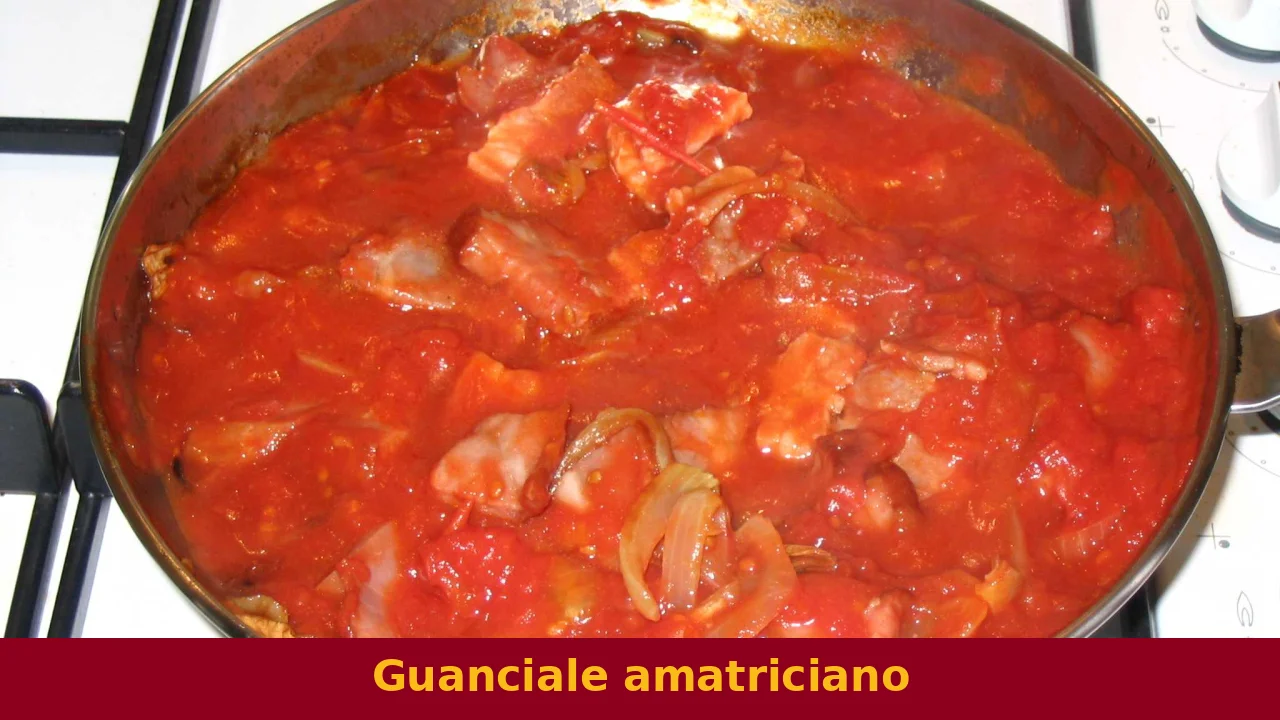
Guanciale amatriciano is an undisputed protagonist of Italian cuisine, whose fame is inextricably linked to iconic dishes. Its primary and most celebrated use is, without doubt, in the preparation of Amatriciana sauce. For this dish, guanciale is cut into cubes or strips and slowly browned in a pan, without adding other fats, so that it releases its valuable rendered fat and becomes crisp and golden. This melted fat is the aromatic base upon which the other sauce ingredients, such as San Marzano tomatoes and Pecorino Romano cheese, are built.
Beyond Amatriciana, guanciale is the key ingredient for pasta alla gricia, the “white” ancestor of Amatriciana, where browned guanciale cubes combine with Pecorino cheese and black pepper, creating a simple yet incredibly flavorful seasoning.
However, its use is not limited to first courses. Guanciale amatriciano can enrich many other preparations:
It is a versatile ingredient that, thanks to its aromatic profile and consistency, elevates any dish, transforming a simple recipe into a memorable gastronomic experience.
Guanciale amatriciano is a unique product for several reasons that define its excellence and distinctiveness. Firstly, its uniqueness derives from the raw material: the pig’s jowl, a specific cut that, unlike pancetta or pork belly, presents a particular balance between lean meat and fat, with a composition that allows it to melt ideally during cooking, releasing complex aromas and an inimitable crispness.
Secondly, the processing and curing methods follow traditional techniques, refined over centuries in the mountain areas of Lazio and Abruzzo. Manual salting with a specific spice blend (pepper, chili pepper, sometimes garlic) and slow curing in environments with precise climatic conditions, typical of the altitudes of Amatrice, Accumoli, and Campotosto, are fundamental. These natural conditions cannot be replicated elsewhere with the same results, giving guanciale amatriciano its distinctive sensory profile.
Its identity is also deeply connected to the gastronomic culture of its territory. It is not just a cured meat, but the central element of dishes that have become symbols of Italian cuisine worldwide, such as Amatriciana and Gricia. This indissoluble connection with historical recipes makes it more than a mere ingredient: it is a keeper of flavors and stories, a bridge between past and present. Its ability to transform a dish with its sole presence, imparting depth, savoriness, and an irresistible crispness, makes it an irreplaceable element and, for many chefs and enthusiasts, not substitutable with other pork cured meats. Its certification as a Traditional Agri-food Product (PAT) further emphasizes its authenticity and intrinsic link with its territory of origin.
Guanciale amatriciano enjoys the recognition of Italian Traditional Agri-food Product (PAT). This certification, established by the Ministry of Agricultural, Food and Forestry Policies, identifies agri-food products that have been subject to production, processing, and preservation practices consolidated over time, according to traditional rules, for a period of no less than 25 years.
The PAT mark is not a protected designation of origin like DOP or IGP, but it certifies the strong cultural and historical link of the product with its territory. For guanciale amatriciano, this recognition underscores its origin in the areas of Amatrice, Accumoli (Rieti) and Campotosto (L’Aquila) and the continuity of the artisanal processing techniques that make it unique.
This recognition is fundamental for the protection and enhancement of the product, guaranteeing consumers authenticity and fidelity to traditions. It helps preserve a gastronomic heritage that might otherwise risk being diluted or altered by industrial productions that do not respect the original methods. Its inclusion in the PAT list highlights the importance of guanciale amatriciano not only as food but as an expression of a specific culture and territorial identity, promoting the knowledge and consumption of Italian traditional food products of quality.
To savor true guanciale amatriciano and appreciate all its nuances, the journey must lead directly to its lands of origin. The municipalities of Amatrice and Accumoli, in the province of Rieti, and Campotosto, in the province of L’Aquila, are the places to find local producers and butcher shops that still make it today according to the most authentic recipes. Visiting these localities offers the opportunity not only to purchase the product directly but also to immerse yourself in the gastronomic culture that shaped it.
Farmers’ markets, artisan shops, and delicatessens specializing in traditional products from LAZIO, both in the Rieti area and in the neighboring Abruzzese provinces, are excellent reference points. Here you can interact with producers and discover the different nuances of guanciale, perhaps with varying curing times. Throughout the year, many local festivals and food and wine events celebrate regional products, offering tastings and direct purchase opportunities.
Even outside the direct production areas, guanciale amatriciano can be found in specialty food stores or high-quality delicatessens in other areas of Lazio. For example, exploring villages like Onano or Latera, in the province of Viterbo, it is easy to find shops that promote and sell regional excellences, even if they are not the direct production sites of guanciale. Tasting guanciale amatriciano in a traditional local osteria, perhaps as part of an an Amatriciana, is the most complete experience to understand its value and its indissoluble link with the territory.
📷 Photo: Wikimedia Commons · CC BY-SA 3.0 · All credits →

What to see in Borbona: a mountain village at 760m in the province of Rieti with 643 residents. Discover the stone historic centre, 3 PAT products, and the 27 May patron feast.

Anzi sits at 1,008 metres above sea level in the province of Potenza, making it one of the highest settlements in Basilicata. Home to 1,745 inhabitants, this small Lucanian village occupies a rocky spur along the upper valley of the Camastra river, surrounded by dense forests of oak and chestnut. For anyone researching what to […]

Fano Adriano, 750 meters above sea level in the province of Teramo, appears as an alpine settlement in the heart of mountainous Abruzzo, with a current population of 249 inhabitants. Its core, developed along the ridges leading to the Gran Sasso massif, documents centuries of human presence in a geographical context that has influenced its […]
📝 Incorrect information or updates?
Help us keep the Guanciale amatriciano page accurate and up to date.