


Acquaviva Collecroce
Discover Acquaviva Collecroce, a charming Croatian-speaking village in Molise, Italy. Explore its unique culture, history, traditions, and stunning landscapes.
Discover Acquaviva Collecroce
Morning light falls across a narrow lane paved in worn stone, and from an open doorway drifts a conversation in a language that is neither Italian nor dialect — it is Croatian, spoken here for five centuries without interruption. Acquaviva Collecroce, a village of 566 inhabitants set at 425 metres above sea level in the province of Campobasso, holds one of the most unusual linguistic legacies in southern Italy. Knowing what to see in Acquaviva Collecroce means tracing the seams where Slavic heritage, Molisan landscape, and medieval architecture converge on a single hilltop.
History of Acquaviva Collecroce
The village’s name carries its geography: “Acquaviva” refers to a living spring — a reliable water source that made permanent settlement viable on this ridge — while “Collecroce” points to the hill (colle) marked by a cross (croce). The combination appeared in official records as early as the medieval period, though human presence in this part of Molise predates the current settlement by centuries. Archaeological evidence from surrounding areas suggests habitation during the Roman and pre-Roman eras, but the village as it exists today took shape during the late Middle Ages.
The defining chapter in Acquaviva Collecroce’s history began in the fifteenth and sixteenth centuries, when communities of Molise Croats — Slavic settlers from the eastern Adriatic — migrated to this part of southern Italy, likely fleeing Ottoman expansion. They established themselves in Acquaviva Collecroce and a handful of neighbouring villages, preserving their Slavic language, known locally as na-našo (“in our way”), through oral tradition, liturgy, and daily use. Today, Acquaviva Collecroce is one of only three villages in Molise where this Croatian dialect survives, making it a site of extraordinary ethnolinguistic interest recognised by Italian minority language protections.
Through the centuries, the village passed among various feudal lords, its fortunes tied to the agricultural economy of inland Molise. Isolation — both geographic and cultural — paradoxically became its greatest asset: the same remoteness that limited economic growth also insulated the community’s language, customs, and architectural fabric from homogenisation. The result is a settlement that feels layered, its identity accrued slowly over time rather than imposed by any single historical event.
What to see in Acquaviva Collecroce: 5 must-visit attractions
1. Chiesa di Santa Maria Ester
The parish church of Santa Maria Ester anchors the village’s spiritual life and its architectural core. Its stone façade, restrained in ornament, reflects the practical building traditions of rural Molise. Inside, the nave holds devotional artworks accumulated across several centuries. The church also served historically as a focal point for Croatian-language liturgical practice — a function that gives it cultural weight beyond its physical modesty.
2. The historic centre and Slavic inscriptions
Walking through the tight grid of the centro storico reveals stone lintels, arched doorways, and weathered plaques — some bearing inscriptions in the Croatian dialect. The residential architecture is vernacular and unadorned: thick walls of local stone, small windows positioned against winter wind, external staircases leading to upper floors. Each detail maps a way of living shaped by climate, economy, and defensive necessity.
3. Palazzo Ferrante
Among the village’s civil buildings, Palazzo Ferrante stands as a marker of feudal authority. Its proportions distinguish it from the surrounding domestic architecture — broader walls, a more formal entrance, an indication of the administrative role it once served. The palazzo speaks to the centuries during which Acquaviva Collecroce existed within the hierarchies of southern Italian feudalism, even as its population maintained distinct Slavic customs.
4. Fontana monumentale
Public fountains in Molisan villages were not decorative gestures but infrastructure — essential points of water distribution. Acquaviva Collecroce’s monumental fountain, tied to the spring that gave the village its name, remains a landmark in the lower part of the settlement. Its stone construction reflects a period when communal water management was a civic priority, and it continues to mark a natural gathering point.
5. Surrounding countryside and the Trigno valley views
From the edges of the village, the terrain drops away toward the valleys that define this sector of Molise. The landscape is a patchwork of cultivated fields, scrub oak, and wild herbs — rosemary and fennel grow along footpaths connecting Acquaviva Collecroce to neighbouring ridges. On clear days, the sightlines extend toward the Adriatic coast, placing the village in geographic context between mountains and sea.
Local food and typical products
The kitchen of Acquaviva Collecroce belongs to the broader tradition of inland Molise cooking: pasta made by hand, pork preserved through the winter, vegetables cultivated in kitchen gardens. Dishes such as taccozze e fagioli — rough-cut pasta with beans — and roasted lamb appear on tables during feast days and ordinary meals alike. The Croatian heritage of the village occasionally surfaces in food preparation techniques and in the names given to certain dishes, though centuries of coexistence have blurred the lines between Slavic and Italian culinary influence. Locally pressed olive oil, produced from groves on the surrounding slopes, provides a foundation for much of the cooking.
There are no large restaurants here — meals are more likely found in small family-run trattorie or agriturismi in the surrounding countryside. Cheese production, especially from sheep’s milk, plays a role in the local economy, as does the curing of sausages and cured meats following methods passed across generations. Visitors should seek out the village during festive occasions, when communal meals bring these traditions into public space. The Molise regional tourism board provides updated information on local food events and producers.
Best time to visit Acquaviva Collecroce
Spring and early autumn offer the most comfortable conditions for exploring the village and its surroundings. From late April through June, wildflowers colour the fields below the village, and temperatures sit between 15°C and 25°C — warm enough for walking without the heavy heat of July and August. The Maja e bukurës, a traditional celebration linked to the Croatian heritage of the community, typically takes place in May and represents one of the most distinctive folk events in all of Molise: a costumed procession and rituals rooted in Slavic spring customs. This is the single most compelling reason to time a visit.
Winters at 425 metres are cold, with temperatures occasionally dropping below freezing and fog settling into the valleys. The village is quiet in the off-season, which has its own appeal — fewer visitors, a more candid view of daily life — but limited services may make logistics more difficult. August brings the return of emigrated families and a modest increase in activity, though Acquaviva Collecroce never experiences anything resembling tourist crowding.
How to get to Acquaviva Collecroce
Acquaviva Collecroce is reached most practically by car. From Campobasso, the provincial capital, the drive covers approximately 50 kilometres via the SS647 and provincial roads, taking just over an hour depending on conditions. From the Adriatic coast — Termoli is the nearest town of significant size — the distance is roughly 40 kilometres inland. The A14 motorway (Bologna–Taranto) provides access from the north and south; exit at Termoli or Poggio Imperiale and follow inland roads westward.
The nearest railway station with regular service is Termoli, on the Adriatic line connecting Pescara, Foggia, and points beyond. From Termoli, onward travel to Acquaviva Collecroce requires a car or infrequent local bus service. The closest airports are Pescara (Abruzzo International Airport, approximately 130 km) and Naples (Capodichino, approximately 200 km). Given the limited public transport connections, renting a car is strongly recommended for reaching the village and exploring the wider Molise territory.
More villages to discover in Molise
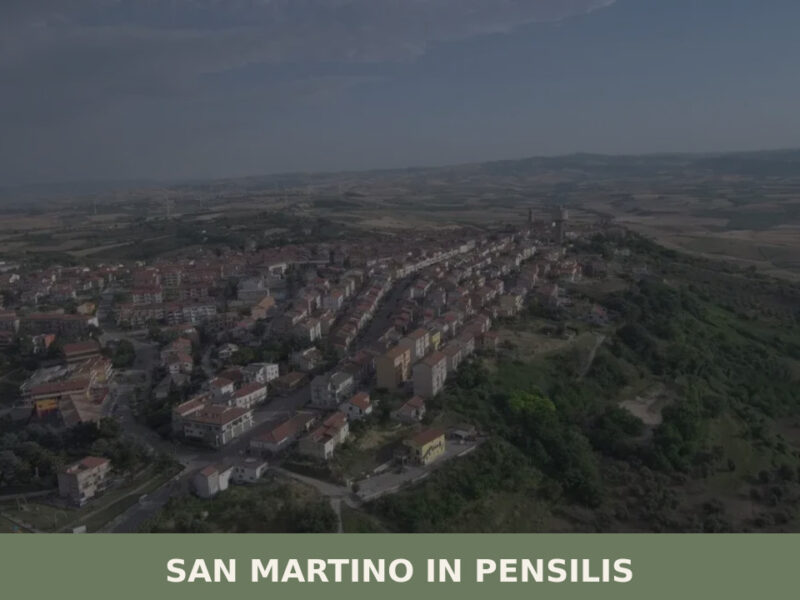
Acquaviva Collecroce exists within a constellation of small Molisan settlements, each carrying its own particular weight. To the northeast, closer to the Adriatic plain, San Martino in Pensilis is known for the Carrese — a dramatic ox-cart race held each spring that draws crowds from across the region. The contrast is instructive: where Acquaviva Collecroce preserves a quiet linguistic heritage, San Martino channels its identity through spectacle and physical competition. Together, they illustrate the range of cultural expression contained within a single province.
Further inland, toward the Matese massif, the village of Campochiaro offers a different landscape entirely — higher elevations, beech forests, and proximity to the archaeological site of a Samnite sanctuary. Travelling between these villages by car reveals the topographic diversity of Molise: coastal lowlands giving way to rolling hills, then abruptly to mountain terrain, all within an hour’s drive. It is precisely this compression of landscape and culture that makes Molise, Italy’s least-visited region, one of its most quietly rewarding.
Getting there
Piazza Nicola Neri, 86030 Acquaviva Collecroce (CB)
Nearby Villages near Acquaviva Collecroce
In Molise More villages to discover
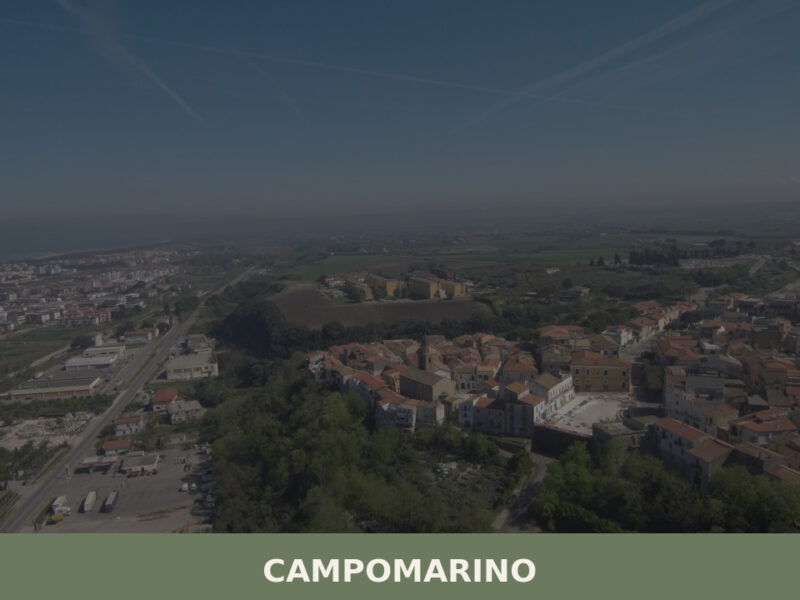
Campomarino
Campomarino straddles a Molise hilltop and the Adriatic shore. Explore its Arbëreshë heritage, three historic churches, and the unspoiled coast of Campomarino Lido.
San Martino in Pensilis
Morning light catches the pale stone of a church bell tower, and below it, the long main street empties into a piazza where a handful of men stand with espresso cups, talking over one another. San Martino in Pensilis sits at 281 metres above sea level in the province of Campobasso, a settlement of roughly […]
Bonefro
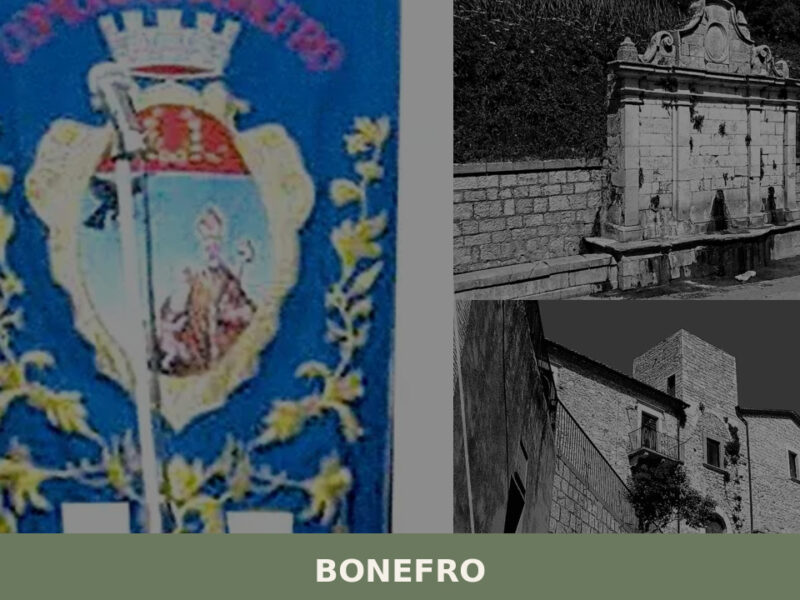
A hilltop village of 1,201 inhabitants in Campobasso province, Bonefro preserves a layered historic centre, a medieval castle, and centuries-old fountains across the quiet ridges of eastern Molise.





📝 Incorrect information or updates?
Help us keep the Acquaviva Collecroce page accurate and up to date.