


Petacciato
 Sea
Sea
Petacciato overlooks the Adriatic from the hills of Campobasso province. A guide to its historic centre, coastal beach, local food, and Molisan surroundings.
Discover Petacciato
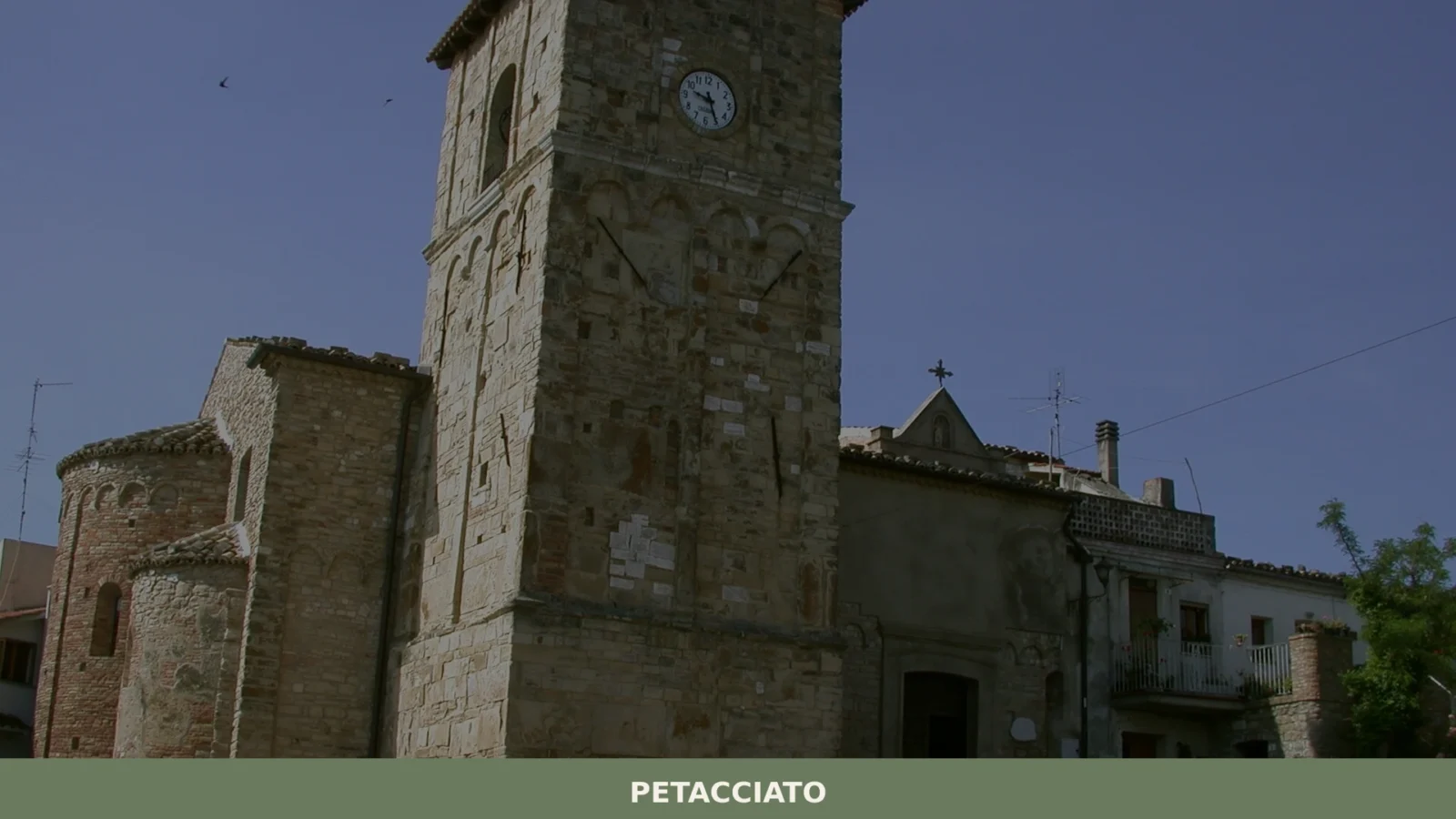
Morning light angles across a row of limestone facades, catching the ironwork balconies of Via Roma before reaching the church square below. A cat stretches on warm stone. Somewhere behind a shuttered window, a radio plays. Petacciato sits at 225 metres above sea level in the province of Campobasso, a village of 3,457 inhabitants that holds the uncommon advantage of overlooking both the Adriatic coast and the Molisan hills. Knowing what to see in Petacciato means understanding a place that lives between two landscapes — the salt air rising from below, the silence of the interior pressing from behind.
History of Petacciato
The origins of Petacciato’s name remain debated. Some scholars connect it to the Latin petacium, meaning a patch or piece of land, possibly referencing the fragmented agricultural plots that characterised the area’s medieval landscape. Others suggest a link to the local terrain itself — stony, broken ground above the coastal plain. What is certain is that the settlement existed by the Norman period, when much of Molise was reorganised into feudal holdings under the broader County of Molise.
During the medieval centuries, Petacciato passed through the hands of various feudal lords, a pattern common across the small hill towns of this region. The village’s position — elevated enough to command views of the coast, close enough to the sea to access trade routes — gave it modest strategic value. Its fortunes rose and fell with the broader political shifts of the Kingdom of Naples, later the Kingdom of the Two Sicilies. The old centre retains the tight, defensive street plan typical of settlements built to discourage raids from the coast, where Saracen incursions were a persistent threat through much of the medieval period.
By the nineteenth century, Petacciato had settled into the rhythms of an agricultural village. The unification of Italy in 1861 brought administrative changes but little immediate economic transformation. Like many Molisan communities, Petacciato experienced significant emigration in the late 1800s and throughout the twentieth century, sending families to the Americas and northern Europe. The village today carries the quiet demographic weight of that history, its population a fraction of what it might have been.
What to see in Petacciato: 5 must-visit attractions
1. Chiesa di Santa Maria
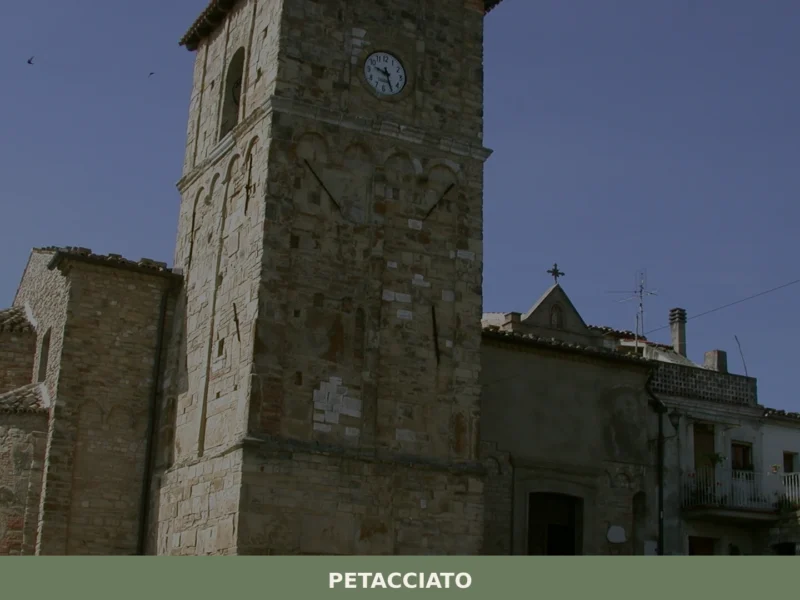
The principal church of Petacciato stands at the heart of the old centre, its stone facade anchoring the main square. The building has undergone modifications across several centuries, layering Romanesque proportions beneath later Baroque additions. Inside, the nave is plain and proportional, with altarpieces and devotional sculpture reflecting the modest patronage of a rural parish. The church remains the focal point of village religious life, particularly during the festa patronale.
2. The Historic Centre
Petacciato’s centro storico is compact and walkable in under an hour, but the pleasure lies in the details: arched passageways connecting parallel streets, external stone staircases leading to upper-floor entrances, and doorways framed in worked sandstone. The street plan follows the contours of the hill, with narrow vicoli opening suddenly onto views of the Adriatic. Several buildings show carved date stones from the seventeenth and eighteenth centuries.
3. Petacciato Marina and its Beach
Below the village, a road descends through olive groves to the coast. Petacciato Marina offers a long stretch of sandy shoreline — broad, relatively uncrowded, and backed by low dunes and Mediterranean scrub. The beach retains a rougher, less developed character than the resorts further up the coast at Termoli. It is a working landscape as much as a recreational one, with fishing boats still drawn up on the sand in the early morning.
4. Bosco Corundoli Nature Area
The Bosco Corundoli, a protected area of Mediterranean maquis and mixed woodland near the coast, provides walking trails through dense vegetation of myrtle, lentisk, and holm oak. The area supports birdlife linked to the coastal corridor, including migratory species that pass through in spring and autumn. For visitors interested in the ecological transition between Molise’s coastline and its interior hills, this is a useful and accessible site.
5. Viewpoint toward the Adriatic and the Tremiti Islands
From several points along the village’s western edge — particularly near the cemetery and the road descending toward the marina — the view opens eastward across the Adriatic. On clear days, the profile of the Tremiti Islands is visible on the horizon. The foreground drops through terraced olive groves and patches of scrub, with the coastal rail line tracing a thin line between the hills and the sea.
Local food and typical products
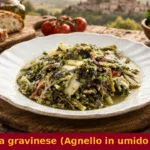
Petacciato’s kitchen draws from both the coast and the hill interior. Fish — particularly anchovies, sardines, and the small sole netted along this stretch of the Adriatic — appears alongside the heavier, meat-based dishes of inland Molise. Cavatelli pasta, shaped by hand from semolina dough, is served with ragù or with broccoli and sausage. Ventricina, the spiced pork salami characteristic of the broader region, is made by local producers using paprika and fennel seeds, then aged in natural casings. Olive oil from the groves that step down toward the coast is a staple, pressed from the Gentile di Larino cultivar common in this part of Campobasso province.
Local trattorias in the centro storico and along the marina road serve these preparations without excessive elaboration. During summer, the marina hosts small seasonal restaurants where grilled fish and fried paranza (mixed small fry) are standard. The village also produces wine from the Tintilia grape, the indigenous Molisan variety that has undergone a revival in recent decades, yielding a structured, dark-fruited red. Bread, baked in wood-fired ovens, remains a serious matter — dense-crumbed loaves that last several days and improve with a day’s age.
Best time to visit Petacciato
The coastal position gives Petacciato a milder climate than the Molisan interior. Summers are warm and dry, with July and August temperatures regularly reaching 30°C — the beach season runs from June through September, when the marina is at its most active. For walking the historic centre and the surrounding countryside in comfort, late April through June and September through mid-October offer temperate days and fewer visitors. Spring brings wildflowers to the Bosco Corundoli and clarity to the coastal views.
The village’s main festa, dedicated to its patron saint, draws the community into the streets with processions, outdoor dining, and music. August is the liveliest month, when emigrants and their descendants return, tripling the evening population of the piazza. Winter is quiet but not without interest: the olive harvest in November fills the air with the green, peppery scent of fresh-pressed oil, and the village’s rhythms slow to a domestic pace that reveals how the place actually functions when no one is watching.
How to get to Petacciato
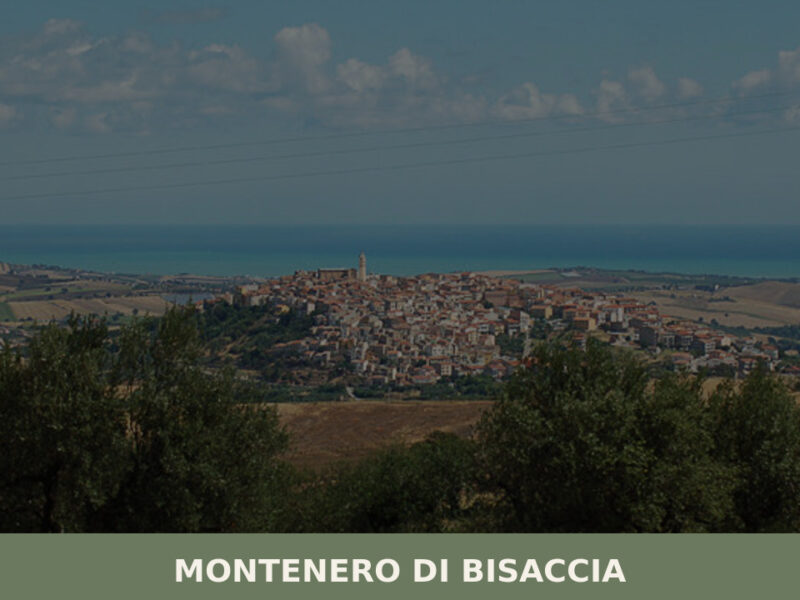
Petacciato is accessible by car via the A14 Adriatic motorway, exiting at Montenero di Bisaccia–Vasto Sud or at Termoli. From either exit, the village is roughly 10–15 minutes by provincial road. The SS16 Adriatica also passes nearby along the coast.
- By train: Petacciato has a small station on the Adriatic rail line (Bologna–Lecce), served by regional trains. Termoli, the nearest larger station with intercity connections, is approximately 15 km north.
- By air: The closest airports are Pescara (Abruzzo International Airport), about 100 km to the north, and Naples Capodichino, approximately 230 km to the south. Both connect to major Italian and European destinations.
- Distances: Campobasso — 75 km (approximately 1 hour 15 minutes by car); Termoli — 15 km; Pescara — 100 km; Rome — 280 km.
A car is the most practical means of exploring both the village and the coast below. Public transport exists but operates on limited rural schedules, particularly outside summer months.
More villages to discover in Molise
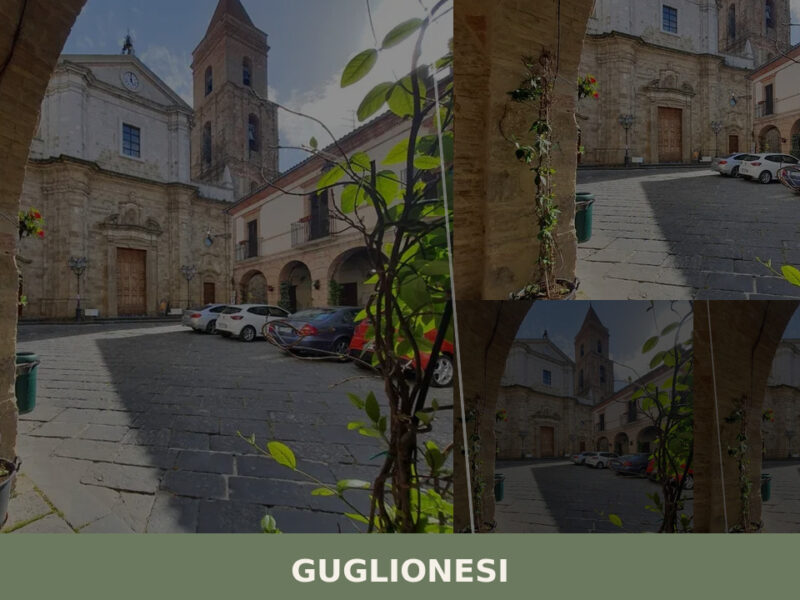
Petacciato belongs to a network of small centres spread across the hills between the Adriatic and the Apennine spine of Molise. A short drive inland leads to Guglionesi, a larger agricultural town that shares the same coastal-facing orientation but sits higher, with a more substantial historic centre and a prominent collegiate church. Together, the two villages illustrate how communities positioned along the same ridge developed in parallel — similar materials, similar economics, but distinct identities shaped by small differences in elevation and exposure.
Further into the Molisan interior, the terrain rises and the character of the villages shifts. Riccia, in the hills southwest of Campobasso, represents a different Molise entirely — a fortified hilltop settlement surrounded by forests and cooler air, where the Adriatic influence gives way to a continental microclimate. Visiting both Petacciato and Riccia in a single trip offers a compressed cross-section of the region, from the salt-aired coast to the wooded interior, separated by less than two hours of winding road but worlds apart in texture and tempo.
Frequently asked questions about Petacciato
È possibile visitare Petacciato come gita giornaliera da Pescara o da Lanciano?
Sì, Petacciato è facilmente raggiungibile in giornata da Pescara in circa un'ora di auto (100 km circa via A14). Da Lanciano la distanza è inferiore, intorno ai 50 km. La visita al centro storico richiede circa un'ora a piedi; aggiungendo la sosta alla marina e al Bosco Corundoli, mezza giornata è sufficiente. Chi desidera anche il pranzo in loco può comodamente rientrare in serata.
Quando si festeggia il patrono di Petacciato e cosa succede in paese durante quei giorni?
La festa patronale di San Rocco si celebra il 16 agosto. Si tratta del momento più animato dell'anno per il paese: agosto è il mese in cui emigrati e loro discendenti rientrano a Petacciato, triplicando la presenza in piazza. I festeggiamenti comprendono processioni religiose, musica e cene all'aperto nelle strade del centro storico. È il periodo ideale per vivere il paese nella sua dimensione comunitaria più autentica.
C'è un parcheggio comodo per chi visita Petacciato in auto?
L'auto è il mezzo più pratico per raggiungere Petacciato, considerando che i mezzi pubblici operano su orari limitati, specialmente fuori stagione. Il centro storico, compatto e percorribile a piedi, è tipicamente accessibile da aree di sosta lungo le strade perimetrali del borgo. Per chi scende alla marina, sono presenti spazi di parcheggio lungo la strada costiera. Si consiglia di verificare eventuali restrizioni nei giorni di festa patronale.
La Tintilia è davvero un vino prodotto a Petacciato?
Sì. La Tintilia è il vitigno autoctono del Molise, e a Petacciato viene prodotto vino da questo vitigno a bacca rossa. Dopo un lungo periodo di abbandono, la Tintilia ha vissuto una significativa rivalutazione a partire dagli anni 2000, ottenendo la DOC Molise Tintilia. I vini che ne derivano sono rossi strutturati, con frutto scuro e buona acidità, rappresentativi dell'identità vinicola molisana. Si trovano nelle enoteche locali e in alcune trattorie del borgo.
Nearby Villages near Petacciato
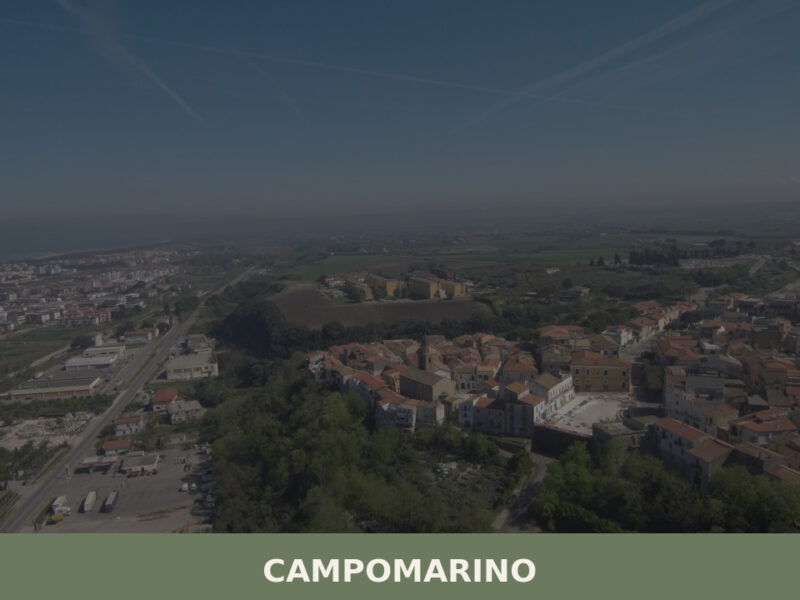
In Molise More villages to discover
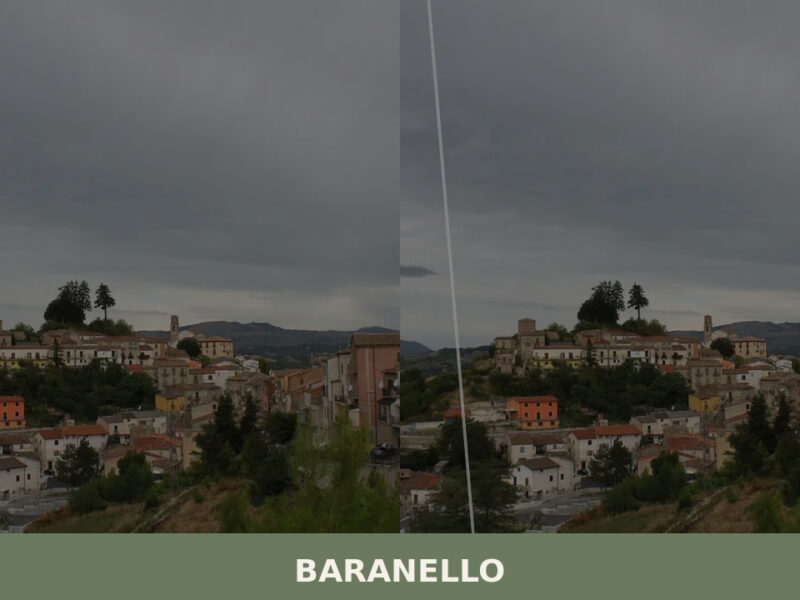
Baranello
 Mountain
A documentary guide to Baranello in Molise — its civic museum, medieval churches, castle, and the quiet rhythms of an overlooked Italian hill village.
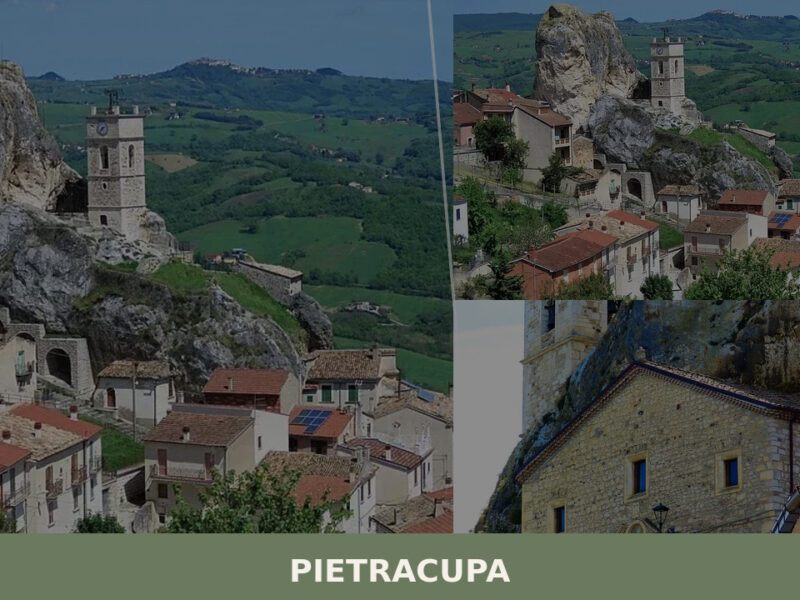
Pietracupa
Mountain
A 208-inhabitant village shaped by a massive rock outcrop in Molise's interior. Discover what to see in Pietracupa, from its grotto chapel to its silent panoramic ridgelines.
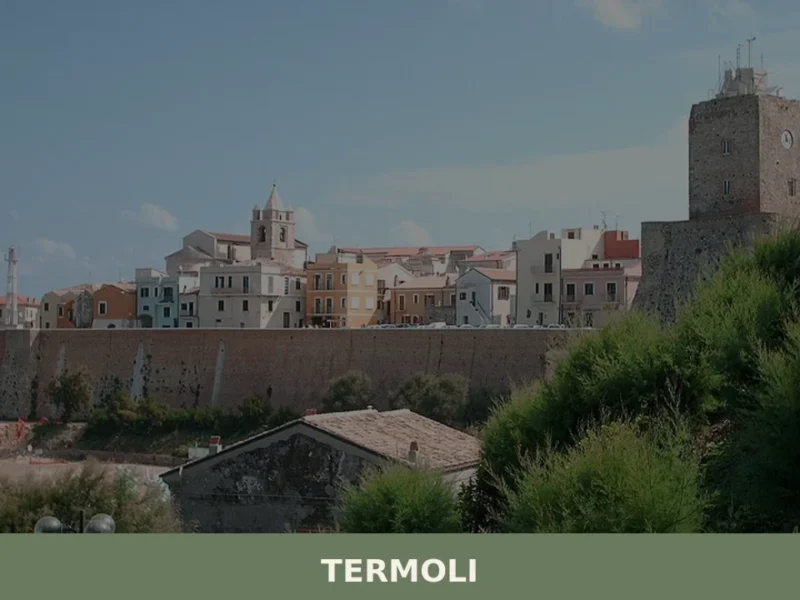
Termoli
Sea
Salt air sharpens every breath along the stone ramparts at dawn, and the Adriatic below shifts between grey-green and pale blue as fishing boats throttle out from the harbour, trailing diesel and the promise of the day’s catch. Termoli — a working coastal town of roughly 32,000 people in the province of Campobasso — sits […]
Riccia
Mountain
A hilltop village of 4,814 inhabitants in the province of Campobasso, Riccia reveals medieval streets, a Norman castle, and one of Molise's most celebrated food festivals.
Tavenna
 Hills
Hills
A complete guide to Tavenna in Molise: its medieval stone centre, parish church, panoramic hillside views, and the quiet rhythms of inland southern Italy.
Trivento
Hills
Morning fog lifts off the Trigno valley in slow, pale sheets, and Trivento emerges at 599 metres above sea level — a compact ridgeline of stone and tile roofs, church bells marking the quarter-hour across a town of 4,353 residents. The air carries woodsmoke and the faint resin scent of surrounding oak forest. If you […]
Bonefro
Mountain
A hilltop village of 1,201 inhabitants in Campobasso province, Bonefro preserves a layered historic centre, a medieval castle, and centuries-old fountains across the quiet ridges of eastern Molise.
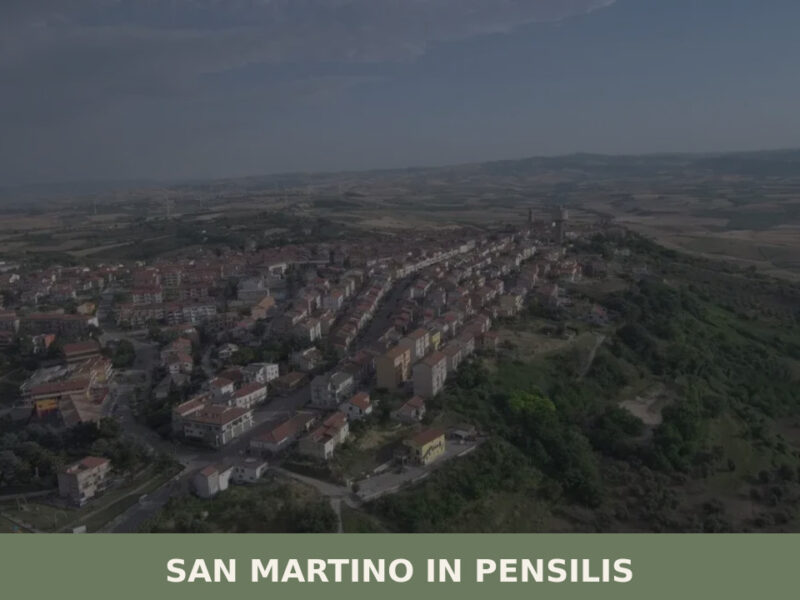
San Martino in Pensilis
Hills
Morning light catches the pale stone of a church bell tower, and below it, the long main street empties into a piazza where a handful of men stand with espresso cups, talking over one another. San Martino in Pensilis sits at 281 metres above sea level in the province of Campobasso, a settlement of roughly […]
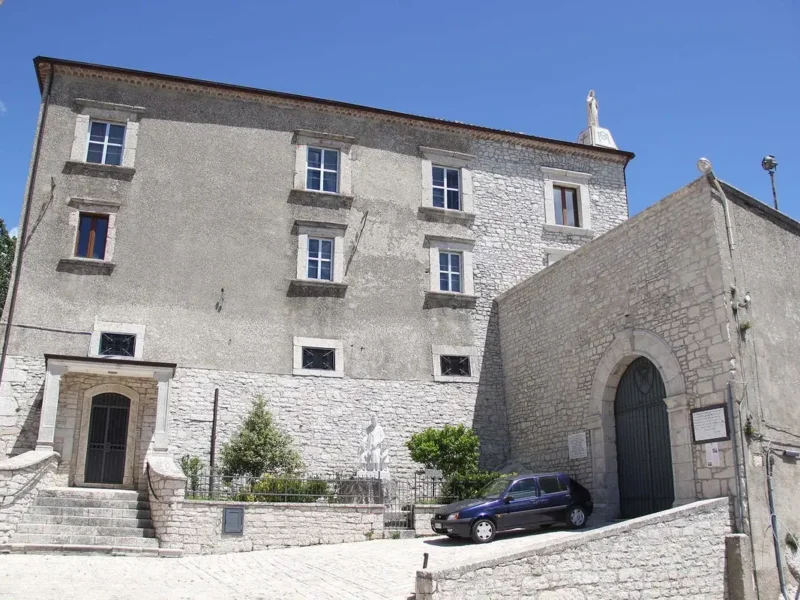
Cercemaggiore
Mountain
What to see in Cercemaggiore, Italy? Explore this mountain village at 930m (3,051 ft) altitude. Discover its historic core and panoramic views. Read our guide for your visit.
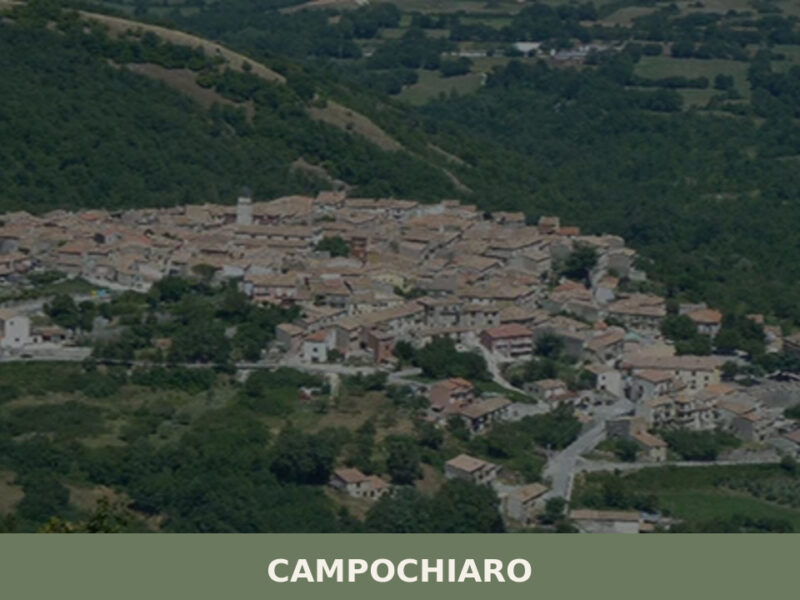
Campochiaro
Mountain
On the eastern slope of the Matese massif, where highland pastures descend toward the Biferno plain, Campochiaro greets visitors with its 594 inhabitants and a compact urban layout, arranged at 750 metres above sea level around the parish church dedicated to Saint Mark. Here, in 1980, archaeologists unearthed an Italic sanctuary from the Samnite period […]


🏡 Know Petacciato better than we do?
If you’re a local or have been there, your knowledge matters: add what’s missing or fix a detail on this page.