


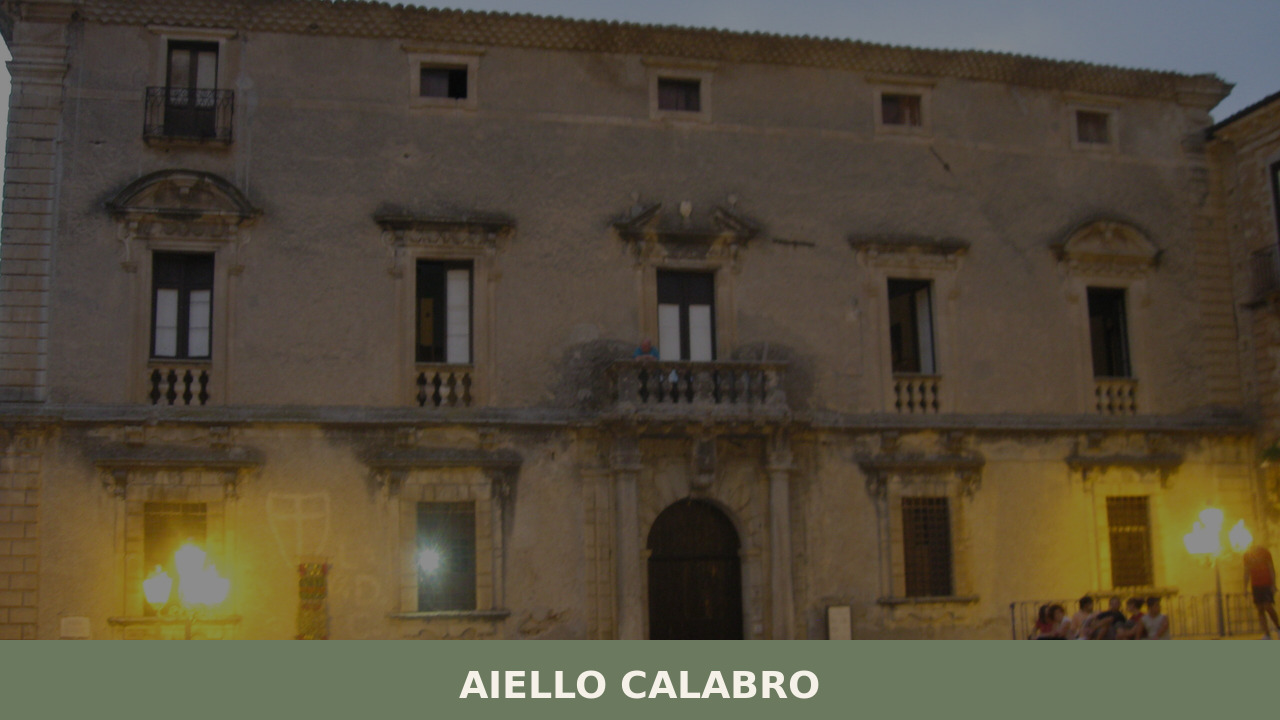
Aiello Calabro
A hill village in Cosenza province at 502 metres, Aiello Calabro holds medieval ruins, noble palazzi, and a living food culture shaped by centuries of mountain life.
Discover Aiello Calabro
Morning light falls unevenly across a narrow street of grey stone, catching the edge of a bell tower that has marked the hours here for centuries. At 502 metres above sea level, Aiello Calabro sits in the hills of the province of Cosenza, home to just over 1,400 people — a place where the silence between church bells is filled by wind moving through chestnut groves. Understanding what to see in Aiello Calabro means walking slowly, reading the walls, and listening to a settlement that has outlived empires.
History of Aiello Calabro
The origins of Aiello Calabro reach back to the early medieval period, when hilltop settlements across Calabria served as defensive positions against coastal raids. The name “Aiello” likely derives from the Latin agellus, meaning “small field” — a modest term for a place that would become a feudal seat of some importance. Under Norman rule, the settlement consolidated around its castle, a pattern repeated in dozens of Calabrian hill villages but felt here with particular sharpness given the site’s commanding view of the surrounding valleys.
The feudal history of Aiello Calabro is bound to the succession of noble families who controlled the territory. Among the most notable were the Cybo-Malaspina, a dynasty linked to the papacy through Pope Innocent VIII (born Giovanni Battista Cybo). Their palazzo, still standing in the village centre, represents the most visible trace of aristocratic governance. The family shaped not only the architecture but the economic rhythms of the settlement, overseeing agriculture and the management of surrounding lands through centuries of Bourbon and later unified Italian administration.
Like many Calabrian villages, Aiello Calabro experienced severe depopulation during the twentieth century, as waves of emigration — first to the Americas, then to northern Italy and northern Europe — hollowed out its population. The 1,406 inhabitants who remain are custodians of a layered past, visible in the fabric of the buildings themselves: Norman foundations beneath Baroque facades, medieval street plans overlaid with nineteenth-century civic improvements.
What to see in Aiello Calabro: 5 must-visit attractions
1. Church of Santa Maria Maggiore and its bell tower
The bell tower of Santa Maria Maggiore is the vertical anchor of the village skyline. Built in stone with a design that reflects successive periods of renovation, the campanile rises above the rooftops with a solidity that speaks to its dual function — spiritual marker and civic timekeeper. Inside the church, altarpieces and devotional art trace the village’s religious life across several centuries.
2. Palazzo Cybo-Malaspina
This noble residence served as the seat of the Cybo-Malaspina family, whose influence shaped the village for generations. The palazzo’s facade, with its dressed stone and proportioned windows, reflects the aspirations of a feudal elite transplanted to the Calabrian hills. Its scale — larger than anything else in the village centre — communicates the power differential that defined daily life here for centuries.
3. The castle ruins
Above the village, the remains of the medieval castle occupy the highest ground. What survives — sections of wall, fragments of a perimeter — is enough to confirm the strategic logic of the site. From here, the view extends across the valleys toward the Tyrrhenian coast, making plain why the Normans and their successors chose this ridge as a point of control and observation.
4. The historic centre and its street pattern
Aiello Calabro’s centro storico is best understood on foot. The narrow lanes, punctuated by stone archways and small piazzas, follow a medieval logic of defence and drainage rather than modern convenience. Doorways framed in carved stone, iron balconies added in the eighteenth and nineteenth centuries, and the occasional half-collapsed building all tell the story of a settlement built to endure.
5. Rural chapels and wayside shrines
Scattered through the village and its immediate surroundings, small chapels and roadside shrines — known locally as edicole votive — mark intersections, field boundaries, and paths between properties. These modest structures, some no larger than a window niche, reveal the deeply localised devotional culture of rural Calabria, where the sacred is woven into the everyday landscape.
Local food and typical products
The cuisine of Aiello Calabro belongs to the broader tradition of inland Calabrian cooking — robust, pork-centred, and shaped by the demands of a mountain climate. Soppressata, capocollo, and ‘nduja from the surrounding area carry DOP and IGP designations that protect production methods rooted in centuries of practice. Pasta is often handmade — fusilli wound on a thin iron rod, or lagane, a broad flat noodle served with chickpeas. Local olive oil, pressed from groves on the lower slopes, provides the cooking fat for nearly everything.
The chestnut forests above the village supply another staple: dried chestnuts ground into flour for bread and sweets, or roasted during autumn festivals. Wild herbs — oregano, fennel, and bay — grow freely in the surrounding countryside and appear in preserved vegetables, sauces, and cured meats. Dining in Aiello Calabro is not a restaurant-district affair; instead, agriturismi and family-run trattorie in and around the village offer fixed menus that change with the season and reflect whatever the surrounding land produces that week.
Best time to visit Aiello Calabro
Spring and early autumn offer the most comfortable conditions for exploring. In May and June, the surrounding hills are green and the light has a clarity that sharpens every stone facade. Summer temperatures can rise above 30°C even at 502 metres, though evenings cool noticeably. August brings the return of emigrant families and seasonal festivals — the village fills briefly with a vitality absent during quieter months. September and October bring the chestnut harvest and the grape crush, and the countryside takes on the amber tones that suit the stone of the buildings.
Winter is quiet and can be cold, with occasional snowfall that transforms the rooftops and narrow streets. For visitors seeking solitude and the particular atmosphere of a Calabrian hill village in low season, the months between November and February have their own severe appeal. Regardless of season, it is worth checking locally for religious feast days and sagre (food festivals), which remain the primary occasions for communal life and offer the most direct way into the village’s living culture.
How to get to Aiello Calabro
Aiello Calabro lies in the province of Cosenza, accessible by car via the A2 Autostrada del Mediterraneo (the main motorway running the length of Calabria). The nearest exit varies depending on direction of travel, but the village is roughly 30 kilometres west of Cosenza city centre, reached via provincial roads that wind through the hills. Allow approximately 40 minutes by car from Cosenza.
- By air: Lamezia Terme International Airport (SUF) is the closest major airport, approximately 60 km to the south. Car hire is available at the terminal.
- By train: The nearest mainline railway station is at Paola, on the Tyrrhenian coast, served by Trenitalia regional and long-distance services. From Paola, a car or local bus connection is required to reach Aiello Calabro — a distance of roughly 25 km.
- By car from major cities: Naples is approximately 300 km north (3–3.5 hours via A2); Reggio Calabria is approximately 200 km south (2.5 hours via A2).
Public transport connections are limited, as is common in inland Calabria. A rental car is strongly recommended for flexibility and for reaching the village’s more remote surroundings.
More villages to discover in Calabria
The hills around Aiello Calabro are dotted with settlements of similar scale and character, each with its own distinct layering of history and landscape. To the south, Cleto occupies a dramatic ridge position with castle ruins that rival any in the province — a natural companion visit for anyone drawn to the feudal geography of this stretch of Calabria. The two villages share a landscape of chestnut woodland, terraced olive groves, and the deep valleys that channel winter rain toward the Tyrrhenian Sea.
Further afield, exploring the inland villages of the Cosenza province reveals a network of communities that have maintained their architectural and culinary identities despite decades of depopulation. Lago, another hill village within reach of Aiello Calabro, offers its own historic centre, churches, and views across the same system of ridges and valleys. Together, these settlements form a constellation of places where Calabria’s deep past remains legible in stone, food, and the patterns of daily life.
Photo Gallery of Aiello Calabro
Do you have photos of Aiello Calabro?
Share your photos of the village: the best ones will be added to the official gallery, with your credit.
Send your photosNearby Villages near Aiello Calabro
In Calabria More villages to discover
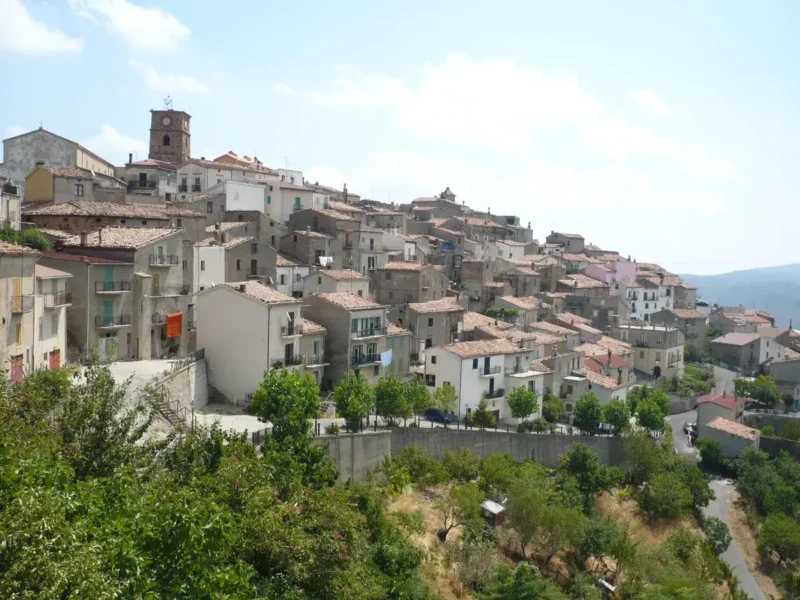
Bocchigliero
What to see in Bocchigliero: a mountain village at 870m in Cosenza. Discover the Mother Church and the Baronial Palace ruins.
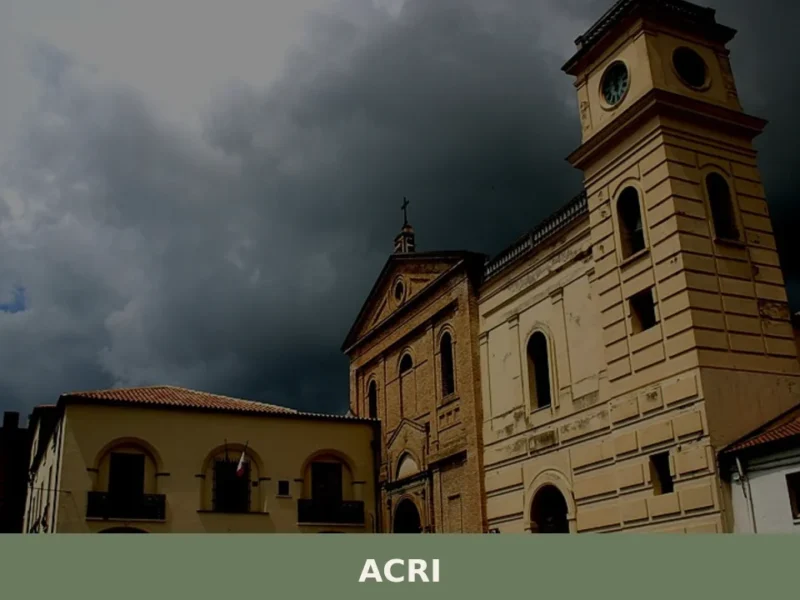
Acri
Acri is a town in the province of Cosenza with over 21,000 inhabitants, located in the Calabrian interior of the Sila Greca area, on a territory that passed through Norman, Swabian and Aragonese rule, leaving concrete traces in the local architecture and culture. For anyone approaching this corner of the province of Cosenza, the question […]
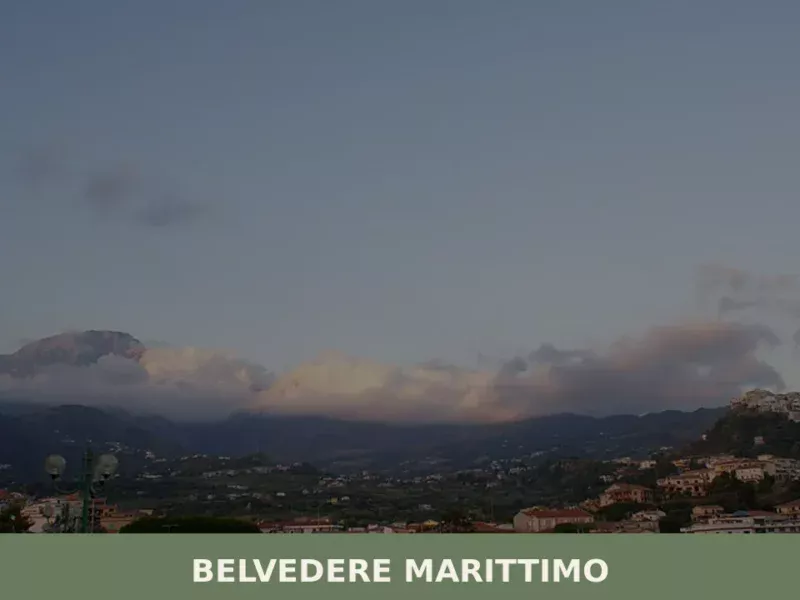
Belvedere Marittimo
Belvedere Marittimo, a village in the province of Cosenza, stands at 150 meters above sea level and has a population of 9,292 inhabitants. This Calabrian location, classified among the lowland villages, offers a view of the Cosenza Tyrrhenian coast, combining historical elements with its proximity to the coast. Its geographical position has shaped its identity […]

📝 Incorrect information or updates?
Help us keep the Aiello Calabro page accurate and up to date.