


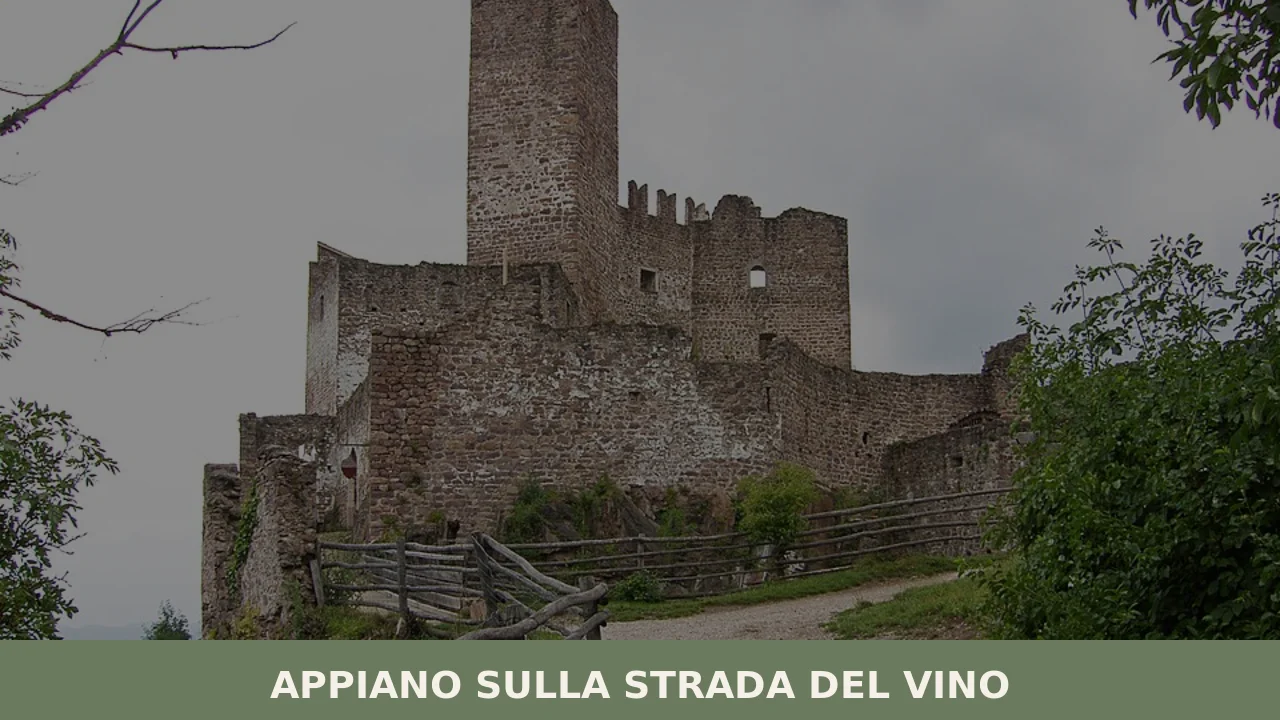
Appiano sulla strada del vino
The municipality of Appiano sulla strada del vino has 14,304 inhabitants spread across eight hamlets — San Michele, San Paolo, Cornaiano, Frangarto, Missiano, Monticolo, Gaido and Girlan (Cornaiano) — set between 200 and 500 metres above sea level on the left bank of the Adige river, in the middle of the Bassa Atesina (Lower South […]
Discover Appiano sulla strada del vino
The municipality of Appiano sulla strada del vino has 14,304 inhabitants spread across eight hamlets — San Michele, San Paolo, Cornaiano, Frangarto, Missiano, Monticolo, Gaido and Girlan (Cornaiano) — set between 200 and 500 metres above sea level on the left bank of the Adige river, in the middle of the Bassa Atesina (Lower South Tyrol). This area has the highest concentration of castles in the whole of Alto Adige: over one hundred and thirty towers, ruins and fortified residences scattered across vine-covered hills. Understanding what to see in Appiano sulla strada del vino means crossing layers of history that span from prehistory to the late Middle Ages, among rows of Schiava and Pinot Bianco vines.
History and origins of Appiano sulla strada del vino
The first settlements in the Appiano area date back to the Neolithic: excavations carried out near Lake Monticolo and in the Castelfeder zone have unearthed flint artefacts and remains of huts dating to the third millennium BC. In Roman times, the area was crossed by the Via Claudia Augusta Altinate, the road that connected Altinum, on the Adriatic, with Augusta Vindelicorum (present-day Augsburg). The place name “Eppan” appears for the first time in a document from around 590 AD, in the context of disputes between the Lombards and Bavarians for control of the Adige valley. The etymology remains debated: some linguists trace it to a Roman personal name, Appius, while others to a pre-Latin root.
In the twelfth century, the Counts of Appiano (Grafen von Eppan) became one of the most powerful families in southern Tyrol, vying for supremacy with the Counts of Tyrol. Their influence explains the extraordinary concentration of castles across the territory: Castel Boymont, Castel d’Appiano (Hocheppan), Castel Corba, and Castel Moos-Schulthaus are just a few of the best known. In 1158 the family lost the war against the Counts of Tyrol and began a slow decline. The territory came under the direct control of the County of Tyrol and subsequently the Habsburgs, who governed its fortunes until 1918. The annexation to Italy after the First World War marked a traumatic transition, with Fascist Italianisation policies imposing the name “Appiano sulla strada del vino” to replace the original German name.
The suffix “sulla strada del vino” (on the wine road) was officially added in 1929, underscoring the winemaking vocation of the territory — a vocation documented since the thirteenth century, when the registers of Novacella Abbey already mentioned the vineyards of the area. Today the municipality is bilingual (German and Italian), with a clear predominance of the German-speaking community, which accounts for approximately 90% of the resident population according to the latest provincial linguistic census.
What to see in Appiano sulla strada del vino: 5 top attractions
1. Castel d’Appiano (Burg Hocheppan)
Built around 1130 by the Counts of Appiano on a rocky ridge at 633 metres above sea level, the castle houses in its Romanesque chapel a cycle of frescoes dating to the late twelfth century. The wall paintings, depicting scenes from the life of Christ and an unusual representation of a Knödel (bread dumpling), are among the oldest in the Alpine region. The keep and perimeter walls provide a direct view over the Bolzano basin and the Adige valley.
2. Parish Church of San Paolo
Known as the “cathedral of the countryside” for its size, the Gothic church of San Paolo dates to the fourteenth century and contains a carved wooden altarpiece of the Tyrolean school. The bell tower, 86 metres tall, is the highest in Trentino-Alto Adige. Inside are late-Gothic frescoes and an altarpiece attributed to the workshop of Hans Klocker, a sculptor active in Bressanone in the late fifteenth century.
3. Castel Moos-Schulthaus Medieval Museum
Housed in a thirteenth-century building in the hamlet of San Michele, the museum gathers domestic furnishings, weapons and everyday objects from the Middle Ages to the seventeenth century. The original Stuben — rooms panelled in Swiss pine — are preserved intact, with the majolica stoves still in place. The exhibition route documents the living conditions of the rural South Tyrolean aristocracy.
4. Monticolo Lakes
Two basins of glacial origin — the Lago Grande (18 hectares) and the Lago Piccolo (5 hectares) — located at 500 metres above sea level in a wooded area of oaks, chestnuts and Scots pines. The water temperature reaches 24°C in summer, making them suitable for swimming. The surrounding area is classified as a protected biotope by the Province of Bolzano and is home to several rare dragonfly species.
5. Castelfeder
A porphyry hilltop between Appiano and Ora, inhabited from the Mesolithic through to the early Middle Ages. The remains of a late-antique castrum and a fifth–sixth-century early Christian church are still visible among the Mediterranean-type vegetation of holm oaks and oaks. The site, managed by the South Tyrol Museum of Archaeology, can be reached with a walk of around 30 minutes from the car park in Ora. The flora includes typically sub-Mediterranean species, unusual at this latitude.
Traditional cuisine and local produce
The table in Appiano reflects the intersection of Tyrolean farming tradition and the influences of Trentino cuisine. The dish that defines the area is Knödel (bread dumplings), prepared in several variations: with speck, with grey cheese (Graukäse) or with spinach, served in broth or dry with melted butter and chives. Speck Alto Adige IGP, made from pork legs that are salted, smoked with beechwood and aged for at least 22 weeks, is omnipresent in starters and farmers’ snacks (Marende). Among first courses are Schlutzkrapfen, half-moon rye pasta parcels filled with ricotta and spinach, dressed with brown butter and Parmesan. Tirtlan, fried leavened-dough pastries with a sauerkraut or ricotta filling, accompany soups. Gröstel — potatoes and beef or pork pan-fried with onion — is the leftover-recovery dish of traditional farmhouse cooking.
But Appiano is above all about wine. The Südtirol/Alto Adige DOC appellation is expressed here across several sub-zones: whites dominate with Pinot Bianco, Gewürztraminer and Sauvignon, while among the reds, Schiava (Vernatsch) and Lagrein are the historic grape varieties. Pinot Nero has found particularly favourable conditions on the hills of Missiano and Monticolo, producing wines that in the best vintages achieve remarkable structure. Among desserts, Strudel di mele (apple strudel) made with varieties grown in the Bassa Atesina — in particular the Mela Alto Adige IGP, in the Golden Delicious and Gala cultivars — is the traditional end to a meal. Zelten, a Christmas sweet bread with dried fruit, walnuts and spices, marks the winter gastronomic calendar. Between September and October, the Törggelen — the grape-harvest festivals — bring roasted chestnuts, new wine and farmhouse dishes to the Buschenschänke (farm inns with a direct-sale licence). The free encyclopedia offers further references on local wine production.
When to visit Appiano sulla strada del vino: the best time
The climate of the Bassa Atesina is among the mildest in the Alpine arc: average January temperatures hover around 0°C, while in July they exceed 22°C. Annual rainfall stays below 700 mm, concentrated in the summer months. From mid-April to late May, the apple and cherry trees in bloom turn the basin into a white and pink mosaic — the blossoming is a precise phenological event, monitored by the Laimburg Research Centre for Agriculture. Between mid-September and mid-November the vineyards turn red and yellow: this is the Törggelen season, the most popular period, when the cellars open to the public for tastings of the new wine and chestnuts.
Summer is the season for the Monticolo lakes, with swimmable water temperatures from June to September. Winter, less busy, allows visits to the castles and museums without crowds; overnight lows in the valley floor rarely drop below -8°C. The San Paolo Christmas market takes place in the first three weeks of December. For up-to-date information on events and accessibility, the official tourism portal publishes the full calendar.
How to get to Appiano sulla strada del vino
By car, the nearest motorway exit is Bolzano Sud on the A22 Brenner motorway, from which Appiano is 8 km to the south-west along the provincial road SP14. From Milan the journey takes approximately 3 hours (310 km), from Verona 1 hour and 40 minutes (155 km), from Innsbruck 1 hour and 20 minutes (120 km). The nearest railway station is Bolzano, on the Brenner line, served by regional trains and Trenitalia Frecce services. From Bolzano, SASA buses (lines 131 and 132) connect the hamlets of Appiano with hourly frequency on weekdays. The nearest airport is Bolzano (ABD), with limited flights; the major hubs are Verona Villafranca (155 km), Innsbruck (120 km) and Venice Marco Polo (270 km). A provincial bike-sharing service allows you to hire bicycles at Bolzano station and reach Appiano along the Adige cycle path in around 40 minutes.
Other villages to discover in Trentino-Alto Adige
Just 3 km to the north-west of Appiano, on the opposite side of the valley, Andriano is one of the smallest municipalities in Alto Adige, with fewer than a thousand inhabitants and a wine production focused almost exclusively on Schiava and Pinot Bianco. The village shares the same mild microclimate and the same porphyry geological bedrock as Appiano, but retains a more compact scale: a historic centre that can be walked in ten minutes, a single parish church, and a direct relationship between the houses and the vineyards surrounding them.
Heading north-east, around 30 km from Appiano, Avelengo sits on a plateau at 1,290 metres above Merano, in a radically different landscape: open pastures, larch forests and the eponymous horse breed — the Haflinger, selectively bred here since 1874 — which continues to be raised on the surrounding alpine farms. The difference in altitude between the two villages — nearly 900 metres — corresponds to a clear shift from the Mediterranean-influenced viticulture of Appiano to the alpine pastoral economy of Avelengo, two faces of the same province best appreciated by visiting both.
In Trentino-South Tyrol More villages to discover
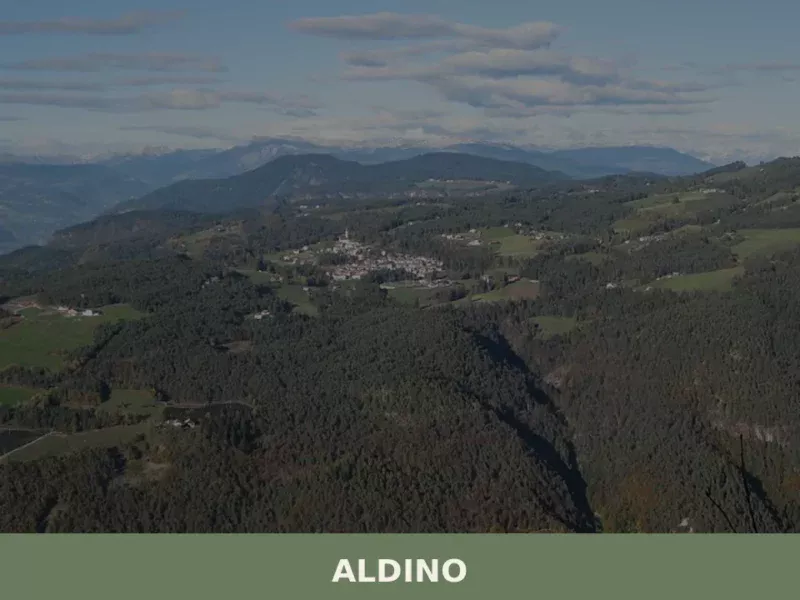
Aldino
At 1,225 metres above sea level, on the western slope of the Val di Fiemme, Aldino has 1,629 inhabitants spread between the centre and the scattered hamlets along the hillsides facing the Latemar group. The municipality, bilingual as required by the South Tyrol statute, bears the German name Aldein — a term some linguists trace […]
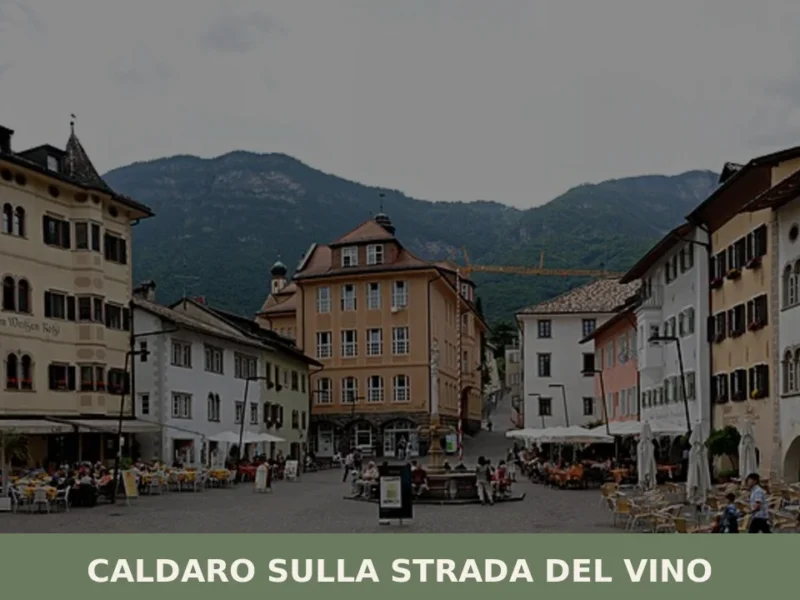
Caldaro sulla strada del vino
Caldaro sulla strada del vino — Kaltern an der Weinstraße in German — has 7,735 inhabitants and over 600 hectares of vineyards, the largest cultivated wine-growing area in South Tyrol. The place name itself declares the vocation of this centre in the province of Bolzano, which grew along the trade route linking the Bassa Atesina […]
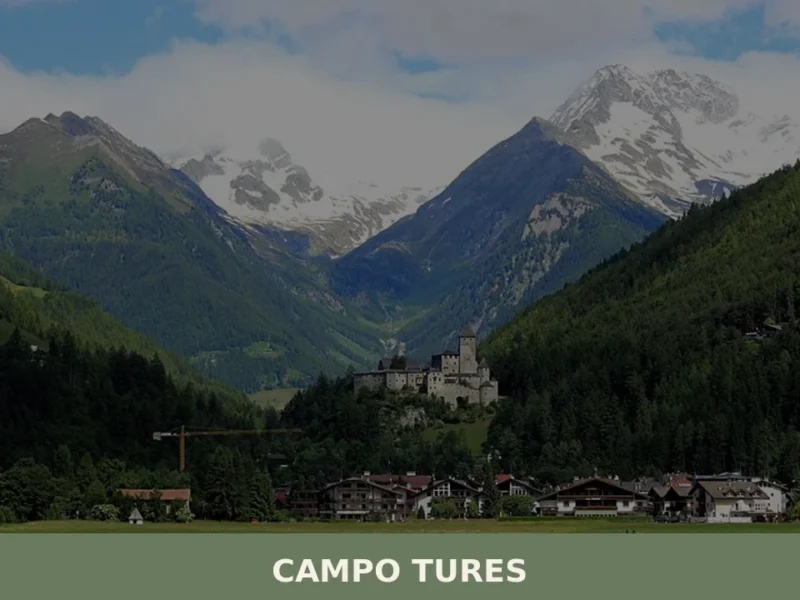
Campo Tures
Tures Castle, first documented in 1136, dominates Campo Tures from a rocky spur at the entrance to the Tures Valley, a side valley of the Aurina Valley. The village has 5,321 inhabitants, spread across an elevation of 864 metres, in a basin where the Aurino torrent slows before continuing south. Understanding what to see in […]

📝 Incorrect information or updates?
Help us keep the Appiano sulla strada del vino page accurate and up to date.