


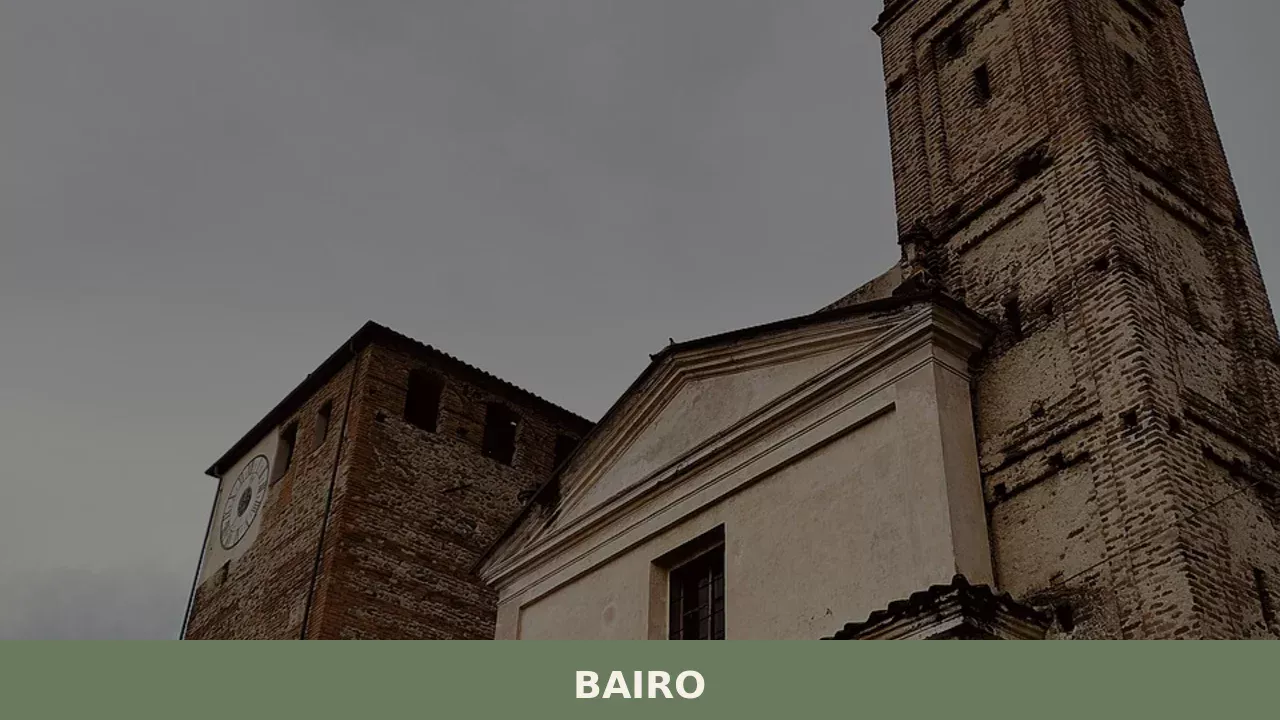
Bairo
The earliest confirmed record of Bairo dates to a document from 1003, when Marquess Arduino of Ivrea — who would shortly become King of Italy — confirmed landholdings in this portion of the Canavese between the moraine ridge and the foothills of the Graian Alps. Today the municipality has 806 inhabitants, spread across the historic […]
Discover Bairo
The earliest confirmed record of Bairo dates to a document from 1003, when Marquess Arduino of Ivrea — who would shortly become King of Italy — confirmed landholdings in this portion of the Canavese between the moraine ridge and the foothills of the Graian Alps. Today the municipality has 806 inhabitants, spread across the historic centre and scattered hamlets at a hilltop elevation of 365 metres. Anyone wondering what to see in Bairo will find a landscape where rows of vines alternate with chestnut woods, a parish church that has undergone five centuries of transformation, and a daily rhythm still governed by the agricultural calendar. This guide brings together all the information needed to plan a well-informed visit.
History and origins of Bairo
The place name Bairo appears in medieval sources in various spellings — Bairium, Bayro, Bayrium — and its etymology remains debated. The most widely accepted hypothesis among scholars of Piedmontese toponymy traces it to a pre-Latin word linked to the shape of the terrain, possibly denoting a height or a wooded rise. Alternative readings connect it to a personal name of Germanic origin, a Lombard or Frankish landowner whose name became fixed to the place. What is certain is that the settlement already existed in the early medieval period: the Canavese area was the subject of thorough territorial organisation from the 10th century onward, when the Marquesses of Ivrea consolidated their power over the hills south of the Dora Baltea. Arduino, crowned King of Italy at Pavia in 1002, had direct interests in this area, and the territory of Bairo fell within the orbit of his landed estates.
During the 12th and 13th centuries, Bairo was caught up in the feudal conflicts that marked the entire Canavese. The region experienced a period of severe instability, defined by the so-called “war of the counts” — the struggles among the Counts of San Martino, the Counts of Valperga, and local communities claiming degrees of self-governance. Bairo, positioned along routes connecting the Vercelli plain with the Alpine valleys, passed through several jurisdictions. In the 14th century, control of the territory was gradually absorbed by the House of Savoy, which incorporated the Canavese fiefs into its administrative framework. Traces of this period survive in the layout of the old centre: the built fabric still shows a concentrated plan, with houses pressed against one another around a raised point, following a defensive pattern common to many Piedmontese hill villages. The parish church dedicated to San Giorgio (Saint George), patron saint of the village, became the focal point of community and religious life, a role it still holds today.
Between the 17th and 18th centuries Bairo shared the fortunes of Savoyard Piedmont: it took part in the economic changes brought by the spread of viticulture across the Canavese hills and suffered the consequences of the wars of succession that swept through the region. The 19th century brought national unification and, with it, a slow but steady depopulation of the rural hill areas in favour of the industrial centres on the Turin plain. The population, which exceeded one thousand in the mid-19th century, has gradually declined to the current 806 residents. Despite this demographic contraction, the village has preserved its autonomous administrative structure and a cohesive social fabric, sustained by farming — above all viticulture, fruit growing and chestnut cultivation — and by proximity to larger centres such as Ivrea, just over fifteen kilometres away. The official website of the Municipality of Bairo documents ongoing initiatives to promote the local heritage.
What to see in Bairo: 5 top attractions
1. Parish church of San Giorgio
The parish church stands at the heart of the historic centre and is the village’s main religious building. Dedicated to San Giorgio (Saint George), patron saint of Bairo, the church has a structure that reflects interventions layered over time: the original plan dates to the late Middle Ages, but alterations in the 17th and 18th centuries reshaped the façade and interior along the lines of Piedmontese Baroque. Inside, it preserves locally crafted liturgical furnishings and a high altar in polychrome marble. The church is the ideal starting point for exploring the old village, with its stone-and-brick houses arranged along gently sloping lanes.
2. Rural chapels and votive pillars
The municipal territory is dotted with rural chapels and votive pillars, signs of a widespread popular devotion found throughout the Canavese. These small structures, often placed at crossroads along country lanes or at the edges of woods, date mostly from the 18th and 19th centuries. Some retain frescoes by local painters depicting the Madonna, San Giorgio, or saints who protect the harvest. Walking the dirt roads that link them is a way of tracing a map of the religious life and peasant economy of this stretch of hillside. They are all freely accessible and can be reached on foot from the centre in under thirty minutes.
3. The historic centre and rural architecture
The old centre of Bairo retains a compact urban fabric, with buildings in local stone and brick dating largely from the 17th and 18th centuries. The houses display typologies common to Canavese rural architecture: interior courtyards, wooden loggias on the upper floors, semi-underground cellars dug into the hillside for wine storage. Several carved stone doorways attest to a modest prosperity among the landowning families. Walking among these buildings provides a direct reading of the construction techniques and social organisation of the Piedmontese farming village, with no need for interpretive panels: the architecture itself does the explaining.
4. Hill paths towards the Serra moraine
Bairo lies at the foot of the Serra Moraine of Ivrea, the longest morainic amphitheatre in Europe, formed during the Quaternary glaciations and now recognised by the international scientific community as a site of geological significance. From the village, waymarked paths climb the surrounding hills through woods of chestnut, oak and black locust, opening up panoramic views over the Canavese plain and, on clear days, over the Alpine chain from Monviso to Monte Rosa. The routes are suitable for beginner-level hikers and can be completed in two to three hours. Spring and autumn are the best seasons to walk them.
5. The vineyards and agricultural landscape
Around the built-up area, vineyards extend across morainic soils that lend the local wines distinctive minerality and structure. Viticulture in Bairo is part of the broader winemaking context of the Canavese, a production area for DOC Canavese and DOC Erbaluce di Caluso wines. Visiting the rows of vines during the harvest, between late September and October, offers a chance to observe farming practices that are still partly manual, with selective grape picking. Some local farms welcome visitors by appointment for cellar tastings, providing direct access to the product at its place of origin.
Local cuisine and regional products
The table in Bairo reflects the gastronomic tradition of the Canavese, a repertoire built on humble ingredients and preservation techniques suited to the hill climate. The most representative dish of the area is tofeja, a bean stew — traditionally made with the piattella canavesana variety — slow-cooked in the namesake terracotta pot together with pork rinds, trotters and ears. The cooking was once done in the wood-fired oven after baking bread, exploiting the residual heat for hours. Alongside tofeja, polenta — made from ottofile corn flour, an indigenous Piedmontese variety — accompanies alpine cheeses and meat stews. Miasse, thin wafers of corn flour cooked on iron plates, are another typical Canavese preparation found in homes and trattorias throughout the area.
The flagship product of the territory is Erbaluce di Caluso DOCG wine, made from the erbaluce grape, an indigenous variety grown exclusively within the morainic amphitheatre. In its passito version, this wine achieves remarkable aromatic complexity, with notes of dried apricot, honey and candied fruit. Also in the wine sphere, the DOC Canavese designation includes reds based on nebbiolo, barbera and freisa — structured wines that pair with the meat dishes of the local tradition. Among the PAT products (Traditional Agri-Food Products) of Piedmont found in the area, the salame di turgia — a fresh pork sausage eaten cooked — and torcetti di Saint-Vincent (or torcet del Canavese), ring- or twisted-stick-shaped biscuits made with butter, sugar and flour, typical of the entire Canavese area, deserve mention. Chestnuts, gathered in the surrounding woods, are still ground into flour for desserts and winter preparations.
Opportunities to taste these products are concentrated above all in the autumn period, when village festivals celebrate the grape harvest and chestnut gathering. The patronal feast of San Giorgio, held on the first Sunday of May, traditionally includes a communal lunch with a menu of local dishes. As for dining options, Bairo does not offer a wide range of establishments, but the trattorias and agritourism farms in the area serve menus rooted in the cuisine of the territory, with ingredients often from their own production. The advice is to book ahead, especially at weekends and during festivals: seats are limited and demand, particularly in autumn, exceeds availability.
When to visit Bairo: the best time of year
Spring, from April to June, is ideal for walking: the hill paths are dry, the vegetation is at its peak of flowering, and temperatures range between 14 and 24 degrees. The choice of period depends on the visitor’s main interest. The patronal feast of San Giorgio, on the first Sunday of May, is the moment when the village is at its liveliest, with a religious procession, music and open-air banquets. Summer, warm but not oppressive thanks to the hilltop elevation (365 m a.s.l.) and the breezes coming down from the Alpine valleys, is when the vineyards reach their maximum vegetative growth: the landscape is a dense mosaic of green.
Autumn, from mid-September to late November, is the richest season in both gastronomic and visual terms. The grape harvest, the chestnut festivals in neighbouring municipalities, the colours of the foliage turning from yellow to red across the woods of the Serra moraine: everything converges into a period of great intensity. October days, often clear and still mild, offer the best visibility of the Alpine chain. Winter is the least-visited period: temperatures drop to around zero, fog can close in over the plain below, but the hilltop village often remains above the mist layer, in a distinctive light. Those seeking silence and solitude will find the Canavese winter a willing companion.
How to reach Bairo
Bairo is reached by car from the A5 Torino–Aosta motorway, exiting at the Scarmagno toll station and continuing for about eight kilometres along the provincial road heading north. From Turin the distance is approximately 45 kilometres, covered in 40–50 minutes depending on traffic. From Milan, following the A4 to Santhià and then the A5 towards Aosta, the journey is about 130 kilometres (roughly an hour and a half). Those coming from Genoa can take the A26 to Vercelli and then continue towards Ivrea.
The nearest railway station is Ivrea, served by the Turin–Aosta line with frequent regional trains (travel time from Torino Porta Nuova: about one hour). From Ivrea to Bairo there are about 15 kilometres remaining, covered by car or with local transport services. The closest airport is Turin-Caselle (IATA code: TRN), about 50 kilometres from the village and reachable in under an hour by car. Milan Malpensa airport, approximately 120 kilometres away, is an alternative for those arriving on international flights. For detailed information on the geography and location of the municipality, the Wikipedia page dedicated to Bairo offers a comprehensive entry.
Other villages to discover in Piedmont
Visitors to Bairo have the opportunity to include the stop in a broader itinerary through the Canavese and its valleys. Climbing in altitude towards the Graian Alps, the small municipality of Alpette offers an entirely different setting: a mountain village at over 900 metres of elevation, surrounded by pastures and conifer forests, with an alpine vocation reflected in the architecture of its mountain huts and in its cheesemaking tradition. The distance from Bairo is about thirty kilometres, but the change in elevation and landscape is such that it feels like a far longer journey. Alpette is a good starting point for hikes into the side valleys of the Gran Paradiso.
In the opposite direction, heading down towards the plain and the Dora Baltea, you encounter Albiano d’Ivrea, a village that shares with Bairo its place within the hill system of the morainic amphitheatre but stands apart for its proximity to Lake Sirio and for an architectural heritage linked to the 19th-century villas of the Ivrea bourgeoisie. Combining the three stops — Bairo for the agricultural hillside, Albiano for the lakeside landscape, Alpette for the mountains — allows you to cross three altitudinal bands and three different ways of inhabiting Piedmontese territory in just a few hours. It is a route that conveys the geographical complexity of the Canavese better than any map, because you read it through building materials, crops, dialects and dishes that change from one municipality to the next. For further information on the area’s tourist offerings, the Touring Club Italiano publishes updates and itineraries devoted to the Piedmontese hills.
In Piedmont More villages to discover
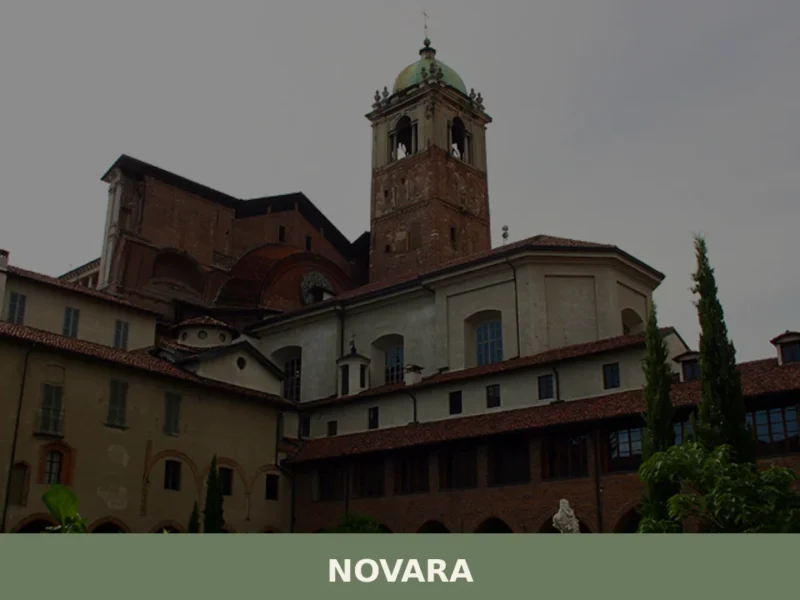
Novara
What to see in Novara: city at 162 m with 101,000 residents. Explore the Antonelli dome, 4th-century baptistery, paniscia and Colline Novaresi DOC wines.
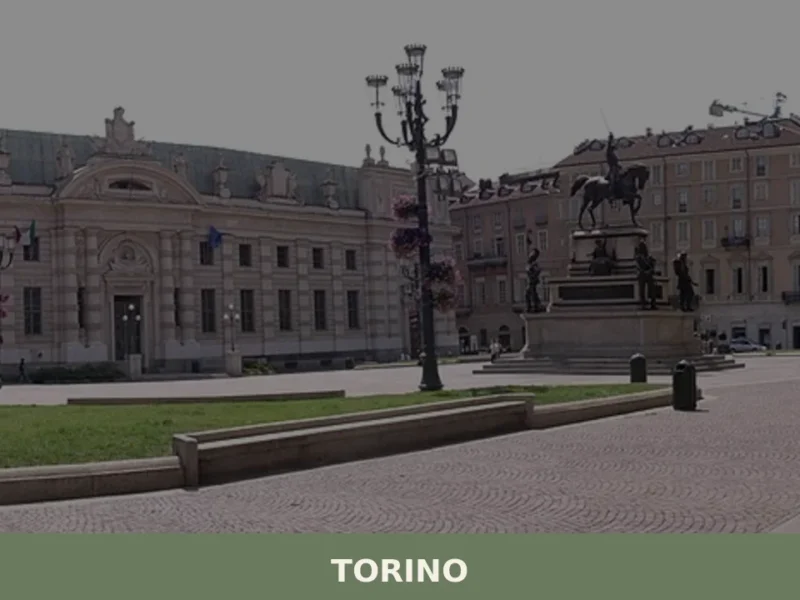
Torino
What to see in Torino: the city at 239m altitude with 841,600 residents. Explore 5 key attractions and Piedmontese cuisine. Read the full guide now.
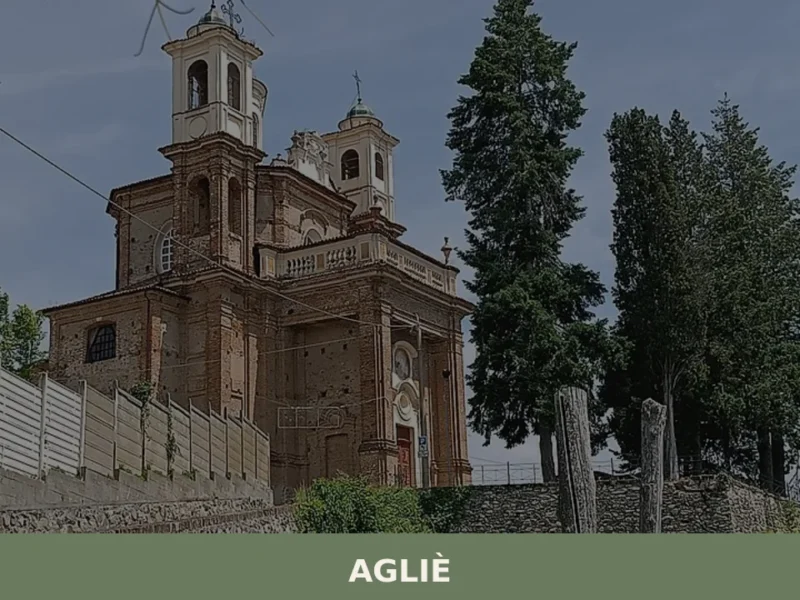
Agliè
In 1646, Count Filippo San Martino d’Agliè — diplomat, poet, choreographer at the court of Christine of France — danced in the great hall of the castle that bears his name, directing baroque festivities destined to reshape Savoyard court ceremony. That castle still dominates the village’s skyline today with its eighteenth-century façade stretching over one […]

📝 Incorrect information or updates?
Help us keep the Bairo page accurate and up to date.