


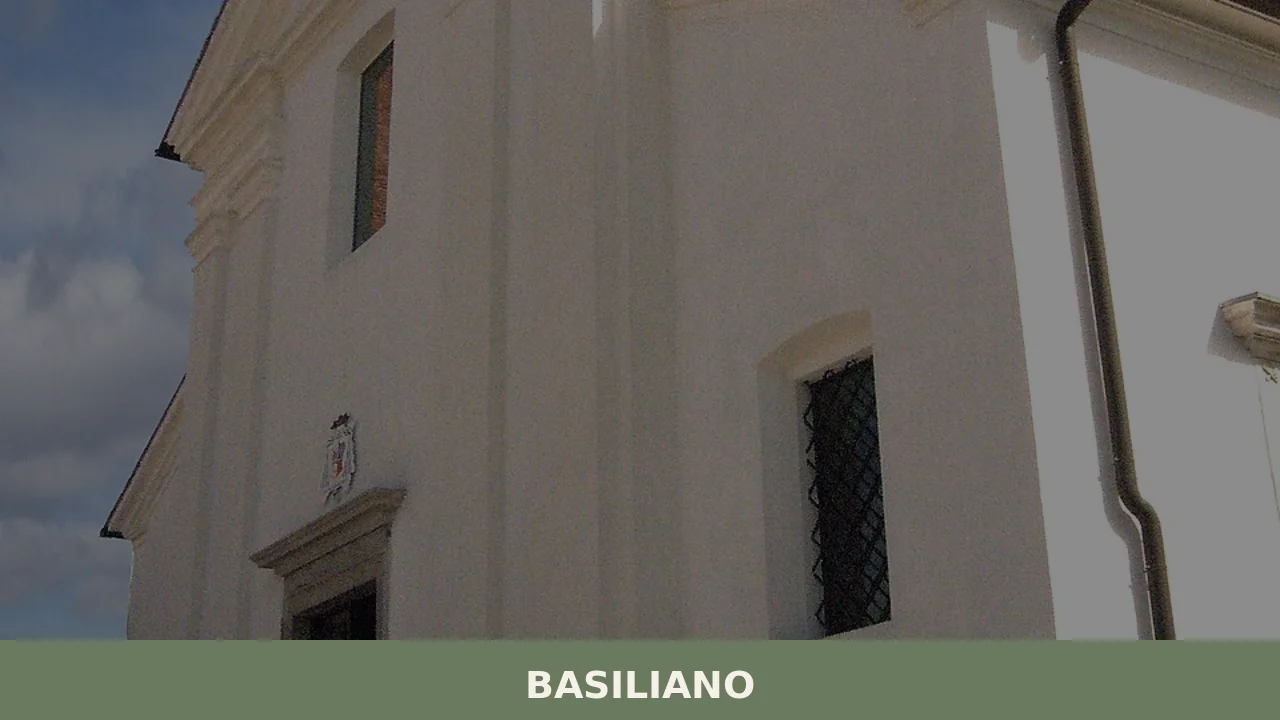
Basiliano
In 1309, a notarial deed drawn up in Udine recorded the transfer of certain feudal rights relating to the territory of Basiliano, confirming the existence of a settlement already organised along the route connecting Udine to Codroipo. Today that route partly coincides with regional road 464, and anyone travelling along it crosses a plain where […]
Discover Basiliano
In 1309, a notarial deed drawn up in Udine recorded the transfer of certain feudal rights relating to the territory of Basiliano, confirming the existence of a settlement already organised along the route connecting Udine to Codroipo. Today that route partly coincides with regional road 464, and anyone travelling along it crosses a plain where fields of maize and soya alternate with rows of mulberry trees that survived the decline of silkworm farming. Asking what to see in Basiliano means preparing to read an agricultural landscape that preserves clear traces of historical stratification: from the foundations of sixteenth-century rural villas to the marks left by nineteenth-century land reclamation works that reshaped the irrigation channels of the lower Friulian plain.
History and origins of Basiliano
The etymology of the name Basiliano is debated among scholars, but the most widely accepted hypothesis traces it to a Latin personal name, Basilius, with the predial suffix -anus typical of Roman place names in north-eastern Italy. This derivation suggests the existence of a fundus, an agricultural estate from the late imperial period, around which a settlement would have gradually formed. The area, after all, was crossed by the road linking Aquileia — then one of the most important cities in the Empire — to the eastern Alpine passes. Roman-era finds, including ceramic fragments and coins, have been unearthed within the municipal territory during various excavation campaigns throughout the twentieth century, confirming continuous human activity in the area from at least the second to third century AD. The surrounding plain, irrigated by the Cormor stream and a network of channels fed by natural springs, offered ideal conditions for the extensive agriculture that formed the economic basis of these settlements.
During the medieval period, Basiliano came under the influence of the Patriarchate of Aquileia, the powerful ecclesiastical institution that governed much of Friuli until 1420. The first certain documentary mention of the village dates to the thirteenth century, when references appear to land holdings and tithe rights linked to local feudal families. With the Venetian conquest of Friuli in 1420, the territory passed under the administration of the Serenissima, which included it in the Patria del Friuli under the governance of the Lieutenant of Udine. For Basiliano, Venetian rule brought relative stability and a gradual transformation of the agrarian landscape: noble Udinese families — including the Savorgnan and the della Torre — acquired extensive properties in the area, commissioning rural villas that served as centres for managing agricultural operations. From this period, some architectural structures survive within the built fabric of the hamlets, although they have often been altered in subsequent centuries.
The nineteenth century brought Basiliano the transformations typical of Friulian agricultural modernisation: the improvement of drainage channels, the introduction of new crops such as maize — which would become the dietary staple of the farming population — and the slow erosion of the feudal system. With the annexation of Friuli to the Kingdom of Italy in 1866, the municipality took on the administrative configuration it essentially retains today, encompassing several hamlets scattered across the plain. The twentieth century left its mark on the territory through both world wars: during the Great War the area, relatively far from the Isonzo front, served as a logistical rear base; in the Second World War, Friuli became a theatre of Nazi occupation and partisan resistance, with episodes that also involved the countryside around Basiliano. In the post-war period, the municipality experienced population growth linked to industrial development in the Udine area, reaching its current 5,417 inhabitants distributed between the main centre and the hamlets, while maintaining a residential and agricultural character that sets it apart from the more urbanised centres on Udine’s outskirts. The Municipality of Basiliano website offers further information on the area’s administrative history and local events.
What to see in Basiliano: 5 key attractions
1. Parish Church of Sant’Andrea Apostolo
Dedicated to the patron saint Sant’Andrea Apostolo (Saint Andrew the Apostle), the parish church is the main religious building in the town centre. The current structure dates from reconstruction and expansion works carried out between the eighteenth and nineteenth centuries, on a pre-existing building documented since the patriarchal period. The interior houses a polychrome marble high altar and several altarpieces from the Venetian-Friulian school. The bell tower, visible from the surrounding plain, is the principal vertical landmark in Basiliano’s urban profile. The church faces the village’s central square, which serves as the natural starting point for any exploration of the old centre. Religious services follow the regular liturgical calendar, with solemn celebrations on the patron saint’s feast day of 30 November.
2. Villa de Brandis and its rural setting
Among the notable buildings found within the municipal territory, Villa de Brandis is a significant example of Friulian rural villa architecture. The de Brandis family, originally from the Tyrol but established in Friuli since the late Middle Ages, held properties in various centres across the region. The villa, with its courtyard layout typical of country residences in the Udine area, reflects the role these structures played as administrative hubs for agricultural activities. The main building, flanked by service annexes — barchesse, granaries, stables — forms an architectural ensemble that documents the relationship between the noble class and land management. The structure can be seen from the outside when walking along the streets of the centre.
3. Oratories and votive shrines in the hamlets
The territory of Basiliano, spread across a flat area that includes the hamlets of Basagliapenta, Blessano, Orgnano, Variano and Villaorba, preserves a network of small oratories and votive shrines scattered along rural roads. These aedicules, built between the seventeenth and nineteenth centuries, mark crossroads of country lanes, property entrances and boundaries between farmlands. Made of local stone or plastered masonry, they often feature devotional frescoes depicting the Virgin Mary, patron saints of the harvest or scenes from the Passion. Walking or cycling the routes that connect these hamlets allows visitors to observe the agrarian landscape of the Friulian plain in its most open and quiet form.
4. The system of irrigation channels and waterways
The surface water network crossing the municipal territory is an element of considerable landscape and historical-environmental interest. The channels, fed by the natural springs of the mid-Friulian plain, flow through the fields along courses that are partly natural and partly reshaped by nineteenth-century land reclamation works. The Cormor stream, which skirts the territory to the east, and the smaller channels that cross it support a riparian ecosystem with moisture-loving vegetation — willows, alders, reedbeds — that harbours wildlife of notable interest, including grey herons and kingfishers. Along some stretches it is possible to follow unpaved paths that run along the embankments, ideal for nature walks away from conventional tourist routes.
5. The countryside of Variano and Villaorba
The municipality’s southern hamlets, particularly Variano and Villaorba, offer views of the Friulian agrarian landscape where the historical land division is still legible in the layout of the fields, the surviving rows of mulberry trees and the arrangement of farmhouses along straight roads. In Villaorba, in particular, the local parish church preserves architectural features of interest. This part of the territory lends itself to cycling excursions on low-traffic roads, connecting Basiliano to neighbouring municipalities through a network of flat rural lanes. The constant elevation of 77 metres above sea level makes the route accessible to cyclists of all abilities and suitable for families with children as well.
Traditional cuisine and local products
Basiliano’s gastronomic tradition is inseparable from that of the Friulian plain — a cuisine historically built on the need to transform humble raw ingredients into substantial dishes suited to agricultural labour. Frico — in both its soft version with potatoes and onion and its crispy version made solely from aged Montasio cheese — is the quintessential signature dish of Friuli Venezia Giulia. In Basiliano, as throughout the Udine plain, frico is traditionally served with polenta made from locally grown, stone-ground maize flour. Brovada, turnips fermented in grape pomace and then slow-cooked, is another product deeply rooted in local tradition, recognised with Protected Designation of Origin (PDO) status: a tart, earthy flavour that accompanies cotechino during the winter months and that few outside Friuli are familiar with.
Among local products, Montasio PDO is the benchmark cheese, produced in various stages of ageing from fresh to extra-mature, used both at the table and as the base ingredient for frico. Friulian cured meats — in particular Prosciutto di San Daniele PDO, whose production area lies just a few kilometres away — complete the local table. The Basiliano plain also contributes to the production of polenta maize, with native varieties that some local farmers have revived as part of projects to protect cereal biodiversity. Also worth mentioning is formadi frant, a PAT (Traditional Agri-food Product) cheese made by working together trimmings and imperfect wheels of different cheeses, blended with milk, cream and pepper: a product born from the peasant economy of waste recovery and now reappraised by regional restaurants.
Village festivals, held across the various hamlets throughout the year, are the main occasion to taste these products prepared in the most traditional manner. The patron saint’s feast of Sant’Andrea, on 30 November, falls at a time when Friulian cooking is at its finest for winter dishes: barley soups, musetto with brovada, desserts made with dried fruit, and grappa. In the hamlets, summer and autumn festivals are periodically organised — often linked to the maize harvest or the grape harvest — during which local pro loco associations set up open-air kitchens. For up-to-date information on food events, it is useful to consult the dedicated page on Wikipedia and the municipal website.
When to visit Basiliano: the best time of year
The climate of the Friulian plain is temperate subcontinental: cold winters with temperatures frequently dropping below zero between December and February, warm and moderately humid summers with highs exceeding 30°C in July and August, and mild, rainy springs and autumns. For those planning to explore the area on foot or by bicycle, the most suitable months are April, May, September and October, when temperatures range between 12 and 22°C and the days offer sufficient light to cover the rural routes at a leisurely pace. In spring, rapeseed fields and flowering meadows bring colour to the plain; in autumn, the maize harvest and the yellowing rows of vines compose a landscape in warm, well-defined tones.
From an events perspective, the period between late spring and early autumn sees the highest concentration of festivals and celebrations in the hamlets. The patron saint’s feast of Sant’Andrea, on 30 November, falls in late autumn and offers a different experience, more intimate and tied to the communal life of the village. Those visiting Basiliano in winter will find the bare landscape of the Padano-Venetian plain — low fog over the fields, frozen ditches, the stripped silhouettes of mulberry trees — which possesses its own visual quality, austere and coherent. It is a time suited to those seeking a Friuli unfiltered by tourist season, where the plain reveals itself in its essential structure.
How to get to Basiliano
Basiliano lies along regional road 464, approximately 10 kilometres west of Udine. By car, from the A23 Udine–Tarvisio motorway take the Udine Sud exit and continue towards Codroipo; from the A4 Venice–Trieste motorway, the relevant exit is Palmanova, from which you head north-west for approximately 20 kilometres. From Trieste the distance is around 90 kilometres (roughly one hour and fifteen minutes’ drive), and from Venice around 130 kilometres (about one hour and a half). The nearest airport is Trieste Airport at Ronchi dei Legionari, approximately 55 kilometres away and reachable in 40–50 minutes by car.
The nearest railway station is Basiliano-Vissandone, on the Udine–Venice line, served by regional trains running at hourly intervals during peak periods. The journey to Udine takes approximately 10–15 minutes by train, making a day trip from the provincial capital possible without a car. For those arriving by train from Venice, the total travel time is around two hours, either with a change at Udine or on direct trains that stop at Basiliano. The flat terrain also makes Basiliano easily reachable by bicycle from Udine, via cycle paths and low-traffic rural roads, in approximately 30–40 minutes of pedalling.
Other villages to discover in Friuli Venezia Giulia
Friuli Venezia Giulia offers a variety of landscapes that few Italian territories can match within such a short distance: from the plain to the Carnic mountains, from the lagoon to the pre-Alpine villages. Anyone visiting Basiliano who wishes to explore the contrast between the plain and Friuli’s mountain environments can reach Bordano, the village of butterflies, in just over an hour. Situated at the foot of the Julian Pre-Alps on Lake Cavazzo, Bordano is known for the entomological murals that decorate its house facades and for the Casa delle Farfalle (Butterfly House), an educational centre hosting live tropical species. The transition from Basiliano’s cereal-growing plain to the limestone walls towering above Bordano delivers a radical change of scenery and atmosphere within just a few kilometres.
Heading up the Tagliamento valley towards Carnia, Ampezzo is another destination of great interest, set in a valley floor surrounded by beech and fir forests. Ampezzo serves as a gateway to the Dolomiti Friulane Natural Park, a UNESCO World Heritage Site, and preserves an old centre with local stone architecture that documents the life of Carnic communities. An itinerary linking Basiliano, Bordano and Ampezzo — feasible in a long day or ideally over a weekend — allows travellers to cross three altitudinal bands and three historically distinct economies: lowland cereal farming, pre-Alpine pastoralism and mountain forestry. It is a transect of Friuli that few tourists undertake, but one that provides a complete and unexpected picture of the region. For further details on regional itineraries, the Touring Club Italiano offers updated guides and routes.
In Friuli Venezia Giulia More villages to discover
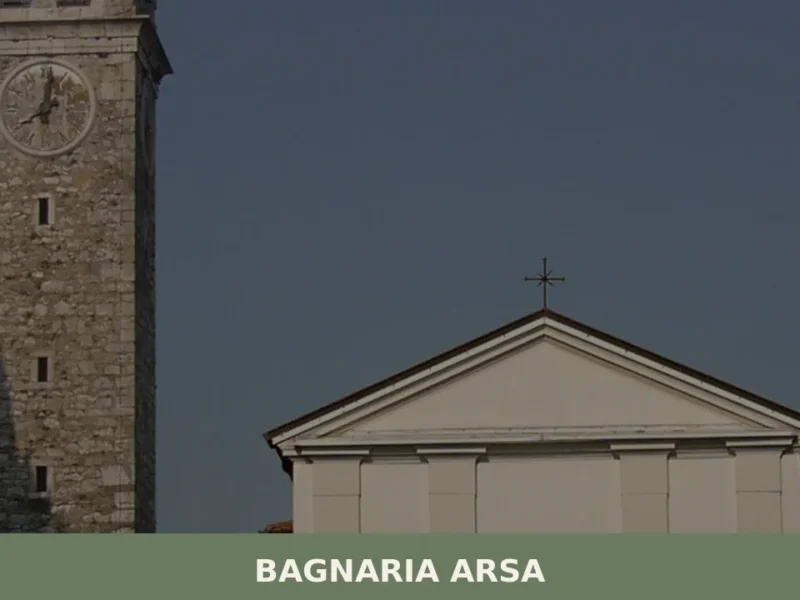
Bagnaria Arsa
In 1420, when the Venetian Republic extended its dominion over Friuli, the territory of Bagnaria Arsa came firmly into the Venetian orbit: the Republic’s cadastral records document a rural settlement structured around two distinct centres — Bagnaria and Sevegliano — separated by fields planted with cereals and crossed by drainage channels. Today, anyone wondering what […]
Ampezzo
A documentary-style guide to Ampezzo in Carnia, covering its history, key attractions, Carnic cuisine, and how to reach this quiet alpine village in Friuli Venezia Giulia.
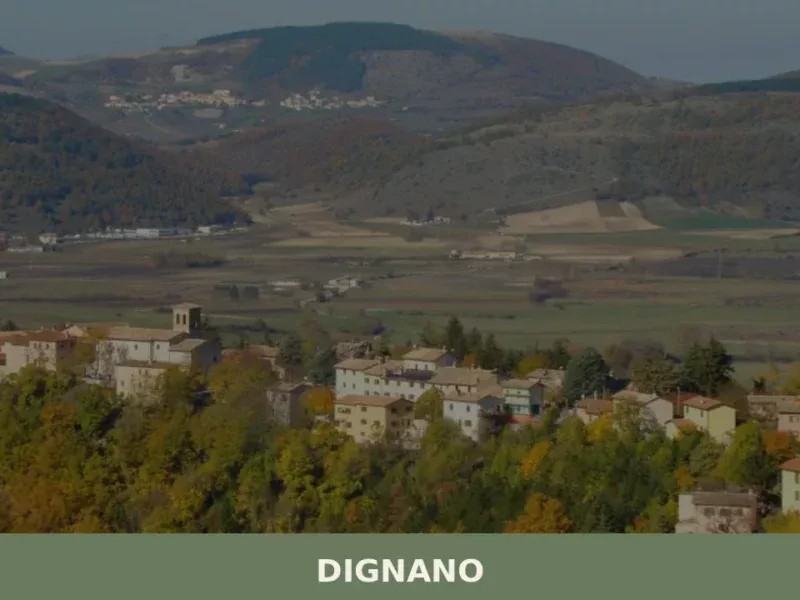
Dignano
In the cadastral register of 1296, the name Dignano appears among the possessions of the Patriarchate of Aquileia, a rural community closely tied to ecclesiastical control and cereal production on the Friulian plain. Today the municipality has approximately 2,380 inhabitants spread across the main centre and several hamlets, in a flat territory northwest of Udine […]



📝 Incorrect information or updates?
Help us keep the Basiliano page accurate and up to date.