


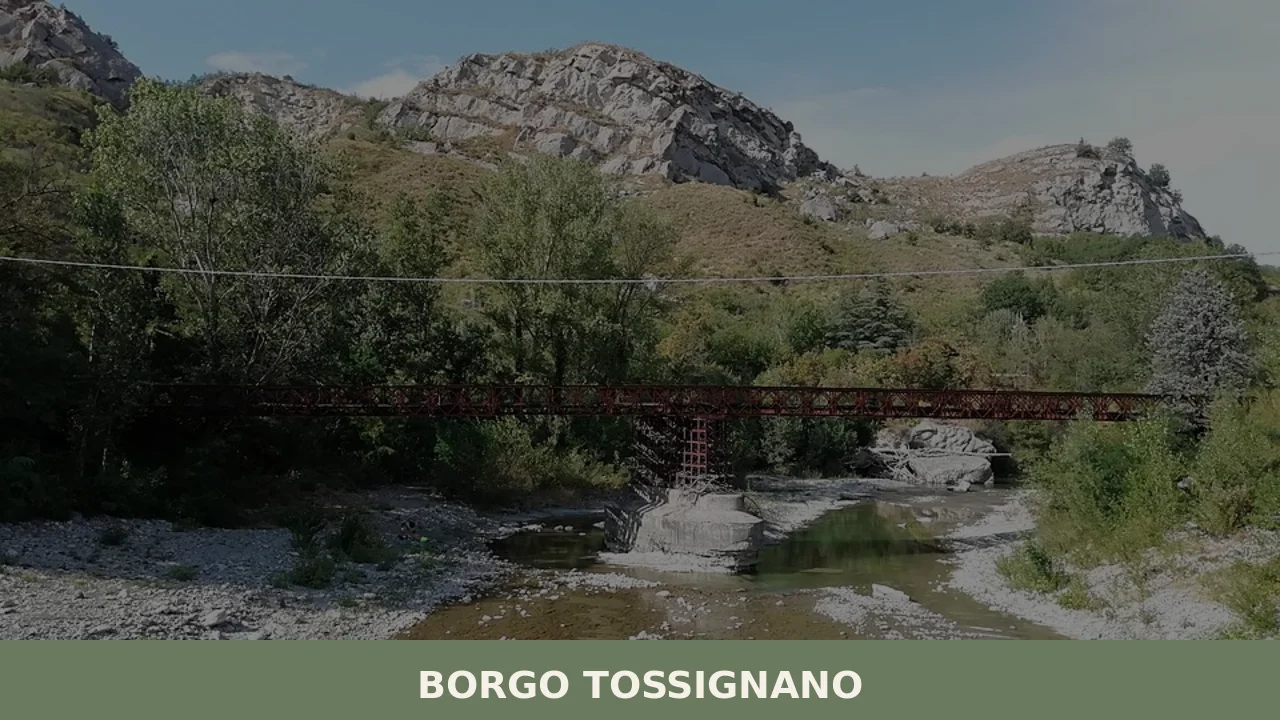
Borgo Tossignano
IN THIS ARTICLEWhat to see in Borgo Tossignano: a complete guide to the village in the Santerno ValleyHistory and origins of Borgo TossignanoWhat to see in Borgo Tossignano: 5 essential attractions3. The ruins of the Castle of Tossignano5. The badlands of the Santerno ValleyWhat to eat in Borgo Tossignano: local cuisine and regional productsWhen to […]
Discover Borgo Tossignano
What to see in Borgo Tossignano: a complete guide to the village in the Santerno Valley
In February 1945, Allied troops and retreating German units fought over every metre of the Santerno Valley, and Borgo Tossignano paid a devastating price: much of the settlement was levelled by bombing, and the post-war reconstruction reshaped the village almost entirely.
Today, those who arrive here, at 102 metres above sea level in the lower Bolognese valley, find a centre that retains a handful of significant fragments from the original settlement alongside mid-twentieth-century buildings, surrounded by badlands and the first hills rising toward the Tuscan-Emilian Apennines. Understanding what to see in Borgo Tossignano means reading precisely this dual nature: the memory of a harsh past and the resilience of a community of 3,335 inhabitants that managed to rebuild itself.
History and origins of Borgo Tossignano
The place name “Tossignano” most likely derives from the Latin personal name Tussinius or Tausignanus, indicating a fundus — a landed estate from the Roman era located along the Santerno river valley. The word “Borgo” was added to distinguish the settlement that grew on the alluvial plain from the older castle of Tossignano, positioned on top of a gypsum spur dropping steeply into the valley. References to the castrum Tausignani already appear in early medieval documents from the 10th century, a sign that the area served as a control point along the route connecting the Po Plain to Tuscany via the Futa Pass and secondary Apennine crossings.
Throughout the Middle Ages, Tossignano was disputed between feudal families loyal to the Papacy and the Commune of Bologna, which in the 13th century gradually extended its jurisdiction over the valley.
In 1362 the fortress came under the rule of the Visconti of Milan, before returning to Bologna and subsequently to the Papal States. The community in the lower borgo, dedicated to agriculture and hemp processing, grew slowly at the foot of the castle, developing its own distinct identity separate from the hilltop settlement. By the 18th century, Borgo Tossignano was already the most populated centre in the area, with weekly markets serving the rural communities scattered across the surrounding hills. The parish church dedicated to Saint Bartholomew the Apostle, patron of the village celebrated on 24 August, became the religious and civic hub of community life.
The most devastating chapter in the village’s history is linked to the Second World War. Between the autumn of 1944 and the spring of 1945, the Gothic Line crossed the Apennines just a few kilometres to the south, and the Santerno Valley became the scene of prolonged combat. Borgo Tossignano suffered catastrophic destruction, with churches, homes and infrastructure reduced to rubble.
The reconstruction, carried out during the 1950s and 1960s, radically altered the urban character of the centre. Demographic trends reflect patterns typical of the Emilian Apennines: from roughly 4,000 inhabitants in the early 20th century, the population has declined to the current 3,335, stabilised by commuting to Imola and Bologna.
What to see in Borgo Tossignano: 5 essential attractions
1. The Vena del Gesso Romagnola
The primary geological reason to visit this area is the Vena del Gesso Romagnola, an outcrop of crystalline selenite approximately 25 kilometres long that cuts through the Santerno Valley with vertical walls and karst formations. The Vena del Gesso Romagnola Regional Park, established in 2005, protects this landscape — unique in Europe for its extent and state of conservation — which was inscribed in 2023 as a UNESCO site under the designation “Evaporite Karst and Caves of the Northern Apennines”.
From trails starting at the upper hamlet of Tossignano, hikers can reach panoramic viewpoints along the gypsum ridge, where the white rock contrasts with the Mediterranean vegetation colonising the south-facing slopes. For walkers, the CAI Trail 705 offers a well-structured route along the crest.
2. The Cave of King Tiberius
A few kilometres from the village centre, the Cave of King Tiberius (Grotta di Re Tiberio) is one of the most important karst cavities in the Vena del Gesso. It extends for over one kilometre inside the gypsum formation and features concretions, underground pools and an archaeological deposit that has yielded materials dating from the Bronze Age to the Roman period. The name is linked to a folk tradition claiming the cave served as a refuge for Emperor Tiberius, but scientific evidence — documented by the Bologna Speleological Group and the University of Bologna — qualifies it above all as a site of palaeoethnological interest. Guided visits are organised periodically by the Regional Speleological Federation of Emilia-Romagna and the Vena del Gesso Park.
3. The ruins of the Castle of Tossignano
On the summit of the gypsum spur overlooking the confluence of the Santerno and the Rio di Corecchio stand the remains of the Castle of Tossignano, a fortification documented at least since the 10th century. What survives of the original structure includes sections of the perimeter walls and the base of a tower — enough to convey the strategic position of the site: from here, the entire valley toward the plain and the first stretch of the Apennine road could be monitored. The bombings of 1944–45 worsened the already advanced decay, but the site retains considerable landscape value. The climb on foot from the village takes about twenty minutes and allows visitors to observe up close the geological stratification of the gypsum rock on which the fortress was built.
4. The Church of San Bartolomeo
The parish church of Saint Bartholomew the Apostle, rebuilt after the war following its wartime destruction, stands in the centre of Borgo Tossignano and is the village’s main place of worship. The current structure, with the plain lines typical of post-war Emilian ecclesiastical architecture, houses a number of works recovered from the rubble of the earlier church, including liturgical furnishings and decorative fragments. The patronal feast on 24 August remains the most important event in the community calendar, with religious celebrations followed by a festival involving the entire village. The square in front of the church serves as a daily gathering place, where the weekly market is held.
5. The badlands of the Santerno Valley
The landscape around Borgo Tossignano is visibly marked by calanchi (badlands), erosive formations that sculpt the Pliocene clays of the hillsides into sharp ridges and deep gullies. This geomorphological phenomenon can be seen along the secondary roads toward Fontanelice and Casalfiumanese, where entire slopes appear stripped of vegetation, scored by rivulets that reshape the terrain with every rainfall. The badlands of the Santerno Valley are among the most studied in the northern Apennines and provide a specific habitat for pioneer plant species adapted to unstable, saline soils. For those interested in nature photography, late afternoon offers the best lighting conditions for capturing the texture of the clay formations.
What to eat in Borgo Tossignano: local cuisine and regional products
The cuisine of Borgo Tossignano belongs to the gastronomic tradition of the lower Bolognese hills and western Romagna, a borderland where two food cultures overlap — the Emilian, rich in fresh pasta and cured meats, and the Romagnol, centred on piadina flatbread and grilling over embers. The clay soils and surrounding hills have historically favoured the cultivation of cereals, grapevines and olive trees on the best-exposed slopes, while the Santerno valley floor was devoted to vegetable gardens, orchards and hemp cultivation, now long abandoned.
Among the traditional local dishes, tagliatelle al ragù hold a central place on the Sunday table, prepared with hand-rolled pasta dough following the classic proportion of one egg per hundred grams of flour.
Tortelloni di ricotta, a hill-country variation on the city’s tortellini, are dressed with butter and sage or a white meat ragù. During the colder months, polenta appears frequently, served with a porcini mushroom sauce — the mushrooms gathered in the oak and chestnut woods covering the northern slopes of the Vena del Gesso. Romagna-style piadina, in the thicker versions typical of the inland areas, is readily available at kiosks and osterias across the zone as an alternative to bread.
The Santerno Valley falls within the production area of several products recognised at a regional level. Its proximity to Imola and Faenza places Borgo Tossignano in the distribution area of squacquerone cheese, a soft fresh cheese typical of Romagna, often paired with piadina. The surrounding hills produce honey — particularly acacia and wildflower varieties — and fruits such as cherries, apricots and peaches, grown in the irrigated valley floors. Extra-virgin olive oil is produced in small quantities from olive groves that survive on the sun-facing slopes of the Vena del Gesso, though it does not reach significant commercial volumes.
Proximity to the Imola area also ensures access to cured meats and salumi from the Emilian tradition.
The best-known food event in Borgo Tossignano is the Sagra della Polenta (Polenta Festival), held in March, which draws visitors from across the province of Bologna. During the festival, polenta is cooked in large copper cauldrons following the peasant tradition and served with ragù, mushrooms and sausage. The patronal feast of Saint Bartholomew on 24 August also features food stalls offering dishes from the local kitchen. For purchasing local products, the weekly market and the farms scattered along the valley offer seasonal fruit, honey and artisanal preserves.
The area falls within the territory of the Colli di Imola DOC wines, a denomination that includes Sangiovese, Trebbiano, Cabernet Sauvignon and other varieties grown on the hills between Imola and the Santerno Valley. The Sangiovese dei Colli di Imola, vinified as a still red, pairs well with the meat dishes and ragù sauces of the local tradition. Some wineries in the area also produce Albana and Pignoletto, indigenous grape varieties of eastern Emilia-Romagna, sold primarily through the network of wine shops and restaurants in the Imola district.
When to visit Borgo Tossignano: the best time of year
Spring, in particular the months of April and May, is the ideal time to visit Borgo Tossignano and the Vena del Gesso Park.
Temperatures are mild, the trails are accessible, and the blooming of wild orchids on the gypsum slopes offers a botanical spectacle documented in the park’s naturalist guides. March is the month of the Sagra della Polenta, which alone justifies a visit. Summer brings the heat of the Po Plain, with temperatures frequently exceeding 35°C in July and August, but the feast of Saint Bartholomew on 24 August enlivens the village with religious and gastronomic celebrations.
Autumn, from September to November, is the season for fruit harvesting and the grape harvest, and the colours of the woods on the Vena del Gesso — oaks, maples, hornbeams — transform the landscape dramatically. It is also the best period for exploring the caves, when internal humidity conditions are most stable. Winter is quiet and little frequented: valley-floor fogs envelop the village for weeks on end, but clear days reward visitors with sharp views of the gypsum ridges.
Those who prefer complete solitude and are not deterred by the cold will find in January and February an almost empty territory, with osterias open and no queues.
How to reach Borgo Tossignano
Borgo Tossignano can be reached by car from the A14 Bologna–Rimini motorway, Imola exit, continuing along the SS 610 Selice Montanara toward Fontanelice for approximately 14 kilometres. From Bologna the journey covers about 50 kilometres and takes 45–50 minutes. From Florence, take the A1 to Bologna, then the A14 to Imola, for a total of roughly 130 kilometres and one hour and forty-five minutes of driving. From Ravenna the distance is about 70 kilometres via the SS 610 through Castel Bolognese.
The nearest railway station is Imola, on the Bologna–Rimini line, from which TPER buses run along the Santerno Valley with limited frequency, mainly on weekdays. It is advisable to check timetables on the TPER website before setting off. Bologna Guglielmo Marconi Airport is approximately 55 kilometres away and is the most convenient airport for those arriving by air; hiring a car at the airport is the most practical option for reaching the village and getting around the valley. There are no car-sharing services or regular taxi services in the area, so a private car remains the recommended means of transport for exploring the territory independently.
Other villages to discover in Emilia-Romagna
Visitors to Borgo Tossignano who wish to explore more of the Emilia-Romagna villages might consider a detour to Cerignale, in the Piacenza Apennines.
With its handful of residents, it is one of the smallest municipalities in Italy, situated in the narrow Trebbia Valley at an altitude considerably higher than Borgo Tossignano. The contrast between the Bolognese plain and the Ligurian-Emilian mountains around Cerignale makes the comparison interesting from both a landscape and cultural perspective: there, dense beech forests dominate; here, gypsum formations and clay badlands prevail. The distance between the two villages is approximately 200 kilometres, reachable in about two and a half hours via the A14 and A21 motorways.
Geographically closer and different in character is Villanova sull’Arda, in the lower Parma province along the Po. This flatland village is linked to the memory of Giuseppe Verdi, who composed many of his operas at the nearby Villa di Sant’Agata.
Villanova sull’Arda shares with Borgo Tossignano its status as an Emilian plain village, but its landscape is that of the alluvial Po lowlands — flat and lined with rows of poplars — profoundly different from the incised Santerno Valley. An itinerary connecting the two villages via Parma and Bologna covers approximately 180 kilometres and provides a complete cross-section of the territorial diversity of Emilia-Romagna.
In Emilia-Romagna More villages to discover
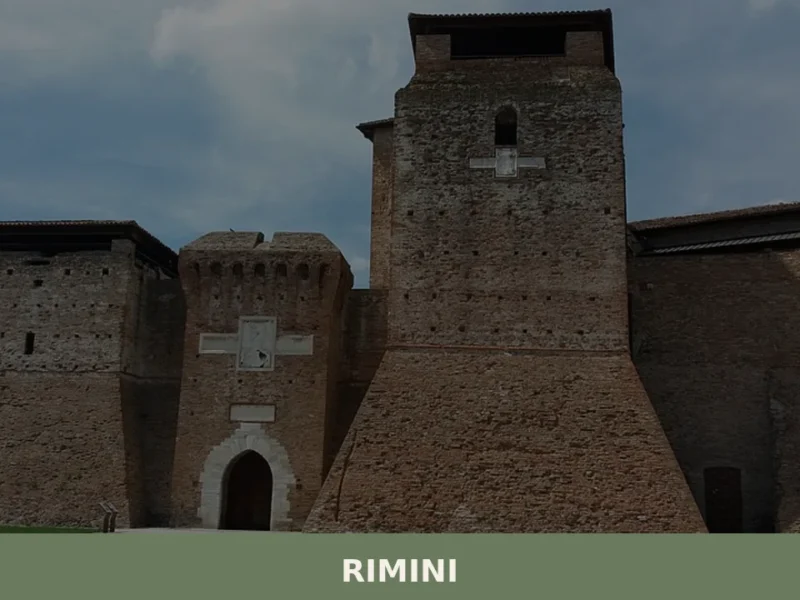
Rimini
What to see in Rimini: 149,211 residents, Arch of Augustus, Tempio Malatestiano, Fellini Museum. Plan your visit with our complete guide to Roman history and local food.
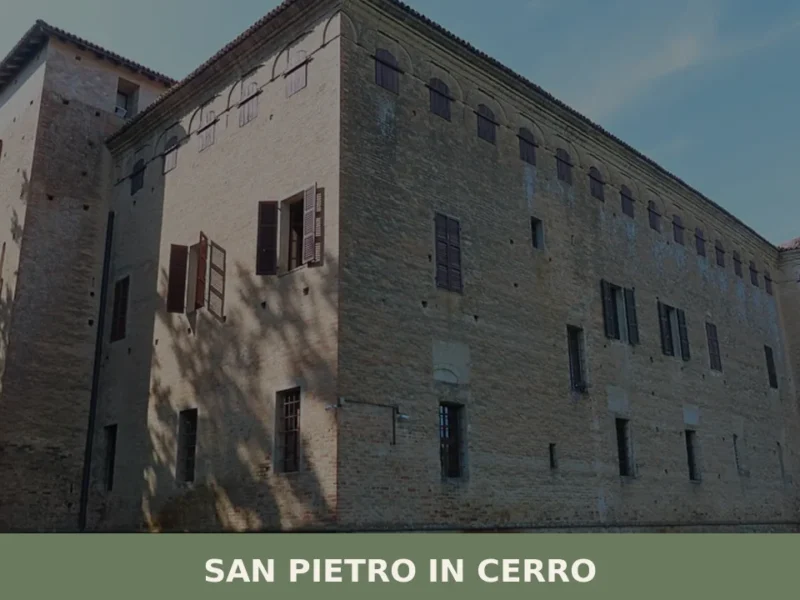
San Pietro in Cerro
With its 769 inhabitants and an elevation of just 44 metres above sea level, San Pietro in Cerro is one of the smallest municipalities in the province of Piacenza, spread across the alluvial plain between the Arda torrent and the Po river. The fifteenth-century castle of the Barattieri counts, still standing today with its square-plan […]
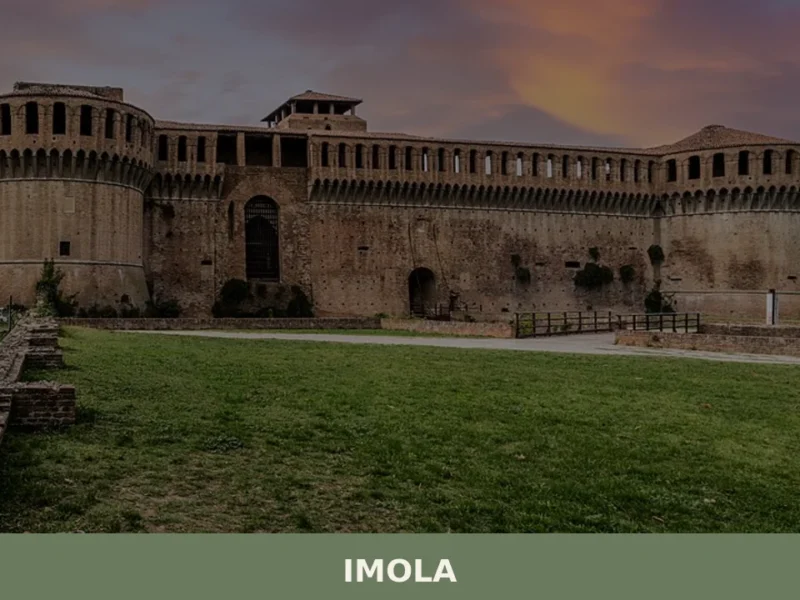
Imola
In 1953, on the track of the Autodromo Enzo e Dino Ferrari, Formula One cars raced in the Italian Grand Prix, placing Imola firmly in international motorsport history. But this city of 69,121 inhabitants, spread out at 47 metres above sea level along the banks of the River Santerno, had already existed for two thousand […]

📝 Incorrect information or updates?
Help us keep the Borgo Tossignano page accurate and up to date.