


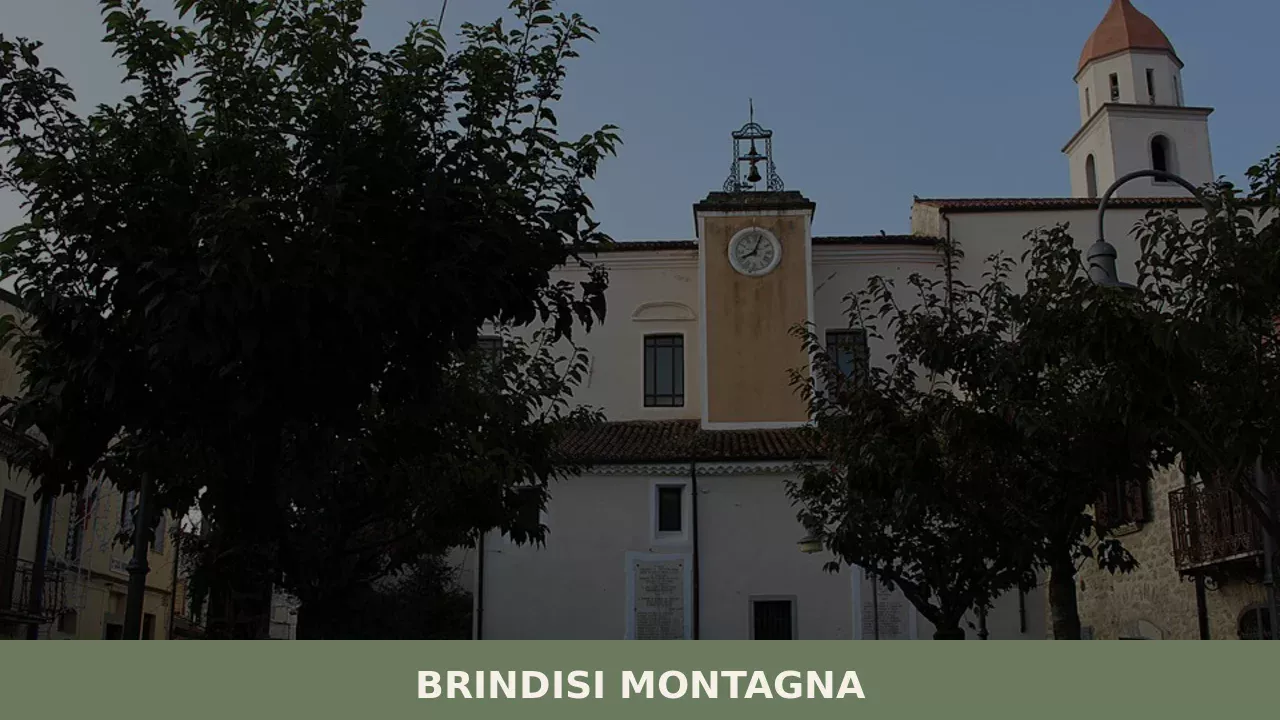
Brindisi Montagna
Discover Amaro, a picturesque village in Friuli Venezia Giulia, Italy. Explore its history, stunning Alpine scenery, and authentic Italian mountain culture.
Discover Brindisi Montagna
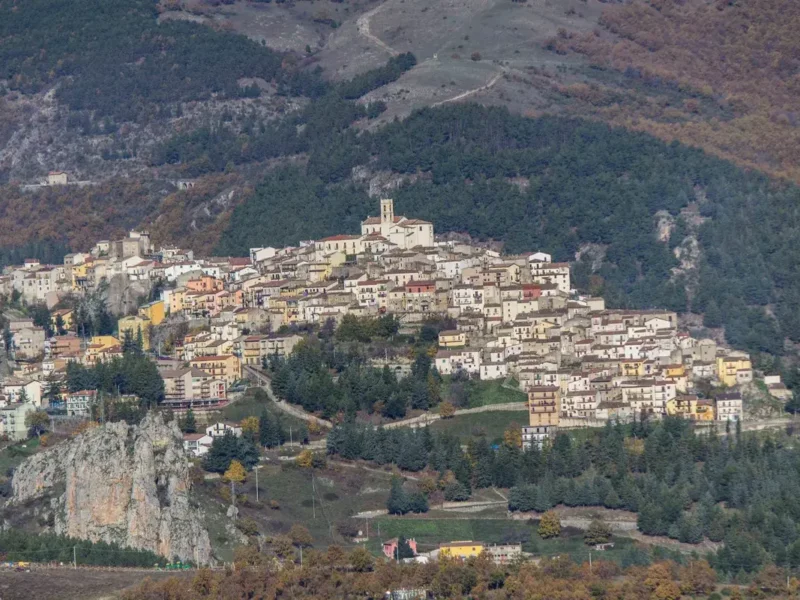
At 800 metres above sea level, on the eastern slope of the Basento valley, Brindisi Montagna has a current population of 794 and retains an urban layout that follows the Norman plan from the 11th–12th century. Anyone wondering what to see in Brindisi Montagna will find concrete answers in its religious architecture, the remains of its feudal castle and its proximity to the Grumentum theme park, but above all in an Apennine landscape where Turkey oak and beech woods descend to the clay badlands of the middle Basento valley. The village falls under the administrative jurisdiction of the Province of Potenza and celebrates its patron saint, Nicholas of Bari, on 6 December.
History and origins of Brindisi Montagna
The place name has been the subject of various interpretations: one tradition links it to the Latin brunda (deer), a reference to the wildlife in the surrounding woods; another hypothesis traces it back to brendon, a pre-Latin word that may have indicated a hilltop. The addition of “Montagna” distinguishes the village from the city of the same name in Puglia and appears consistently in documents from the Angevin period onwards, in the 13th century. The earliest documentary evidence of a fortified settlement dates to the Norman era: a castrum controlled the passage along the Basento valley, a route connecting the Ionian coast with the Lucanian interior.
Over the course of the Middle Ages, the fief passed through numerous baronial families. Under Swabian rule the castle was reinforced, while during Angevin domination the village took on a more settled appearance with the construction of churches and the definition of the urban perimeter. In the 16th and 17th centuries Brindisi Montagna followed the fate of most inland towns in Basilicata: an agro-pastoral economy, feudal dependence and successive waves of emigration that reduced the population. The earthquake of 1857 — documented by the French photographer Alphonse Bernoud on behalf of the Bourbon government — also struck this part of the region, damaging buildings and infrastructure.
After Italian Unification, Brindisi Montagna experienced the phenomenon of brigandage that affected all of inland Basilicata. In the 20th century, large-scale emigration to the Americas and northern Italy drastically reduced the population, a process that has slowed only in recent decades with the consolidation of small enterprises linked to the agricultural supply chain and slow tourism. The official municipal website documents the ongoing initiatives to enhance the historic centre.
What to see in Brindisi Montagna: 5 main attractions
1. Ruins of the Norman Castle
At the highest point of the village, the wall structures of the Norman fortress remain, modified during the Swabian and Angevin periods. The stretches of curtain wall still visible allow visitors to make out the original quadrangular plan and the strategic position overlooking the Basento valley below. Access is via a footpath that starts from the upper part of the historic centre.
2. Mother Church of San Nicola di Bari
Dedicated to the village’s patron saint, the church has a layout dating to the 16th century with later alterations resulting from post-earthquake restorations. Inside there are altars in local stone and a wooden statue of Saint Nicholas carried in procession on 6 December. The sober, gabled façade overlooks a small square that serves as a gathering point for the village’s civic life.
3. Church of Santa Maria degli Angeli
Located in the lower part of the village, this smaller church features a carved stone portal and a single-nave interior. It likely dates to the 17th century and retains traces of wall decorations. It represents a second religious focal point in the village, linked to the confraternities that maintained it over the centuries.
4. Grumentum Historical, Naturalistic and Archaeological Park
A short distance from the town centre, this protected area combines nature trails through Turkey oak and beech woods with historical reconstructions related to Lucanian civilisation. The park offers marked paths and educational areas, and represents the main tourism infrastructure in the municipal territory. Opening is seasonal and hours vary — it is advisable to check with the municipality.
5. The historic centre and its medieval urban fabric
The village preserves the narrow, irregular street grid typical of Lucanian hilltop settlements: limestone staircases, round-arched portals, and houses built from local tuff blocks arranged to follow the slope of the ridge. Several noble residences from the 17th–18th centuries display rusticated doorways and wrought-iron balconies. A complete walk through the centre takes about an hour.
Cuisine and local products
The table in Brindisi Montagna reflects the cooking traditions of the inland Lucanian Apennines, built on cereals, pulses, pork and sheep and goat meat. The dishes most deeply rooted in local tradition include strascinati (fresh semolina pasta dragged by hand across wooden boards) dressed with a mixed-meat ragù or with peperoni cruschi — Senise IGP peppers that are dried and fried, one of the signature ingredients of Lucanian cooking. Lagane e ceci (broad flat noodles of flour and water served with local chickpeas) appear regularly in the winter diet. Lucanica, a pork sausage whose name — according to Varro and other Latin authors — may derive from Lucania itself, is produced by family butchers in the area during the cold months. Also worth noting are Pane di Matera IGP, widespread throughout the province, made from durum wheat semolina and baked in wood-fired ovens; and Canestrato di Moliterno IGP, a hard-paste cheese made from a blend of sheep’s and goat’s milk, aged in stone cellars, found among the dairy products of the area.
Among the local products are Lucanian extra-virgin olive oil, Pecorino di Filiano DOP — aged in tuff caves and made from the milk of indigenous sheep breeds from the Vulture-Alto Basento area — and Fagiolo di Sarconi IGP, cultivated in the nearby Val d’Agri and used in soups and broths. The reference wine is Aglianico del Vulture DOC, a red made from Aglianico grapes grown on the volcanic soils of Vulture, which accompanies meat dishes. Sulla honey and chestnut honey are harvested in the surrounding woods. During the patron saint’s feast on 6 December and at summer food festivals, stalls selling these products and dishes prepared according to local recipes can be found.
When to visit Brindisi Montagna: the best time
The altitude of 800 metres ensures cool summers — with average July temperatures around 20–22°C — but harsh winters, with frequent snowfall between December and February. The most favourable period for a visit runs from May to October: in spring the surrounding meadows and woods are in full bloom, while autumn brings the changing colours of the beeches and Turkey oaks in the woods of the middle Basento valley.
The key date in the local calendar is 6 December, the feast of Saint Nicholas of Bari, with a religious procession and the preparation of traditional dishes. During the summer months, the municipality organises cultural events and food festivals that enliven the historic centre. Those travelling in winter should be aware that access roads may require snow chains and that some tourist services operate on reduced hours or close for the season.
How to reach Brindisi Montagna
Brindisi Montagna is reached via the SS 407 Basentana, which connects Potenza to the Ionian coast following the course of the Basento river. From the Basentana exit, a provincial road climbs to the village centre in about 10 minutes. From Potenza the distance is approximately 25 km (30 minutes by car); from Matera the journey covers around 90 km (1 hour and 15 minutes); from Naples the village can be reached in about 2 hours via the A3 Salerno–Reggio Calabria motorway, exiting at Atena Lucana and continuing along the Basentana.
The nearest railway station with regular services is Potenza Centrale, connected to Salerno and Taranto by the Trenitalia-operated line. From Bari-Karol Wojtyła airport (approximately 150 km) or Naples Capodichino airport (approximately 200 km), onward travel requires a rental car or regional buses. Bus connections operated by SITA Sud and FAL serve the Potenza–Ionian coast route with stops in the Basento valley, but services are infrequent: check timetables before departure.
Other villages to discover in Basilicata
Inland Basilicata is dotted with smaller towns that share with Brindisi Montagna a medieval urban layout and an agro-pastoral economy. Heading north-west, Cancellara occupies a hilltop commanding a wide stretch of the Bradano valley. Its castle, visible from a great distance, and the concentric arrangement of houses around the summit offer a parallel example of a Lucanian defensive settlement. The distance from Brindisi Montagna is short, making a combined visit feasible within a single day.
To the south, in the Sinni valley, Carbone documents a different chapter of regional history: its ties to Italo-Greek monasticism and the presence of churches preserving traces of the Byzantine rite. Comparing the two villages — one linked to the road network of the Basento valley, the other to the monastic tradition of the Sinni — reveals the variety of histories and landscapes that Basilicata concentrates within a relatively compact territory.
Getting there
Via Tornichet, 85010 Brindisi Montagna (PZ)
Nearby Villages near Brindisi Montagna
In Basilicata More villages to discover
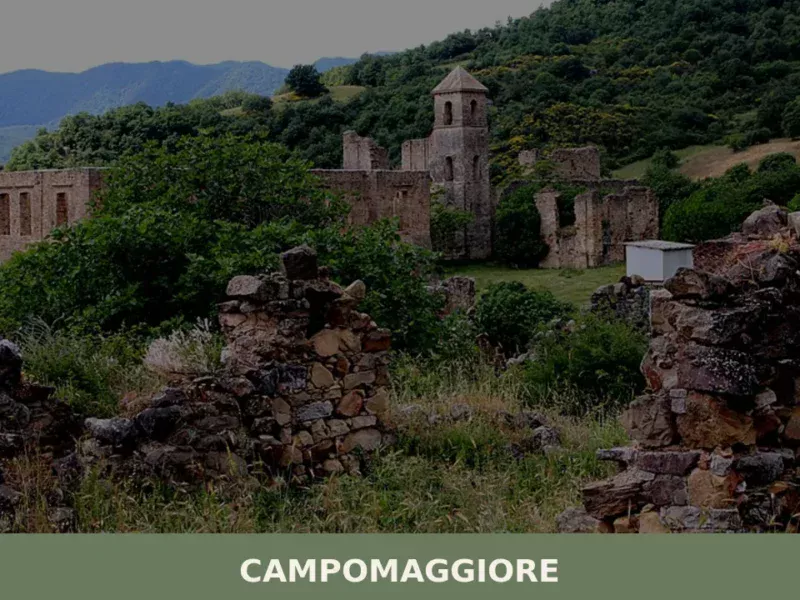
Campomaggiore
As the morning mist reluctantly peels back from the Lucanian Apennines, a faint scent of wild herbs drifts through the narrow lanes of **Campomaggiore**. At 795 meters above sea level, this small community, home to 832 inhabitants, begins its day with a quiet rhythm. Sunlight catches the weathered stone of an ancient wall, illuminating moss […]
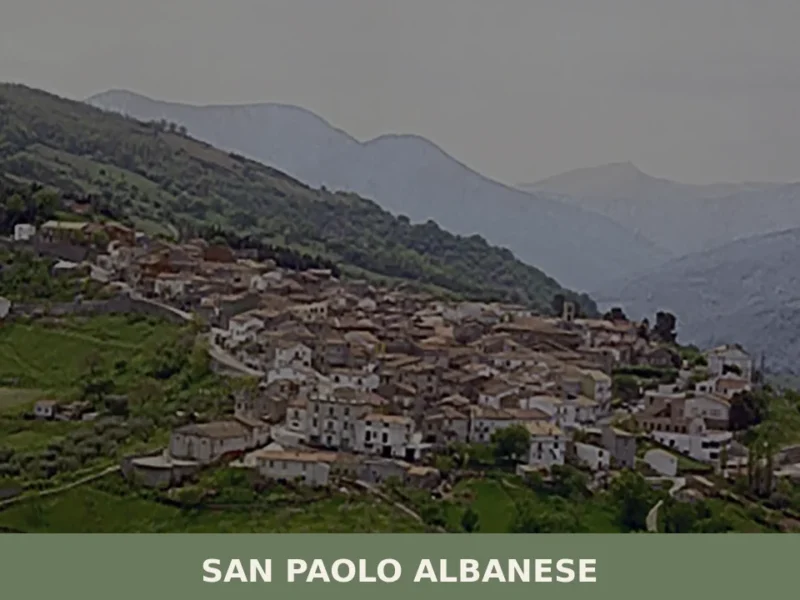
San Paolo Albanese
San Paolo Albanese, in the province of Potenza, stands out as Basilicata’s least populous municipality, recording a population of 280 inhabitants. This demographic reality gives the village an intimate dimension, where social relationships and the traditions of the Arbëreshë community remain strongly evident. For those wondering about what to see in san paolo albanese, the […]
Abriola
A highland village of 1,306 inhabitants in Basilicata's Lucanian Apennines. Discover what to see in Abriola — from its medieval lanes to the woodland sanctuary of Monteforte.





📝 Incorrect information or updates?
Help us keep the Brindisi Montagna page accurate and up to date.