


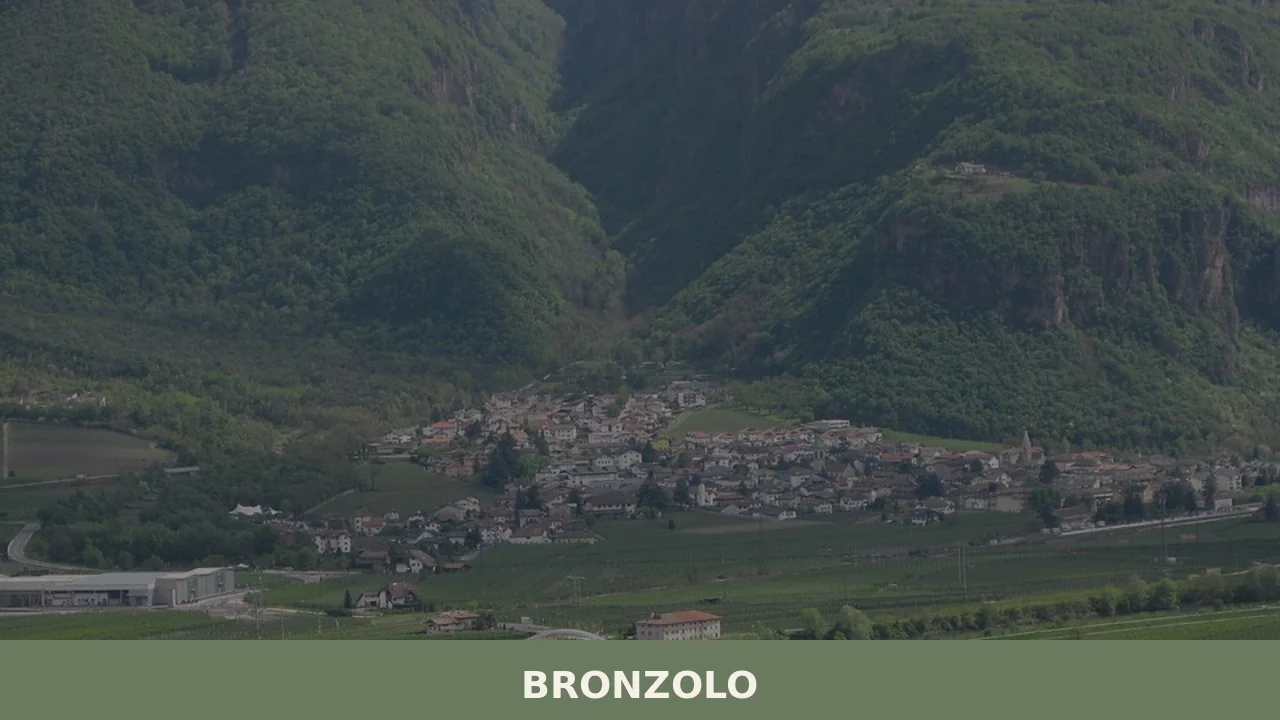
Bronzolo
Bronzolo has 2,646 inhabitants and sits at 238 metres above sea level, on the right bank of the Adige River, at the point where the Isarco Valley meets the Adige plain. The German name for the town — Branzoll — already appears in medieval documents related to the control of trade routes between the Germanic […]
Discover Bronzolo
Bronzolo has 2,646 inhabitants and sits at 238 metres above sea level, on the right bank of the Adige River, at the point where the Isarco Valley meets the Adige plain. The German name for the town — Branzoll — already appears in medieval documents related to the control of trade routes between the Germanic and Italian worlds. Asking what to see in Bronzolo means entering a territory of linguistic and cultural borders, where signage is bilingual, surnames alternate between Latin and Germanic roots, and fruit farming marks the rhythm of the seasons more than any civil calendar.
History and origins of Bronzolo
The earliest written records of the place name date back to the early medieval period. The area was an obligatory passage along the route connecting Verona to Augsburg via the Brenner Pass, and its strategic position shaped its character for centuries. The name “Branzoll” may derive from a pre-Roman term linked to a watercourse or from a phonetic evolution of a Latin personal name, although the etymological hypotheses remain a subject of debate among linguists. The village is documented as the site of a small fortification as early as the 13th century, at a time when the area was disputed between the Bishopric of Trento and the Counts of Tyrol.
During the 16th and 17th centuries, Bronzolo consolidated its agricultural vocation. The alluvial plain of the Adige offered fertile land suited to the cultivation of grapevines and fruit trees. After 1918, with the transfer from Austrian Tyrol to Italy, the village experienced the tensions and transformations common to all of South Tyrol: the arrival of new Italian-speaking residents, the Options of 1939, and the institutionalised bilingualism established by the Autonomy Statute of 1972. Today the population is divided almost equally between the Italian and German language groups, a proportion that sets Bronzolo apart from most municipalities in the Province of Bolzano, where the German-speaking community is clearly predominant.
This linguistic duality is not an abstract statistic: it can be observed in shop signs, in the alternation between Italian and German schools, and in the very structure of the municipal administration. Bronzolo is, in this sense, a real-world laboratory of coexistence, with all its everyday complexities.
What to see in Bronzolo: 5 main attractions
1. Parish Church of San Martino
Dedicated to the patron saint, the church stands in the centre of the village and features a structure remodelled in several phases between the Gothic and Baroque periods. The bell tower, visible from various points across the plain, is one of the most recognisable architectural elements of Bronzolo’s skyline. Inside, wooden altars and decorations document the South Tyrolean tradition of sacred art.
2. Castel Bronzolo (Burg Branzoll)
The remains of the castle stand on the hill overlooking the village, in a commanding position above the Adige Valley. The fortification, documented from the 13th century, controlled the river and road passage. Today the structure is privately owned and not open to visitors inside, but the path climbing the hill allows you to view the outer walls and offers a broad vantage point over the surrounding plain.
3. Walk along the Adige
The network of footpaths and cycle paths running alongside the Adige connects Bronzolo to the neighbouring municipalities — Laives to the north, Ora to the south. The flat route, suitable for every season and every fitness level, passes through apple orchards and vineyards, and offers a close-up view of the irrigation system that made the alluvial plain cultivable.
4. Historic centre and rural architecture
The old core of Bronzolo preserves residential buildings with construction elements typical of the Adige rural tradition: plastered façades with relief decorations, stone doorways, and wooden balconies. Several farmsteads (Masi) in the immediate vicinity of the centre display the functional layout of South Tyrolean agricultural architecture, with stable, barn, and dwelling integrated into a single building.
5. Trail to Monte di Mezzo (Mittelberg)
Behind the village, the hillside rises with moderate gradients towards wooded areas that offer a sharp contrast with the cultivated plain below. Marked trails reach elevations where the agricultural landscape gives way to chestnut groves and mixed woodland, with views stretching from the Mendola range to the mountains above Bolzano.
What to see in Bronzolo: cuisine and local produce
Bronzolo’s position in the Bassa Atesina (Lower Adige area) places it at the centre of one of the most productive fruit-growing areas in the Alpine arc. The Mela Alto Adige IGP (Südtiroler Apfel g.g.A.) is the dominant product: Golden Delicious, Gala, and Fuji varieties grow in the orchards that surround the village as far as the eye can see. Viticulture, equally well-established, produces grapes destined for Alto Adige DOC (Südtirol DOC) wines: at this altitude, the main varieties cultivated are Schiava (Vernatsch) and Lagrein for reds, Pinot Bianco and Gewürztraminer for whites. Speck Alto Adige IGP is found on every table, thinly sliced and served with rye bread — the classic Schüttelbrot, a crisp bread made with rye flour, caraway seeds (Brotklee), and fenugreek. Also worth noting is Graukäse, a low-fat grey-paste cheese produced in the South Tyrolean dairy tradition, and Tyrolean Krapfen, half-moon pastries filled with apricot jam, ricotta, or sauerkraut, deep-fried in lard.
Among the dishes found in local trattorias: Schlutzkrapfen (rye-dough half-moons filled with spinach and ricotta), Knödel — available in speck, spinach, or grey cheese versions —, and Gulasch served with yellow polenta, a legacy of the proximity to the Trentino area. In autumn, village festivals in Bronzolo and the surrounding municipalities celebrate Törggelen, the farming tradition involving the tasting of new wine accompanied by roasted chestnuts (gebratene Kastanien) and Bauerntoast, toasted bread with speck and melted cheese. Apple juice produced by local cooperatives is a constant at daily meals, even more so than wine itself. The municipal website periodically lists farmers’ markets and food events linked to the agricultural calendar.
When to visit Bronzolo: the best time of year
The climate of the Bassa Atesina is among the mildest in the entire Province of Bolzano. At 238 metres of altitude, Bronzolo regularly records summer temperatures exceeding 30 °C, while winters are cold but with moderate snowfall compared to the more inland valleys. Spring — particularly the last weeks of March and the first weeks of April — transforms the orchards into expanses of white and pink blossoms: the apple tree flowering is a visual event that draws photographers and walkers along the entire plain. Autumn, from mid-September to late October, is the period of the grape harvest and apple picking, and coincides with the Törggelen season.
For those who prefer to avoid the intense heat of the Adige plain in July and August, the mid-seasons remain the most practical choice. Advent weekends bring Christmas markets to the nearby towns — Bolzano is less than fifteen minutes away — and the village takes on a quieter pace.
How to get to Bronzolo
Bronzolo is located along the Brenner motorway (A22), accessible from the Bolzano Sud exit. The distance from the centre of Bolzano is approximately 10 kilometres heading south; Trento is 50 kilometres away, Verona 140, and the Brenner Pass 85. The local road network connects Bronzolo to the neighbouring municipalities of Laives, Ora, and Vadena without difficulty.
Bronzolo’s railway station is on the Brenner line (Verona–Innsbruck) and is served by regional trains. The nearest airport is Verona-Villafranca (approximately 150 km), followed by Innsbruck (120 km) and Bergamo-Orio al Serio (230 km). The Val d’Adige cycle path crosses the municipal territory and allows you to reach Bronzolo by bicycle from Bolzano in under an hour.
Other villages to discover in Trentino-Alto Adige
Heading up the Isarco Valley to the north-east, about thirty kilometres from Bronzolo, you reach Barbiano, a scattered municipality that extends along the eastern slope of the valley between 400 and 1,500 metres of altitude. Barbiano presents a landscape radically different from that of the Adige plain: isolated farmsteads among steep meadows, conifer forests, and the Barbiano waterfalls, three cascades accessible along an equipped trail. The comparison between the two villages — one on the plain, the other in the mountains — illustrates in just a few kilometres the full range of altitude and climate that South Tyrol has to offer.
In the opposite direction, heading west towards the narrowest stretch of the Adige Valley between Bolzano and Merano, lies Andriano, a small wine-growing centre about 25 kilometres from Bronzolo. Andriano shares Bronzolo’s agricultural vocation and the favourable climate of the Adige basin, but is even smaller in size and has a concentration of vineyards that makes it one of the municipalities with the highest density of viticulture in the province. For those travelling through the Bassa Atesina with the intention of understanding the relationship between territory, agriculture, and human settlement, the Bronzolo–Andriano–Barbiano itinerary offers three concrete variations on the same theme.
In Trentino-South Tyrol More villages to discover
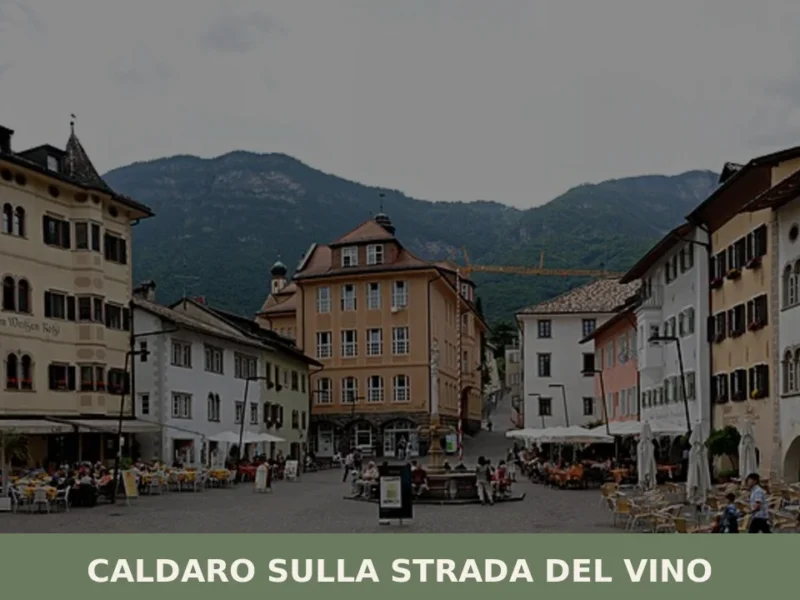
Caldaro sulla strada del vino
Caldaro sulla strada del vino — Kaltern an der Weinstraße in German — has 7,735 inhabitants and over 600 hectares of vineyards, the largest cultivated wine-growing area in South Tyrol. The place name itself declares the vocation of this centre in the province of Bolzano, which grew along the trade route linking the Bassa Atesina […]
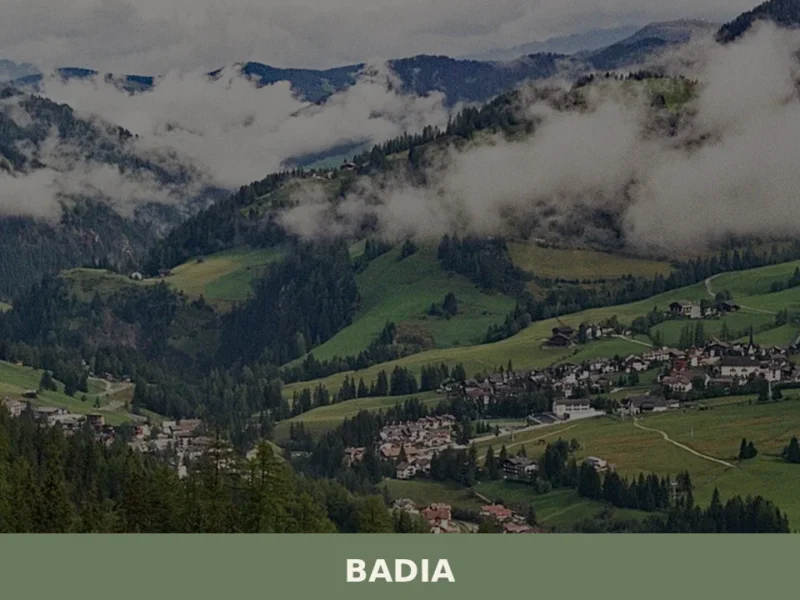
Badia
Badia has 3,396 inhabitants spread across six hamlets — San Leonardo, Pedraces, La Villa, San Cassiano, La Val and Antermoia — and occupies a stretch of the Val Badia where Ladin is the mother tongue for over ninety per cent of the population. Understanding what to see in Badia means entering a Dolomite valley where […]
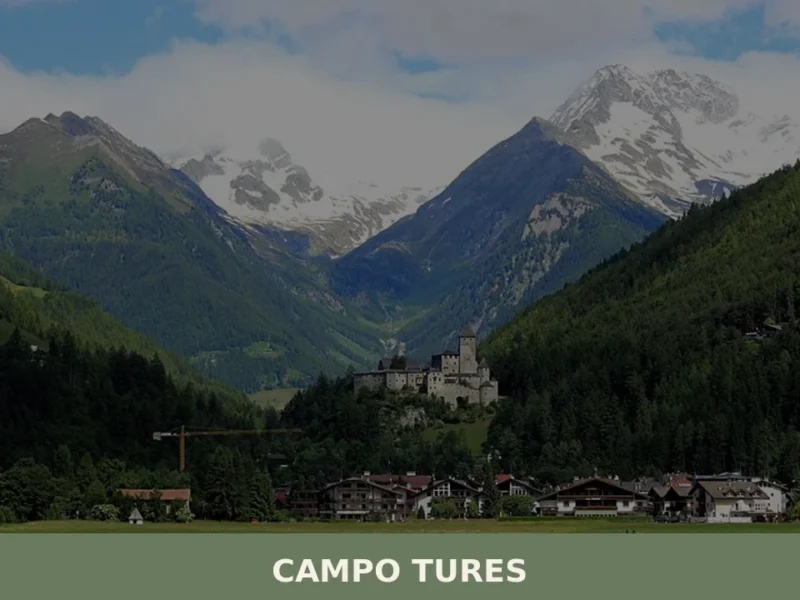
Campo Tures
Tures Castle, first documented in 1136, dominates Campo Tures from a rocky spur at the entrance to the Tures Valley, a side valley of the Aurina Valley. The village has 5,321 inhabitants, spread across an elevation of 864 metres, in a basin where the Aurino torrent slows before continuing south. Understanding what to see in […]

📝 Incorrect information or updates?
Help us keep the Bronzolo page accurate and up to date.