


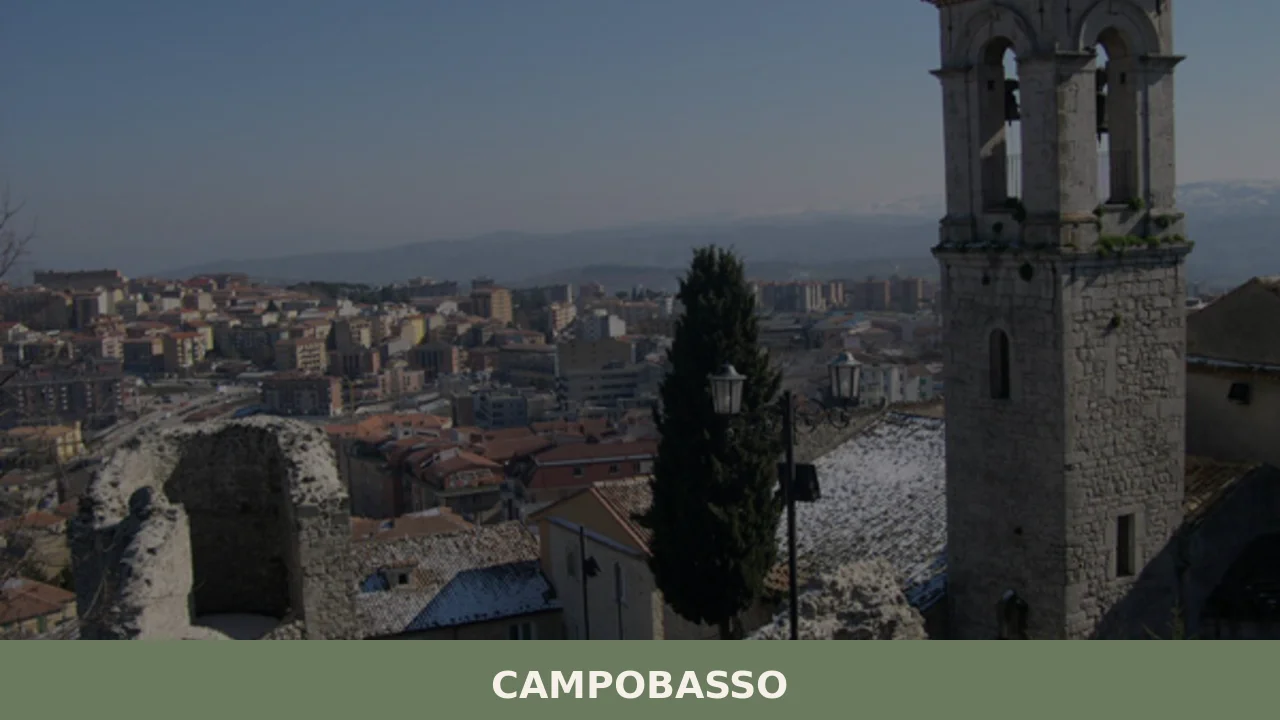
Campobasso
 Mountain
What to see in Campobasso: from the 5 top attractions to Monforte Castle. Discover the complete guide to visiting the capital of Molise.
Discover Campobasso
The scissors manufactured in Campobasso have been documented since the 14th century, when the city’s blade-making workshops supplied markets across the southern Apennines.
At 701 m (2,300 ft) above sea level, the city occupies the high basin of the Biferno river, encircled by the Sannio and Matese mountains.
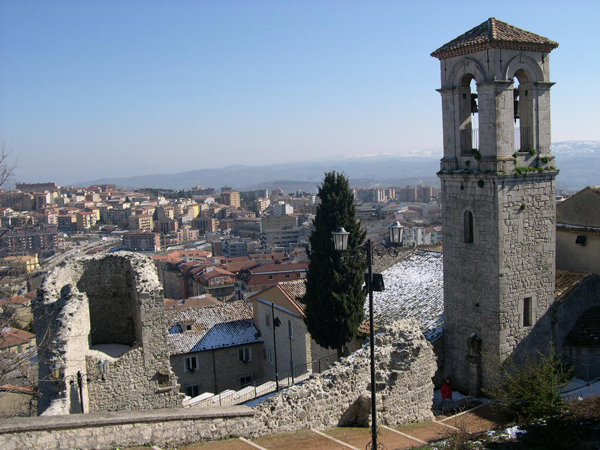
The castle on the ridge above the lower town sits at 792 m (2,598 ft), and on clear days the profile of the Apennine ridgeline fills the eastern horizon.
Knowing what to see in Campobasso helps visitors organise a realistic itinerary across a city of 48,487 inhabitants that functions as the regional capital of Molise.
The Castello Monforte, the medieval church of San Giorgio, and the neoclassical Cathedral of the Holy Trinity each represent a distinct layer of the city’s development.
Visitors to Campobasso find a compact historic core, documented culinary traditions centred on scamorza cheese and locally grown pears, and one of the few Italian regional capitals with no direct motorway connection — which influences how you arrive.
History of Campobasso
The name of the city derives from the Latin Campus vassorum, meaning “field of the vassals,” which identifies the site as the administrative seat of the vassals of the Duke of Spoleto. The most widely accepted theory holds that the Lombards founded the settlement before the 8th century as a fortified position on the hillside where the castle now stands. After the Norman conquest of southern Italy, Campobasso lost its function as a purely defensive stronghold and shifted toward commerce and civil administration, a transition that shaped the layout of the lower town.
Between 1330 and 1745 the city was governed by the Monforte-Gambatesa family, who commissioned the construction of the castle and operated a mint within the city.
Following their rule, control passed through successive noble families — Di Capua, Gonzaga, Vitagliano, Carafa, and Romano — each leaving administrative traces but few physical monuments.
The earthquake of 1456 and a subsequent one in 1805 forced repeated reconstruction of the upper settlement.
By 1763 the population had abandoned the old hilltop city entirely, relocating to the lower valley. King Joachim Murat of Naples expanded the current lower city in 1814, establishing the street plan of the district known as Campo Basso, meaning “low field,” which gives the city its modern name. The village of Molise itself, the small settlement that lent its name to the entire region, developed within this same geographic and political context during the medieval period.
The Second World War reached Campobasso directly in October and November 1943, when German and Canadian forces fought for control of the city. The fighting destroyed the City Hall and the municipal archives, and 38 civilians were killed, among them Bishop Secondo Bologna, head of the local diocese.
The Canadian military occupation that followed was significant enough that the city acquired the informal names “Canada Town” and “Maple Leaf City.” This historical connection is reflected today in the city’s twin-city relationship with Ottawa.
In 1995, Campobasso received the bronze medal for Civil Valour in recognition of the prolonged effort required to clear the surrounding territory of unexploded warheads, a task that continued until 1948.
What to see in Campobasso, Molise: top attractions
Castello Monforte
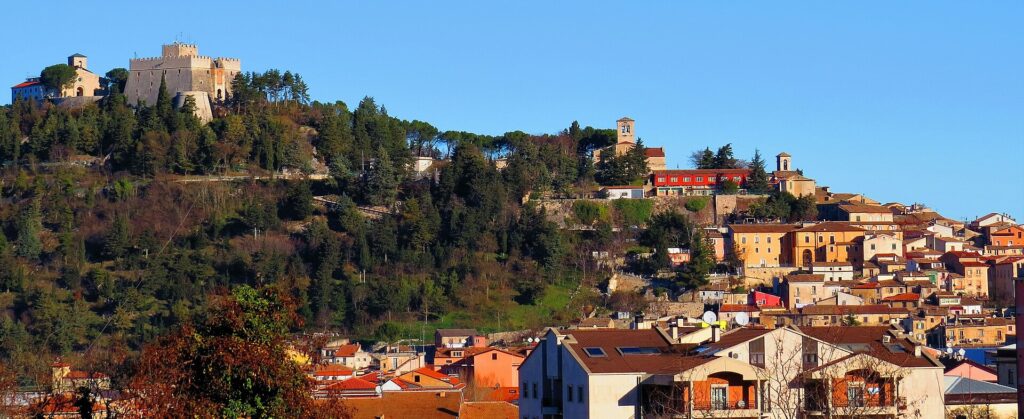
The castle’s Guelph merlons — the square-topped battlements that distinguish Guelph-aligned fortifications from Ghibelline ones — sit at 792 m (2,598 ft) and define the city’s skyline from any approach road.
Nicola II Monforte commissioned the current structure in 1450, building over earlier Lombard or Norman foundations.
Archaeological investigations at the site have identified traces of Samnite walls, indicating the ridge was occupied long before the medieval construction. The earthquakes of 1456 and 1805 each caused damage that required reconstruction, so the building visible today incorporates work from multiple centuries. It is worth climbing up to the castle in the morning, when the light comes from the east and the mountain profile beyond the Biferno basin is clearest.
Chiesa di San Giorgio
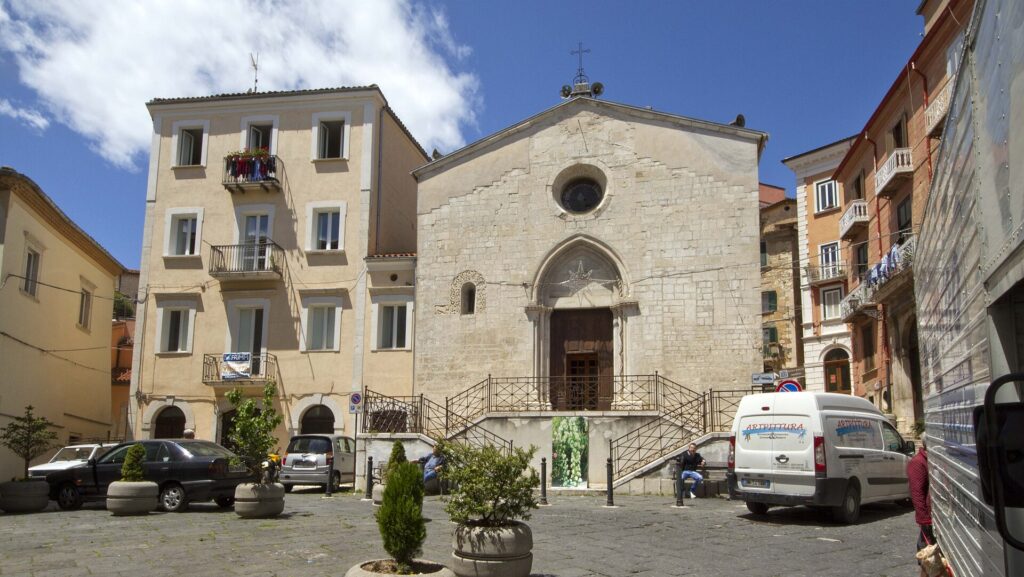
San Giorgio stands below the castle on a site that oral tradition and architectural evidence date to around the year 1000 AD, making it likely the oldest surviving church in Campobasso.
The building replaced a pre-Christian structure, and its position — directly beneath the castle walls — reflects the medieval integration of religious and military authority on the hilltop.
San Giorgio is also the city’s patron saint, whose feast falls on 23 April each year. The church’s exterior stonework shows the characteristic compact masonry of early Romanesque construction in the southern Apennine region, with minimal decorative carving.
Visiting during the week avoids the crowds that gather here around the April feast day.
Chiesa della Madonna del Monte (Santa Maria Maggiore)
The original construction of Santa Maria Maggiore dates to the 11th century, though the building was substantially rebuilt in 1525 following damage from the 1456 earthquake. Inside, the single most significant object is a carved wooden statue of the Incoronata — the Crowned Virgin — which is documented as having been produced in 1334, predating the rebuild by nearly two centuries.
The statue’s survival across earthquakes, war, and reconstruction makes it an unusually direct link to the medieval period.
The church sits on the upper slope of the historic hill, between the lower town and the castle. The interior lighting is dim, so visiting on a bright morning when the portal faces the light gives the best view of the sculptural detail.
Cathedral of the Holy Trinity (Chiesa della Santissima Trinità)
The Cathedral was first built in 1504, positioned outside the city walls as they stood at the time — a placement that became relevant when the 1805 earthquake destroyed the structure entirely. The Neoclassical replacement was completed in 1829, and its colonnaded facade represents a deliberate architectural departure from the Romanesque and Gothic vocabulary of the older buildings higher on the hill.
The Cathedral functions as the seat of the Archdiocese of Campobasso-Boiano, one of the institutional anchors of the city alongside the University of Molise.
The flat piazza in front of the Cathedral is the most accessible gathering point in central Campobasso, suitable for anyone arriving from the railway station on foot.
Villa de Capoa
Villa de Capoa is a formal garden recently restored after a period of neglect, containing a collection of tree species unusual for this altitude and latitude.
Among the documented species are sequoias, Norway spruces, cypresses, and Lebanon Cedars — each one marking a planting decision from an era when European botanical gardens competed to display exotic specimens. The garden also includes figurative statues distributed along its paths. At 701 m (2,300 ft) the growing conditions are cooler than coastal southern Italy, which has allowed the northern European conifers to establish mature canopies.
The garden is open for public access and provides the clearest contrast in the city between the stone-built historic core and a planned green space.
Local food and typical products of Campobasso
Campobasso’s food production reflects its position in the high Biferno basin, where the climate is cool enough to support dairy farming and fruit cultivation at altitude.
The city is documented as a production centre for scamorza, a semi-soft stretched-curd cheese made from cow’s milk, and for pears, which grow in the orchards of the surrounding hill territory. Both products have been associated with the city for long enough to appear in descriptions of local trade from the early modern period.
Molise as a whole has one of the smallest surface areas of any Italian region, which means the food culture of Campobasso draws from a concentrated territory rather than a diverse landscape.
The town of Larino, situated in the lower Biferno valley to the east, shares some of the same pastoral traditions that underpin the dairy production found in Campobasso’s markets.
The most visible local dish built around scamorza is the grilled version, scamorza alla brace, where the cheese is placed directly on a iron grill over charcoal until the exterior develops a firm brown crust while the interior remains molten.
The technique requires fresh rather than aged cheese, since older scamorza loses too much moisture.
Pasta e fagioli molisana — a thick soup of short pasta and borlotti beans seasoned with guanciale and local chilli — represents the inland mountain tradition of combining legumes with cured pork fat for a calorically dense winter meal.
Agnello alle erbe, lamb roasted with mountain herbs including rosemary and wild fennel, reflects the long transhumance tradition of Molise, where sheep flocks historically moved between coastal and Apennine pastures along fixed routes.
The blade-making craftsmanship documented since the 14th century produced a secondary food culture in the city: Campobasso scissors and knives were traded across the region, and the quality of local cutting tools influenced the precision butchery techniques applied to the cured meats produced in the surrounding villages.
While this is not a certified designation, it forms a documented part of the city’s economic history. Scamorza di Campobasso is the most widely recognised local dairy product, produced from full-fat cow’s milk, hand-formed into its characteristic pear shape, and smoked over straw in some variations.
It is sold fresh in the city’s covered market.
Festivals, events and traditions of Campobasso
The feast of San Giorgio, patron saint of Campobasso, falls on 23 April each year.
The celebration centres on the church of San Giorgio in the upper historic district, with a formal religious procession that carries the image of the saint through the streets of the old quarter. The April date places the feast in spring, when the mountain weather at 701 m (2,300 ft) can still be cold, so the procession is a physically demanding event for participants and spectators alike.
The day combines liturgical ceremony with the informal gatherings typical of Italian civic feast days, including the opening of outdoor food stalls in the piazzas below the church.
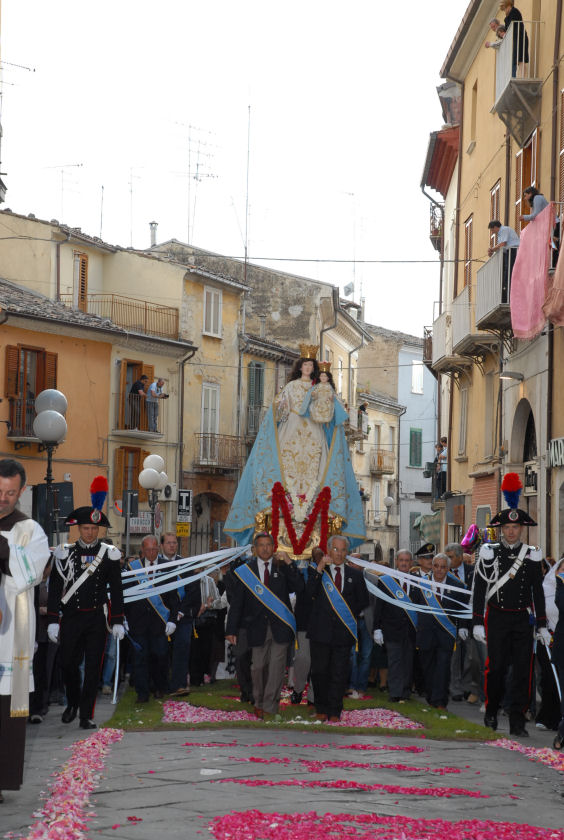
Campobasso’s most visually distinctive traditional event is the Sagra dei Misteri, a local sagra — a traditional festival tied to a specific food or cultural practice — that takes place on the feast of Corpus Christi, which falls in late May or June depending on the liturgical calendar.
The procession involves elaborate floats called i Misteri, in which costumed figures representing biblical scenes are suspended above the street on iron frames, creating the illusion that the performers are floating in mid-air.
This tradition has been performed in Campobasso for several centuries and is the most widely documented local cultural practice associated with the city.
When to visit Campobasso, Italy and how to get there
The best time to visit Campobasso for comfortable outdoor sightseeing is late spring, specifically May and early June, when temperatures average around 15-18 °C (59-64 °F), the mountain vegetation is fully green, and the Corpus Christi festival provides a cultural anchor for the trip.
Summer temperatures reach around 23 °C (73 °F) on average and the air at altitude remains drier than coastal Italy.
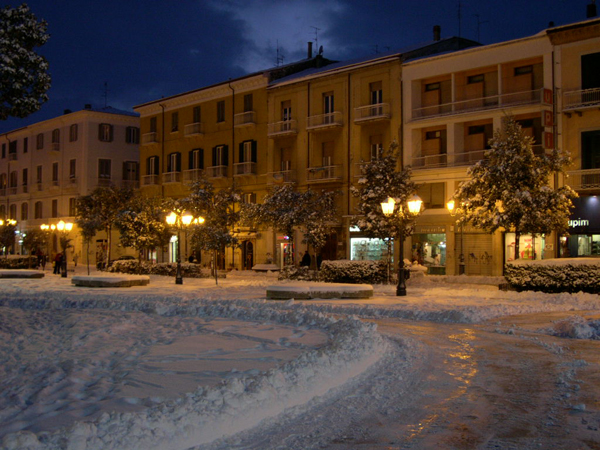
Autumn brings the heaviest rainfall, with approximately 77 mm (3.0 in) of rain in November alone, making outdoor visits to the upper castle district less comfortable. Winter in Campobasso is genuinely cold — the city is documented as one of the coldest in central and southern Italy — and snowfall is frequent, which can make the cobbled upper streets difficult to navigate safely.
Campobasso does not have its own airport. The nearest major facility is Naples International Airport, located 154 km (96 mi) to the south-west. From Naples, reaching Campobasso by car takes approximately 1 hour 45 minutes via the State Road SS647 Fondo Valle del Biferno, which follows the Biferno river valley uphill into the city.
If you arrive by car from Rome, the distance is approximately 230 km (143 mi), taking around 2 hours 30 minutes, making Campobasso a feasible day trip destination from the capital for those focused on the historic centre.
The Campobasso railway station sits in the centre of the city and connects two lines: the route from Termoli on the Adriatic coast to Vairano, and the branch line from Benevento.
Train services from Naples require a change and take approximately 2 to 2.5 hours depending on the connection. Urban bus transport within the city operates across 23 lines run by the SEAC company. For international visitors, English is spoken in larger hotels and at the university, but smaller shops and the covered market operate primarily in Italian; carrying cash in euros is advisable since card acceptance is inconsistent in the historic quarter.
Those arriving from the Adriatic side of Molise can combine the visit with a stop at Acquaviva Collecroce, one of the villages in the province that preserves a distinct Slavic-origin dialect and medieval street plan.
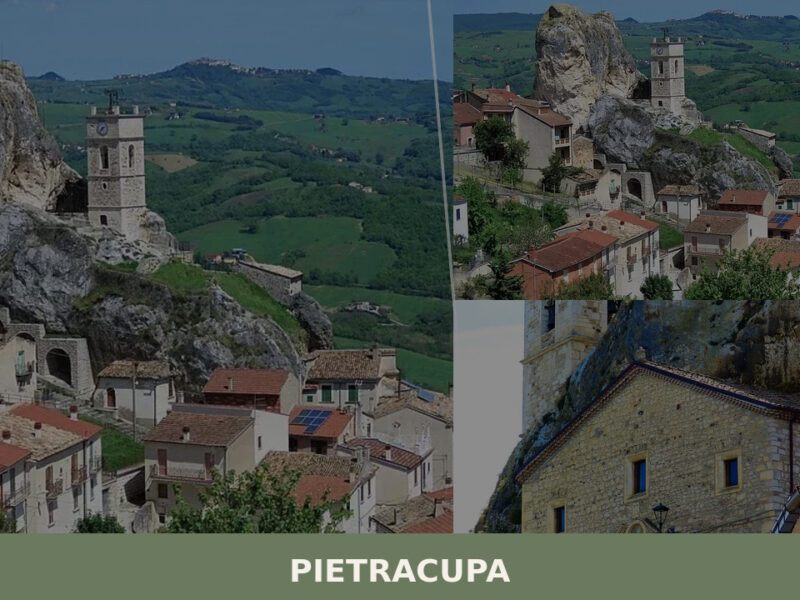
Travellers interested in smaller Molise settlements can also include Pietracupa, a compact mountain village roughly 30 km (18.6 mi) south of Campobasso, as a half-day addition to the itinerary before descending toward the Campobasso basin.
Frequently asked questions about Campobasso
What is the best time to visit Campobasso?
Spring and early autumn are ideal. April is particularly rewarding: the city celebrates its patron saint San Giorgio on 23 April, when processions and events animate the historic hilltop quarter around the medieval church bearing his name. Summer temperatures at 701 m stay mild compared to coastal Italy, making July and August comfortable for sightseeing. Winter brings cold mountain conditions and occasional snow, which suits visitors interested in a quieter, atmospheric stay. Avoid driving in during winter without checking road conditions, as the lack of a direct motorway connection makes approach routes weather-dependent.
What are the historical origins of Campobasso?
The name derives from the Latin Campus vassorum, 'field of the vassals,' identifying it as an administrative seat under the Duke of Spoleto. Lombard origins predate the 8th century, with the hilltop fortified as a defensive position. After the Norman conquest, the city shifted toward commerce. From 1330 to 1745 the Monforte-Gambatesa family governed the city, commissioning the castle and operating a mint. The 1456 and 1805 earthquakes repeatedly forced reconstruction. By 1763 the hilltop was abandoned; King Joachim Murat established the modern lower city plan in 1814, giving rise to the name 'Campo Basso,' meaning low field.
What to see in Campobasso? Main monuments and landmarks
The top four sites form a clear itinerary. Castello Monforte (792 m) crowns the ridge with Guelph merlons and panoramic views over the Biferno basin — best visited on a clear morning. Below it, the Romanesque Chiesa di San Giorgio dates to around 1000 AD and is the oldest surviving church in the city. Santa Maria Maggiore preserves a carved wooden Crowned Virgin statue from 1334. The Neoclassical Cathedral of the Holy Trinity (completed 1829) anchors the lower city near the railway station. Villa de Capoa, a restored botanical garden with sequoias and Lebanon Cedars, offers a green contrast to the stone historic core.
What are the main natural or scenic attractions of Campobasso?
Campobasso sits at 701 m in the high Biferno basin, encircled by the Sannio and Matese mountains. The Matese mountain group, one of the highest massifs in the southern Apennines, is accessible within a short drive and offers documented hiking and nature routes. The Biferno valley itself provides scenic ridge walking territory. Villa de Capoa within the city features mature Nordic conifers — sequoias, Norway spruces, and Lebanon Cedars — rare at this latitude, making it a notable botanical stop. On clear days the eastern Apennine ridgeline is visible from the castle at 792 m.
Where to take the best photos in Campobasso?
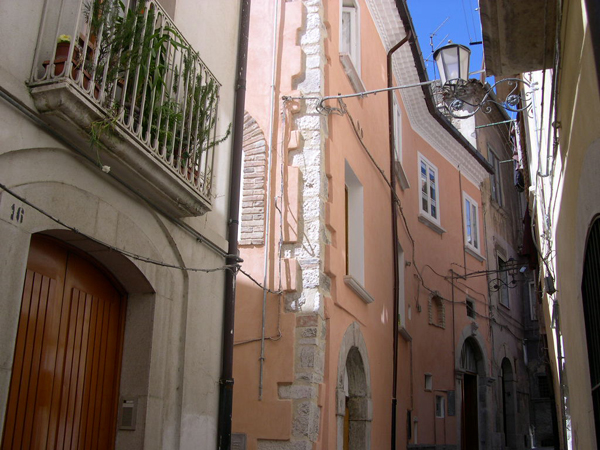
The terrace around Castello Monforte at 792 m offers the most commanding panorama: the Biferno basin spreads below and the Apennine ridgeline fills the eastern horizon, best photographed in morning light when shadows define the mountain profiles. The stepped lanes climbing from the lower town toward San Giorgio church provide classic views of the medieval hilltop layered against the castle above. The colonnaded facade of the Cathedral of the Holy Trinity photographs well in afternoon light from the flat piazza in front of it. Villa de Capoa's mature sequoias and cedar canopies offer unusual green framing for architectural shots.
Are there museums, churches or historic buildings to visit in Campobasso?
The city holds four principal historic buildings. Castello Monforte (1450, built over earlier Lombard or Norman foundations) is the dominant landmark and open to visitors. Chiesa di San Giorgio, likely dating to around 1000 AD, is the oldest church in the city and the seat of the patron saint's April feast. Santa Maria Maggiore (rebuilt 1525) contains the 1334 carved wooden Incoronata statue. The Cathedral of the Holy Trinity (1829) is the seat of the Archdiocese of Campobasso-Boiano. For specific opening hours and admission fees, check directly with the Comune di Campobasso or local tourist office, as schedules vary seasonally.
What can you do in Campobasso? Activities and experiences
Visitors can walk the documented ascent from the lower city through the medieval quarter to Castello Monforte, passing the two oldest churches along the route. The Matese mountains nearby offer hiking at altitude. The city's covered market sells fresh local scamorza cheese and seasonal pears from the surrounding hill orchards — tasting and purchasing directly from producers is a reliable activity. The patron saint feast of San Giorgio on 23 April brings processions and street activity to the historic quarter. The connection to Canada Town history, including twin-city ties with Ottawa, makes the WWII-era sites and memorials a distinctive cultural itinerary.
Who is Campobasso suitable for?
Campobasso suits travellers who prefer authentic regional capitals over tourist-saturated destinations. History enthusiasts will find a layered city spanning Lombard, Norman, medieval, and Neoclassical periods. Foodies focused on inland southern Italian cuisine — scamorza, lamb, mountain legume dishes — will find a working food culture rather than a staged one. Hikers use the city as a base for the Matese mountains. The compact historic core and flat cathedral piazza make it manageable for families and older visitors. The absence of a motorway connection means the city attracts independent travellers comfortable with regional rail or road navigation rather than coach-tour groups.
What to eat in Campobasso? Local products and specialties
Scamorza di Campobasso is the city's most recognised dairy product: a stretched-curd cow's milk cheese hand-formed into a pear shape, sold fresh in the covered market and sometimes smoked over straw. Grilled scamorza alla brace — charcoal-grilled until the exterior crisps and the interior turns molten — is the most characteristic local preparation. Pasta e fagioli molisana, a thick borlotti bean and short pasta soup with guanciale and local chilli, is the emblematic mountain dish. Agnello alle erbe, lamb roasted with rosemary and wild fennel, reflects Molise's transhumance heritage. Local pears from hill orchards around the city appear in season from late summer.
📷 Photo Gallery — Campobasso
Nearby Villages near Campobasso
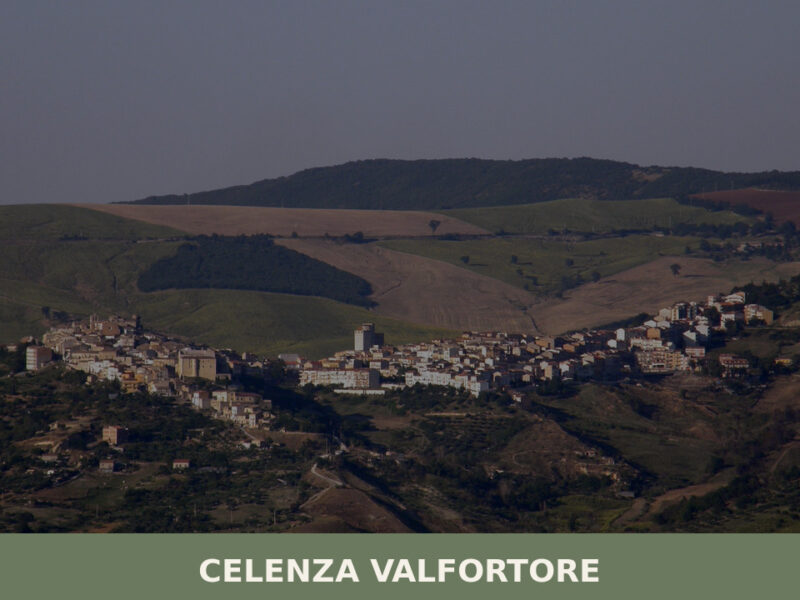
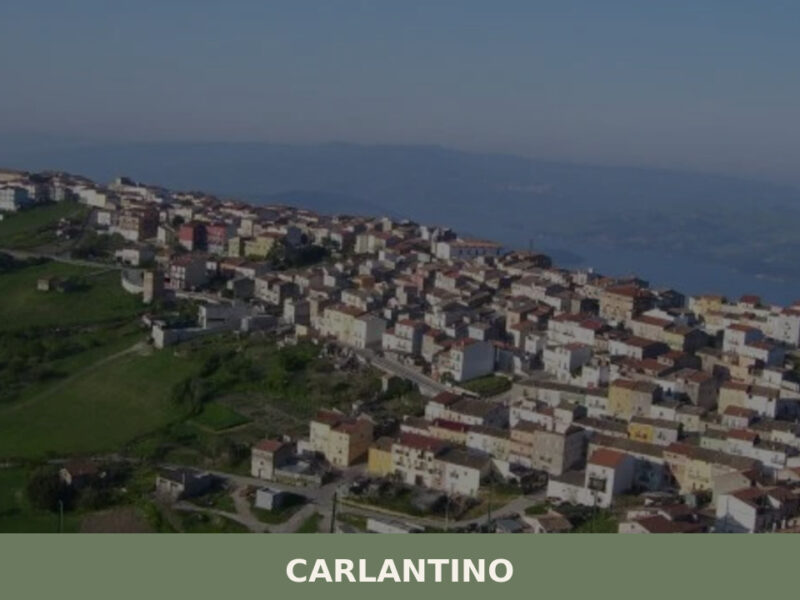
In Molise More villages to discover
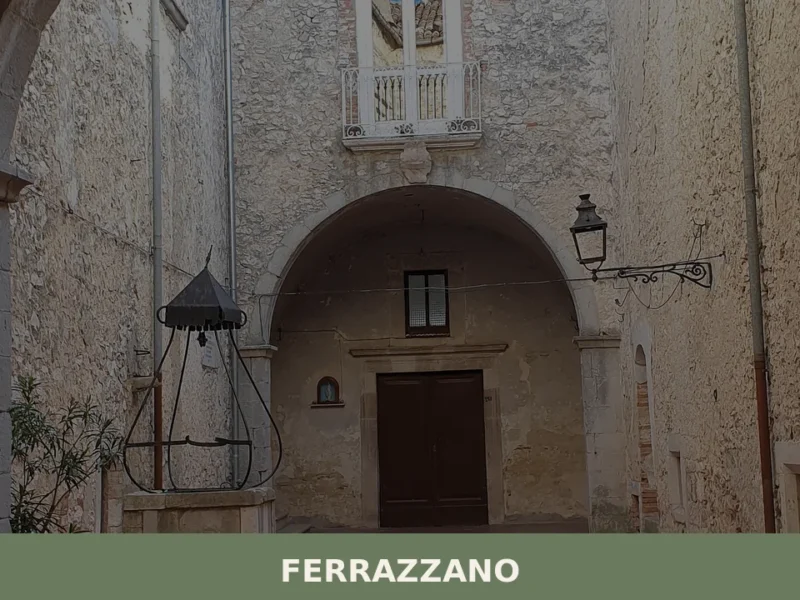
Ferrazzano
Mountain
Morning light hits the limestone walls of Ferrazzano at an angle that turns every alley into a corridor of pale gold. At 872 metres above sea level, the air carries a sharpness that the lower towns of Molise never know — a clarity that makes the distant Adriatic coast visible on days when the haze […]
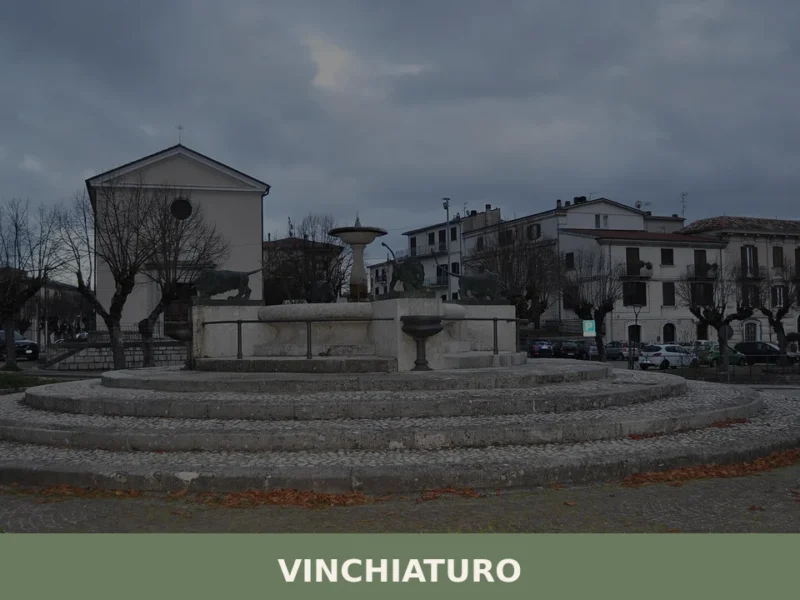
Vinchiaturo
Mountain
Morning mist settles into the valley below as church bells mark the hour from somewhere above the rooftops. At 620 metres above sea level, the air in Vinchiaturo carries a sharpness that cuts through the warmth of Molise’s interior hills. With just over 3,300 inhabitants, this is a village where the rhythm of daily life […]
Acquaviva Collecroce
 Hills
Hills
Discover Acquaviva Collecroce, a charming Croatian-speaking village in Molise, Italy. Explore its unique culture, history, traditions, and stunning landscapes.
Cercemaggiore
Mountain
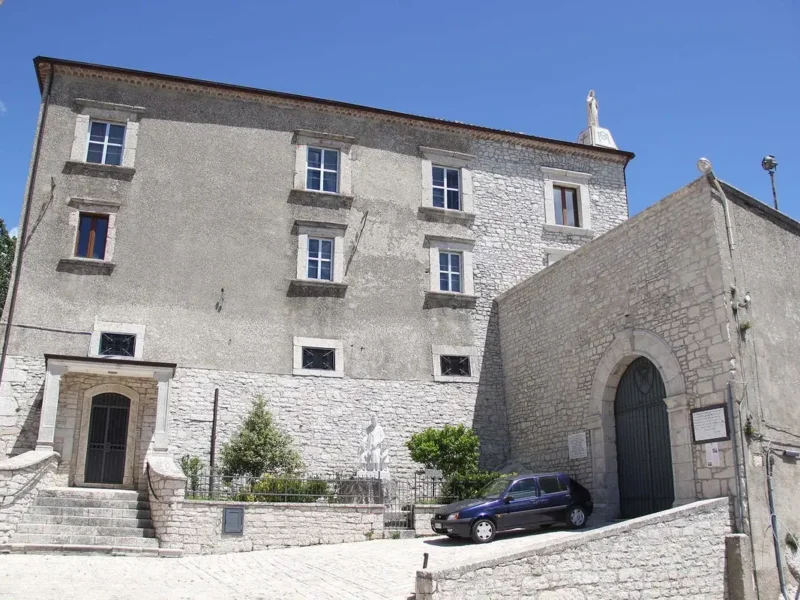
What to see in Cercemaggiore, Italy? Explore this mountain village at 930m (3,051 ft) altitude. Discover its historic core and panoramic views. Read our guide for your visit.
Larino
Hills
A layered town of Roman ruins and medieval stone in the Molisan countryside. Here is everything to see in Larino, from its amphitheatre to the Festa di San Pardo.
Molise
Mountain
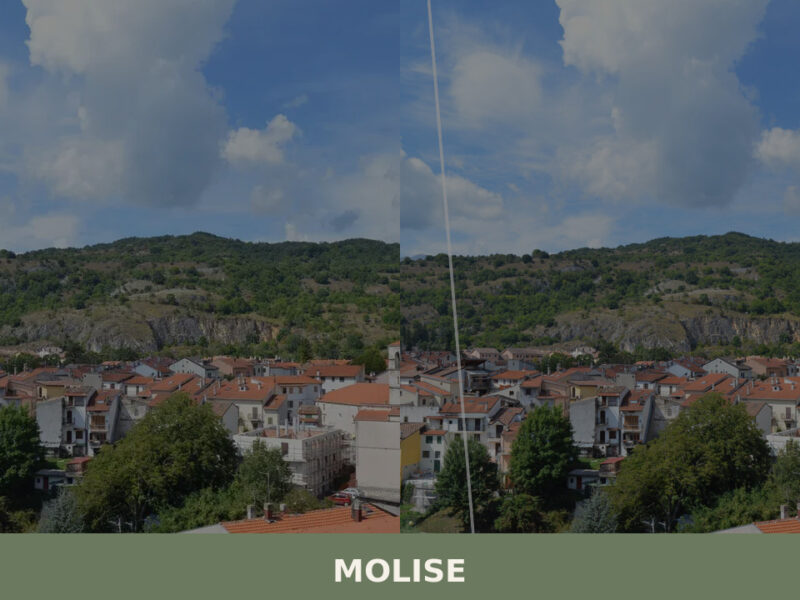
Molise is Italy's youngest and least-visited region. From Samnite theatres to Adriatic fishing towns, here is what to see in Molise.
Campomarino
 Sea
Sea
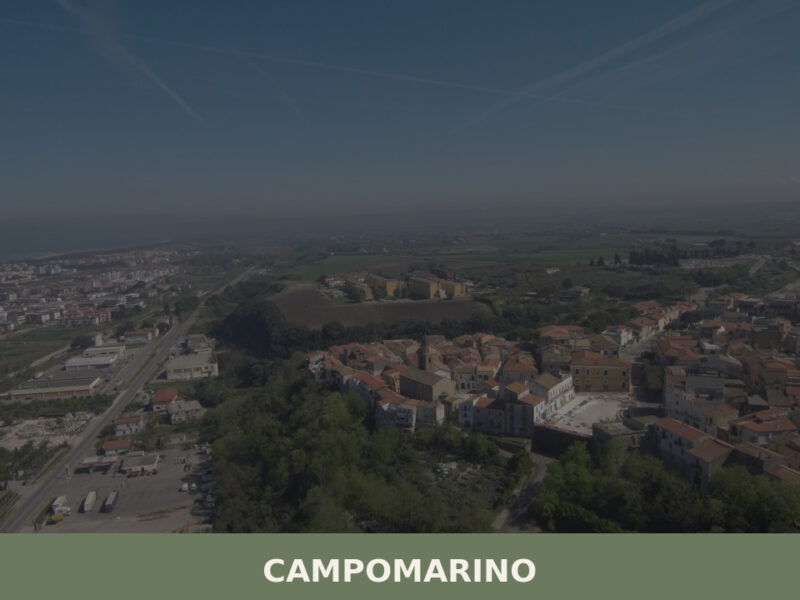
Campomarino straddles a Molise hilltop and the Adriatic shore. Explore its Arbëreshë heritage, three historic churches, and the unspoiled coast of Campomarino Lido.
Baranello
Mountain
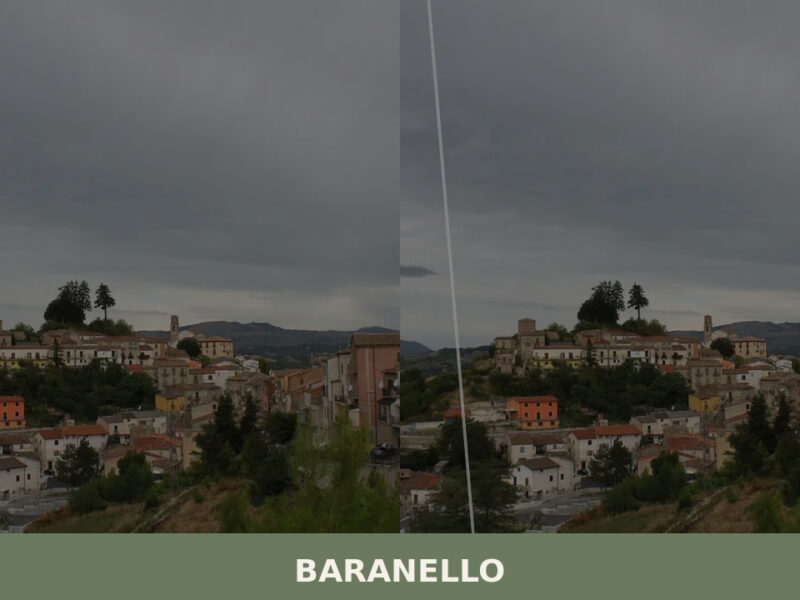
A documentary guide to Baranello in Molise — its civic museum, medieval churches, castle, and the quiet rhythms of an overlooked Italian hill village.
Casacalenda
Mountain
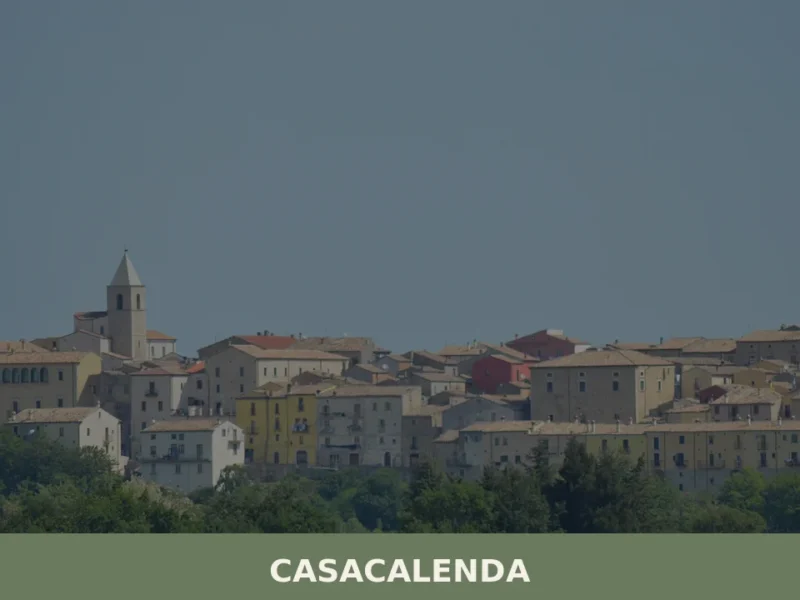
Morning light hits the limestone facades along Corso Roma and the sound is not silence but something close — a dog barking two streets away, the clatter of a shutter being folded back, the low idle of a Fiat Panda parked outside the only bar open before eight. Casacalenda sits at 631 metres above sea […]
Tavenna
Hills
A complete guide to Tavenna in Molise: its medieval stone centre, parish church, panoramic hillside views, and the quiet rhythms of inland southern Italy.

🏡 Know Campobasso better than we do?
If you’re a local or have been there, your knowledge matters: add what’s missing or fix a detail on this page.