


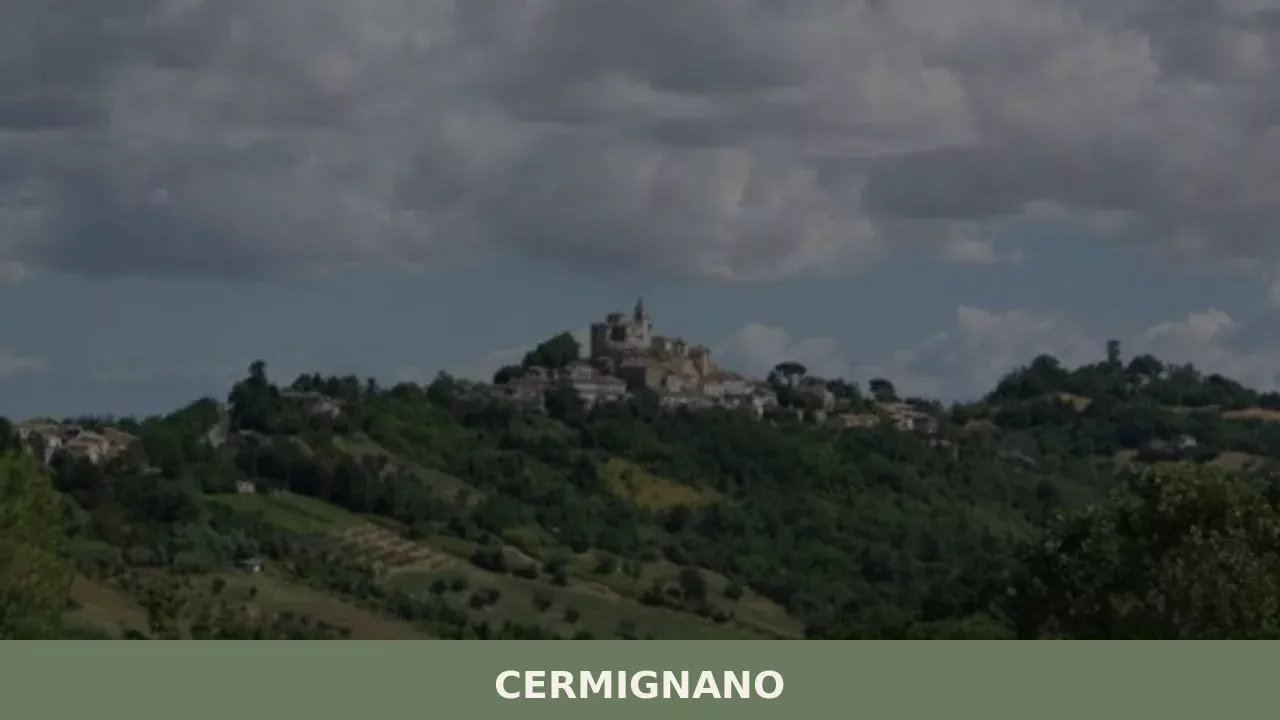
Cermignano
With its 1,440 inhabitants, Cermignano stands at 563 meters above sea level, offering a view of the Vomano valley and the foothills of Gran Sasso. This town in the province of Teramo, whose patron saint is Saint Sylvester, appears as a hillside settlement that retains traces of its historical development. For those wondering what to […]
Discover Cermignano
With its 1,440 inhabitants, Cermignano stands at 563 meters above sea level, offering a view of the Vomano valley and the foothills of Gran Sasso. This town in the province of Teramo, whose patron saint is Saint Sylvester, appears as a hillside settlement that retains traces of its historical development. For those wondering what to see in cermignano, the village reveals an urban fabric that has consolidated over centuries, from its first settlements to its current configuration, representing an example of the typical settlement dynamics of inland Abruzzo.
History and Origins of Cermignano
The origins of Cermignano are rooted in the Roman era, as suggested by the toponym which might derive from fundus Cermenianus or from a gens Herminia. After the fall of the Western Roman Empire, the territory was influenced by Lombard rule, which left marks on the landscape organization and early fortifications. In the Middle Ages, Cermignano became part of the Contado di Atri, an important feudal entity of the Kingdom of Naples, later coming under the control of powerful noble families such as the Acquaviva.
The village has maintained its agricultural calling over time, developing an economy linked to the cultivation of cereals, olive trees, and vines. Its strategic position, on a ridge overlooking the surrounding valleys, made Cermignano a point of observation and control of the territory, though it never reached the size of a primary urban center. The civil and religious architectures that define the old core indicate the different historical periods that shaped its appearance.
What to See in Cermignano: 5 Unmissable Attractions
1. The Church of Saint Sylvester Pope
The main place of worship in the village, dedicated to the patron saint. Its structure has undergone modifications over the centuries, featuring elements ranging from Romanesque to Baroque. The interior preserves sacred artworks and wooden furnishings that reflect local devotion and the craftsmanship of Abruzzese artists. It is a reference point for the community and an example of the religious architecture of the area.
2. Palazzo De Sterlich
A historic residence that stands out in Cermignano’s urban fabric. Palazzo De Sterlich, with its facade and architectural details, is an expression of noble elegance. It represents an example of civil architecture that characterized village life in past centuries, indicating the presence of influential families and their contribution to local development.
3. The Historic Center
Cermignano’s oldest core is a network of streets and squares that developed around the main buildings. Walking among the stone constructions, one can observe architectural details, doorways, and small internal courtyards that recount the daily life of the village. The urban planning reflects the adaptation to the hilly territory and the stratification of eras.
4. The Old Fountain
A service element and social gathering point, the Old Fountain represented for decades an essential point for the village’s water supply. Its structure, simple yet functional, is an example of utilitarian architecture that holds historical and identity value for the community of Cermignano, a symbol of a time when water was a resource to be managed with care.
5. The Viewpoint over the Vomano Valley
From the heights of Cermignano, panoramic views open up over the Vomano Valley, a wide river basin that extends to the Adriatic Sea. On clear days, the view can stretch to the peaks of Gran Sasso and Maiella, offering an image of Abruzzo’s landscape diversity, from the mountains to the coast, passing through the gentle hills.
Traditional Cuisine and Local Products
The table of Cermignano reflects the culinary traditions of Teramo Abruzzo, based on simple and genuine ingredients from local agriculture and pastoral farming. Among the first courses, maccheroni alla chitarra stand out, often seasoned with mixed meat ragù, and scrippelle ‘mbusse, thin crepes immersed in chicken broth. Lamb meat, from the surrounding hillside farms, is a main ingredient in various preparations, such as grilled or oven-baked lamb with potatoes.
Among the local products, Teramane Hills PDO Extra Virgin Olive Oil holds a prominent place, a product of the olive groves that dot the landscape. Typical cured meats, such as Teramo ventricina, are also available, as are pecorino cheeses, produced with milk from local flocks. The Montepulciano d’Abruzzo and Trebbiano d’Abruzzo wines, expressions of the territory, accompany meals. Summer festivals offer opportunities to taste these specialties, often prepared according to recipes passed down through generations.
When to Visit Cermignano: The Best Time
Cermignano offers a different experience depending on the season. Spring and autumn are the ideal times to visit the village, thanks to mild temperatures and nature displaying full bloom or the warm colors of foliage. These months allow for walks in the historic center and the surrounding countryside, enjoying the climate without extreme heat or cold.
Summer, while warm, is enlivened by local events and food festivals that brighten the evenings. The feast of the patron saint Saint Sylvester, celebrated in December, offers an opportunity to discover the village in a more intimate and traditional atmosphere, although the winter climate can be harsh, with the possibility of snow making the landscape evocative.
How to Get to Cermignano
To reach Cermignano, one can use a car. The village is accessible via the provincial road network. From the Adriatic coast, take the A14 motorway (Bologna-Taranto) to the Roseto degli Abruzzi or Teramo-Giulianova exit, then continue on state and provincial roads towards the interior. From Rome, one can follow the A24 motorway (Rome-Teramo) to the Teramo exit, from which it is approximately 20-30 kilometers further.
The nearest train station is Teramo, served by regional connections. The reference airport is Abruzzo Airport in Pescara (PSR), located about 60 kilometers away, offering national and international flights. From Pescara or Teramo, it is possible to rent a car or use public transport services, albeit with limited frequency.
Other Villages to Discover in Abruzzo
Abruzzo is a region that holds numerous small settlements, each with its own historical and landscape characteristics. After visiting Cermignano and its hillside tranquility, one can continue exploring the Abruzzese interior. For example, the village of Carsoli, located in the province of L’Aquila, offers a mountain setting with remains of medieval architecture and a history linked to ancient communication routes.
Moving towards the province of Chieti, one encounters Archi, another village that developed on a height, overlooking the Sangro valley. These centers, despite their geographical and historical diversity, share with Cermignano the authenticity of a lesser-known Abruzzo, where the relationship between people and territory remains deeply rooted.
In Abruzzo More villages to discover
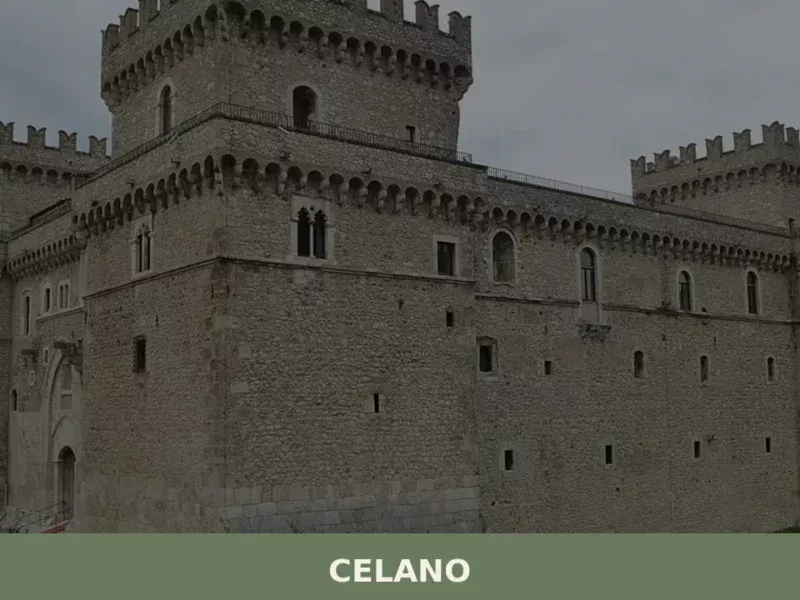
Celano
The Castello Piccolomini in Celano, with its four corner towers and curtain wall enclosing a perimeter of over one hundred metres, commands the Fucino plain from an altitude of 840 metres. Anyone wondering what to see in Celano will find an unequivocal starting point here: a fortress that has endured six centuries of history, earthquakes […]
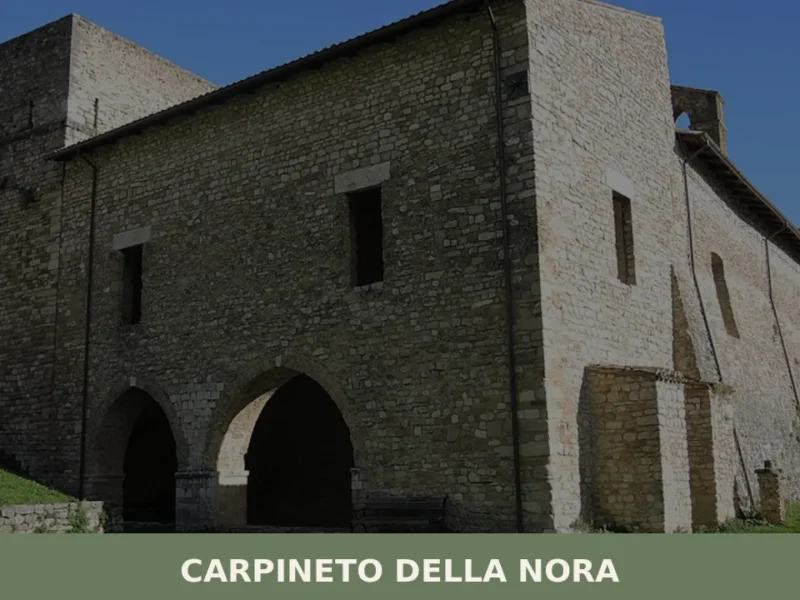
Carpineto della Nora
At 535 metres above sea level, on the ridge separating the Nora valley from the Pescara plain, Carpineto della Nora has a current population of 536 — a number that has halved since post-war censuses. Anyone looking into what to see in Carpineto della Nora will find a settlement built entirely from local stone, spread […]
Castelguidone
Castelguidone has 294 inhabitants and occupies a ridge at 775 metres above sea level in the upper Trigno valley, on the border between Abruzzo and Molise. The place name, documented in Angevin records from the 13th century, points to a fortified settlement linked to a feudal lord named Guidone. Anyone looking for what to see […]






📝 Incorrect information or updates?
Help us keep the Cermignano page accurate and up to date.