


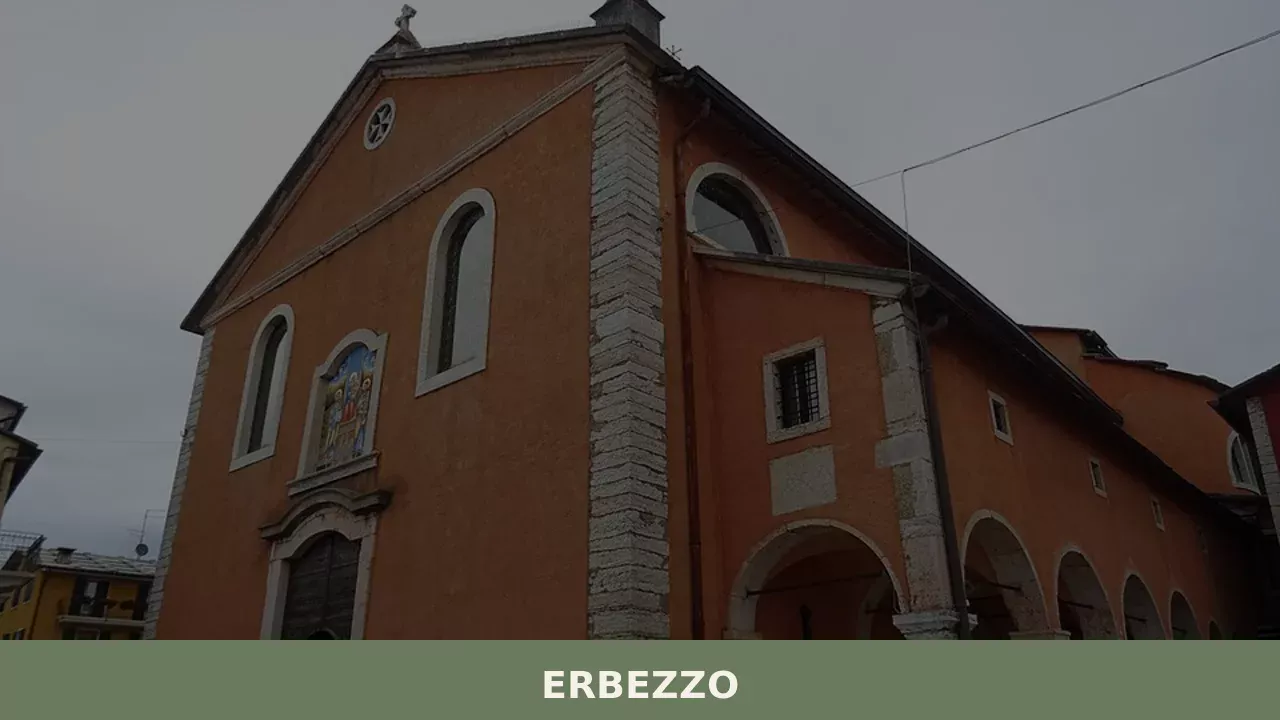
Erbezzo
At 1,118 metres above sea level, on the eastern edge of the Veronese Lessinia, Erbezzo has 756 inhabitants spread between the municipal centre and a handful of hamlets scattered across the pastures. It is the highest municipality in the province of Verona and one of the few where the pastoral economy has never fully given […]
Discover Erbezzo
At 1,118 metres above sea level, on the eastern edge of the Veronese Lessinia, Erbezzo has 756 inhabitants spread between the municipal centre and a handful of hamlets scattered across the pastures. It is the highest municipality in the province of Verona and one of the few where the pastoral economy has never fully given way to tourism. Asking what to see in Erbezzo means preparing to read a landscape where limestone geology, still-active mountain dairies and a network of marked trails form a precise catalogue of reasons to make the climb up here.
History and origins of Erbezzo
The place name Erbezzo most likely derives from the Latin herbaceum, referring to the abundance of grassy pastures that characterise the plateau. The first documented mention of the settlement dates to the medieval period, when the community fell within the holdings of the Della Scala family, rulers of Verona from 1262 to 1387. With the transfer of the Lessinia to the Republic of Venice in the 15th century, Erbezzo was incorporated into the administrative system of the Thirteen Communes of the Lessinia, a territorial entity of Cimbrian origin that enjoyed special autonomies and fiscal privileges granted by the Serenissima in exchange for the defence of the mountain borders.
The Cimbrian element — a population of Germanic origin that settled on the Veneto plateaux from the 13th century onwards — left traces in local place names and in the layout of the hamlets. The limestone houses with roofs made of Lessinia stone slabs, known as laste, followed a building model designed for high-altitude conditions: thick walls, small openings, stables on the ground floor to exploit animal warmth. After annexation to the Kingdom of Italy in 1866, Erbezzo remained a municipality with an agro-pastoral vocation, tied to seasonal cheese production in the mountain dairies and to timber harvesting in the beech and Norway spruce forests covering the northern slopes of the territory.
During the Second World War the area saw partisan operations, aided by the rugged terrain and dense woodland cover. In the post-war years depopulation hit the more isolated hamlets hard, but the central nucleus maintained a continuity of habitation that persists to this day, with a stable population below one thousand residents for over half a century.
What to see in Erbezzo: 5 main attractions
1. Parish Church of San Filippo Apostolo
Dedicated to the patron saint of the village, celebrated on 3 May, the church preserves an architectural layout remodelled over the course of the 18th and 19th centuries. The interior features a main altar in polychrome marble and several canvases from the Veronese school. The façade, plain and plastered, faces the main square, the focal point of community life in Erbezzo.
2. Fossil Trail of the Covolo di Camposilvano
A few kilometres from the centre, the Covolo di Camposilvano is a karst sinkhole approximately 70 metres deep, formed by the collapse of an underground cavity’s vault. The trail leading to it crosses limestone outcrops rich in ammonite and belemnite fossils dating to the Jurassic and Cretaceous periods, evidence of the ancient seabed from which the Lessinia was formed.
3. Contrada Laste and Cimbrian architecture
The hamlets scattered around Erbezzo preserve clusters of rural buildings with local stone masonry and limestone slab roofing. Contrada Laste, in particular, shows a layout of buildings designed around livestock rearing: stable-hayloft downhill, dwelling uphill, with covered passages between structures. It is a built record of the Cimbrian culture of the Lessinia, legible without the need for explanatory panels.
4. Lessinia Regional Natural Park
Erbezzo falls entirely within the boundaries of the Lessinia Regional Natural Park, established in 1990. From the municipal territory, CAI-marked trails lead towards Cima Trappola (1,170 m) and the summit meadows, where between June and July wild orchids, gentians and narcissi bloom. Recorded fauna includes roe deer, marmots and the black grouse.
5. The active mountain dairies of the Lessinia
Several mountain dairies with seasonal cheese production still operate on the territory of Erbezzo, active from June to September during the summer grazing period. The structures — recognisable by their rectangular plan with an attached milking pen — produce fresh and aged cheese from raw cow’s milk using manual methods. Some can be reached on foot via the trails of the Lessinia Park.
Food and gastronomy in Erbezzo: local products and dishes
The table in Erbezzo reflects the altitude and latitude with precision. The most important product of the territory is Monte Veronese DOP, a cow’s milk cheese produced in two types — latte intero (fresh, soft paste) and d’allevo (aged, hard and grainy paste) — whose production area coincides with the Lessini Mountains and therefore with the municipality of Erbezzo. The ageing of Monte Veronese d’allevo can exceed twelve months, developing piquant notes and a crumbly texture. Alongside the cheese, traditional local dishes include gnòchi sbatùi, potato gnocchi dressed with melted butter and grated Monte Veronese, and pearà, a Veronese sauce made from stale bread, beef marrow, broth and black pepper, served as an accompaniment to boiled meats. Polenta made from stone-ground maize flour remains the staple carbohydrate, eaten with porcini and chanterelle mushrooms gathered in the surrounding woods or with soppressa veronese, a coarse-grained cured pork sausage.
Among the products of the Lessinia undergrowth, Lessinia black truffle (Tuber aestivum and Tuber melanosporum) has a regulated harvest and appears on menus in local restaurants, grated over egg tagliatelle or fried eggs. Wild herbs — dandelion, nettle, wild hop (bruscansi) — are used in omelettes and spring soups. In Erbezzo and the nearby hamlets the Festa della Lessinia is held periodically, an occasion at which local producers display mountain dairy cheeses, Lessinia wildflower honey and Grappa del Veneto. The municipal website publishes the updated calendar of seasonal food events.
When to visit Erbezzo: the best time
Erbezzo’s climate is that of the mid-Alpine mountain zone: harsh winters with temperatures regularly dropping below -10 °C and frequent snow cover from December to March; cool summers, with highs that rarely exceed 25 °C. The most favourable period for hiking in the Lessinia Park runs from May to October. In June the summit meadows reach their flowering peak. July and August offer the best conditions for visiting working mountain dairies and buying fresh cheese directly from producers. The feast of San Filippo Apostolo on 3 May traditionally marks the start of the season and provides an opportunity to observe the community gathered together.
Autumn, between September and November, is the season for mushroom and truffle foraging, with the beech forests turning copper and ochre. Those looking for snow for cross-country skiing should aim for the January–February window, when the plateau is accessible with winter tyres or chains. Bear in mind that some secondary road sections can be challenging in icy conditions.
What to see in Erbezzo and in other villages in Veneto
Veneto offers a variety of villages spanning plain, hill and mountain. Starting from Erbezzo and descending towards the lower Veronese plain, you can reach Bevilacqua, on the plain south of Verona, where Castello Bevilacqua — a 14th-century fortress converted into a hospitality venue — documents the transition from Scaliger military architecture to residential use. The contrast with Erbezzo is stark: from the limestone plateau you move to the irrigated lowlands of the southern Veronese, with an altitude difference of over a thousand metres and a completely different landscape.
Some thirty kilometres from Bevilacqua, also in the province of Verona, lies Concamarise, a small municipality on the eastern Veronese plain. Here the territory is one of rice paddies and drainage canals, with a compact rural built fabric and a parish church that holds works of local interest. Placing Erbezzo, Bevilacqua and Concamarise in sequence means crossing, in just a few dozen kilometres, three altitudes and three different economies — pastoral, castellan, agricultural — that convey the complexity of the province of Verona better than any summary.
In Veneto More villages to discover
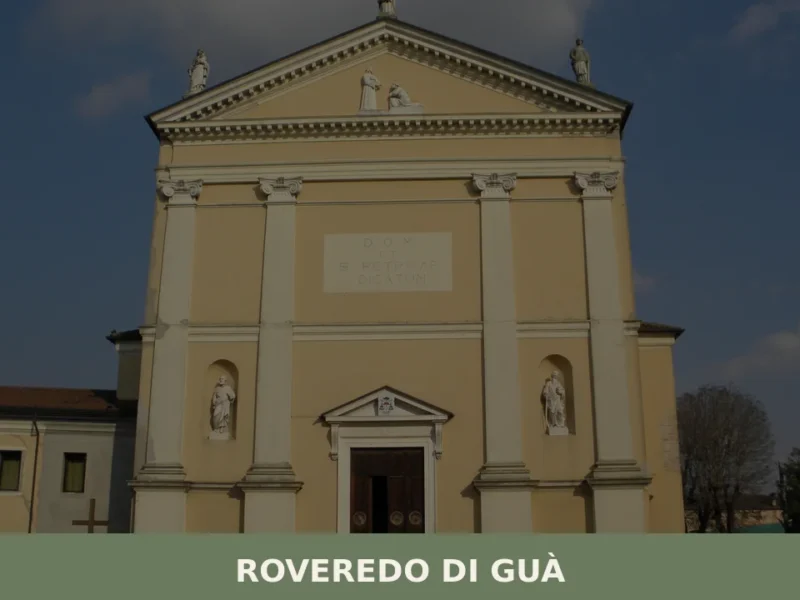
Roveredo di Guà
Roveredo di Guà has 1,542 inhabitants and covers an area of just 8 square kilometres on the lower Veronese plain, 16 metres above sea level, along the course of the Guà canal — a branch of the Adige river system that has determined the shape and economy of this territory. Understanding what to see in […]
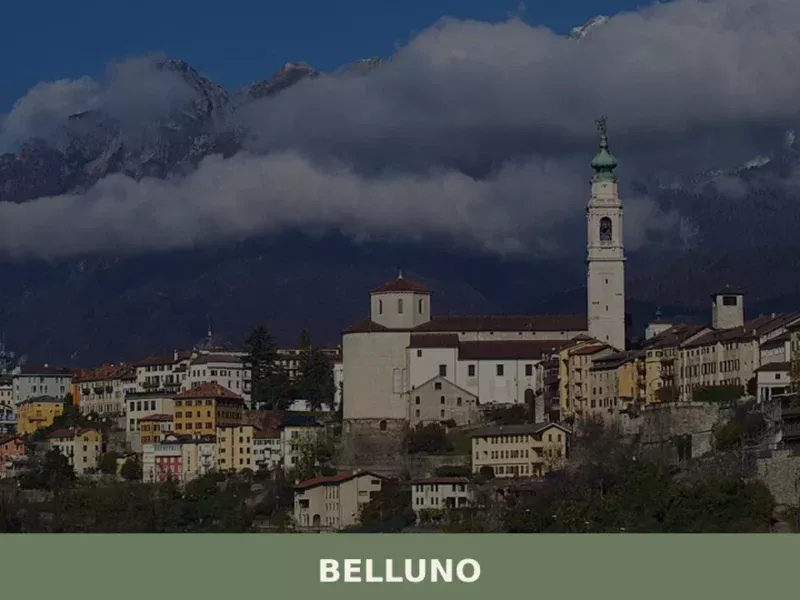
Belluno
What to see in Belluno: a city at 389m with Venetian palaces, a Baroque bell tower and Alpine views. Plan your visit with this complete guide. Includes food and travel tips.
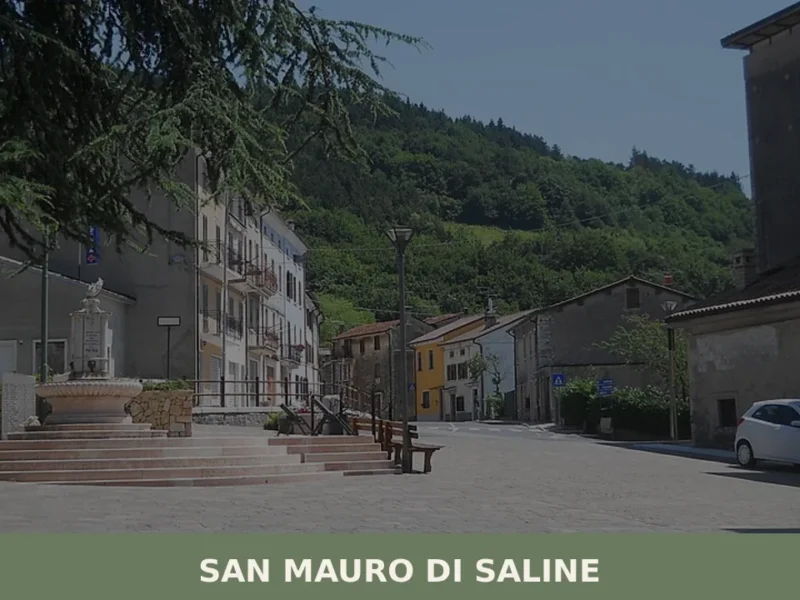
San Mauro di Saline
At 804 metres above sea level, on the eastern slope of the Veronese Lessini Mountains, San Mauro di Saline has a current population of 558 inhabitants spread between the municipal centre and the scattered hamlets along the pastures. The village’s name derives from the saline — the brackish water pools that historically surfaced in this […]
📝 Incorrect information or updates?
Help us keep the Erbezzo page accurate and up to date.