


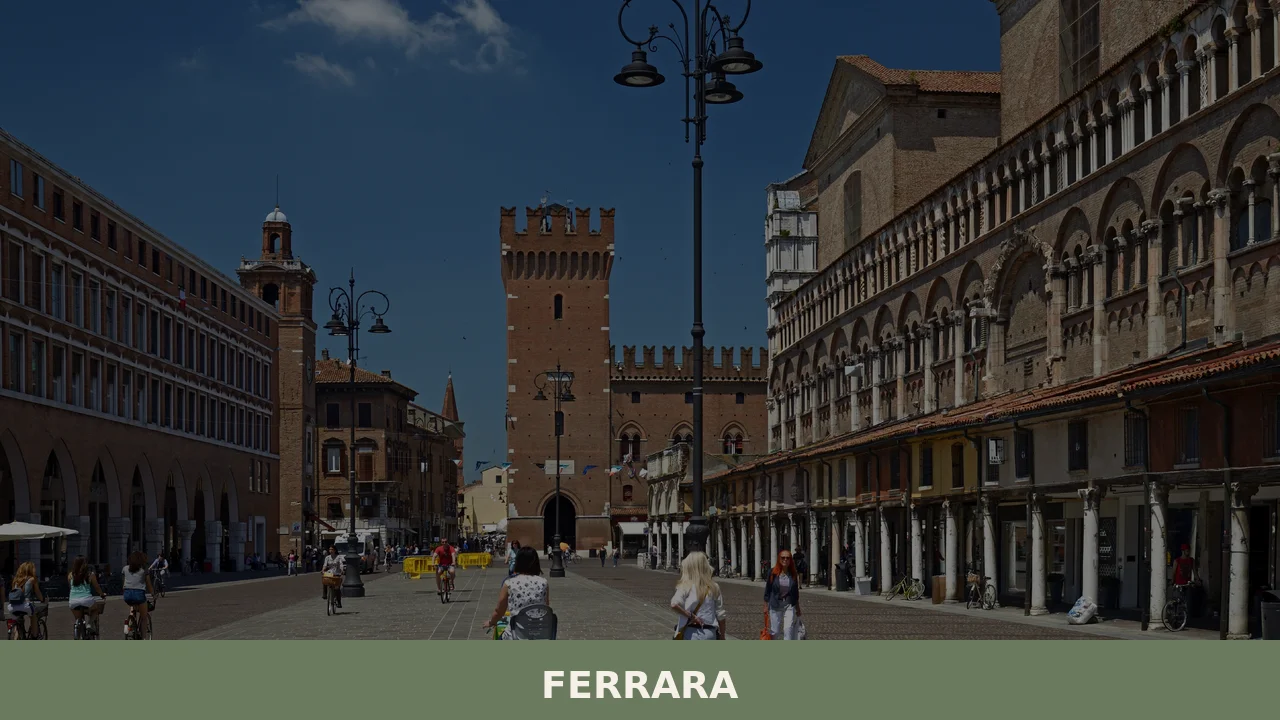
Ferrara
What to see in Ferrara? Explore 6 attractions, from the Estense Castle to the Palio at this city of 135,000. Discover Ferrara’s unique architecture today!
Discover Ferrara
Ferrara, an Emilian city located 9 meters above sea level, owes much of its splendor to the d’Este family. This dynasty dominated the city for over three centuries, transforming it into one of the most vibrant cultural and artistic centers of the Italian Renaissance and leaving an architectural legacy of inestimable value. Its history is deeply linked to the surrounding plain, a context that shaped both its urban landscape and its identity.
For those wondering what to see in Ferrara, the answer lies among its streets, palaces, and walls, which tell a past of ducal grandeur and urban innovation.
Its historic center has been recognized by UNESCO as a World Heritage Site, a testament to its uniqueness.
History and Origins of Ferrara
The first documented records of Ferrara’s settlement date back to the 8th century, when the city appeared in a Lombard diploma of 753 AD with the name “Ferraria”.
Initially, the urban core developed along the Po di Volano, a branch of the Po river which at the time was a fundamental waterway for trade and communications. Its strategic position, at a crossroads of river and land routes, fostered gradual but significant growth, making it a reference point for the agricultural and mercantile economy of the Po Valley region.
Ferrara’s true period of flourishing began in the 13th century with the advent of the d’Este family, who took control in 1264. Under their lordship, the city experienced extraordinary territorial expansion and intense building activity that profoundly altered its appearance. The Este family, far-sighted patrons, attracted artists, writers, and scientists to their court, transforming Ferrara into a cultural beacon of the Renaissance.
Their influence also extended beyond the city limits, establishing ties with other important Italian and European courts.
The 15th and 16th centuries represented the pinnacle of Este power, particularly under dukes such as Ercole I d’Este and Alfonso I d’Este.
It was during this period that Ferrara became a laboratory of modern urban planning, with the famous “Addizione Erculea” (Herculean Addition), an urban expansion project conceived by the architect Biagio Rossetti.
This plan, carried out between 1492 and 1505, doubled the city’s surface area, creating wide avenues and squares, an early example of Renaissance urban planning. The historical and artistic importance of Ferrara is such that its historic center has been included in UNESCO’s World Heritage list, recognizing its universal value.
What to see in Ferrara: main attractions
Estense Castle
The Estense Castle stands imposingly in the heart of Ferrara, representing the city’s most recognizable symbol. Its construction began in 1385, at the behest of Niccolò II d’Este, as a defensive fortress following a popular revolt.
The original project was entrusted to the architect Bartolino da Novara, who created a quadrilateral structure with four corner towers and surrounded by a moat, which is still present and navigable today.
Over the centuries, the castle underwent several modifications, evolving from a military stronghold to a lavish ducal residence, with the addition of frescoed apartments and hanging gardens.
Visitors can explore the different areas of the castle, from the underground dungeons that housed prisons, including the cell of Ugo and Parisina, to the richly decorated halls of the piano nobile.
Among the most significant rooms are the Salone dei Giochi (Hall of Games) and the Sala dell’Aurora (Hall of Dawn), with their frescoed ceilings celebrating Estense grandeur. The visit offers a journey through history and art, allowing visitors to understand the evolution of court life and the defensive functions of the structure.
The inner courtyard, known as Corte Ducale (Ducal Courtyard), serves as a starting point for exploration, offering a complete view of the majestic architecture.
Cathedral of Saint George Martyr
The Cathedral of Saint George Martyr, Ferrara’s Duomo, overlooks Piazza del Municipio with its polychrome facade, constituting one of the main points of interest for visitors to the city.
Its construction began in the 12th century, with a first consecration in 1135, and continued for several centuries, integrating Romanesque and Gothic architectural styles. The facade, with its three orders of loggias and the main portal sculpted by Master Niccolò, illustrates biblical and allegorical scenes, capturing the attention of passers-by.
The bell tower, attributed to Leon Battista Alberti and left unfinished, adds an element of Renaissance grace to the complex.
Inside, the cathedral underwent significant Baroque transformations in the 18th century, which masked the original medieval structure but still preserve valuable artworks. The crypt, however, retains its Romanesque appearance and houses the tombs of some Ferrarese bishops.
The Cathedral is an active place of worship and a museum of history and religious art, inviting visitors to discover its stylistic layers.
Palazzo dei Diamanti
The Palazzo dei Diamanti is an icon of the Ferrarese Renaissance and a masterpiece of Biagio Rossetti’s architecture, built between 1493 and 1503 as part of the Addizione Erculea.
Its name derives from over 8,000 bossage stones of white and pink marble, cut in the shape of diamond points, which cover the external facades, creating a dynamic and unique chiaroscuro effect. Each bossage stone is oriented differently, reflecting light variably and giving the palace an ever-new appearance depending on the time of day.
The palace was commissioned by Sigismondo d’Este, brother of Duke Ercole I, and represents an excellent example of Estense patronage.
Today it houses the Pinacoteca Nazionale di Ferrara (National Art Gallery of Ferrara), which holds a rich collection of artworks by Ferrarese artists from the 13th to the 18th century, including Cosmè Tura, Ercole de’ Roberti, and Garofalo.
Its rooms also host important international temporary exhibitions, attracting a wide audience.
A visit to the Palazzo dei Diamanti allows one to appreciate not only the exterior architecture but also the artistic heritage preserved within.
Walls of Ferrara
The Walls of Ferrara constitute one of Italy’s best-preserved city wall circuits, extending for approximately nine kilometers and embracing the entire historic city. Their construction began in the 15th century, under Ercole I d’Este, as part of the Addizione Erculea project, and was completed in subsequent centuries. The brick walls feature bastions, towers, and monumental gates, testifying to the advanced fortification techniques of the Renaissance era.
They offer a unique perspective on Ferrarese urban planning and the city’s relationship with its territory.
Today, much of the route is accessible and transformed into an evocative linear park, ideal for walks or bike rides. Walking along the walls allows one to admire the city from various angles, observing the inner gardens, the outer moats, and the surrounding plain landscape.
Different sections, such as the Mura degli Angeli (Walls of the Angels) or the Montagnone stretch, reveal specific characteristics and panoramic viewpoints.
The walls represent a distinctive element of Ferrara, offering an immersive experience into its defensive and urban history.
Casa Romei
Casa Romei is one of the most interesting 15th-century noble residences in Ferrara, a well-preserved example of a stately home from that era. It was built by the merchant Giovanni Romei between 1445 and 14
50, and later passed to the Este family and then to the nuns of the Corpus Domini. The building stands out for its architecture that blends late-Gothic elements with early Renaissance influences, visible in the inner courtyard with its loggia and terracotta decorations.
Its structure reflects the wealth and taste of the patron.
Today Casa Romei is a state museum exhibiting collections of removed frescoes, sculptures, and architectural fragments from demolished buildings in Ferrara.
Visitors can walk through the various rooms, admiring the original wooden ceilings, wall frescoes, and monumental fireplaces.
The internal garden, with its intimate atmosphere, completes the visit, offering a moment of tranquility. The building is a tangible example of what it was like to live in a patrician residence in the 15th century in Ferrara, allowing for a deeper understanding of the daily life and art of the time.
Typical cuisine and products of Ferrara
Ferrarese cuisine stands out for its robustness and bold flavors, the result of a tradition rooted in the Este court and the peasant culture of the Po Valley. Historical influences, linked to the presence of a refined court and the abundance of agricultural and pork products in the area, have given rise to rich and complex dishes.
Local gastronomy celebrates ingredients such as pumpkin, cereals, and pork, masterfully transformed into preparations that tell the story of the place.
The Ferrara area, like that of Villanova sull’Arda, shares a strong link with Emilian culinary traditions.
Among the most representative dishes are Cappellacci di zucca, a fresh pasta filled with pumpkin pulp, Parmigiano Reggiano, and nutmeg, traditionally served with melted butter and sage or with a meat ragù.
Another symbol of Ferrarese cuisine is Salama da sugo, a spiced and cured pork sausage that requires long cooking and is usually accompanied by mashed potatoes. Its preparation is a ritual passed down through generations, reflecting the importance of pork processing in the region.
Another specialty not to be missed is the Pasticcio di maccheroni, a sumptuous preparation born at the Este court, which combines macaroni seasoned with white meat ragù, mushrooms, truffle, and béchamel, all enclosed in a sweet shortcrust pastry shell. This dish, served warm, is an example of the sweet and savory fusion typical of some Emilian culinary traditions.
Finally, Pampepato or Pan del Papa, a Christmas cake made with almonds, walnuts, candied fruit, cocoa, honey, and spices, covered in dark chocolate, testifies to the richness of the ingredients used in local pastry-making.
These products can be found in the bakeries and delicatessens of the historic center.
Festivals, events and traditions of Ferrara
Ferrara celebrates its patron saint, Saint George, on April 23rd with a series of religious and civil events.
The patronal feast is a significant moment for the community, which participates in processions and liturgical celebrations dedicated to the martyr. Beyond the devotional aspects, the day is often enriched by cultural events and initiatives that involve the citizenry, keeping alive the connection with the city’s historical traditions.
The presence of stalls and small markets enlivens the main squares, offering typical products and local crafts.
Among the most important and deeply felt events in Ferrara is the Palio di Ferrara, a historical reenactment rooted in the 13th century, making it the oldest palio in Italy. The races, traditionally held on the last Sunday of May, see the city’s districts compete in horse, donkey, and children’s races, preceded by a grand historical procession in Renaissance costume. This event, involving thousands of participants, recalls the splendor of the Este court and ancient chivalric traditions.
The Palio is not just a competition, but an opportunity to relive the splendor of the ducal past, with music, flag-wavers, and shows that enliven the historic center.
When to visit Ferrara and how to get there
The best time to visit Ferrara is spring (April-June) and early autumn (September-October), when temperatures are mild and ideal for exploring the city on foot or by bicycle.
In spring, nature awakens and cultural events, such as the Palio di Ferrara in May, liven up the streets. Autumn offers pleasant weather and the warm colours of the foliage, as well as fewer tourists compared to the summer months. Those looking for what to see in Ferrara during a quieter period will find these seasons the ideal environment for an in-depth visit.
Ferrara is well-connected and easily accessible from various Italian locations.
If arriving by car, the city is served by the A13 Bologna-Padova motorway, with the “Ferrara Nord” and “Ferrara Sud” exits leading directly to the city centre. For those who prefer the train, Ferrara’s train station is an important hub, with frequent connections to Bologna, Venice, and other cities in northern Italy.
For train travel, it is advisable to consult the official Trenitalia website for timetables and tickets.
Those arriving by plane can refer to Bologna’s “Guglielmo Marconi” Airport (Bologna Airport), which is approximately 50 kilometres from Ferrara and is connected by a shuttle service or trains.
| Starting point | Distance | Estimated time |
|---|---|---|
| Bologna | 50 km | 45 min (car) / 30 min (train) |
| Venice | 115 km | 1 h 30 min (car) / 1 h 15 min (train) |
| Milan | 240 km | 2 h 30 min (car) / 2 h 15 min (train) |
Where to stay in Ferrara
Ferrara offers a wide range of accommodation options, suitable for every type of traveller and budget. In the historic centre, you can find numerous hotels, from boutique hotels housed in ancient palaces to more modern hotels with all amenities. Many establishments offer rooms with views of the main monuments or the city’s characteristic alleys.
For those who prefer a more intimate experience, there are numerous bed & breakfasts and guesthouses available, often managed by residents who can provide useful tips about the city.
For visitors who also wish to explore the surroundings or prefer the tranquillity of the countryside, farm stays (agriturismi) and holiday homes can be found in the immediate vicinity of Ferrara.
These options offer the opportunity to stay in rural settings, enjoying local cuisine and the peace of nature.
It is advisable to book in advance, especially during high season periods or in conjunction with important events like the Palio, to ensure availability and the best rates.
For those visiting Ferrara and wanting to extend their itinerary in Emilia-Romagna, it is possible to consider a stop in Piozzano, in the Piacenza area, or in Morfasso, both villages offering a different experience, amidst hills and local traditions.
Photo Gallery of Ferrara
Do you have photos of Ferrara?
Share your photos of the village: the best ones will be added to the official gallery, with your credit.
Send your photosIn Emilia-Romagna More villages to discover
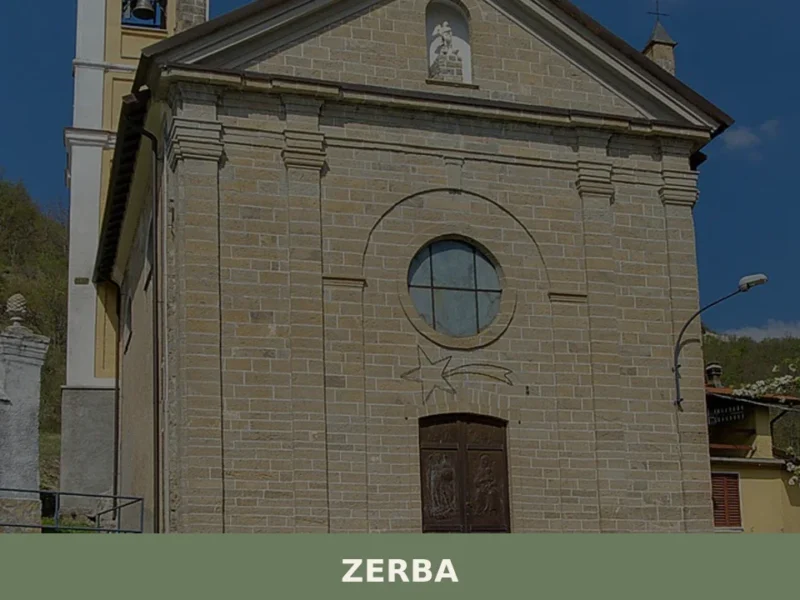
Zerba
With just 71 registered inhabitants, Zerba is the least populated municipality in the entire province of Piacenza and one of the smallest in Italy. Situated at 906 metres above sea level in the upper Val Boreca, on the border between Emilia-Romagna and Liguria, this mountain settlement retains a sandstone building fabric that follows precise construction […]
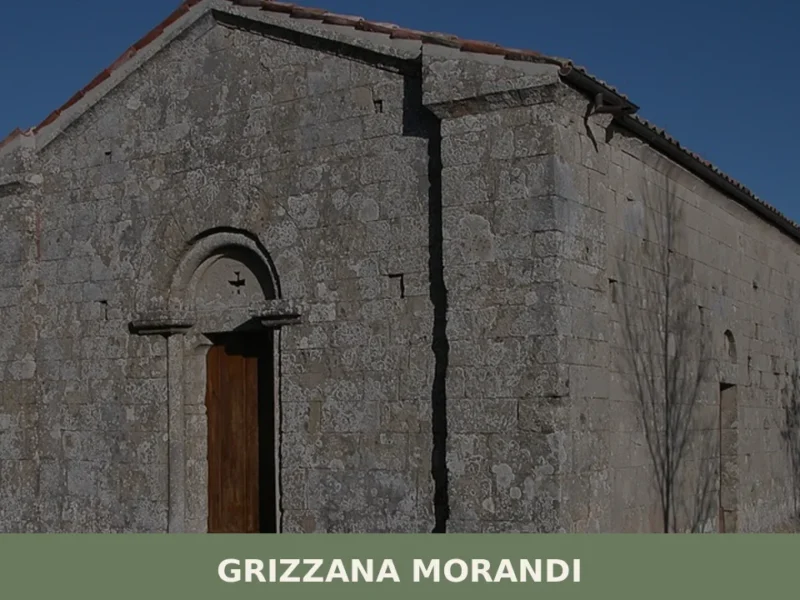
Grizzana Morandi
In 1929, the Bolognese painter Giorgio Morandi travelled to Grizzana for the first time — a scattered municipality in the Emilian Apennines that he would return to every summer for over thirty years. From the barns and tower-houses of this valley, he painted hundreds of landscapes, transforming the clay badlands and mountain ridgelines into universal […]
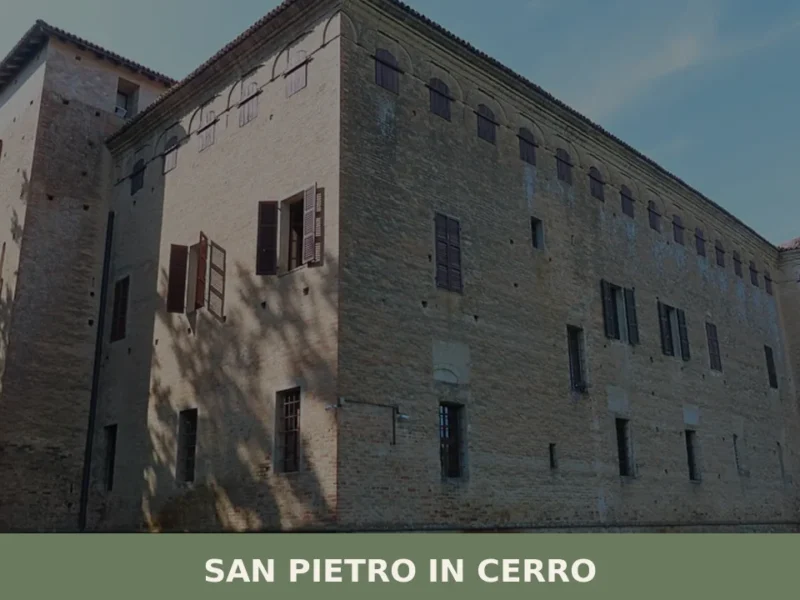
San Pietro in Cerro
With its 769 inhabitants and an elevation of just 44 metres above sea level, San Pietro in Cerro is one of the smallest municipalities in the province of Piacenza, spread across the alluvial plain between the Arda torrent and the Po river. The fifteenth-century castle of the Barattieri counts, still standing today with its square-plan […]

📝 Incorrect information or updates?
Help us keep the Ferrara page accurate and up to date.