


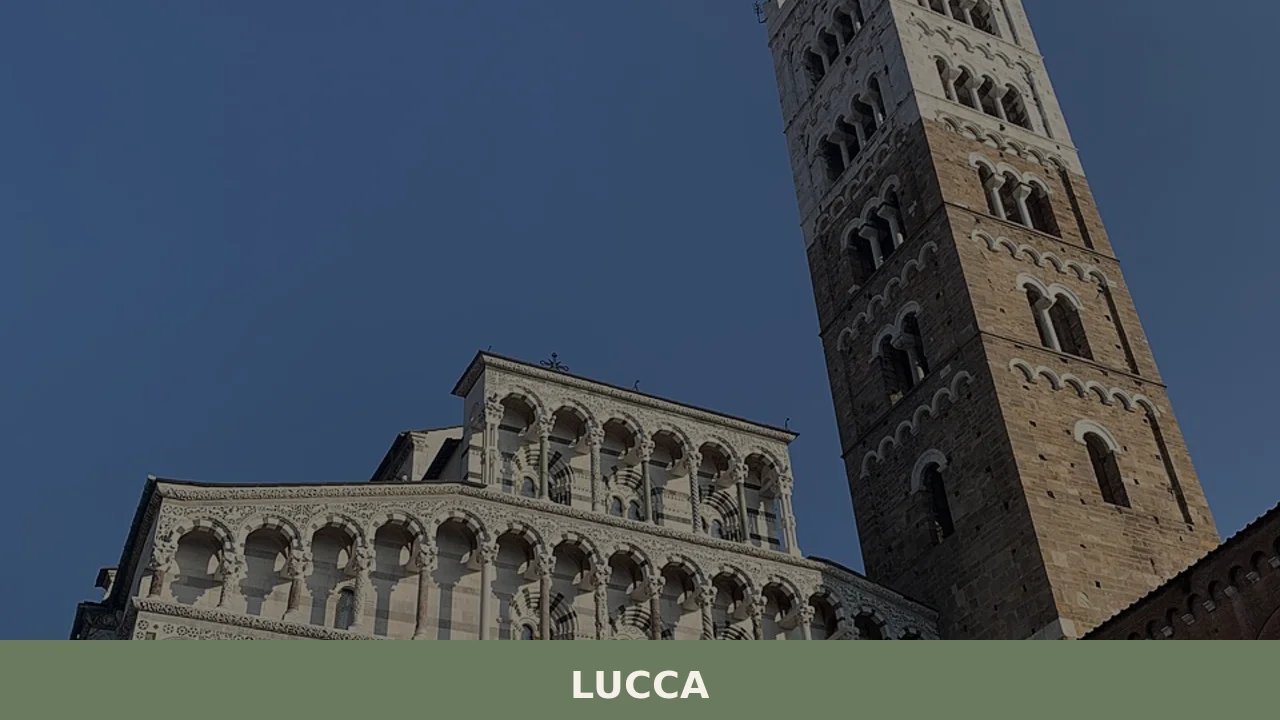
Lucca
Discover Lucca, Tuscany’s enchanting walled village in Italy. Explore medieval streets, stunning architecture, and rich culture in this timeless Italian treasure.
Discover Lucca
Lucca introduces itself with a clear identity: 87,598 inhabitants, a flat position just 19 metres above sea level, and a Renaissance city wall stretching over four kilometres that still runs intact around the historic centre today.
For anyone wanting to know what to see in Lucca, the answer begins with those walls — which do not separate the past from the present but hold them together in a way that is concrete and walkable.
The city lies in Tuscany, the capital of its own province, and is easy to reach from both the Tyrrhenian coast and the Apennine interior.
History and Origins of Lucca
Lucca’s roots go back to Roman times: the city was founded as a Latin colony in 180 BC under the name Luca, quickly becoming a key node along the Via Cassia and later the Via Clodia.
Its position on the Tuscan plain, at the edge of the Serchio river basin, made it a major commercial and military centre even in the Republican period. In 56 BC the city entered universal history when Julius Caesar, Pompey and Crassus met here to renew the so-called First Triumvirate, consolidating their political alliance at a decisive moment for the Roman Republic.
After the fall of the Western Roman Empire, Lucca passed through Ostrogothic and then Lombard rule; the Lombards made it the capital of the Duchy of Tuscia from the sixth century onwards.
During this period the city saw intense religious and architectural activity: the first great Paleo-Christian and Romanesque churches were built, and they still define the face of the historic centre today.
In the Middle Ages, Lucca became one of the wealthiest cities in Europe through the silk trade.
Lucchese merchants operated across the entire continent, and their financial networks anticipated what would later become the great Tuscan banking tradition.
The Volto Santo — the cedar-wood crucifix preserved in the Cathedral of San Martino — was already drawing pilgrims from every corner of Europe by the twelfth century.
During the thirteenth and fourteenth centuries, Lucca experienced a period of intense political conflict between Guelph and Ghibelline factions, with power passing between various lords, including Castruccio Castracani, who governed the city with an iron hand between 1316 and 1328, expanding its territory and turning it into a regional power.
After his death, the city reclaimed a form of republican government that it maintained, with interruptions, until 1799, when Napoleon Bonaparte first turned it into the Lucchese Republic and then, in 1805, into a Principality assigned to his sister Elisa Baciocchi.
Following the Congress of Vienna in 1815, Lucca became an independent Duchy, until its annexation to the Grand Duchy of Tuscany in 1847 and then to the Kingdom of Italy in 1861.
What to See in Lucca: Main Attractions
The Renaissance Walls
Lucca’s walls are among the best-preserved in Europe and are the city’s most recognisable landmark.
Built between 1513 and 1645, they extend approximately 4.2 kilometres and can be walked or cycled in their entirety along the tree-lined avenue running along the top of the bastions. The structure includes eleven bulwarks and four main gates: Porta San Pietro, Porta Elisa, Porta Santa Maria and Porta San Donato.
Visitors to Lucca often spend an entire morning on the walls, taking in a continuous view over the city’s rooftops on one side and the surrounding hills on the other.
Cathedral of San Martino
The Cathedral of San Martino dominates Piazza San Martino with its asymmetrical Romanesque façade, shaped by the pre-existing presence of the bell tower.
Construction began in the eleventh century under a project attributed to Bishop Anselmo da Baggio, who later became Pope Alexander II.
Inside, the church preserves the Volto Santo, a cedar-wood crucifix whose veneration is documented as far back as 742 AD. The sacristy contains the funerary monument of Ilaria del Carretto, a masterpiece by Jacopo della Quercia sculpted between 1406 and 1408 and considered one of the most significant works of Italian Gothic sculpture.
Piazza dell’Anfiteatro
Piazza dell’Anfiteatro occupies exactly the perimeter of Lucca’s ancient Roman amphitheatre, built in the second century AD and originally capable of holding around 10,000 spectators. In the Middle Ages, the arena’s structure was absorbed into houses and workshops, creating the elliptical shape that is still clearly legible today.
The square is accessible through four arched passageways and hosts markets, events and the everyday life of Lucca’s residents.
The way the Roman urban layout remains visible beneath the medieval buildings makes this one of the most remarkable examples of urban stratification in Italy.
Basilica of San Frediano
The Basilica of San Frediano faces its namesake square with a gilded thirteenth-century apsidal mosaic depicting the Ascension of Christ, the work of a Lucchese master trained in the Byzantine tradition.
The church was founded in the sixth century by the Irish bishop Frigidianus, later canonised, who according to historical sources diverted the course of the Serchio river to protect the city. The three-nave interior preserves a twelfth-century Romanesque baptismal font decorated with bas-reliefs depicting the story of Moses, as well as the Trenta Chapel with a polyptych altar by Jacopo della Quercia dating from 1422.
Torre Guinigi
The Torre Guinigi stands 45 metres tall and is distinguished by the seven tall holm oaks growing at its summit, their roots sunk into the medieval terrace.
It was built by the powerful Guinigi family in the fourteenth century as a symbol of prestige and political power. Paolo Guinigi, lord of Lucca between 1400 and 1430, made the tower the most visible sign of his authority over the city. Climbing the 230 internal steps offers a bird’s-eye view of the entire historic city plan, making the Roman street grid — still preserved in today’s block layout — immediately apparent.
Anyone thinking about what to see in Lucca from an elevated vantage point should make this tower a priority.
Local Cuisine and Products of Lucca
Lucchese cooking sits within the broader Tuscan gastronomic tradition, with certain distinct characteristics tied to the agricultural and commercial history of the city and its territory.
The Serchio plain has always provided abundant cereal production, while the surrounding hills — particularly those of the Garfagnana and Versilia — have contributed mountain and coastal products.
The influence of the Republic of Lucca, which for centuries maintained strong commercial ties with Northern Europe, has also left its mark on the local cuisine, characterised by restrained use of spices and a preference for unprocessed local ingredients.
Among the most documented dishes of the Lucchese tradition is garmugia, a spring soup made from veal, spring onions, fresh peas, broad beans and asparagus, recorded in local recipe books as far back as the seventeenth century. Garfagnana spelt soup is another deeply rooted local dish, made with spelt grown in the Apennine valleys north of the city.
Among main courses, Serchio trout has long been a fixture on local tables, cooked in a braise or with aromatic herbs.
Buccellato is Lucca’s most representative dessert: a sweet ring-shaped bread made with flour, sugar, anise seeds and raisins, sold in the historic pastry shops of the city centre.
Regarding extra virgin olive oil, the province of Lucca produces one of Tuscany’s most recognisable varieties, made primarily from the Frantoio cultivar alongside the local Leccino and Maurino varieties.
The hills between Lucca and Pescia form a traditional olive-growing area documented as far back as the Middle Ages. No certified up-to-date DOP or IGP data is available to include here, but Lucca’s olive oil is recognisable for its low acidity and herbaceous aromatic profile.
Those wishing to take local products home can visit the weekly market held every Wednesday and Saturday in Piazza San Giusto and the surrounding squares, where local farmers sell seasonal vegetables, fresh cheeses and locally cured meats.
In July, on the feast of San Paolino on the 12th of the month, the historic centre hosts events and market stalls offering traditional products.
Lucca Comics and Games — the international event dedicated to comics and gaming held every year in late October — brings over 250,000 visitors to the city and provides an opportunity to explore the local food scene in the restaurants and bars of the historic centre.
Festivals, Events and Traditions of Lucca
The patron saint of Lucca is San Paolino, bishop of the city in the fourth century and a central figure in the spread of Christianity across the Tuscan region.
The patron saint’s feast is celebrated on 12 July with a series of events involving the whole city. The day includes a solemn procession with the saint’s relics, departing from the Cathedral of San Martino and moving through the streets of the historic centre, accompanied by participants dressed in historical costume.
On the evening of 12 July, the traditional luminara takes place, during which the churches and principal buildings of the centre are lit by thousands of candles and torches, creating a dramatic effect documented since the medieval period.
The city’s civic calendar is also linked to the memory of the Volto Santo: on the night of 13 September, the Procession of the Holy Cross takes place — one of Lucca’s oldest religious ceremonies, with documented origins going back at least to the eleventh century.
In terms of contemporary cultural events, Lucca Comics and Games is the most significant. Founded in 1966 as a comics fair, it has evolved over the decades into one of the largest events in Europe dedicated to pop culture and board games, with exhibitors from around the world and a programme that occupies the entire historic centre across pavilions, exhibitions and meetings with authors.
It takes place each year over the days spanning late October and early November.
Lucca Summer Festival is the summer music series that brings concerts by international artists to Piazza Napoleone, with editions over the years featuring major names from the global rock and pop scene.
When to Visit Lucca and How to Get There
Spring, between April and June, offers the most favourable conditions for visiting Lucca: temperatures are mild, the days are long and the city has not yet reached peak crowding.
Those looking for what to see in Lucca without the pressure of large crowds tend to prefer this period, when local markets offer seasonal produce and the churches and museums are accessible without queuing. Autumn — particularly September and the first half of October — is another good window.
The days of Lucca Comics and Games in late October are best avoided if you are looking for calm and standard hotel prices, but worth considering if the event itself is the reason for the trip.
Summer is warm and busy, but the Lucca Summer Festival provides an additional reason to plan an evening visit to the city.
If you are arriving by car, the A11 Firenze-Mare motorway has the Lucca Est exit approximately 2 km from the historic centre and the Lucca Ovest exit approximately 3 km away. The A12 motorway link connects Lucca to the coast and to Genoa. Public car parks are available along the walls, in particular at the Palatucci car park and in the stopping areas near Porta Santa Maria.
Lucca railway station is served by the regional Pisa–Lucca–Viareggio line and the Lucca–Aulla line, with frequent connections via Trenitalia and the main Tuscan rail hubs such as Pisa Centrale and Florence Santa Maria Novella. The nearest airport is Galileo Galilei in Pisa, approximately 25 km away and reachable in around 30 minutes by car or regional train.
Travellers coming from Florence cover approximately 80 km by motorway.
Visitors to Lucca can extend their itinerary to the villages of the province and the surrounding Apennine areas.
Careggine, in the Garfagnana, lies approximately 50 km north of Lucca along the Serchio valley and is known for its artificial lake, which is periodically drained to reveal the remains of the old submerged village.
Those wishing to venture further into Lunigiana can reach Bagnone, a medieval village in the province of Massa-Carrara that preserves a fourteenth-century castle and a historic centre of medieval layout, or Licciana Nardi and Tresana, both in Lunigiana — an area that for centuries shared with Lucchese territory the same trade routes and the pilgrimage paths of the Via Francigena.
In Tuscany More villages to discover
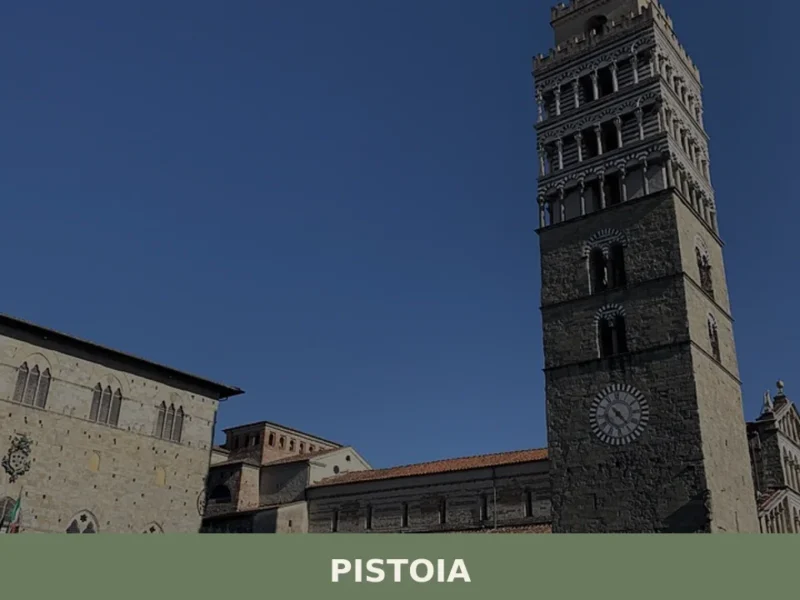
Pistoia
Discover Pistoia, a charming village in Tuscany, Italy. Explore its rich history, stunning architecture, and authentic Italian culture off the beaten path.
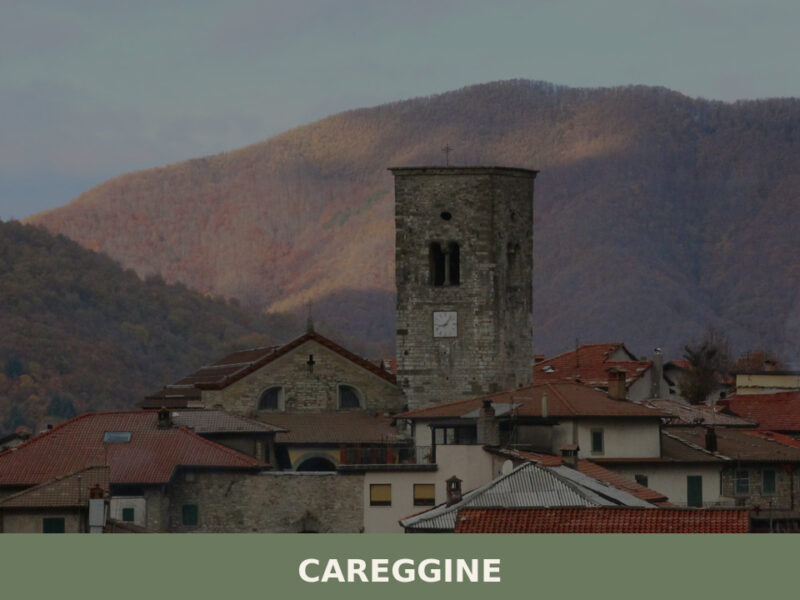
Careggine
Morning fog lifts from the Apuan Alps in slow, pale sheets, revealing a scatter of stone houses along a ridgeline above the Garfagnana valley. A church bell marks seven o’clock — the sound carries far in this thin, mountain air, reaching nobody in particular. With only 585 inhabitants, Careggine keeps its own unhurried tempo. Understanding […]
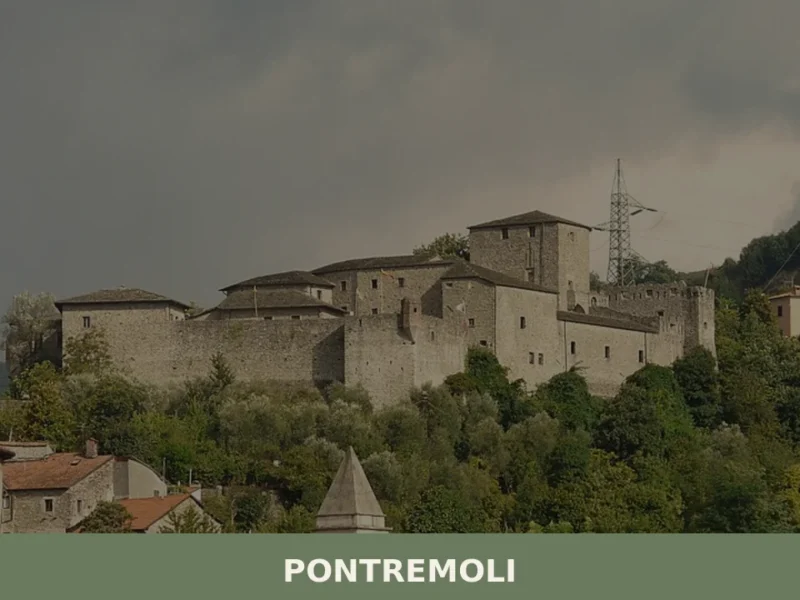
Pontremoli
Pontremoli has a current population of 7,593 and sits at an elevation of 236 metres in the valley of the River Magra, in the province of Massa and Carrara. The central hub of historic Lunigiana, the town is crossed by the route of the Via Francigena — stop number 28 on the itinerary of Sigeric, […]
📝 Incorrect information or updates?
Help us keep the Lucca page accurate and up to date.